Retroviral Control and Reporter Constructs for Research
MBP Inc. supplies ABM control and reporter constructs for retroviral delivery workflows, including empty vector controls, GFP and RFP fluorescent reporters, and firefly luciferase reporter vectors for establishing experimental baselines and confirming transduction efficiency in gamma-retroviral gene delivery experiments.
MBP offers retroviral control and reporter systems for a variety of experimental workflows. Request a quote by contacting customerservice@mbpinc.net for product details and availability.
Controls/Reporters

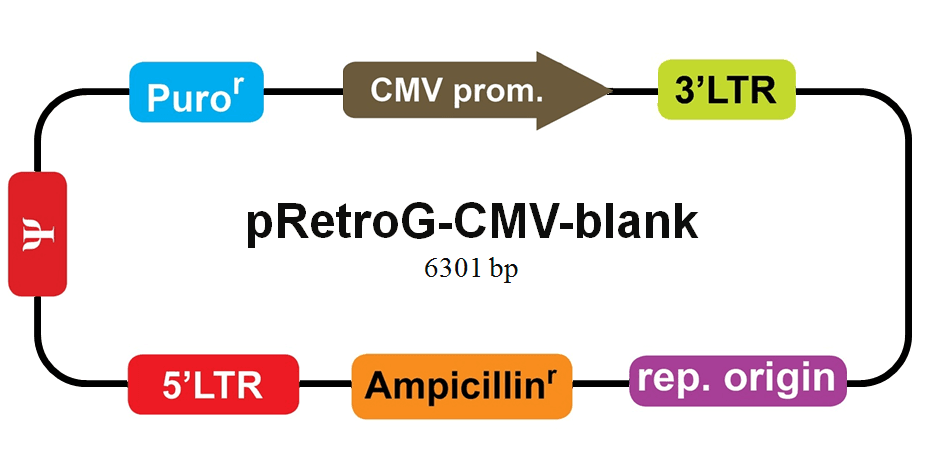
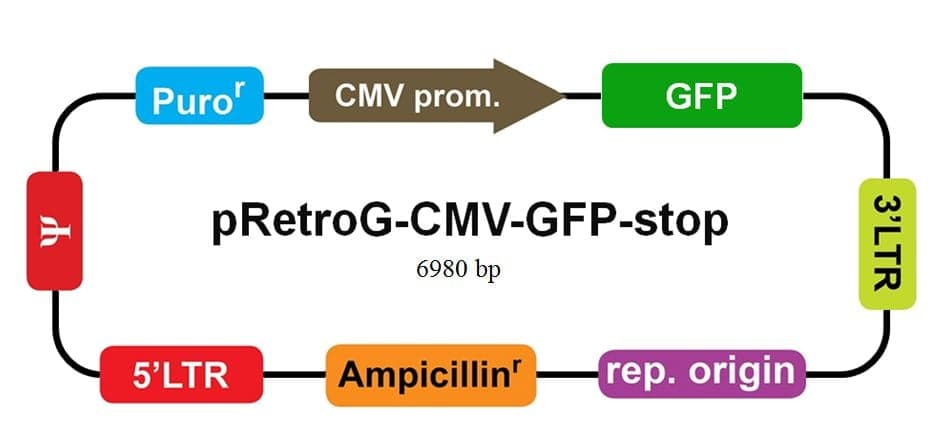
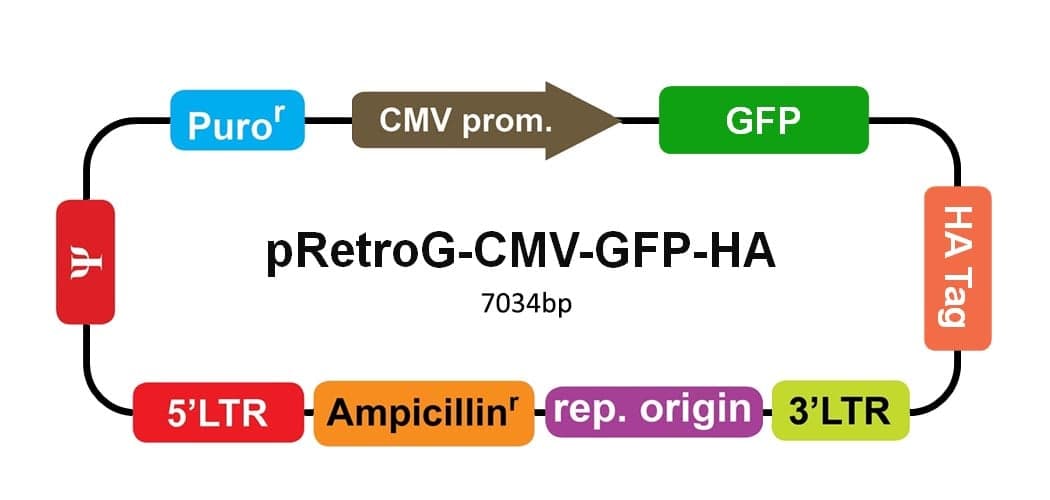
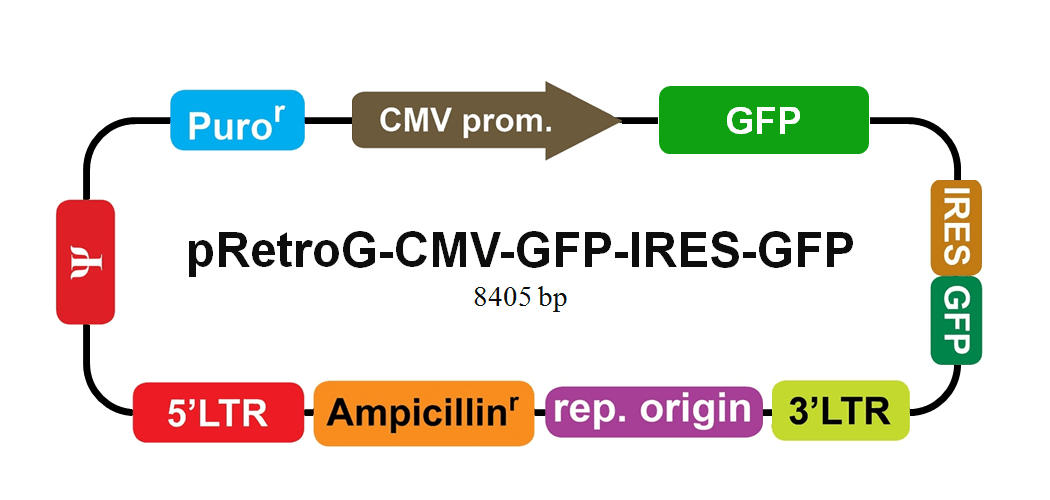
Showing 1 to 10 of 10 results
What Are Retroviral Control & Reporter Constructs?
Every retroviral over-expression experiment requires a matched set of control constructs to confirm that transduction was successful, the packaging system produced infectious virus at an adequate titer, and the empty vector backbone does not itself alter the measured phenotype. Retroviral control and reporter vectors use the same LTR and backbone configuration as experimental over-expression vectors. Reliable controls and reporters improve confidence in transduction and expression studies. Select the control/reporter system appropriate for your experiment.
What you will find:
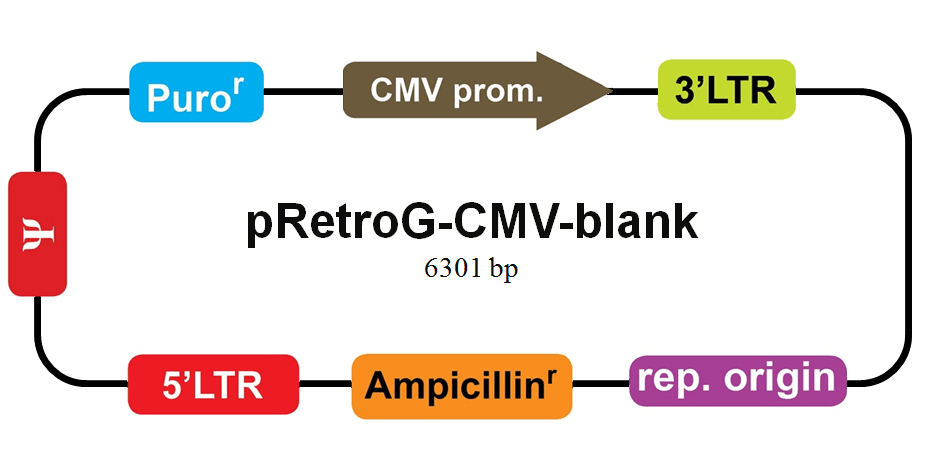
- Retro-CMV Blank Retroviruses used as baseline controls for retroviral delivery systems
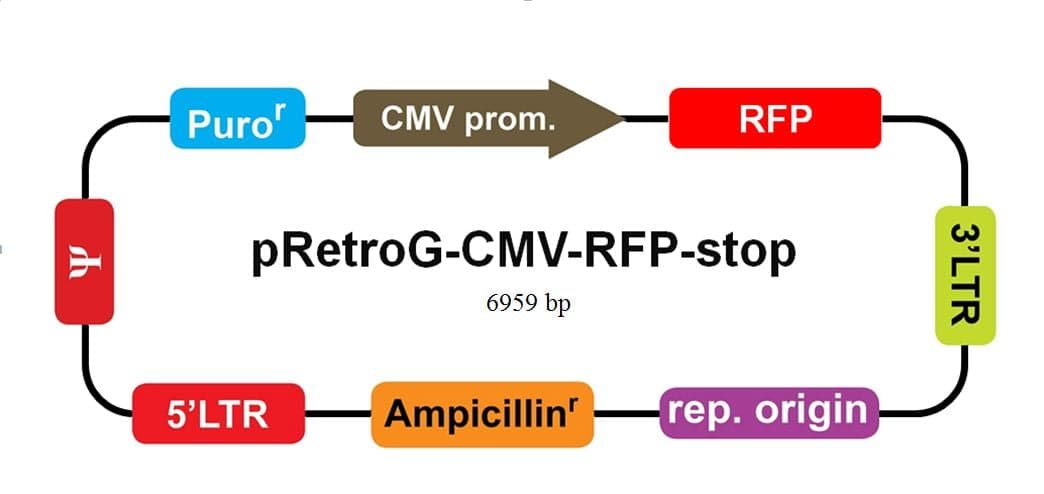
- Fluorescent Reporter Retroviruses (GFP, RFP) for real-time monitoring of transduction efficiency
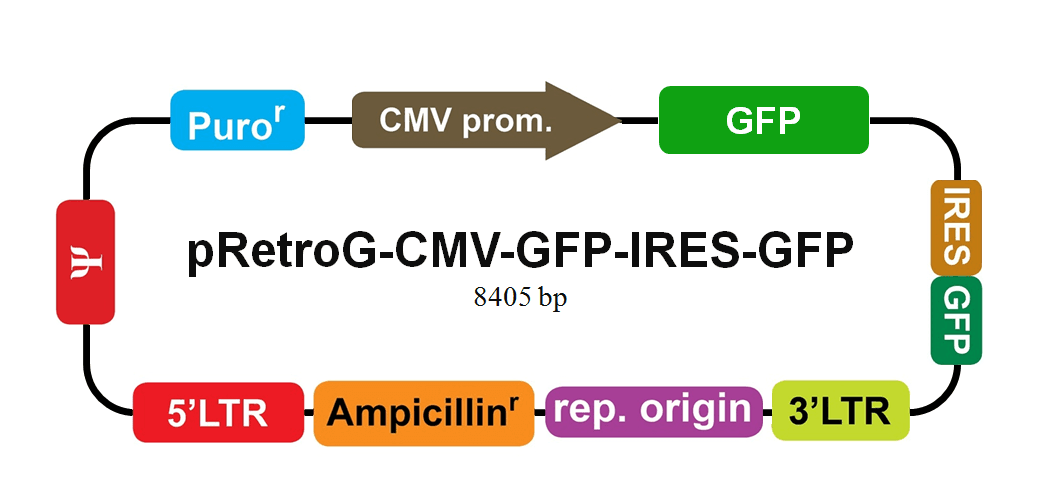
- Bicistronic GFP Reporter Vectors for co-expression and experimental normalization
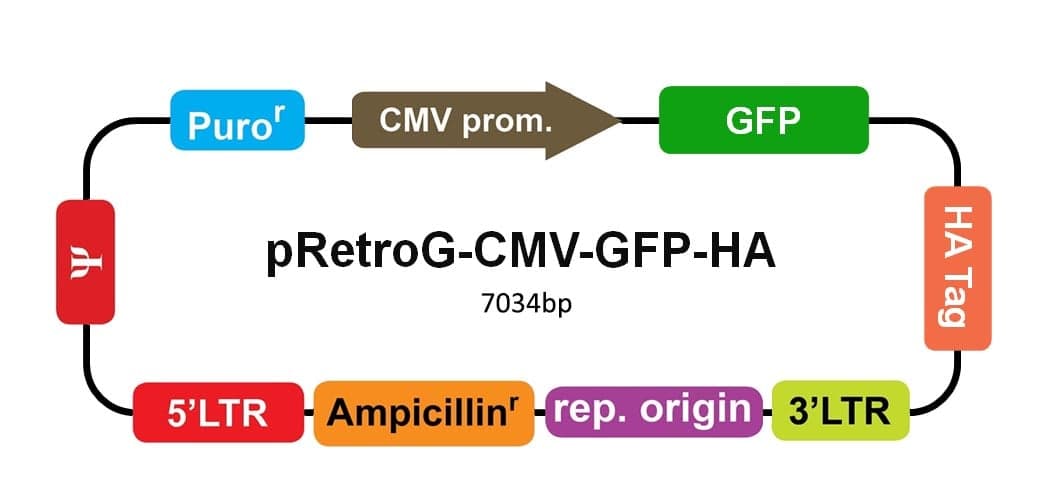
- Epitope-tagged Control Vectors supporting protein detection and expression analysis
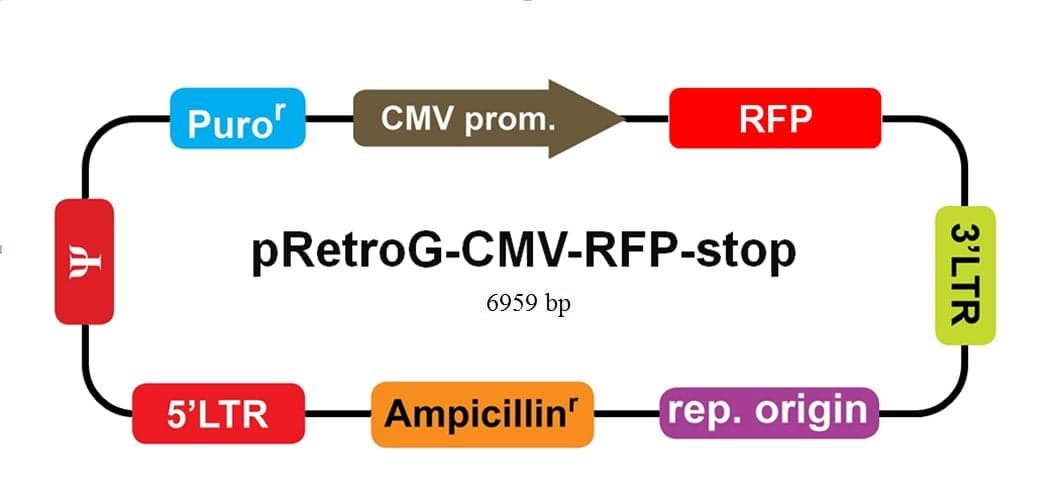
- Stop-codon Reporter Plasmids for assessing baseline expression and vector background activity
- CMV-driven control plasmids used in retroviral expression and stable cell line workflows
How to Choose Retroviral Control & Reporter Constructs
Empty Vector Backbone Matching
The empty vector control must match the experimental vector in backbone, LTR configuration, internal promoter, and selection marker — for pBABE experiments, pBABE-puro empty is correct; for pLNCX2 experiments, an empty pLNCX2 vector is required. Mismatched controls introduce confounding variables.
Transduction Efficiency Verification
GFP-expressing retroviral controls (pBABE-GFP, pMSCV-GFP) enable real-time FACS-based quantification before proceeding with experimental constructs — Adequate efficiency is typically assessed empirically based on cell type and experimental design, ensuring that packaging and infection conditions are suitable for downstream applications.
Histochemical Detection Needs
pLAPSN, derived from the pLXSN backbone, expresses bacterial alkaline phosphatase (AP), detectable histochemically with substrates such as NBT/BCIP — useful when fluorescence-based detection is not available or appropriate, particularly in fixed tissue sections.
In Vivo Tracking Requirements
Retroviral GFP and luciferase reporter cell lines support in vivo tracking of transplanted cells in mouse models, including haematopoietic reconstitution studies and tumour xenograft experiments via bioluminescence imaging.
Multiplexing Considerations
Retroviral GFP reporters are compatible with red-channel markers (RFP, mCherry, tdTomato) in multiplexed imaging and FACS — ensure control and experimental constructs use spectrally distinct reporters.
Specifications Context
Retroviral control and reporter systems using Retro-CMV and pRetroG-CMV vectors deliver CMV-driven expression cassettes packaged as replication-incompetent retroviral particles for transduction of actively dividing mammalian cells. These systems support stable genomic integration of GFP/RFP reporters, HA-tagged constructs, bicistronic IRES-based expression formats, and empty vector controls for baseline comparison and experimental normalization. Following transduction, integrated expression is maintained through cell division under selection or reporter-based enrichment, enabling consistent gene expression analysis, functional studies, and stable cell line generation in retroviral workflows. Product availability reflects MBP's catalogue as of mid-2026.
Contact the expert team at MBP to get advanced retroviral control/reporters for your lab today.
FAQ



