CRISPR/Cas9 Lentiviral Negative Control Constructs for Labs
MBP Inc. supplies CRISPR/Cas9 lentiviral negative control constructs — non-targeting sgRNA vectors with and without Cas9 — for establishing experimental baselines in gene editing studies. These controls deliver all components of the CRISPR system without cutting any known mammalian gene, enabling researchers to distinguish editing-specific phenotypes from non-specific Cas9 expression or sgRNA delivery effects in labs across the USA and Canada.
MBP provides CRISPR/Cas9 control vectors and viral systems to support genome-editing validation and assay development. Request a quote for your research requirements by contacting customerservice@mbpinc.net
CRISPR/Cas9 Controls
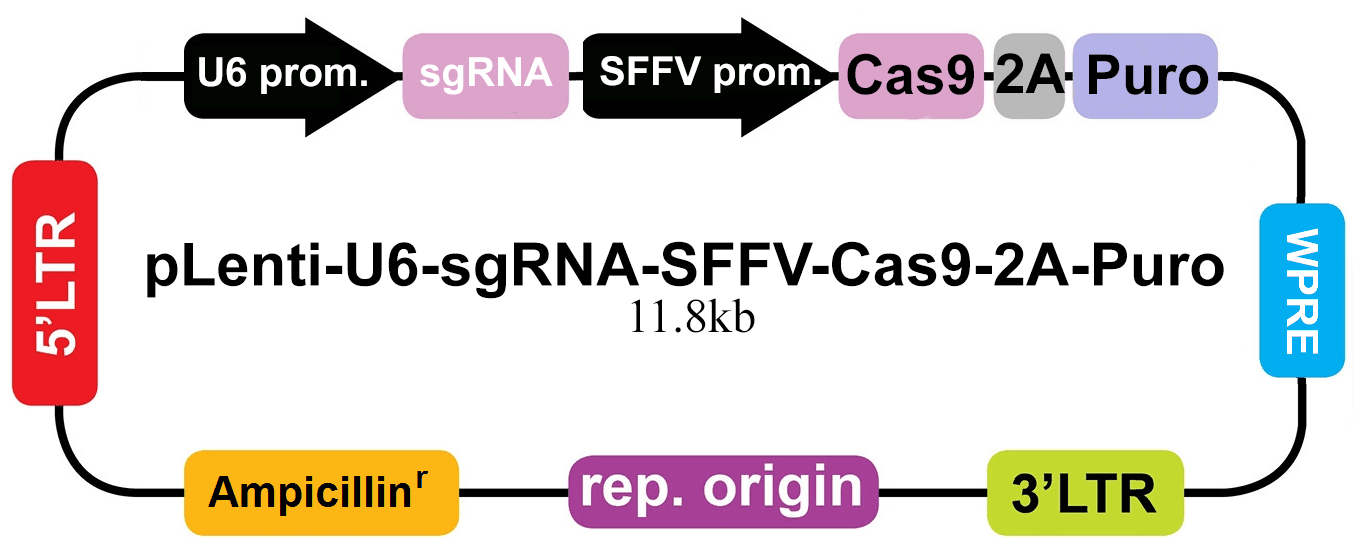
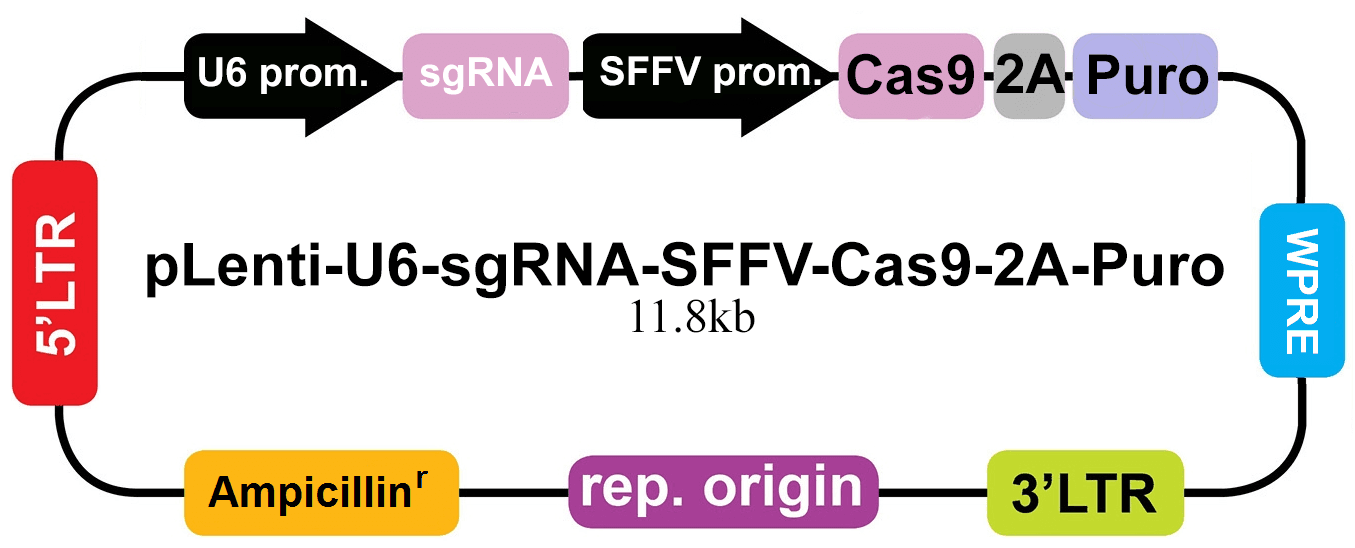
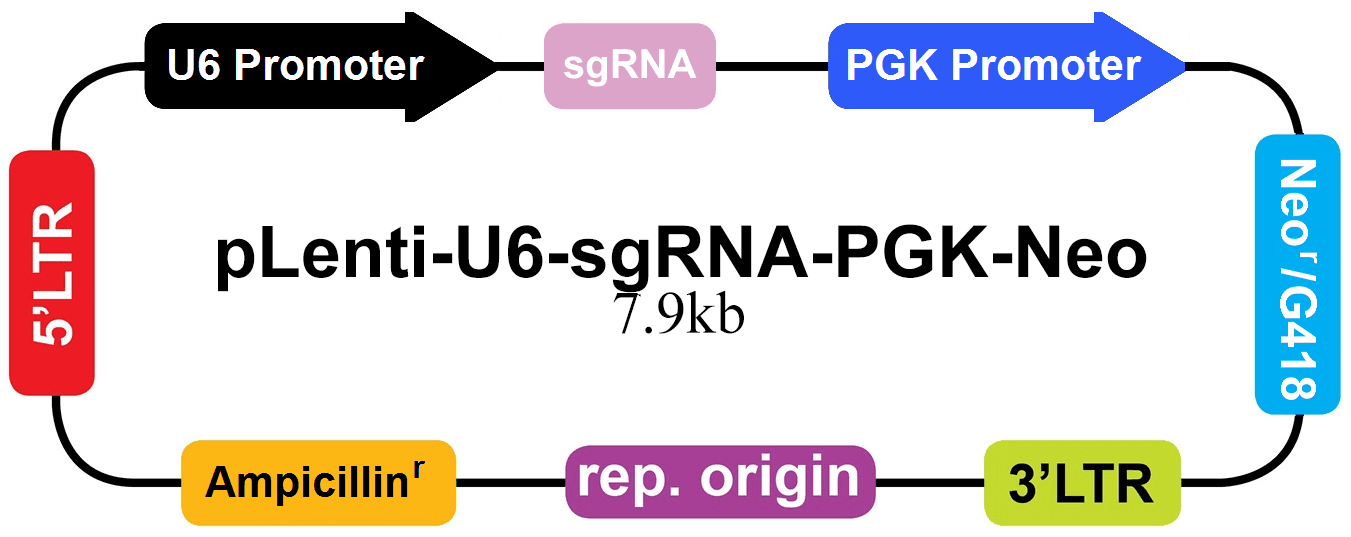
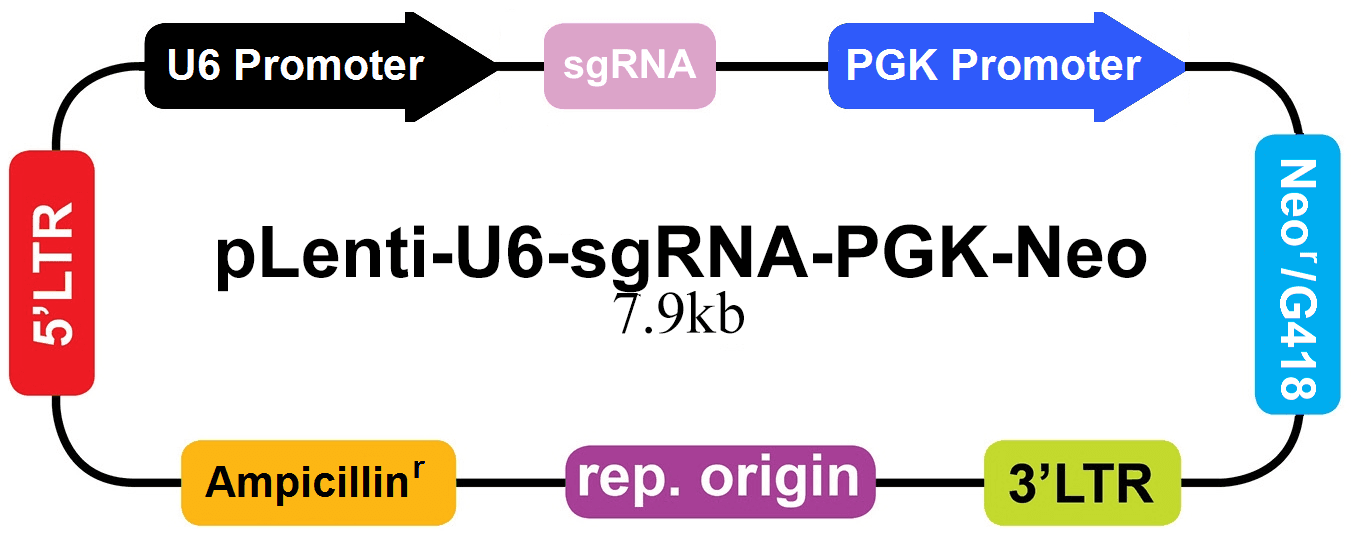
Showing 1 to 4 of 4 results
What Are CRISPR/Cas9 Lentiviral Negative Controls?
Because Cas9 protein, guide RNA, and viral vector introduction can each independently affect cell physiology, matched negative controls accounting for all these variables are necessary to confidently attribute phenotypic changes to specific on-target editing. Cas9 expression has been shown to induce cellular stress and DNA damage responses in some cell types, and guide RNA delivery can activate innate immune sensing in others. Well-designed controls are critical for genome-editing experiments. Select the CRISPR/Cas9 control system that supports reliable interpretation of results.
What you will find:
-
Scrambled sgRNA Lentiviruses as negative controls carrying non-targeting guide RNA
-
All-in-One Lentiviral Control Vectors for streamlined delivery using both spCas9 and a scrambled sgRNA
-
Scrambled sgRNA CRISPR Lentiviral Vectors used for expression of non-targeting guides in CRISPR activation or interference.
-
Pre-packaged CRISPR Lentiviruses for rapid delivery of control sgRNA and spCas9 into target cells.
How to Choose CRISPR/Cas9 Negative Controls
Cas9 Inclusion
A non-targeting sgRNA + Cas9 vector controls for all components of the CRISPR system and is the primary experimental negative control. A non-targeting sgRNA vector without Cas9 isolates the contribution of sgRNA expression alone.
sgRNA Validation Standard
A well-designed control expresses a non-targeting sgRNA bioinformatically verified to have at least three mismatches or gaps to all PAM-adjacent genomic sites in human, mouse, and rat — using the same vector backbone, promoter, and selection marker as experimental sgRNA vectors.
Why Not Scrambled sgRNA
Unlike siRNA controls, scrambled sgRNA sequences are not recommended for CRISPR experiments — randomly rearranged guide sequences are statistically likely to target one or more genomic sites and could produce unintended editing with phenotypic consequences.
Safe-Harbor Cutting Controls
sgRNAs targeting a known safe-harbor locus (AAVS1 or ROSA26, with no known coding function) produce confirmed Cas9 cutting without a phenotypic readout — verifying the CRISPR system is functional while controlling for DSB induction at a neutral locus.
Delivery System Matching
For all-in-one Cas9 + sgRNA lentiviral systems, use a matched all-in-one non-targeting control; for two-vector systems, the sgRNA control should use the identical backbone as experimental guides; for inducible (Tet-On) Cas9, non-targeting controls should pair with the same Tet-On Cas9 vector.
Specifications Context
Non-targeting sgRNA controls are included as standard negative controls in genome-wide CRISPR library screens, with multiple distinct sequences distributed across the library to provide an internal, statistically robust baseline for scoring essential gene dropout and positive selection hits. Non-targeting control constructs are available with GFP, RFP, or other fluorescent reporter tags for FACS-based selection or monitoring of transduced populations. Like all lentiviral work, CRISPR lentiviral controls require institutional biosafety committee (IBC) approval before use, particularly when Cas9 is co-delivered; BSL-2 containment is standard for third-generation lentiviral packaging systems.
Contact the expert MBP today to request a quote for high-quality CRISPR control for your lab.
FAQ



