Cell Culture Reagents for Complete In Vitro Cell Growth, Maintenance, and Harvest
Cell Culture Reagents is the umbrella category covering everything needed to establish, maintain, and harvest cells in vitro: classic basal media (DMEM, RPMI, IMDM, Ham's F-12) and recombinant proteins under Mammalian Cell Culture; cell-type-specific media and complete kits under Primary Cell Culture; and L-glutamine/amino acids, buffers (PBS/DPBS/HBSS), antibiotics, and specialty additives under Cell Culture Supplements & Additives. All available in RUO through GMP grades with cell-culture-grade certification (0.22 µm sterile-filtered, endotoxin- and mycoplasma-tested). MBP ships to labs across the United States, Canada, and internationally with PO and Quick Order at mbpinc.net.
Explore available cell culture reagents or request a quotation by contacting customerservice@mbpinc.net. Our team can help identify the optimal products for your cell culture system, application type, and production scale.
Cell Culture Reagents

Showing 1 to 3 of 3 results
What is the Cell Culture Reagents category?
Cell Culture Reagents is the umbrella category encompassing every consumable chemical and biological product used to establish, feed, maintain, harvest, and preserve cells grown in vitro. It organizes into two cell-type-driven branches — Mammalian Cell Culture (Classic Media such as DMEM, RPMI 1640, MEM, IMDM, and Ham's F-12, plus Recombinant Proteins including growth factors and cytokines) and Primary Cell Culture (cell-type-specific media formulations and complete Primary Cell Culture Medium Kits) — alongside Cell Culture Supplements & Additives covering L-Glutamine & Amino Acids, Buffers & Solutions, Antibiotics, and Additional Cell Culture Reagents (DMSO, selection antibiotics, transfection reagents, attachment factors).
What you will find:
-
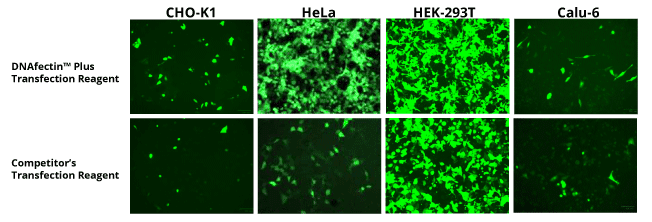
Transfection Reagents: Includes Susfectin™, DNAfectin™ Plus, and general transfection reagents for enhanced delivery of nucleic acids in mammalian cells.
-
Growth Factors & Hormones: Signaling molecules and bioactive proteins to support cell growth, differentiation, and cellular functional studies.
-
Serum & Plasma: Optimized biological supplements for enhanced cell culture performance
-
Receptors & Modulators: Target-specific proteins and compounds for analyzing cellular activation, signalling, and regulatory pathways.
-
Blood Products & Biofluids: Research-grade biofluids and products for biomarker analysis, diagnostics, and translational studies.
-
Cell Stains & Dyes: Dependable staining reagents for viability assessment, cell visualization, and fluorescence-based analysis workflows.
How the Cell Culture Reagents category fits together
Basal medium selection drives everything downstream
Whether starting from Classic Media for an immortalized line or a cell-type-specific formulation / Primary Cell Culture Medium Kit for primary cells, the basal medium choice determines which supplements are needed and at what concentrations — DMEM's 4 mM glutamine baseline differs from Medium 199's 0.68 mM, for example, affecting how much additional L-glutamine or GlutaMAX a protocol requires.
Serum and growth factor strategy
Standard protocols add FBS (typically 10%) for growth factors, proteins, and hormones absent from basal media. Serum-free and chemically defined protocols instead rely on Recombinant Proteins — specific cytokines and growth factors at defined concentrations — plus ITS-type supplements (insulin/transferrin/selenium) from the supplements branch.
Glutamine and amino acid supplementation
L-Glutamine & Amino Acids covers both standard L-glutamine (2–6 mM typical, degrades to toxic ammonia in solution) and GlutaMAX/L-alanyl-L-glutamine (stable dipeptide alternative) — the choice matters most for extended culture periods between media changes.
Buffers for washing and dissociation
Buffers & Solutions (PBS, DPBS, HBSS, EBSS) support washing, pre-dissociation rinsing (calcium/magnesium-free formulations are essential before trypsinization), and short-term cell maintenance — every protocol needs buffer stock on hand regardless of basal medium choice.
Antibiotic decision
Antibiotics (Penicillin-Streptomycin, Antibiotic-Antimycotic, Gentamicin, Amphotericin B) are available for contamination prevention, but routine use is genuinely debated — many protocols, particularly for primary cells and stem cells, deliberately exclude antibiotics in favor of rigorous sterile technique.
Specialty and selection reagents
Additional Cell Culture Reagents covers DMSO for cryopreservation, selection antibiotics (Geneticin, Puromycin) for stable cell line development, transfection reagents, and attachment factors for difficult-to-culture cell types — sourced as needed for specific protocol steps beyond routine maintenance.
Grade considerations span the whole category
RUO is standard for academic/industry research across every sub-category. GMP-grade options are most prominently available for Recombinant Proteins but increasingly available for FBS, DPBS, and other components for labs on a path toward cell and gene therapy manufacturing — and a single protocol may legitimately mix RUO and GMP-grade inputs depending on which components are regulatory-pathway-relevant.
Specifications context
Cell culture grade certification — 0.22 µm (or 0.1 µm for FBS) sterile filtration, endotoxin testing, mycoplasma and viral screening for animal-derived components — applies uniformly across basal media, FBS, buffers, antibiotics, and supplements in this category. As of 2026, GlutaMAX-supplemented media, reduced-serum "Advanced" formulations, and serum-free/xeno-free options across multiple sub-categories represent the dominant trend toward consistency and animal-component reduction across academic and biomanufacturing labs alike.
Contact the expert team at MBP and request a quote to get premium-quality cell culture reagents for your lab.
FAQ