Temperature Controlled Baths for Laboratory Heating and Cooling
Temperature controlled baths are laboratory instruments that maintain water, oil, or dry-medium at a defined, stable temperature for the indirect, uniform heating of samples in test tubes, flasks, Erlenmeyer vessels, and microplates - spanning general-purpose water baths at ambient to 100 degrees C for enzyme reactions, cell incubation, and reagent thawing; shaking water baths that combine temperature control with orbital agitation; circulating baths with internal pumps for superior uniformity across large volumes; and dual baths with two independently controlled zones running simultaneously at different temperatures.
MBP supplies temperature-controlled baths for research labs across the United States, Canada, and internationally, with US order processing in Houston, Texas. Request a quote for temperature-controlled baths for laboratory heating, cooling, and sample incubation applications by contacting customerservice@mbpinc.net.
Temperature Controlled Baths
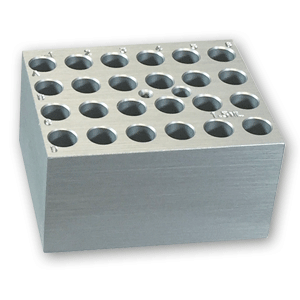
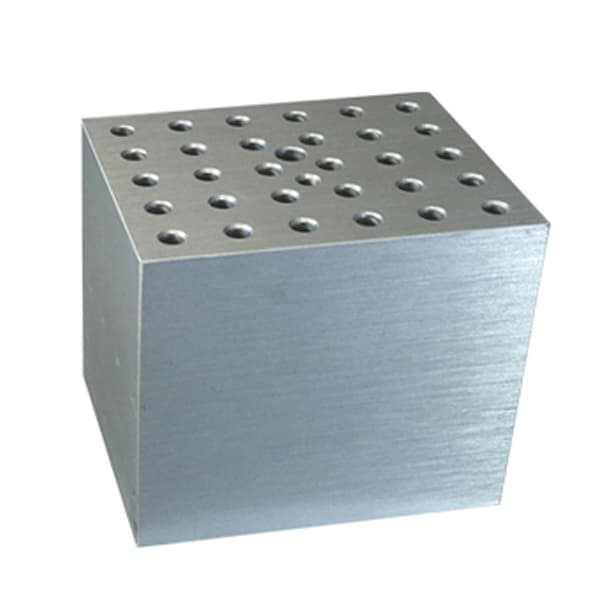
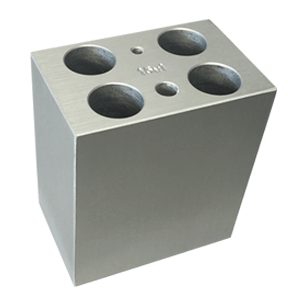
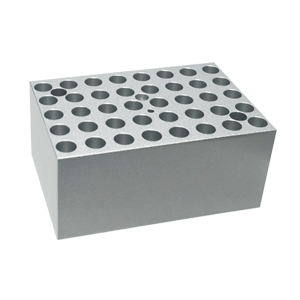
Showing 13 to 24 of 65 results
What Are Temperature-Controlled Baths?
Temperature-controlled baths heat a liquid medium (most commonly deionized or distilled water, or occasionally oil for applications above 100 degrees C) to a precise setpoint temperature and maintain it with minimal fluctuation, providing an isothermal environment for indirect heating of samples enclosed in sealed containers. Indirect water heating protects heat-sensitive biological samples from the local temperature extremes that direct heating (hotplate, heat block) can cause, reduces the risk of uneven heating across large sample volumes, and eliminates open-flame hazards when working with flammable materials. The standard temperature range for laboratory water baths is ambient (typically 5 degrees C above room temperature) to 100 degrees C; circulating bath circulators add a pump for uniformity; shaking baths add orbital or reciprocal agitation; and specialized refrigerated/heated bath circulators extend to -40 degrees C. Choose temperature-controlled baths based on required setpoint temperature, volume, and number of samples, whether agitation is needed, and whether two simultaneous setpoint temperatures are required.
What You Will Find:
-
Water Baths: High-performance digital water baths featuring corrosion-resistant chambers and precise temperature control for uniform immersion heating.
-
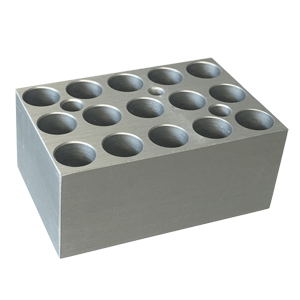
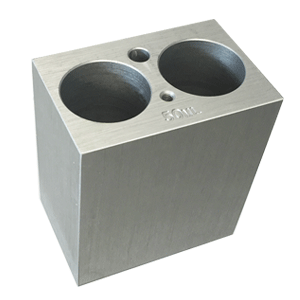
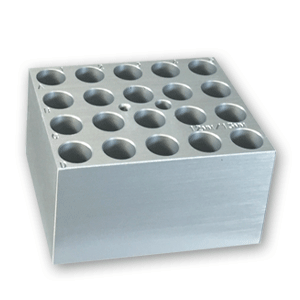
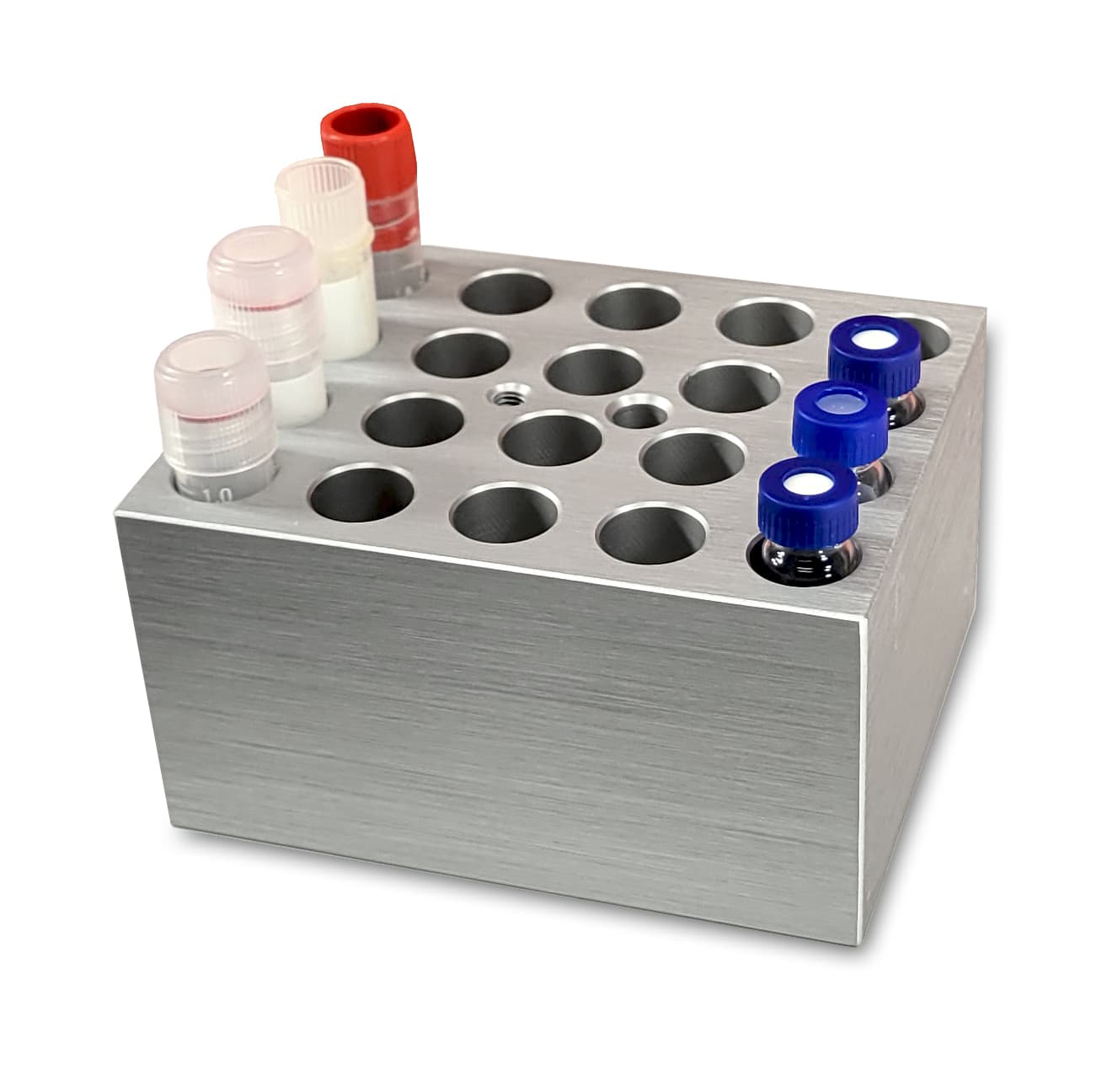
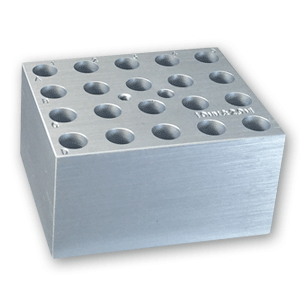
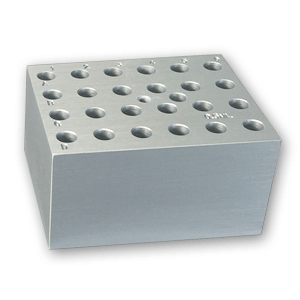
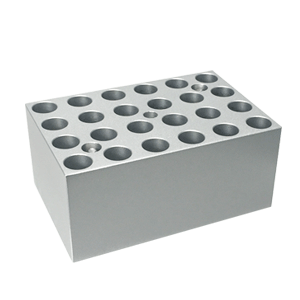
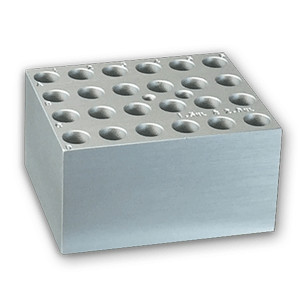
Dry Baths: Versatile dry block heaters with interchangeable blocks designed to accommodate various tube sizes for clean and efficient heating.
-
Dual Baths: Innovative systems that combine multiple heating zones or technologies, allowing you to manage different protocols simultaneously within a single footprint.
How to Choose Temperature-Controlled Baths
Bath format: standard, circulating, shaking, or dual
Non-circulating (general-purpose) water baths rely on natural convection; they are cost-effective and appropriate for most routine incubations at 37 degrees C or 60 degrees C, but may show temperature variation of plus or minus 0.5-1 degree C across the tank. Circulating baths add an internal pump to actively circulate water, delivering uniformity of plus or minus 0.1-0.2 degrees C across the tank and at external connections for jacketed vessels or columns. Shaking baths combine controlled temperature with orbital or reciprocal agitation (20-250 rpm typical) for applications requiring continuous mixing, such as hybridization reactions, blot washes, and suspended culture incubations. A dual bath house has two independently controlled zones in a single footprint, enabling two different assays or temperatures simultaneously.
Temperature range and stability
Standard molecular biology applications use 37 degrees C for enzyme reactions and cell incubation, 55 degrees C for Proteinase K digestion, 60-65 degrees C for restriction enzyme reactions with enhanced activity, 70 degrees C for heat inactivation of enzymes, and 95-100 degrees C for DNA denaturation and gel agarose preparation. A bath with temperature stability of plus or minus 0.2 degrees C is sufficient for most routine applications; enzyme kinetics and viscosity measurements require plus or minus 0.1 degrees C. Verify uniformity (the spatial variation across the tank at setpoint) separately from stability (variation at a single point over time).
Tank capacity and construction
Standard water bath capacities range from 3-4 L (compact benchtop, 10-20 tubes) to 20-30 L (high-throughput). Stainless steel tanks (304 or 316L grade) resist corrosion from water, mild acids, and most biological media. 316L stainless offers superior resistance to saline solutions compared to 304, but is costlier. Inner tanks with seamless welds are easier to clean and less prone to bacteria-harboring crevices. Covers and gable lids reduce evaporation, maintain temperature uniformity, and are required when operating above 80 degrees C to prevent steam condensation on surrounding equipment.
Safety features
Over-temperature protection (auto-shutoff when bath exceeds a user-set maximum threshold) is standard on research-grade units. Low-water alarms protect heating elements from dry-out damage when water evaporates during extended high-temperature runs. PT100 or PT1000 platinum resistance temperature sensors are standard on digital units, replacing mercury thermometers no longer considered safe for laboratory use. Grounding and GFI (ground fault interrupter) protection are essential for water baths used in proximity to personnel.
Specifications Context
Temperature stability (the variation at a single setpoint over time) and temperature uniformity (the spatial variation across the bath at setpoint) are distinct specifications; request both from the manufacturer. Standard water baths should always use distilled or deionized water rather than tap water to prevent mineral scale buildup on the heating element and tank walls, which reduces heat transfer efficiency and can harbor bacteria and algae. Microbial contamination (particularly from bacteria, fungi, and algae) occurs in stagnant bath water, especially at 37 degrees C, used for cell culture incubation; add antimicrobial bath additives and change the water weekly for baths used in sensitive biological work. Digital water baths with PT100 platinum resistance sensors, microprocessor PID control, and USB data logging capability are the standard specification for new installations in regulated research and clinical laboratory environments.
Explore our temperature-controlled bath collection and reach out to the MBP team for a friendly quote today.
FAQ