Laboratory Water Baths for Enzyme Reactions and Sample Incubation
Laboratory water baths are temperature-controlled instruments consisting of a stainless steel tank filled with deionized water and heated by an immersion element controlled by a PID microprocessor, maintaining the water temperature within plus or minus 0.2-0.5 degrees C of the setpoint from ambient to 100 degrees C for enzyme reactions, microbial and cell culture incubations, nucleic acid denaturation, sample thawing, agarose gel preparation, restriction enzyme digestion, and clinical reagent warming.
MBP is a registered vendor for Howard Hughes Medical Institute, Vanderbilt University, and MD Anderson Cancer Center. Request a quote for laboratory water baths for enzyme reactions, sample incubation, and reagent warming applications by contacting customerservice@mbpinc.net.
Water Baths




Showing 1 to 12 of 13 results
What Are Laboratory Water Baths?
A laboratory water bath is a temperature-controlled instrument with a stainless steel tank filled with deionized water, an immersion heating element, a thermocouple or platinum resistance temperature sensor (PT100 or PT1000), and a PID microprocessor controller that maintains the water temperature within a tight band of the setpoint from ambient to 100 degrees C. Heat transfers from the warm water to the sample by conduction through the container walls, providing more uniform and gentle heating than direct contact with a hot block or hotplate. Standard capacities range from 5 liters (compact benchtop for 10-20 microcentrifuge tubes) to 30 liters (high-throughput for multiple flask incubations). Key construction features are the tank material (304 stainless steel standard; 316L for saline applications), lid type (gable, concentric ring, or flat), and the presence of a circulation pump. Select a water bath based on tank capacity (number and size of containers you process per run), required temperature range, stability specification, and whether active circulation is needed for uniformity.
What you will find:
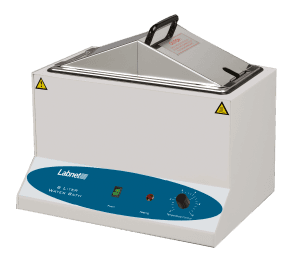
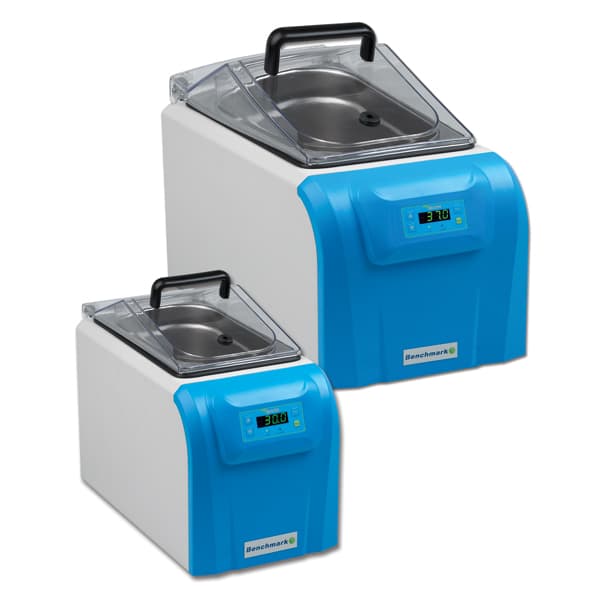
- Digital water baths: Laboratory water baths designed to provide accurate, uniform temperature control for sample incubation, warming, and other routine applications.
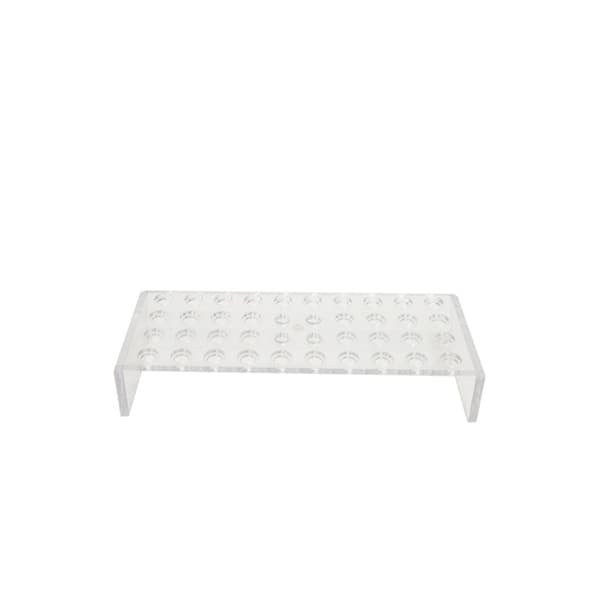
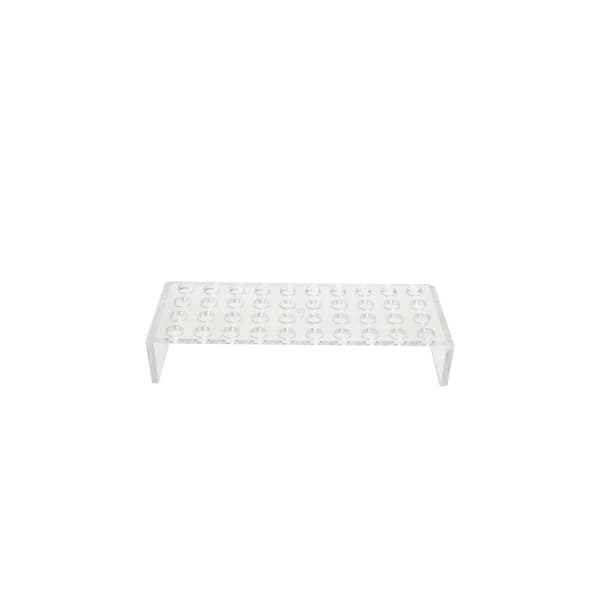
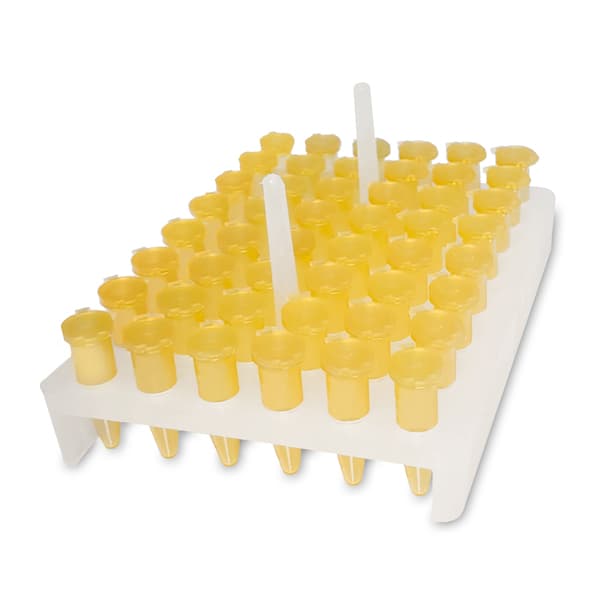
- Water bath accessories: Test tube racks and optional microtube racks compatible with a variety of tube sizes to maximize bath capacity and sample organization.
- Tube holding solutions: Racks designed for 0.5 mL, 1.5/2.0 mL, 15 mL, and 50 mL tubes to securely position samples during temperature-controlled incubation.
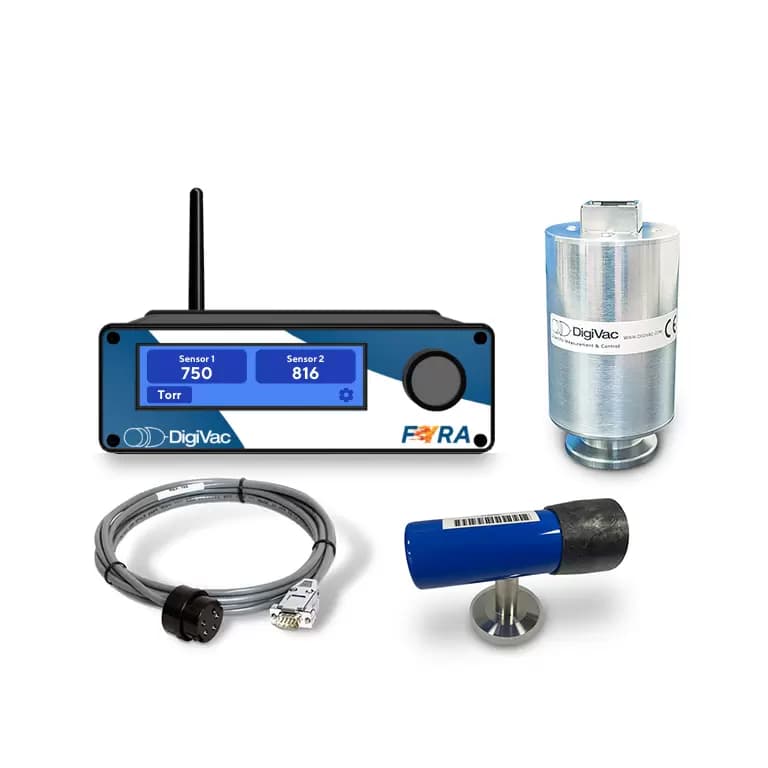
- Lyophilization monitoring tools: Vacuum gauges for detecting the end of primary drying in freeze-drying applications.
- Temperature-controlled laboratory equipment: Products that support consistent heating and reliable sample handling across research, clinical, and industrial laboratories.
How to Choose a Laboratory Water Bath
Capacity: tank size and sample volume
Compact water baths with 5-8 L tanks accommodate 20-40 microcentrifuge or test tubes in standard racks and suit most small-lab molecular biology workflows. Mid-size 12-20 L tanks hold 50-100 tubes or multiple 250 mL Erlenmeyer flasks. Large-format 20-30 L baths handle simultaneous incubation of multiple flask sizes and are used in microbiological culture incubation and pharmaceutical dissolution testing. Confirm that the bath accepts the rack or tube holder format you use; some baths include stainless steel tube racks while others require separate purchase of tube racks or floating foam holders.
Temperature sensor type
PT100 and PT1000 platinum resistance temperature sensors (RTDs) are the current standard for digital water baths, providing high accuracy (plus or minus 0.3 degrees C at 37 degrees C for PT1000 sensors) and long-term stability without the hysteresis of bimetallic thermostats. PT1000 sensors are preferred for their lower self-heating current requirement, reducing sensor-induced temperature error at setpoint. NTC thermistor-based controls are used in lower-cost models; they are accurate near calibration temperature but less linear across the full operating range.
Analog vs. digital control
Analog water baths use a bimetallic thermostat and a dial for setpoint selection; they are less expensive but offer temperature stability of only plus or minus 1-3 degrees C and require manual reading of an external thermometer. Digital water baths with PID microprocessor control, LED or LCD display, and PT100/PT1000 sensors achieve plus or minus 0.2-0.5 degrees C stability and display actual and setpoint temperatures simultaneously. For GLP-compliant research environments and clinical applications, digital units with data logging and calibration documentation are required.
Lid type
Gable (slanted ridge) lids reduce condensate dripping onto samples by running condensation to the bath walls. Concentric ring lids provide flexible access for different container sizes (Erlenmeyers, test tubes, beakers) without removing the lid entirely. Flat lids are simple and cost-effective. Ball blanket systems (polyethylene hollow spheres floating on the bath surface) reduce evaporation and maintain temperature without a rigid lid, allowing easy sample access without cooling the bath.
Stainless steel grade
304 stainless steel tanks are standard for most molecular biology applications using deionized or distilled water. 316L stainless (with molybdenum addition) provides superior resistance to chloride-ion pitting corrosion and is preferred for baths that use saline solutions, phosphate-buffered saline (PBS), or any salt-containing media. Seamless welded tanks without internal crevices are easier to clean and prevent microbial biofilm accumulation in corners and seams.
Specifications Context
A digital water bath with a 20 L stainless steel tank and PT100 sensor achieves temperature accuracy of plus or minus 0.3 degrees C at 37 degrees C and stability of plus or minus 0.5 degrees C; a 20 L bath typically heats from ambient to 37 degrees C in 8-12 minutes at full power. Water baths intended for cell culture work at 37 degrees C require weekly water changes and antimicrobial additive use, as uncleaned baths at 37 degrees C can accumulate diverse microbial communities within days. Over-temperature protection and low-water alarms are mandatory safety features for any new water bath purchase; confirm that both are standard (not optional upgrades) in the unit specification before ordering. Digital water baths with microprocessor PID control, non-mercury PT1000 sensors, and integrated over-temperature protection are standard purchases for all new laboratory water bath installations, replacing legacy analog thermostat models.
Browse our full water bath collection and reach out to the MBP team for a quote today.
FAQ