Laboratory Evaporators for Solvent Removal and Concentration
Laboratory evaporators are instruments that remove volatile solvents from liquid samples by evaporation under controlled conditions of heat, vacuum, or gas flow, concentrating or drying the non-volatile target compound or extract.
MBP provides purchase order procurement and specialist support for laboratory evaporators for research institutions across the USA and Canada. Request a quote for laboratory evaporators for solvent removal, sample concentration, and extract processing by contacting customerservice@mbpinc.net.
Evaporators
Showing 1 to 4 of 4 results
What Are Laboratory Evaporators?
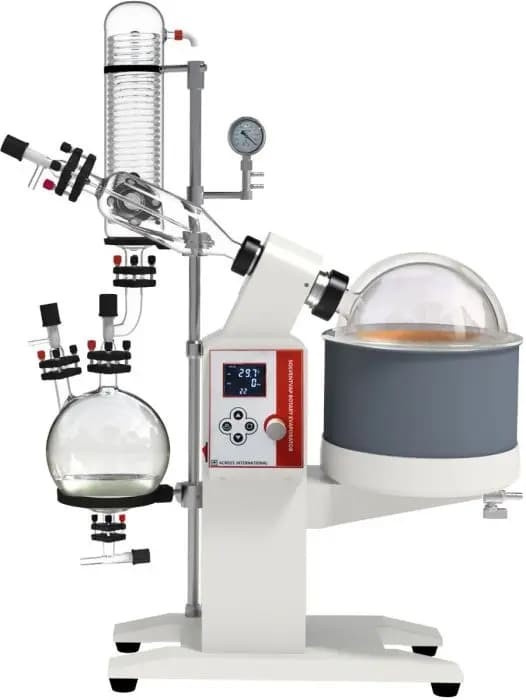
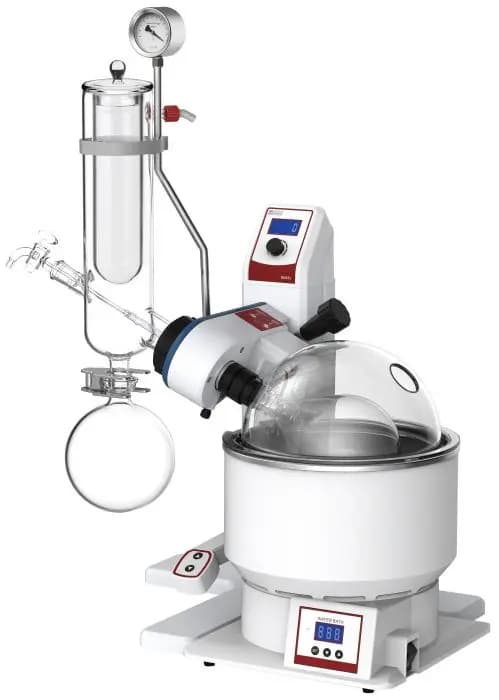
Laboratory evaporators remove volatile solvent from a sample to concentrate a dissolved target compound, dry a sample to residue, or recover solvent for reuse. They differ from distillation systems in that the primary goal is solvent removal rather than compound-from-compound separation; the non-volatile residue (the concentrated extract, reaction product, or dried sample) is the target, not the evaporated solvent fraction. Rotary evaporators (rotovap) are the most widely used lab evaporation instrument: a round-bottom flask rotates in a heated water bath under vacuum, creating a thin film of solvent on the flask wall that evaporates efficiently; the vapor passes to a condenser and is collected for recovery or disposal. Choose a rotary evaporator for batch solvent removal on a 1 L to 20 L scale.
What You Will Find:
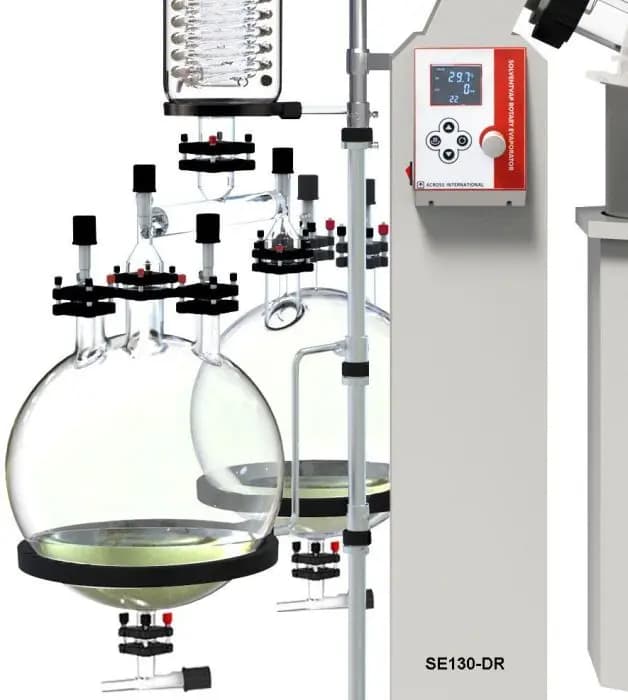
- Turnkey SolventVap Packages: Complete 5L and 50L setups that integrate high-capacity ULVAC pumps and PolyScience chillers for an immediate, high-efficiency workflow.
- Advanced Vacuum Performance: Systems equipped with PTFE-coated pumps and magnetic coupling to maintain deep vacuum levels for surgical solvent separation.
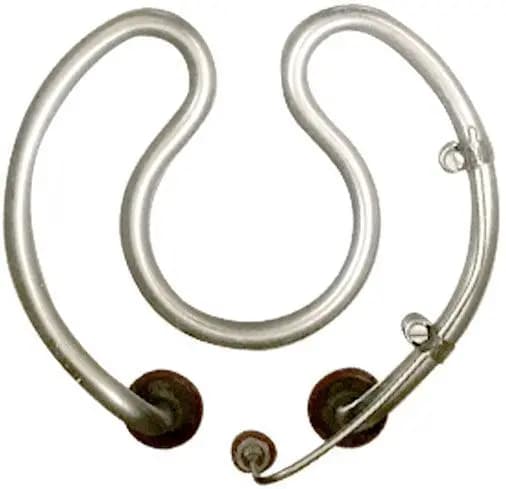
- Precision Heating Components: Specialized replacement heating elements designed specifically for the SolventVap series to ensure uniform temperature distribution and long-term reliability.
How to Choose a Laboratory Evaporator
Rotary evaporator: flask size and vacuum
Rotary evaporators are available for flask sizes from 1 L to 50 L; most research labs use 2 L to 5 L systems. The critical pairing is flask size with vacuum pump: a diaphragm pump reaching 5 to 20 mbar handles most common organic solvents (ethanol, ethyl acetate, dichloromethane, hexane). A cold trap between the rotovap and the pump is essential; omitting it allows solvent vapor to contaminate pump oil and limits the achievable vacuum. Condenser efficiency (coolant flow rate and temperature) determines how much solvent vapor is recovered vs. drawn into the vacuum system; a recirculating chiller providing coolant at 0 to -20 degrees C is standard for efficient solvent recovery.
Falling film evaporator: throughput and solvent
Falling film evaporators process feed at 50 to 3,000 L/h, making them the instrument of choice for ethanol or solvent recovery in extraction facilities and pharmaceutical manufacturing. They operate at 5 to 100 mbar with steam or hot water as the heating medium, achieving 99% or higher solvent recovery efficiency in continuous operation. Feed viscosity must be low enough for the liquid to form a stable falling film on the tube walls without channeling or dry spots; highly viscous feeds require a wiped film system instead.
Nitrogen evaporator: sample volume and throughput
Nitrogen blow-down evaporators process multiple samples simultaneously (12 to 96 positions) in culture tubes, vials, or microplates, concentrating or drying small volumes (0.1 to 50 mL) rapidly without vacuum equipment. They are used for sample preparation before analytical techniques, including LC-MS, GC-MS, and HPLC, where residues must be redissolved in a specific mobile phase volume. Temperature is controlled by a heated bath beneath the sample block; nitrogen flow rate per position is individually adjustable on some models.
Solvent compatibility
Confirm that all wetted surfaces (rotovap flask, condenser, cold trap, seals) are compatible with the solvents being evaporated. Halogenated solvents (DCM, chloroform) require PTFE seals and borosilicate glass. Aqueous solvent-containing samples may require higher heating bath temperatures (above 60 degrees C) to drive off water efficiently. For highly corrosive solvents or samples, confirm material compatibility of pump diaphragm membranes; PTFE-coated diaphragms are standard for chemical resistance.
Solvent recovery vs. waste
All evaporation systems generate a condensate stream (recovered solvent) and a residue. Rotary evaporators and falling film evaporators both recover solvent in a condensate receiver for reuse or proper disposal. Nitrogen evaporators vent solvent vapor into the fume hood; this approach is appropriate for small volumes but not for large-scale solvent removal, where vapor emissions are a concern. For laboratories with solvent recycling programs, rotary and falling film evaporators with dedicated condensate receivers are preferable.
Specifications Context
Rotary evaporator performance is often expressed as evaporation rate in L/h for a specific solvent (usually ethanol or methanol) at a given bath temperature and vacuum. Confirm the evaporation rate for your specific solvent rather than assuming the published rate for ethanol applies to all solvents. Condenser surface area and coolant temperature are the key specifications for solvent recovery efficiency; an undersized condenser or insufficiently cold coolant allows solvent vapor to pass through to the vacuum pump and atmosphere. For regulated labs (GMP, ISO 17025), some rotary evaporator models include digital vacuum control, bath temperature logging, and rotation speed documentation.
Ready to enhance your evaporation efficiency? Explore our full collection and reach out to the MBP team for a friendly quote today.
FAQ