Automated Purification Systems for Flash and Prep Chromatography
Automated purification systems integrate gradient solvent pumping, UV/Vis detection, automated fraction collection, and chromatography column management into a single instrument, replacing manual flash chromatography and preparative HPLC column work with a reproducible, hands-free workflow. They are used in drug discovery and synthesis laboratories to isolate and purify reaction products from complex mixtures at milligram to multi-gram scale using normal-phase silica, reversed-phase C18, or chiral stationary phases.
MBP provides quote-based procurement and purchase order support for automated purification systems for US and Canadian research and pharmaceutical laboratories. Request a quote for automated purification systems for flash chromatography, preparative purification, and compound isolation by contacting customerservice@mbpinc.net.
Automated Purification Systems
Showing 13 to 14 of 14 results
What Are Automated Purification Systems?
Automated purification systems are integrated chromatography instruments that combine a multi-channel solvent delivery pump, a sample injection module, a chromatography column holder (accepting prepacked cartridges or reusable columns), a UV/Vis (and optionally ELSD or mass detector) detection system, and an automated fraction collector into a single controlled platform. The system runs gradient elution programs that change solvent composition over time, separating sample components by their differential affinity for the stationary phase. UV signal peaks trigger fraction collection into numbered tubes or microplates, eliminating the need for the operator to monitor the separation and manually collect fractions. Mass-directed systems add an inline mass spectrometer to trigger fraction collection on a specific molecular mass rather than UV absorbance, enabling selective collection of the target compound even when it co-elutes with impurities of similar UV absorption. Specify an automated purification system when your lab runs more than 3 to 5 flash chromatography purifications per day; the time saved on each run compounds rapidly and improves fraction quality through consistent, reproducible gradient programming.
What You Will Find:
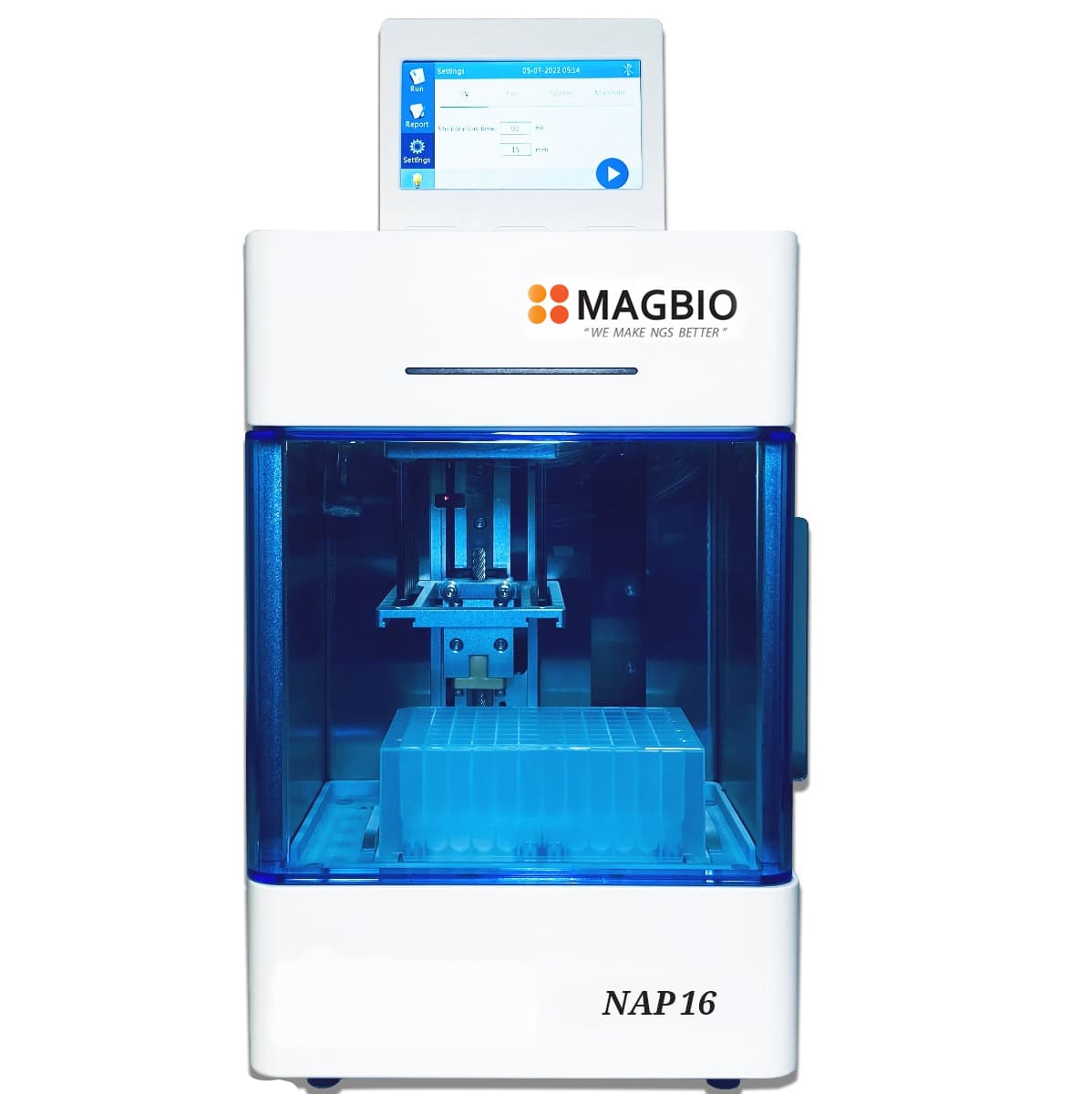
- Compact and high-throughput magnetic bead-based instruments, including IsoPure™ Mini, IsoPure™ 24, IsoPure™ 96, and Nucleic Acid Purifier 16 systems for automated nucleic acid purification.
- Compatible 24-well and 96-well deep-well plates and elution plates for automated purification workflows.
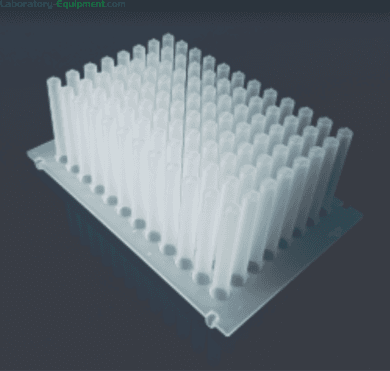
- Replacement magnetic tip combs for IsoPure™ Mini, IsoPure™ 24, and IsoPure™ 96 automated purification systems.
- Reagent vessels and aluminum sample racks designed for efficient sample loading and workflow organization.
- System Accessories, including Tablets, demo cases, and other compatible accessories to support the setup, operation, and maintenance of automated purification systems.
How to Choose an Automated Purification System
Flash chromatography vs. preparative HPLC
Automated flash chromatography systems (operating at 5 to 30 bar with spherical 25 to 100 micron silica or C18 cartridges) are optimized for fast, cost-effective purification of 0.1 to 10 g samples with throughputs of 3 to 10 runs per day. Preparative HPLC systems (operating at 50 to 300 bar with 5 to 25 micron particle columns) provide higher resolution for complex mixtures, smaller sample loads (mg to g scale), and are required when flash chromatography cannot resolve closely similar compounds. Some systems integrate both flash and prep HPLC capability in one instrument.
Sample load and column capacity
Match the column loading to your typical sample mass. Standard flash cartridges in 4 g, 12 g, 25 g, 40 g, 80 g, and 120 g silica sizes handle sample loads of roughly 0.04 to 1.2 g on normal-phase silica. Reversed-phase C18 cartridges handle lower loads per gram of silica. For larger sample loads (5 to 100 g), large-diameter columns or multi-injection protocols are used. Confirm the system's maximum column size and flow rate capacity against your typical sample mass.
Detection: UV/Vis vs. ELSD vs. mass directed
UV/Vis detection (monitoring at 254 nm and 280 nm) is standard and sufficient for compounds with a chromophore (most synthetic products). Evaporative light scattering detection (ELSD) is added for compounds with poor UV absorption (lipids, carbohydrates, alkyl chains). Mass-directed purification adds an inline single-quadrupole mass spectrometer that triggers fraction collection only when the target mass is detected; this is the highest-selectivity option for purifying one compound from a complex mixture, but at significantly higher instrument cost.
Number of solvent lines
Entry-level systems use two solvent lines (binary gradient). Advanced systems provide four solvent lines (quaternary gradient), enabling more complex separation strategies, modifier additions (e.g., acetic acid or ammonium formate in reversed-phase), and reduced operator setup time for multi-method labs. For most flash chromatography in synthetic chemistry, a binary gradient (organic/non-polar + polar modifier) is sufficient.
Software and workflow integration
Automated systems vary widely in software capability: basic systems provide gradient programming and peak detection; advanced platforms add automatic injection, queue management for multiple samples, solvent level monitoring, LIMS connectivity, and 21 CFR Part 11 compliance for regulated pharmaceutical environments. For open-access use in multi-chemist departments, queue-based software allowing each user to submit samples independently increases throughput.
Specifications Context
Column and cartridge consumables are a significant ongoing cost for automated purification systems; prepacked silica cartridges for flash systems are single-use or limited-use. Confirm cartridge availability and pricing for the specific system before purchase, as some systems lock users to proprietary cartridges at premium pricing while others accept standard-thread cartridges from multiple suppliers. Solvent consumption (L/run) scales with column size and flow rate; larger cartridges and longer gradients use more solvent. For high-throughput labs, solvent waste management (evaporation, recycling, or disposal) is a practical operational consideration. UV detection wavelength settings (254 nm for aromatic compounds, 210 to 220 nm for carbonyl-containing compounds) should be confirmed for your compound class to avoid missing low-UV-absorbing peaks.
Complete your purification setup today—browse our accessories collection and contact the MBP team for a quote.
FAQ