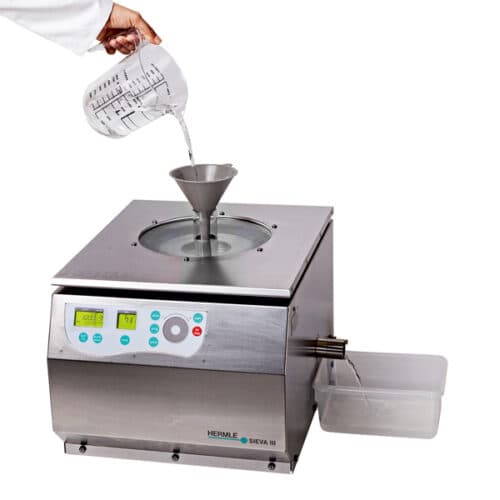
Product Filters

Filtration Centrifuges for Rapid Macromolecule Concentration and Buffer Exchange


Filtration centrifuges—centrifugal spin filter devices—concentrate macromolecules 25- to 80-fold by driving solvent and small molecules through an ultrafiltration membrane at 3,000–5,000 ×g, retaining proteins, antibodies, nucleic acids, and viral particles in the upper reservoir. Available in regenerated cellulose (RC) and PES membrane materials with MWCO options from 2 kDa to 300 kDa in 0.5–20 mL formats. MBP is a registered vendor to Howard Hughes Medical Institute, MD Anderson Cancer Center, and Vanderbilt University.

Contact customerservice@mbpinc.net to compare filtration centrifuge options and request availability or institutional pricing.

Filtration Centrifuge

Per Page:
Sort By:
no products Image
No Products Found
Back to home

What Are Filtration Centrifuges?


Filtration centrifuges, also called centrifugal filters, spin concentrators, or centrifugal ultrafiltration devices, are two-part filter units placed inside a standard benchtop centrifuge or microcentrifuge. They consist of an upper reservoir containing an ultrafiltration membrane and a lower filtrate collection tube. During centrifugation, solvent, salts, and small molecules pass through the membrane while proteins, antibodies, nucleic acids, and other larger biomolecules are retained and concentrated in the upper chamber. These devices support concentration factors of 25- to 80-fold or more in a single spin and are available with molecular weight cut-off (MWCO) options ranging from 2 kDa to 300 kDa. Common membrane materials include regenerated cellulose (RC) for low protein binding and broad chemical compatibility, and polyethersulfone (PES) for faster filtration rates.


What You Will Find:


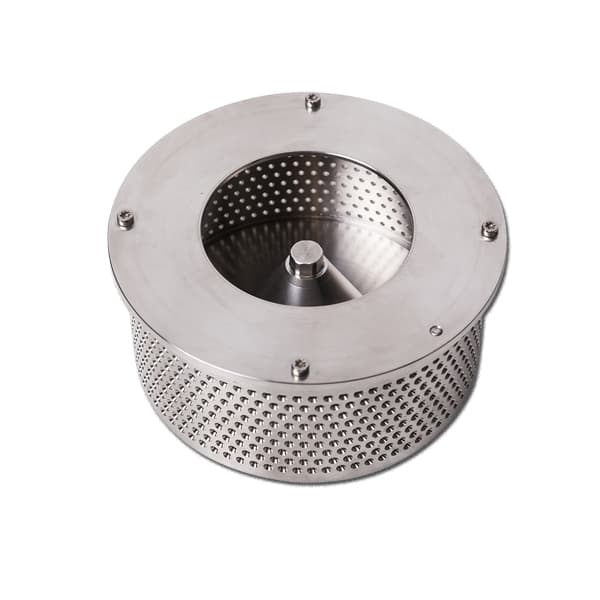
  • Filtration Centrifuge Accessories: Include filter materials with different pore sizes and perforated and non-perforated baskets. These tools allow efficient and controlled separation of particles.


How to Choose a Filtration Centrifuge Device


MWCO Selection

The molecular weight cut-off determines which molecules are retained during centrifugation. A general guideline is to select an MWCO that is three to six times lower than the molecular weight of the target molecule. This approach helps maximize retention while maintaining efficient filtration performance.

Sample Volume and Device Format

Choose a filtration device that matches or slightly exceeds your starting sample volume. Small-volume devices accommodate hundreds of microliters, while larger formats support up to 20 mL for preparative and bioprocessing applications.

Membrane Material

Regenerated cellulose membranes provide minimal non-specific protein binding and broad pH compatibility, making them suitable for sensitive protein samples. Polyethersulfone membranes offer faster flow rates and are often preferred for viscous solutions and higher-concentration preparations.

Centrifuge and Rotor Compatibility

Ensure that the selected device fits the available rotor format and operates within the recommended centrifugal force range. Small devices fit standard microcentrifuge rotors, while larger filtration units may require 15 mL or 50 mL conical tube rotors.

Reverse-Spin Recovery

Many centrifugal filtration systems include a reverse-spin recovery step that helps maximize sample retrieval from the membrane surface. This technique is particularly valuable when working with dilute samples or low-abundance biomolecules.


Specifications Context


Most centrifugal ultrafiltration devices operate within a range of 3,000–5,000 ×g. Exceeding the recommended force limits may damage the membrane or reduce sample recovery. Processing times vary depending on sample volume, concentration requirements, and membrane characteristics.

Modern regenerated cellulose membranes provide excellent protein recovery with minimal adsorption, while newer PES-based systems offer improved flow rates for demanding laboratory applications. These technologies continue to support life science, biotechnology, and pharmaceutical workflows requiring reliable concentration and buffer-exchange performance.

Don't miss your chance to get the right filtration centrifuge for your lab. Contact the expert team at Molecular Biology Products Inc. and get yours today.

FAQ

A filtration centrifuge (centrifugal filter or spin filter) is a two-part disposable or reusable device placed inside a standard benchtop centrifuge tube: an upper sample reservoir fitted with an ultrafiltration membrane, and a lower filtrate collection tube. During centrifugation, centrifugal force drives smaller molecules (solvent, salts, small metabolites) through the membrane while retaining larger molecules (proteins, nucleic acids, antibodies) in the upper reservoir. The retained macromolecules are concentrated 25- to 80-fold or more in a single spin.
Choose the molecular weight cut-off (MWCO) approximately 3- to 6-fold lower than the molecular weight of the target molecule to be retained. For a 150 kDa IgG antibody, a 30 kDa or 50 kDa MWCO retains the antibody while removing smaller contaminants. For a 10 kDa enzyme, a 3 kDa MWCO is appropriate. Common MWCO options are 2 kDa, 3 kDa, 10 kDa, 30 kDa, 50 kDa, 100 kDa, and 300 kDa; confirm that the target molecule molecular weight is well above the MWCO to prevent loss of retentate in the filtrate.
Centrifugal filters are typically spun at 3,000–5,000 ×g for 15–60 minutes depending on sample volume, membrane MWCO, and sample viscosity. Manufacturer protocols for Amicon Ultra and Sartorius Vivaspin devices specify 3,000–4,000 ×g as the standard operating RCF; using higher RCF risks membrane rupture or non-specific protein binding to the pressurized membrane. Always use the RCF range specified in the centrifugal filter device's instruction sheet, not a generic centrifuge protocol.
Centrifugal filters (spin concentrators) are used for: protein concentration and buffer exchange (25- to 80-fold concentration in a single spin); nucleic acid purification and concentration; antibody purification and formulation buffer exchange; removal of unincorporated dyes, nucleotides, or reagents from labeled probes; desalting and removal of low-molecular-weight contaminants from biological samples; concentration of viral particles; and preparation of protein-free filtrate from serum or plasma for small-molecule drug analysis.
The two primary membrane materials are: regenerated cellulose (RC), also called Ultracel or Durapore RC—low protein binding, broad chemical compatibility (pH 1–14 for Ultracel RC), recommended for most protein and nucleic acid concentration applications; and polyethersulfone (PES)—faster flow rates, suitable for high-viscosity samples, but slightly higher protein binding than RC. PES membranes are specified for many Sartorius Vivaspin devices. For samples requiring the lowest possible protein adsorption (dilute antibodies, low-recovery proteins), regenerated cellulose is the preferred membrane material.
Amicon Ultra (Merck Millipore) centrifugal filters use Ultracel regenerated cellulose membranes with vertical membrane geometry, available in 0.5 mL, 2 mL, 4 mL, and 15 mL formats at MWCOs from 3 kDa to 100 kDa. Vivaspin (Sartorius) devices use PES or hydrosart membranes in vertical twin-membrane format, available from 500 µL to 20 mL formats at MWCOs from 2 kDa to 300 kDa. Both achieve >90% protein recovery with reverse-spin sample retrieval. The choice between them is typically driven by MWCO range, sample volume, membrane chemistry preference, and downstream application requirements.
Swing-out rotors are generally preferred for centrifugal filter devices because the horizontal tube orientation during spinning drives filtrate perpendicular to the membrane surface, reducing concentration polarization and maintaining higher flux rates throughout the spin. Fixed-angle rotors are also compatible with most centrifugal filter formats and are widely used in practice; for the Vivaspin 20 format (20 mL capacity), the manufacturer specifically notes compatibility with both fixed-angle and swing-out rotors up to their specified maximum RCF.
To maximize recovery from a centrifugal filter: do not over-concentrate (stop spinning when the retentate volume reaches the device's dead-stop volume); use reverse-spin recovery—invert the filter unit into a fresh collection tube and spin at a lower RCF (approximately 1,000 ×g for 2 minutes) to recover the maximum retentate volume; pre-wet the membrane with the target buffer before loading sample, to reduce non-specific adsorption; and avoid over-centrifugation, which compresses protein against the membrane and reduces recovery. Most regenerated cellulose devices (Amicon Ultracel) achieve >90% recovery with reverse-spin technique.
We provide the highest quality of products and anytime customer service.
Featured Categories
    online payment
    online payment
    fast delivery
    fast delivery
    technical support
    technical support
    24/7 support
    24/7 support
    copy right
    2026 All Right Reserved