Laboratory Aspirators for Cell Culture Media Removal and Supernatant Aspiration
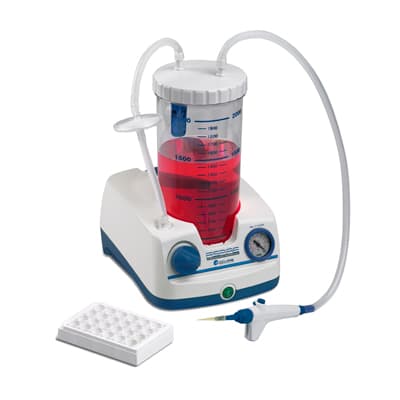
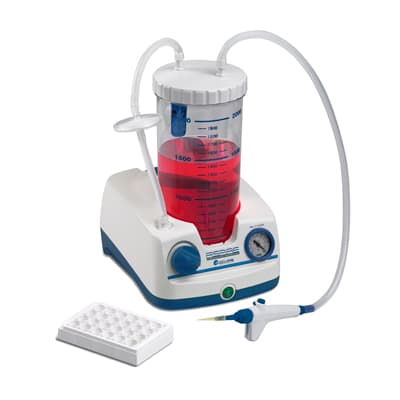
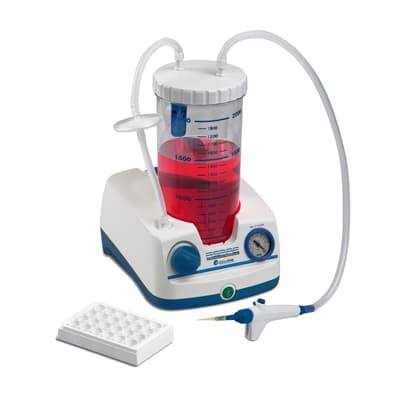
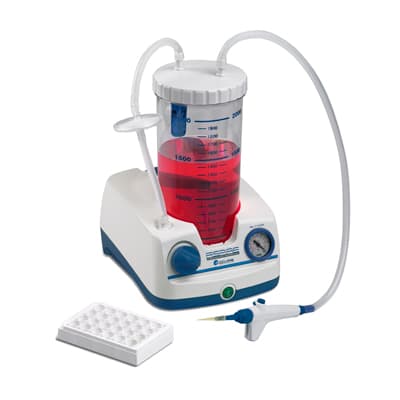
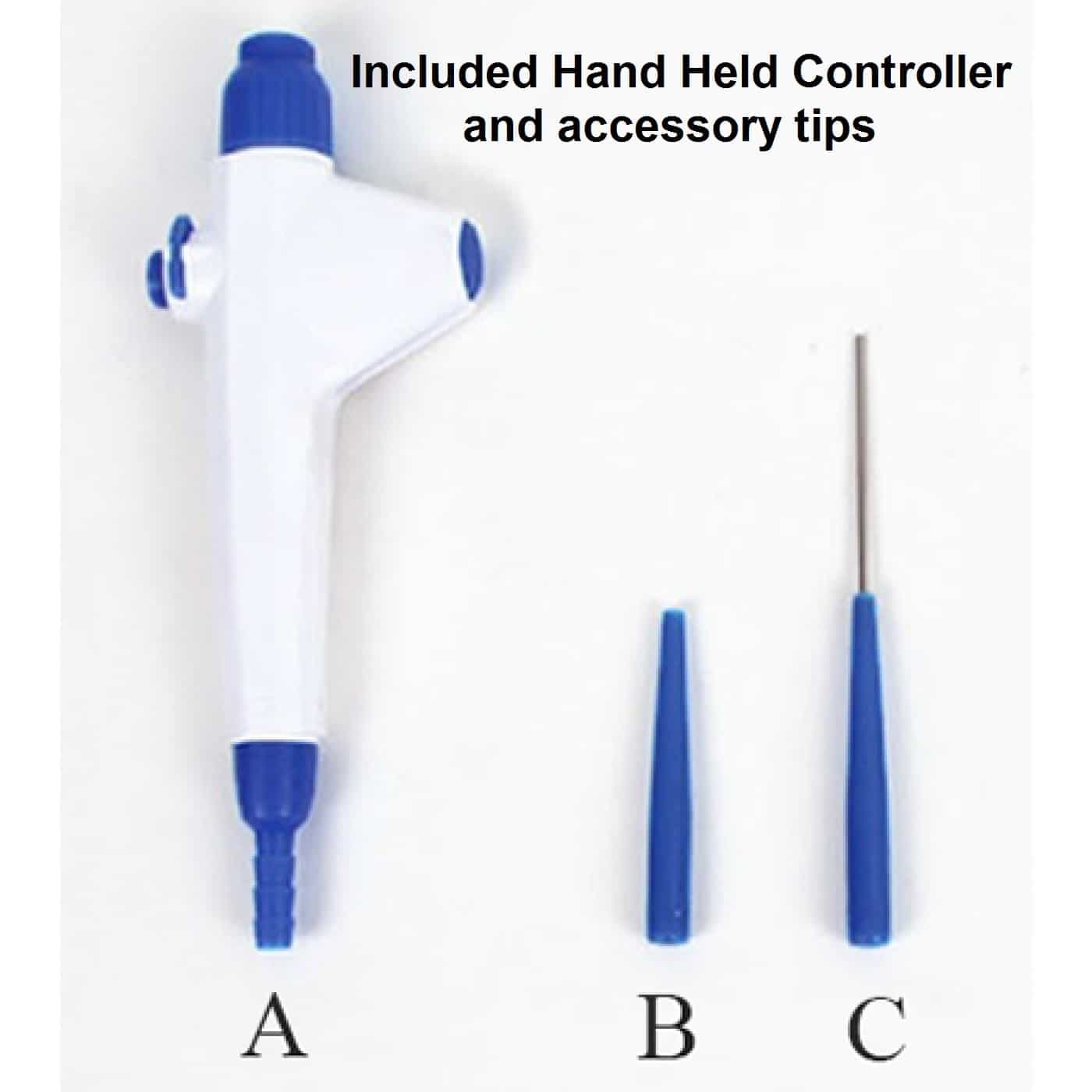
Laboratory aspirators use an oil-free vacuum pump (−30 to −750 mbar, adjustable) to remove spent cell culture media, supernatants, and wash buffers from culture vessels, microplates, and centrifuge tubes through an autoclavable POM handpiece with standard 200–300 µL tip or Pasteur pipette adapter. A 2-liter collection bottle with overflow protection valve and a replaceable hydrophobic in-line filter protect the pump. Designed for biosafety cabinet use. MBP is a registered vendor to Howard Hughes Medical Institute, MD Anderson Cancer Center, and Vanderbilt University.
Contact customerservice@mbpinc.net to compare laboratory aspirator systems and request pricing or availability information.
Laboratory Aspirator

Showing 1 to 11 of 11 results
What Are Laboratory Aspirators?
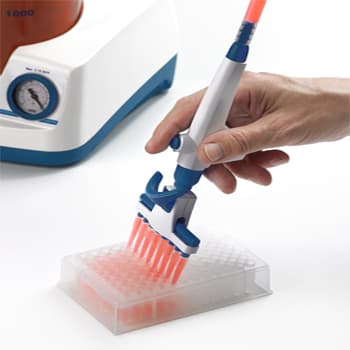
Laboratory aspirators are compact vacuum systems designed to remove liquids from cell culture vessels, microplates, centrifuge tubes, and other laboratory containers without manual pipetting. These systems typically consist of an oil-free vacuum pump, adjustable pressure controls, a collection bottle, overflow protection mechanisms, replaceable filters, tubing, and handheld aspiration tools. Laboratory aspirators are widely used for cell culture media removal, supernatant aspiration, and washing procedures in applications such as ELISA, immunoassays, and general laboratory workflows.
What you will find:
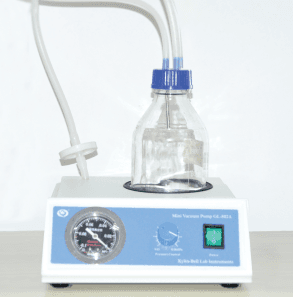
- Laboratory Aspirator: Innovative systems like tabletop vacuum models and the Aspire™ model designed for routine waste handling, liquid removal, and cleanup of benchtop samples.
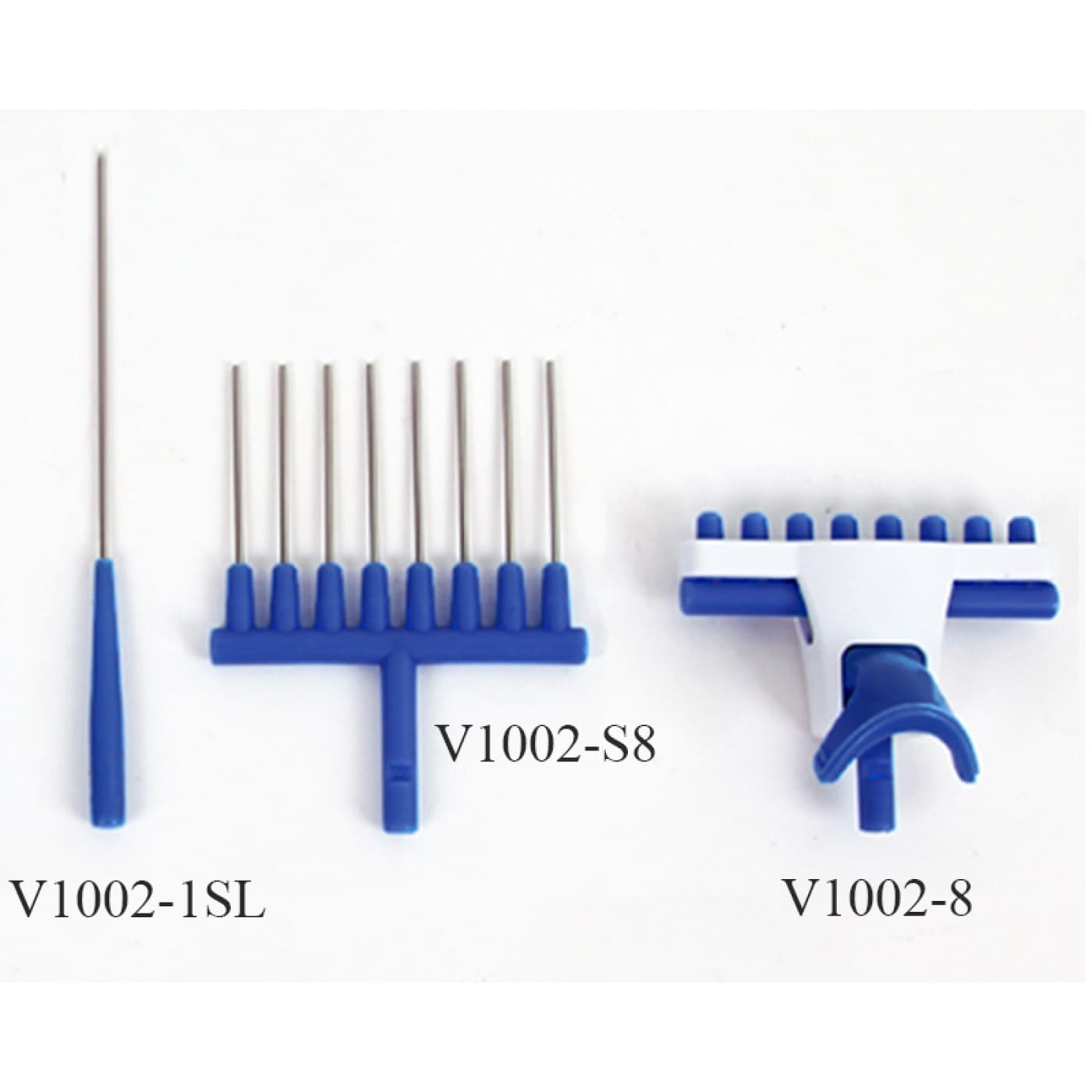
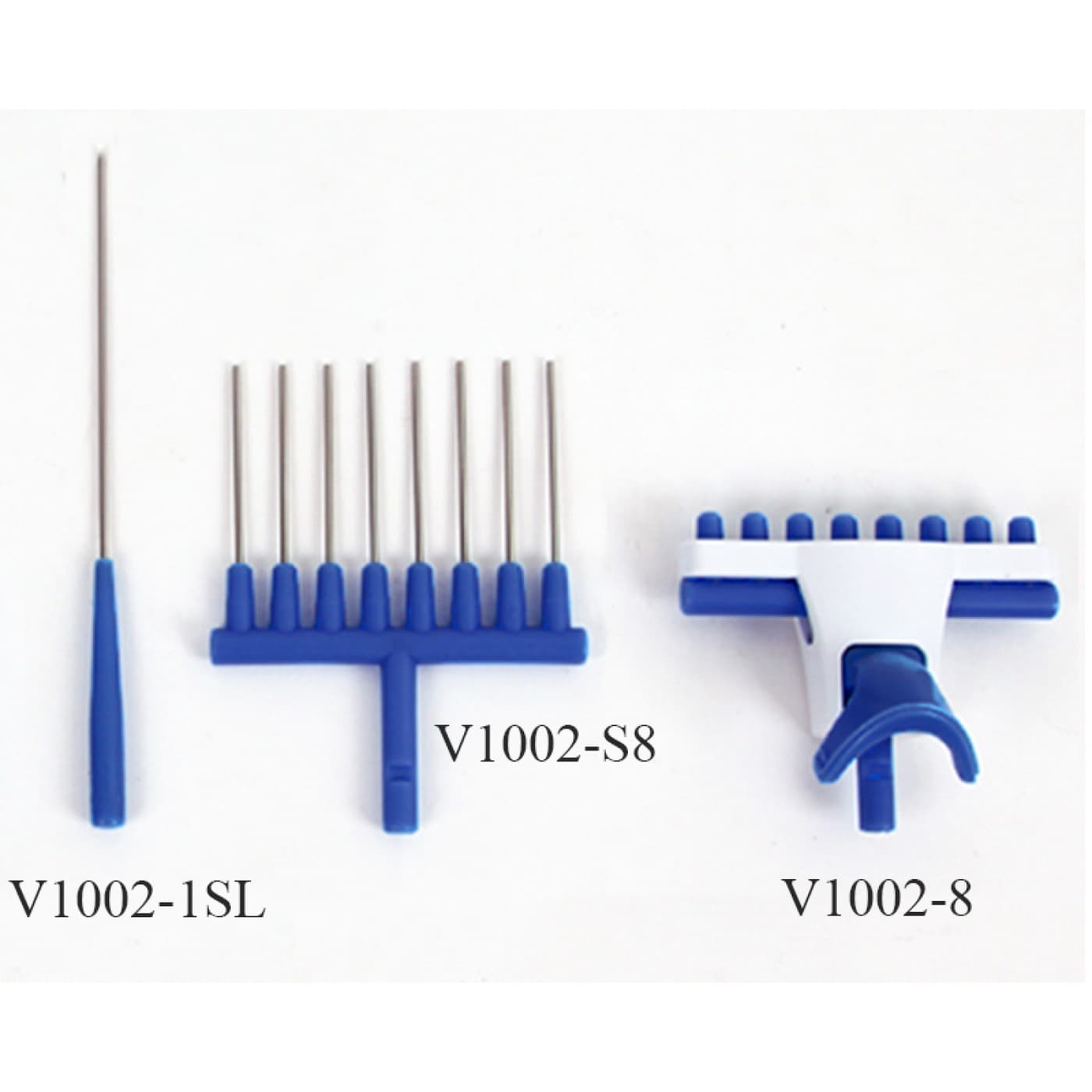
- Laboratory Aspirator Accessories: Adapters (single and multi-channel), silicone tubing, hydrophobic filters, handheld controllers, and collection bottles for suction setup optimization.
How to Choose a Laboratory Aspirator
Vacuum Pressure Range and Adjustability
Choose a system with adjustable vacuum settings that match your applications. Lower vacuum levels are suitable for delicate cell culture work, while higher settings support rapid liquid removal from tubes, flasks, and larger vessels.
Collection Bottle Capacity
Collection bottle size influences how frequently waste must be emptied during operation. Standard capacities are suitable for most workflows, while larger bottles support high-throughput or extended use.
Overflow Protection Features
Reliable overflow protection prevents liquid from reaching the vacuum pump and ensures safe handling of biological materials.
Handpiece and Tip Compatibility
Ensure the handpiece supports pipette tips, Pasteur pipettes, and required adapters for your workflow.
Noise Levels and Biosafety Cabinet Compatibility
Compact, quiet systems are suitable for use in or near biosafety cabinets without disrupting airflow or workspace access.
Autoclavable Components
Check which parts are autoclavable to simplify sterilization and maintain laboratory hygiene standards.
Specifications Context
Modern laboratory aspirators typically include oil-free pumps, adjustable vacuum controls, overflow protection systems, and replaceable hydrophobic filters for safe and efficient liquid removal.
Proper maintenance, including filter replacement and tubing inspection, helps maintain performance and extends equipment lifespan. Laboratory aspirators remain essential tools in research, clinical, and biotechnology laboratories.
Your hunt for a laboratory aspirator is over. Reach out to the expert team at Molecular Biology Products Inc. (MBP) today for a personalized quote.
FAQ