Bacterial Culture Consumables for Microbiology Laboratories
Bacterial culture consumables are the sterile plasticware, inoculation tools, and culture media required to grow, isolate, and enumerate bacteria on solid agar plates and in liquid broth for research, clinical diagnostics, and quality control. Core consumables include 90 mm × 15 mm polystyrene petri dishes (gamma-sterilized), calibrated disposable inoculating loops (1 µL and 10 µL), culture tubes, and agar growth media. MBP carries COPAN Diagnostics inoculating loops and sterile polystyrene petri dishes, ships to labs across the US, Canada, and internationally, and is a registered vendor for Howard Hughes Medical Institute, Vanderbilt University, and MD Anderson Cancer Center.
Need help selecting the right bacterial culture consumables for your laboratory? — Contact our team at customerservice@mbpinc.net for product recommendations, bulk pricing, and purchasing assistance.
Bacterial Culture


Showing 1 to 3 of 3 results
What Is Bacterial Culture?
Bacterial culture is the laboratory process of growing bacteria under controlled conditions to isolate, identify, count, and study microbial organisms. Bacteria are typically cultivated on solid agar media in petri dishes or in liquid nutrient broths, allowing microbiologists to observe colony characteristics, determine bacterial species, perform antimicrobial susceptibility testing, and assess microbial contamination. The process begins with inoculating a sample onto a suitable growth medium using a sterile inoculating loop or needle, followed by incubation under conditions appropriate for the target organism. Bacterial culture remains a fundamental technique in clinical diagnostics, pharmaceutical quality control, food safety testing, environmental monitoring, and microbiological research.
What You Will Find:
-
Level, stable platform for uniform agar depth
-
High optical clarity for accurate observation
-
Ventilated lids for airflow with reduced condensation
-
Rigid, stackable design for stability
-
Smooth surface for easy inoculation
-
Sterile, multi-size options for varied lab use
How to Choose Bacterial Culture Consumables
Petri Dishes: Size and Lid Type
Petri dishes provide the primary surface for bacterial growth on solid media. The 90 mm polystyrene petri dish with a vented lid is the standard format for routine bacterial culture, offering adequate space for colony isolation and enumeration. Smaller 60 mm dishes are commonly used for teaching laboratories and limited-volume applications, while larger 150 mm dishes are suitable for high-density plating and specialized microbiological procedures. Vented lids promote airflow and support aerobic growth, whereas non-vented lids help reduce moisture loss and are often used during transport or specialized incubation conditions.
Inoculating Loops and Needles
Sterile inoculating loops and needles are used to transfer microorganisms between samples and culture media. Calibrated 1 µL loops are commonly selected for quantitative culture procedures such as urine culture testing, where accurate sample volume is essential. Ten-microliter loops are typically used for routine streak plating and subculturing. Flexible polypropylene loops work well for agar surface streaking, while rigid needles are preferred for stab cultures and inoculation of semi-solid media.
Agar Media Selection
The choice of agar medium depends on the microorganisms being cultured. General-purpose media such as nutrient agar and tryptic soy agar support the growth of a wide variety of bacteria. Blood agar is commonly used for cultivating fastidious organisms and observing hemolytic reactions. Selective and differential media, including MacConkey agar and chocolate agar, help isolate specific bacterial groups and aid in organism identification.
Culture Tubes
Culture tubes are used for liquid culture growth, dilution series, specimen transport, and biochemical testing. Available in various sizes and materials, they should be selected based on the intended application and compatibility with the culture medium. Polypropylene tubes provide enhanced chemical resistance, while polystyrene tubes offer greater transparency for visual observation.
Compare Petri Dish Formats for Bacterial Culture
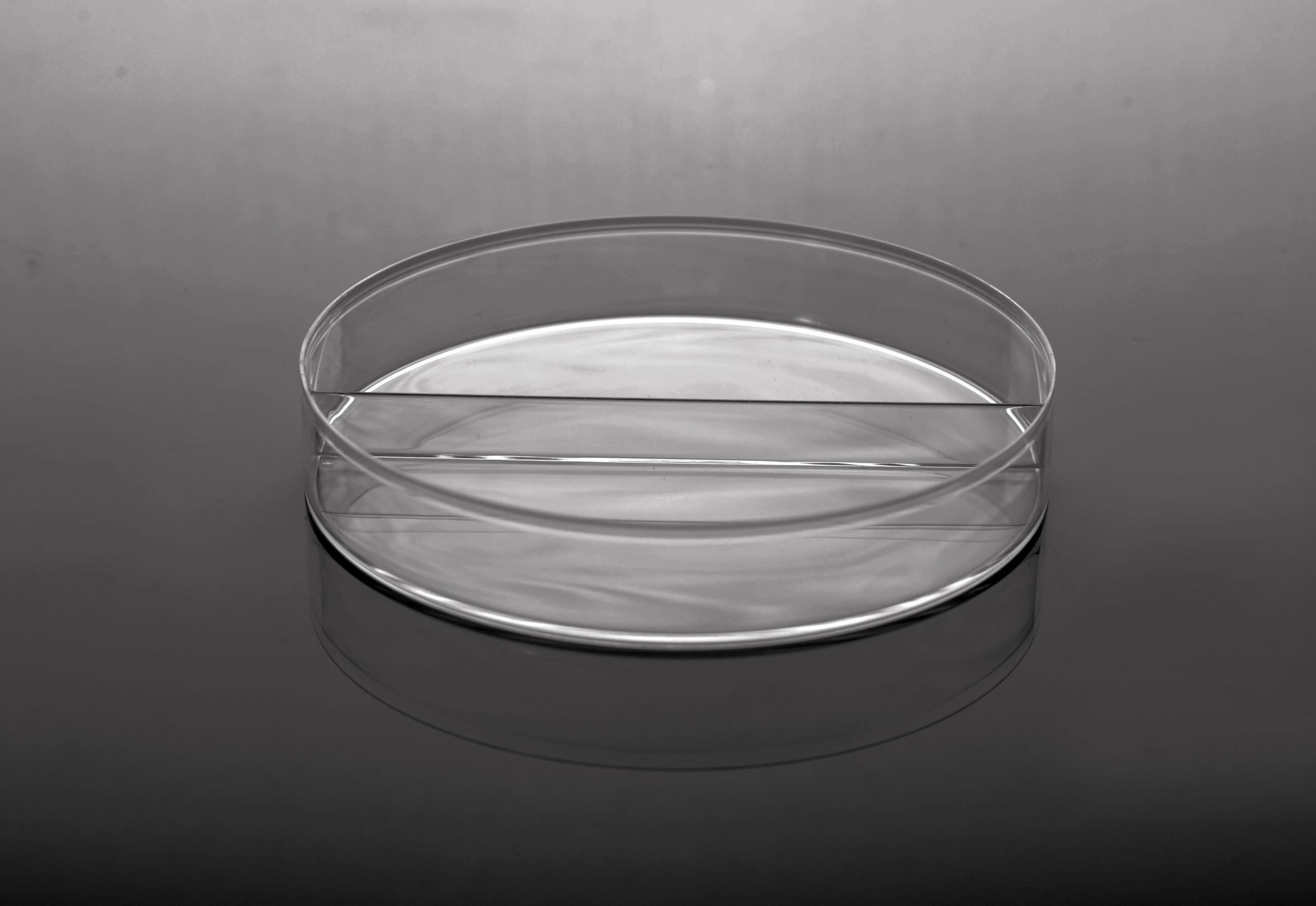
The 90 mm vented petri dish is the most widely used format for routine bacterial and fungal culture. Smaller 60 mm dishes are useful for educational settings and limited sample volumes, while larger 150 mm dishes provide increased surface area for dense cultures and specialized testing. Non-vented dishes help retain moisture during extended incubations, and compartmentalized dishes allow multiple media types or samples to be evaluated within a single plate, improving laboratory efficiency.
Specifications Context
Modern microbiology petri dishes are typically manufactured from sterile, transparent polystyrene and supplied ready for use. Most disposable dishes are sterilized using validated irradiation processes and produced under controlled manufacturing conditions to ensure product consistency. For reliable colony counting, microbiological guidelines generally recommend plates containing between 30 and 300 colony-forming units (CFU). Laboratories performing quantitative culture procedures commonly use calibrated disposable loops to improve accuracy and reduce contamination risk. Together, petri dishes, inoculating loops, culture tubes, and appropriate growth media form the foundation of bacterial culture workflows across clinical, industrial, and research laboratories.
Is your bench ready for the next round of inoculation? Don’t let a sub-par dish affect your culture’s morphology. Connect with the MBP team today for bulk pricing and find the perfect dimensions for your specific microbiology workflow.
FAQ