Histology Cassettes for Tissue Processing and Embedding
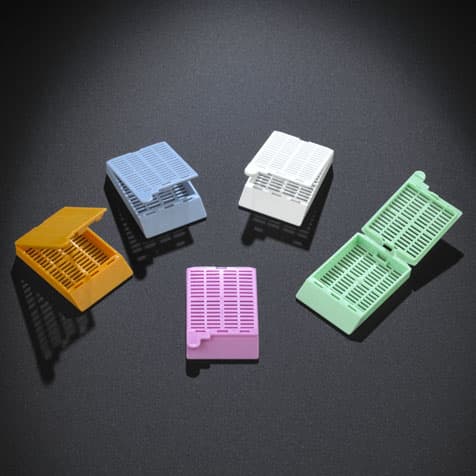
Histology cassettes are acetal polymer containers used to hold, process, embed, and archive tissue specimens in surgical pathology and research histology workflows. Available as standard tissue cassettes with wide-slot openings and biopsy cassettes with fine 1 mm mesh, they resist formalin, xylene, alcohols, and decalcifying acids. Globe Scientific cassettes are compatible with Leica and Sakura labeling instruments and packaged in 500-count dispenser boxes for high-throughput labs.
Need help selecting the right histology cassettes for your laboratory workflow? — Contact our team at customerservice@mbpinc.net for product recommendations, bulk pricing, and purchasing assistance.
Cassettes
Showing 1 to 5 of 5 results
What Are Histology Cassettes?
Histology cassettes are specialized plastic containers used to hold and protect tissue specimens throughout the histology processing workflow. They are used during fixation, dehydration, clearing, paraffin infiltration, embedding, and long-term storage of tissue samples. By keeping the specimen contained throughout processing, cassettes help maintain specimen identification and reduce handling errors.
Typically manufactured from durable acetal polymer (POM), histology cassettes are designed to withstand exposure to formalin, alcohols, clearing agents, paraffin, and other chemicals commonly used in tissue processing laboratories.
Histology cassettes keep tissue specimens secure throughout processing and embedding. Standard cassettes are suitable for larger tissue samples, while biopsy cassettes with finer openings are preferred for small or delicate specimens.
What you will find:
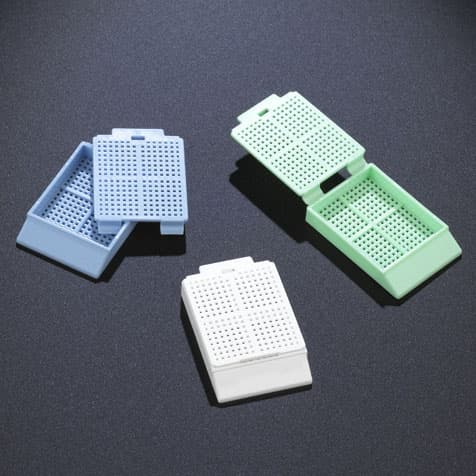
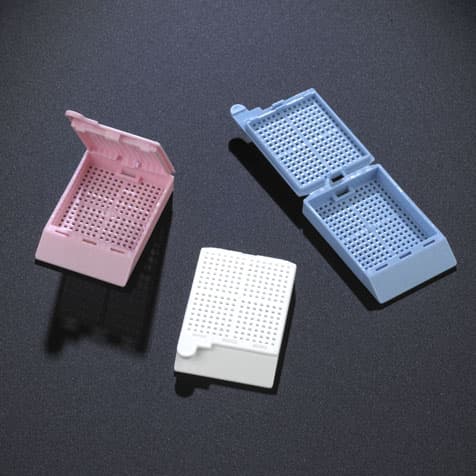
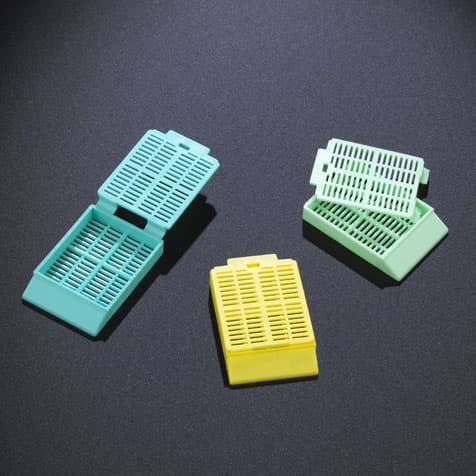
- Tissue Cassettes - Engineered for routine histology workflows, these cassettes feature a secure-lock design and chemical resistance to protect and identify larger tissue samples during fixation and embedding.
- Biopsy Cassettes - Specifically designed for small and delicate specimens, these cassettes feature fine-mesh or specialized perforations to ensure optimal reagent flow while preventing sample loss.
How to Choose Histology Cassettes
Specimen Size and Cassette Design
Standard tissue cassettes are commonly used for larger tissue samples, surgical specimens, and routine pathology applications. Their wider openings allow efficient fluid exchange during processing while securely holding larger specimens.
Biopsy cassettes feature finer mesh openings designed to retain small tissue fragments, needle-core biopsies, and endoscopic specimens. These designs help prevent specimen loss during processing cycles.
Single-Compartment vs Multi-Compartment
Single-compartment cassettes are the most commonly used format and are ideal for processing one specimen per cassette.
Multi-compartment cassettes allow multiple small tissue samples to be processed within a single cassette while keeping specimens separated. These formats can be useful when maintaining orientation or organizing multiple related samples.
Lid Configuration
Integral hinged-lid cassettes provide a convenient all-in-one design that allows users to securely close the cassette without separate components.
Separate-lid designs may be preferred in certain laboratory workflows and can be compatible with specific embedding systems or processing equipment.
Labeling and Equipment Compatibility
Many histology cassettes are designed to work with commonly used cassette printers and labeling systems. Before purchasing, laboratories should verify compatibility with their existing equipment and preferred labeling methods.
Color-Coded Organization
Color-coded cassettes help improve specimen identification and workflow organization. Different colors may be used to distinguish departments, specimen types, processing schedules, or laboratory protocols, reducing the risk of identification errors.
Specifications Context
Histology cassettes are commonly manufactured from acetal polymer (POM), a material chosen for its durability, dimensional stability, and resistance to chemicals routinely used in tissue processing. Standard cassette sizes are designed to fit most tissue processors, embedding stations, and storage systems used in modern histology laboratories.
These cassettes are resistant to formalin, alcohols, xylene substitutes, paraffin, and many decalcification solutions commonly used in pathology workflows. Because specimens are processed in fixatives and other chemicals, sterility is generally not a required specification for routine histology cassettes.
Globe Scientific histology cassettes are manufactured under ISO 9001:2015 quality standards and are available in multiple colors, formats, and packaging options to support a variety of laboratory workflows.
Upgrade to a professional standard that respects your specimens; browse our inventory and hit up the MBP team for a quote.
FAQ