Graduated Cylinders for Accurate Laboratory Liquid Measurement
Graduated cylinders are tall cylindrical borosilicate glass vessels with multiple calibration marks used for measuring liquid volumes in chemistry, biology, and clinical lab workflows. MBP stocks Class A (high-accuracy) and Class B (general-use) graduated cylinders in single-scale (mL) and dual-scale (mL/oz) formats, autoclavable. Available as individual units for labs across the US, Canada, and worldwide by PO or Quick Order.
Contact customerservice@mbpinc.net to compare graduated cylinder options and request pricing or availability for your laboratory needs.
Graduated Cylinders
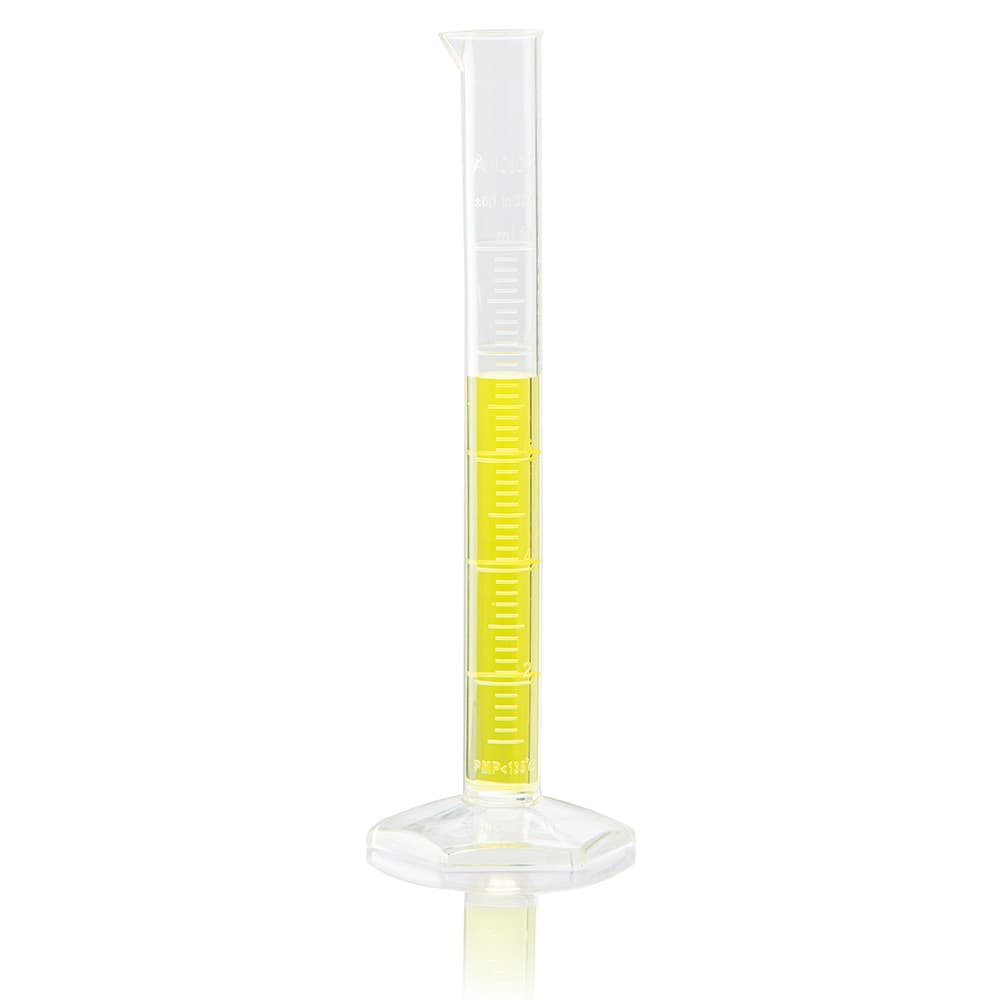
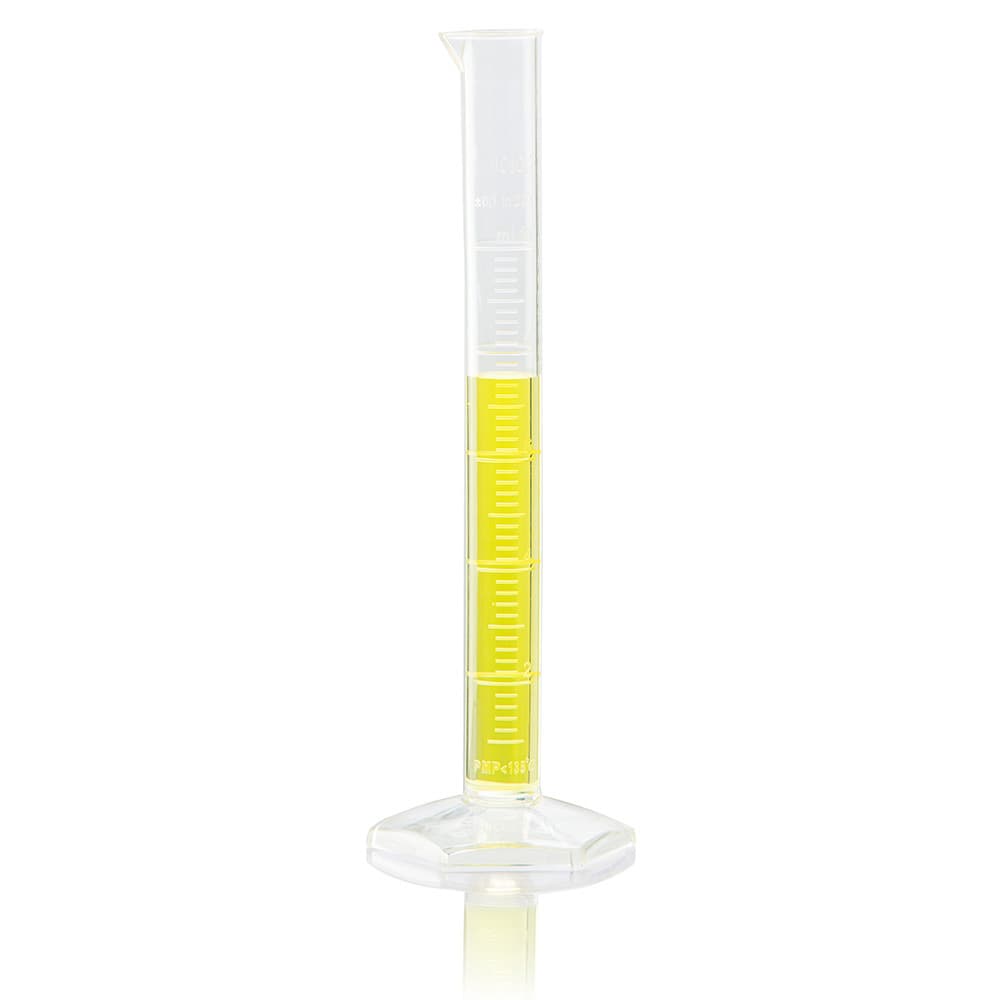
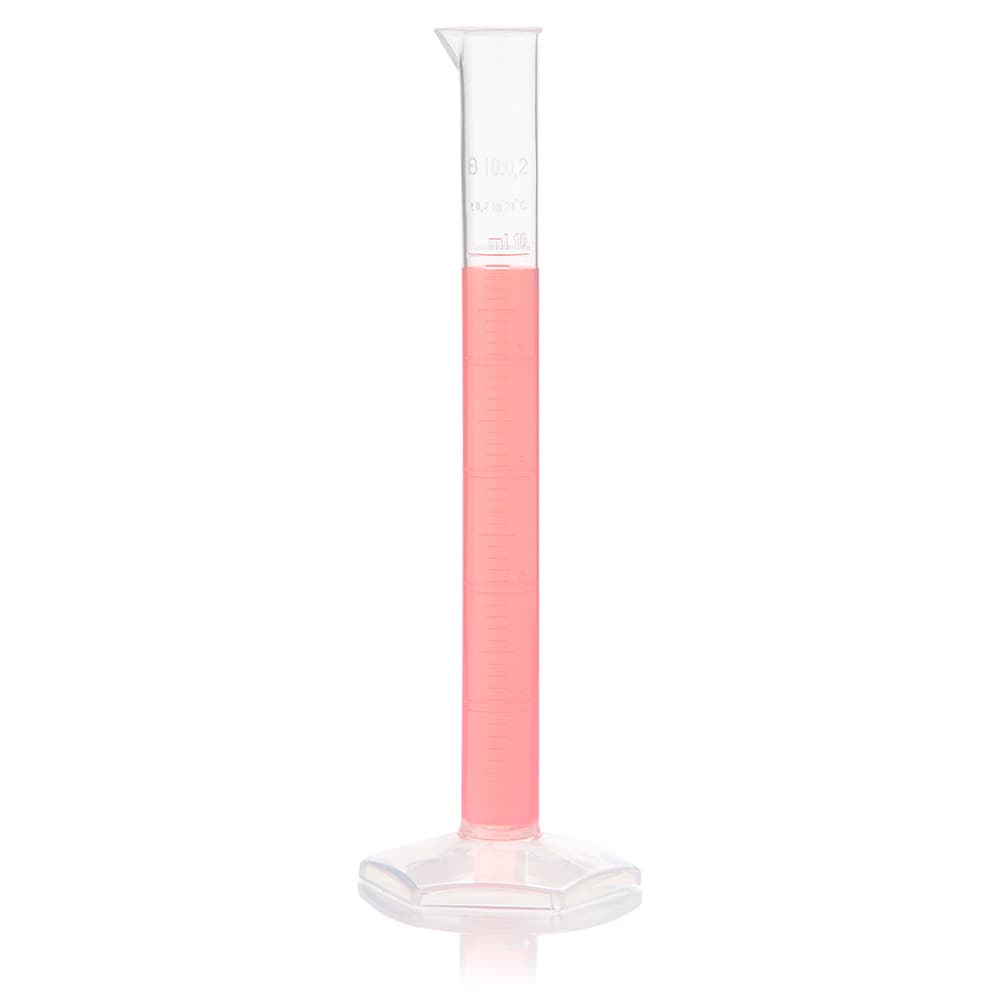
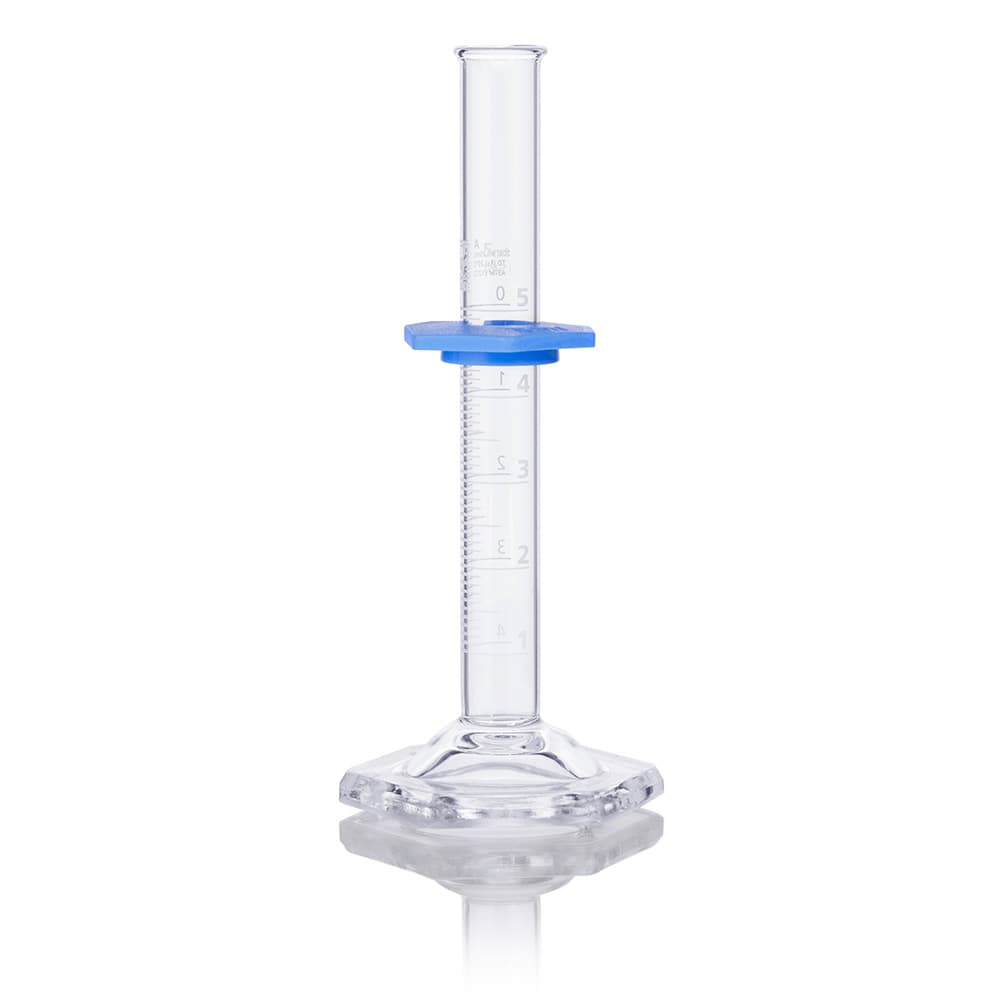
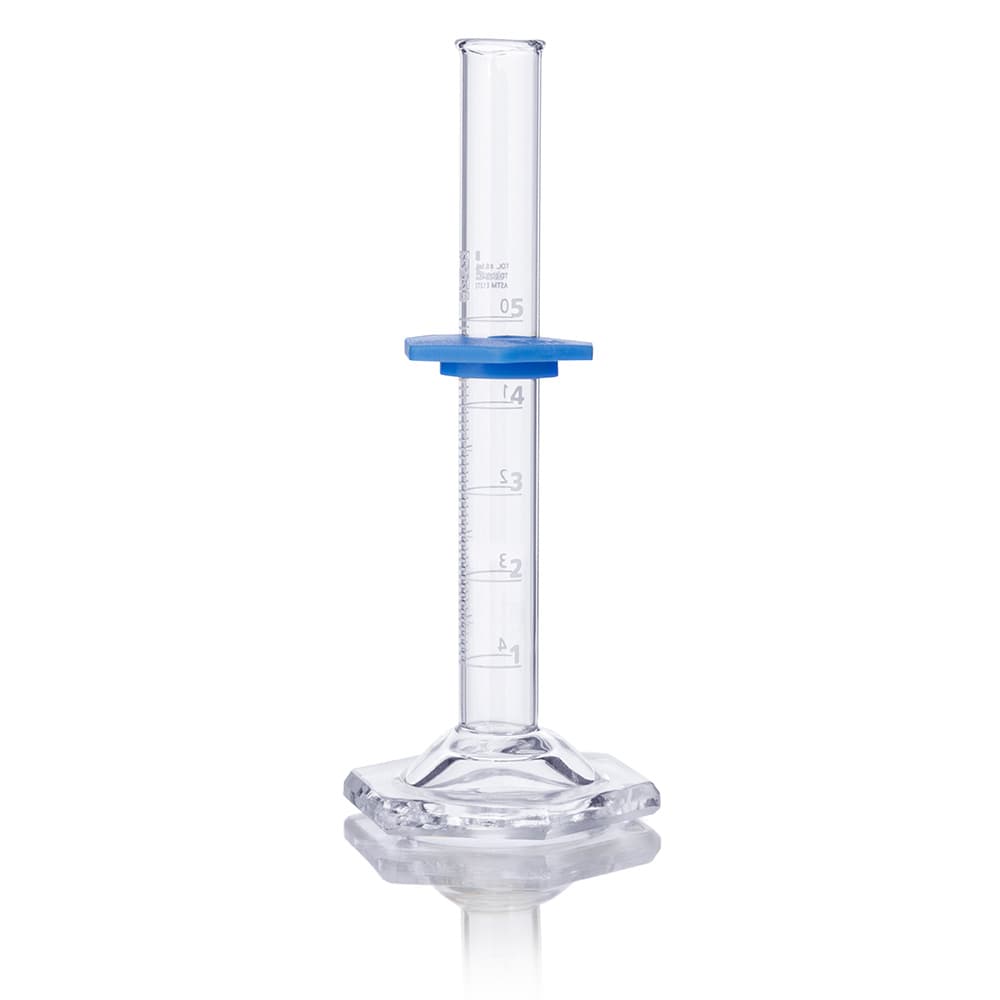
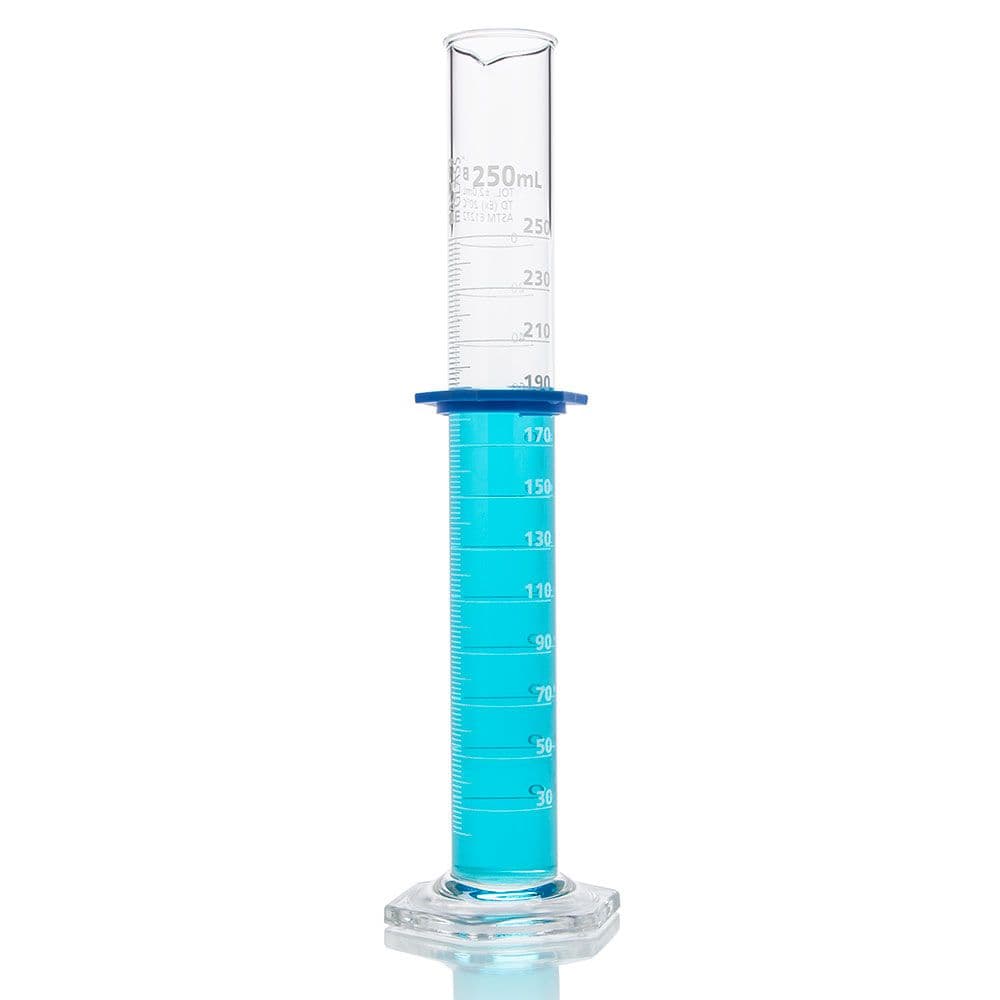
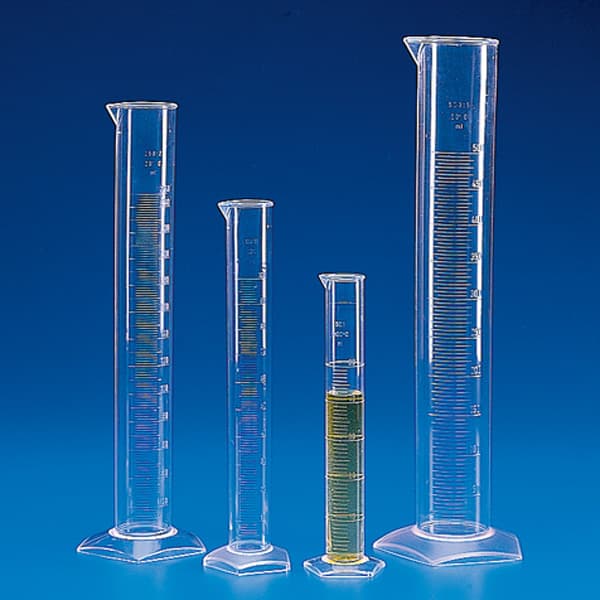
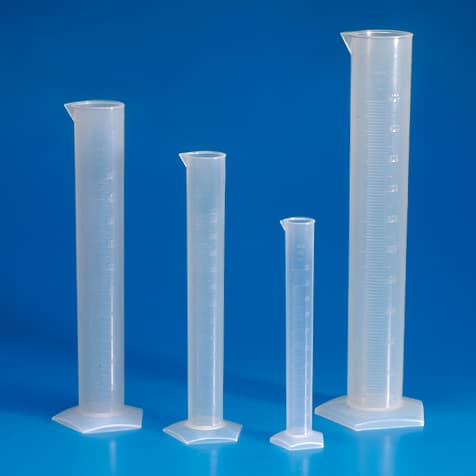
Showing 1 to 8 of 8 results
What Are Graduated Cylinders?
Graduated cylinders are tall, narrow borosilicate glass or polymer vessels calibrated with multiple volume graduation marks, used to measure liquid volumes at bench scale — more accurately than beakers (±5% capacity) but less accurately than volumetric flasks (±0.05–0.1% capacity). They are the everyday volumetric tool in chemistry, biology, and clinical labs for measuring reagent volumes, preparing buffer dilutions, and transferring liquids where a precise but not analytically exact volume is required. Class A borosilicate glass graduated cylinders at MBP conform to ASTM E1272 / ISO 4788 tolerances. Choose Class A cylinders for applications where stated volume accuracy matters; choose Class B for routine measurements where a fast approximate reading is sufficient.
Product Range at MBP
-
Class A high-accuracy measuring cylinders
-
Class B general use graduated cylinders
-
Clear single-scale graduated cylinders
-
Dual-scale (mL/oz) measuring cylinders
-
Autoclavable laboratory measuring cylinders
How to Choose Graduated Cylinders
Class A vs. Class B
Class A graduated cylinders conform to ASTM E1272 / ISO 4788 Class A tolerances — e.g., ±0.5 mL for a 100 mL cylinder, ±2.0 mL for a 1,000 mL cylinder. Class B tolerances are twice as wide as Class A. Class A cylinders are appropriate for protocols specifying cylinder-grade volume accuracy; Class B for routine lab measurements where tight tolerances are not required.
Single Scale vs. Dual Scale (mL/oz)
Single-scale cylinders are marked in mL only — cleaner graduation lines, easier to read, preferred for labs working exclusively in metric units. Dual-scale cylinders carry both mL and oz markings, useful in labs operating across metric and US customary units or for customer-facing applications requiring oz notation.
Autoclavable Glass vs. Plastic
Borosilicate glass graduated cylinders are autoclavable at 121°C, resistant to all common lab reagents, and reusable indefinitely with careful handling. PP plastic cylinders are shatterproof and autoclavable at 121°C but are not suitable for organic solvents or high heat above 135°C.
Size and Base Type
Common sizes: 10 mL, 25 mL, 50 mL, 100 mL, 250 mL, 500 mL, 1,000 mL, and 2,000 mL. Hexagonal bases provide better bench stability than round bases — important in high-traffic labs where tip-over risk is a concern.
Specifications Context
Borosilicate glass graduated cylinders conforming to ASTM E1272 / ISO 4788 are calibrated "to contain" (TC) the stated volume — the mark indicates the volume held in the cylinder, not delivered from it (Class A volumetric flasks are also TC). Reading technique: for aqueous solutions in glass, read the bottom of the curved meniscus at eye level to eliminate parallax error. Borosilicate 3.3 has a strain point of 515°C; autoclave tolerance is 121°C for standard sterilisation cycles. As of June 2026, MBP stocks Class A and Class B graduated cylinders in single and dual-scale formats for labs in the US, Canada, and worldwide.
Reach out to the team at Molecular Biology Products Inc. (MBP) to request a quote for your lab requirements.
FAQ