Non-Treated Cell Culture Flasks for Suspension Cells and Insect Cell Culture
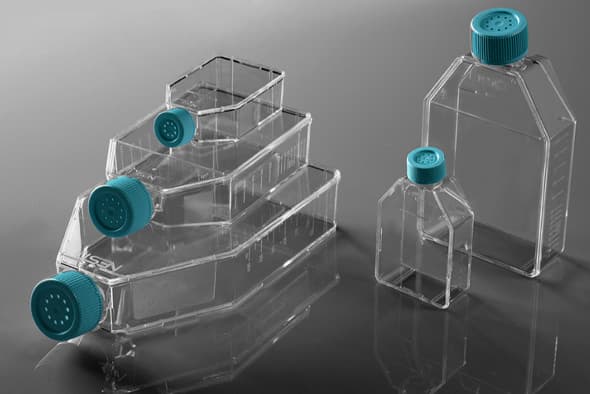
Non-treated cell culture flasks are sterile polystyrene T-flasks with an unmodified hydrophobic surface (contact angle ~75–90°) designed for suspension mammalian cells (CHO-S, HEK293-F, Jurkat, K562), hematopoietic progenitors, hybridomas, insect cells (Sf9, Hi5), and microbial culture. NEST Scientific non-treated flasks (T25–T225) are E-beam sterilized to SAL 10⁻⁶, DNase/RNase-free, ISO 9001:2015 and ISO 13485 certified, and available with 0.2 µm vented or plug seal caps.
MBP carries the full non-treated flask line with direct PO ordering for labs across the USA, Canada, and worldwide. For further details, contact customerservice@mbpinc.net
Non-Treated Cell Culture Flasks
Showing 1 to 4 of 4 results
What are Non-Treated Cell Culture Flasks?
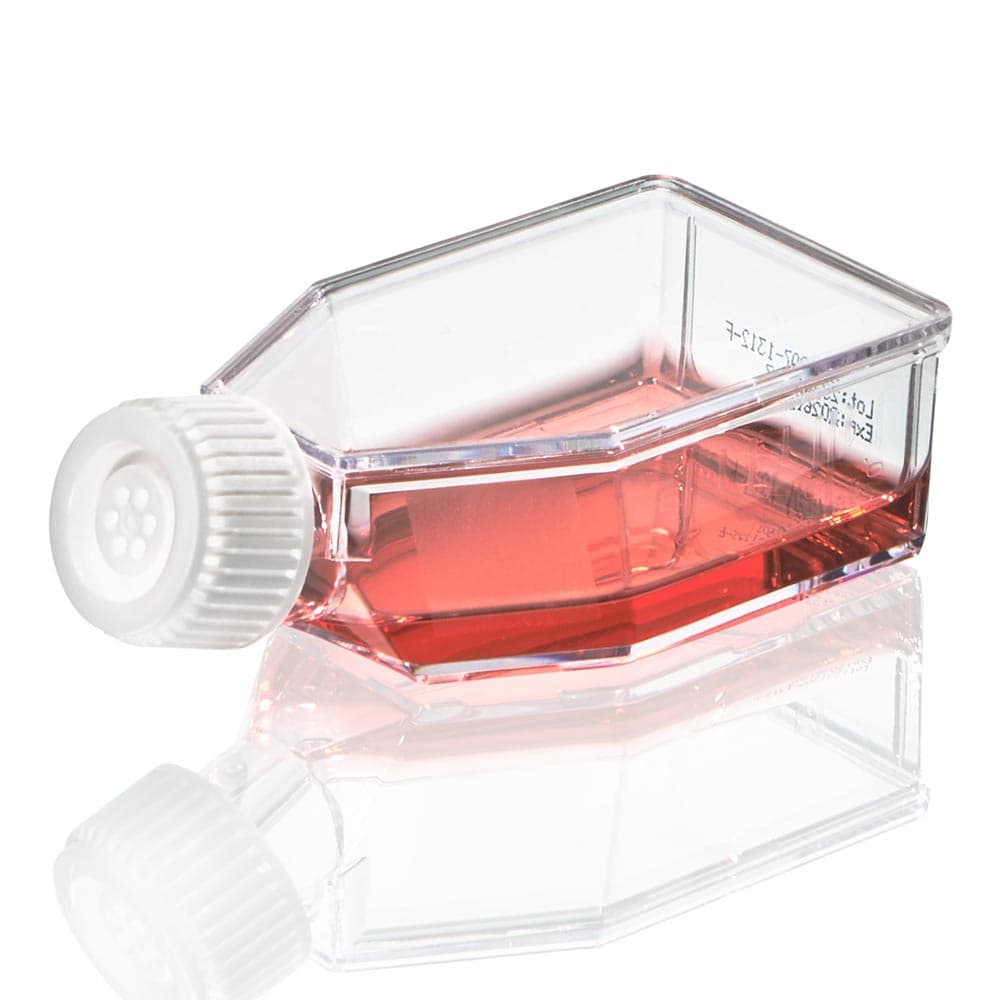
Non-treated cell culture flasks are sterile polystyrene T-flasks that retain the original hydrophobic, unmodified surface of the polystyrene substrate — no plasma, corona, or chemical surface treatment is applied. The hydrophobic surface minimizes cell attachment, making these flasks the correct vessel for cell types that grow in suspension or require minimal surface contact: suspension-adapted CHO, Jurkat, K562, HL-60, hematopoietic progenitors, hybridomas for monoclonal antibody production, insect cell lines (Sf9, Hi5), yeast, and bacteria. NEST Scientific non-treated flasks are manufactured from 100% virgin polystyrene in ISO 8 cleanrooms, E-beam sterilized to SAL 10⁻⁶, and available in T25, T75, T175, and T225 sizes with vented (0.2 µm PTFE membrane) or plug seal caps.
Use non-treated flasks exclusively for cell types that do not require surface attachment; placing adherent mammalian cell lines in a non-treated flask causes cell death within 24–48 hours.
What you will find:
-
Suspension-Optimized Surface, like naturally hydrophobic polystyrene, ensures cells remain in suspension without surface interference.
-
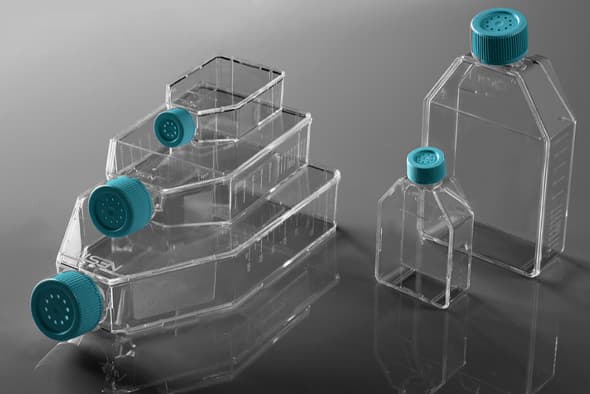
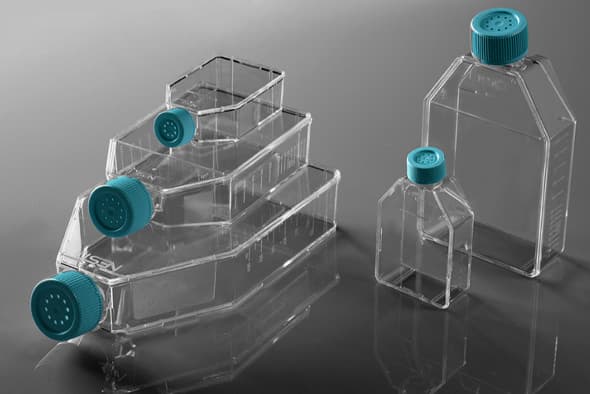
Scalable Formats precision-engineered in T25, T75, T175, and T225 sizes to fit various research scales.
-
Aseptic Security with certified RNase-, DNase-, and Pyrogen-free to maintain the highest purity standards.
-
Ergonomic Access with angled neck design facilitates seamless pipette access and reduces the risk of contamination during media changes.
How to Choose Non-Treated Cell Culture Flasks
Application: Suspension Mammalian Cells
Suspension-adapted cell lines — CHO-S, HEK293-F, Expi293, and HEK293-EBNA variants used in transient transfection — require non-treated flasks for static suspension culture between spinner flask passages or when the scale is too small for orbital shaker flasks. Cells must be agitated (shaken, pipetted, or rocked) periodically to prevent settling when in static non-treated flasks with volumes >5 mL.
Application: Hematopoietic and Immune Cells
Non-adherent hematopoietic cell lines (Jurkat T-cells, K562 erythroleukemia, HL-60 promyelocytes, Raji B-cells) and primary hematopoietic cells (peripheral blood mononuclear cells (PBMCs), bone marrow progenitors) must be cultured in non-treated vessels. TC-treated surfaces activate integrin signaling in hematopoietic cells, inducing undesired differentiation and stress responses.
Application: Hybridoma Culture
Hybridoma cells for monoclonal antibody (mAb) production are non-adherent B-cell fusions that grow as suspension cultures. Non-treated T75 and T225 flasks, combined with HT-supplemented DMEM/HAT medium, are the standard vessels for hybridoma selection and expansion. Scale-up from T225 non-treated flasks typically progresses to spinner or hollow-fiber bioreactors.
Application: Insect Cells
Sf9 (Spodoptera frugiperda) and Hi5 (Trichoplusia ni) insect cells used in baculovirus expression vector systems (BEVS) require non-treated polystyrene for monolayer culture. On TC-treated surfaces, Sf9 cells attach so strongly that they are difficult to recover. Non-treated flasks allow Sf9 to loosely adhere and detach easily with tapping, or to grow as a loosely attached monolayer that tolerates trypsin-free passaging.
Application: Microbial Culture
Non-treated polystyrene T-flasks with plug seal caps can serve as culture vessels for E. coli, Bacillus subtilis, yeast (S. cerevisiae, P. pastoris), and other microorganisms where the large surface area per volume is needed, and standard Erlenmeyer flask orbital shaking is unavailable. Ventilated caps support aerobic culture; confirm that the vented 0.2 µm membrane is compatible with your aeration requirements.
Cap Selection for Non-Treated Flasks
Vented caps (0.2 µm PTFE membrane) are standard for suspension cultures in a CO₂ incubator. For microbial aerobic culture without a CO₂ incubator, vented caps with 0.2 µm pore still provide adequate aeration. Plug seal caps are used for anaerobic culture, transport, and short-term storage.
Specifications Context
NEST Scientific non-treated cell culture flasks are manufactured from 100% virgin polystyrene with no surface modification. Contact angle of non-treated PS surface is approximately 75–90° (hydrophobic), confirmed by water contact angle measurement per NEST lot QC data. E-beam sterilized in ISO 8 cleanrooms to SAL 10⁻⁶; DNase-free, RNase-free, and non-pyrogenic per lot certificate. Vented caps use a 0.2 µm hydrophobic PTFE membrane. As of 2026, NEST Scientific non-treated flasks are stocked by MBP in all four sizes (T25, T75, T175, T225) with vented and plug seal options, in case quantities for PO-based institutional ordering. MBP is a registered vendor for Howard Hughes Medical Institute, Vanderbilt University, and MD Anderson Cancer Center.
Elevate your suspension culture workflows. Contact Molecular Biology Products Inc. for your Non-Treated Cell Culture Flasks today!
FAQ