qPCR Titer Kits for Lentivirus and Viral Vector Stocks
qPCR titer kits quantify viral vector preparations, most commonly lentivirus, with dedicated formats also available for AAV and retroviral vectors by measuring vector genome copy number through real-time PCR. This provides a genome titer used to estimate multiplicity of infection (MOI) for downstream transduction experiments. These kits deliver same-day results compared to functional transduction-based titer assays, which can take several days.
Academic researchers producing their own viral vector stocks benefit from rapid, reproducible titer determination using qPCR titer kits. Request a quote today by contacting customerservice@mbpinc.net
qPCR Titer Kits
Showing 1 to 3 of 3 results
What is a qPCR, Titer Kit?
A qPCR titer kit provides the primers, probes, or dye-based detection chemistry, standards, and master mix components needed to quantify viral vector genome copy number by real-time PCR. For lentiviral preparations, this typically involves amplifying a conserved region of the viral genome (such as the LTR or a packaging signal sequence) and comparing the signal to a standard curve of known copy number to determine vector genomes per mL of the preparation. Use a qPCR titer kit for rapid, same-day genomic titer determination of in-house viral vector preparations, understanding that genomic titer (genome copies/mL) is related to, but distinct from, functional (infectious) titer measured by transduction assays.
What you will find:
-
Lentivirus & Retrovirus Titer Kits: Advanced quantitative qPCR-based tools designed for rapid and accurate assessment of viral genome copy number in lentiviral and retroviral preparations, supporting consistent transduction workflow optimisation in mammalian cell culture systems.
-
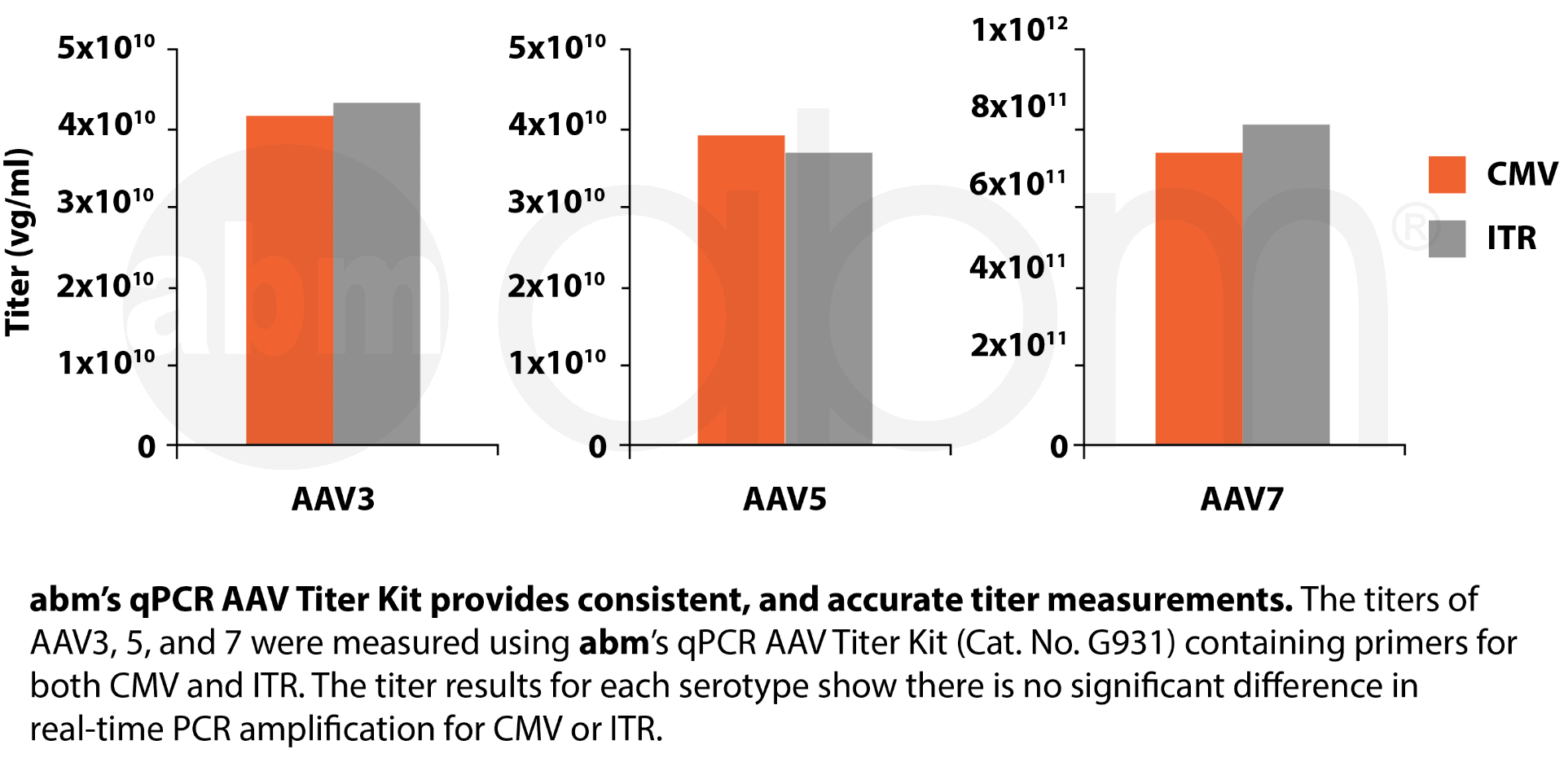
AAV Titer Kits: Optimised qPCR solutions for the quantification of Adeno-Associated Virus vectors, providing precise genome copy data required for vector dosing and therapeutic research studies.
How to Choose a qPCR Titer Kit
Viral Vector Type Compatibility
qPCR titer kits are commonly available for lentivirus, with related kits for AAV and other viral vector types -- confirm the kit targets the appropriate conserved genomic region for your specific vector type and packaging system.
Genomic vs. Functional Titer
qPCR titer kits report genomic titer (vector genome copies per mL), which can differ from functional or infectious titer measured by transduction-based assays (such as a GFP or antibiotic-resistance endpoint assay) -- understanding this distinction is important when translating a qPCR titer result into an experimental MOI.
Standard Curve and Quantification Range
The kit's included standards define the quantification range over which results are reliable -- confirm your expected titer falls within this range, diluting samples as needed to bring concentrated preparations into range.
Turnaround Time
qPCR titer kits provide same-day results (the time required for a qPCR run plus data analysis), substantially faster than functional transduction-based titer assays, which require a transduction step followed by several days of cell culture and an endpoint readout.
Compatibility with Existing qPCR Infrastructure
Since qPCR titer kits use standard real-time PCR instrumentation, confirm that the kit's detection chemistry (dye-based or probe-based) and any reference dye requirements (such as ROX) are compatible with your existing real-time PCR instrument.
Specifications Context
qPCR-based viral titer determination amplifies a conserved genomic region of the vector -- for lentivirus, commonly within the LTR or packaging signal -- and compares the resulting signal against a standard curve of known copy number to calculate vector genomes per mL of the test preparation. Because genomic titer counts total vector particles containing the packaged genome regardless of whether they are capable of productive transduction, it typically yields a higher number than functional titer, which counts only particles that successfully transduce and express in target cells; researchers calculating MOI for an experiment should be clear about which titer type they are using, since the appropriate MOI range can differ depending on which titer figure is the basis for the calculation. qPCR titer kits are typically stored at −20 °C, with standards and master mix components included; lot-specific CoAs are available on request.
Ensure the accuracy of your viral dosing—reach out to the MBP team now for a quote on our expert qPCR Titer solutions
FAQ