SYBR/Primer-Probe Master Mixes for Flexible qPCR Detection
SYBR/Primer-Probe reagents include formulations for both dye-based (SYBR Green) and sequence-specific probe-based real-time PCR detection chemistries, allowing researchers to select the assay format best suited to their application. Probe-based formats, such as the AzuraQuant Probe 1-Step qPCR Mix series, support highly specific RNA quantification workflows while offering HiROX, LoROX, and NoROX options to ensure instrument compatibility.
Academic researchers running gene expression and pathogen detection assays benefit from flexible chemistry and instrument-matched reagent choices. Contact customerservice@mbpinc.net to request a quote today!
SYBR/Primer-Probe
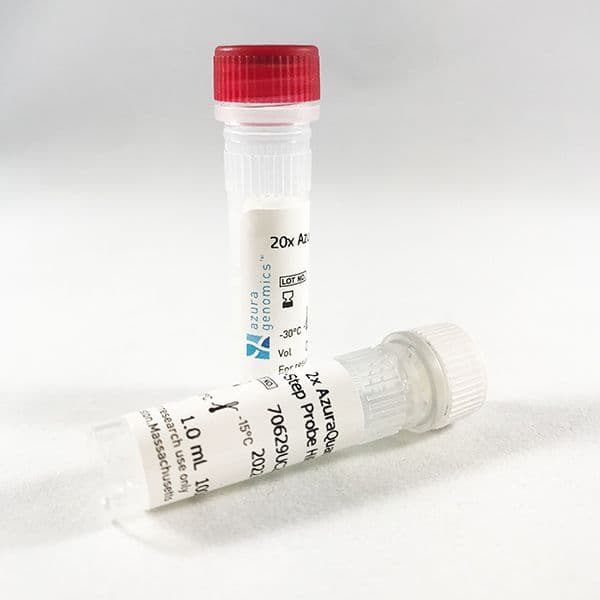
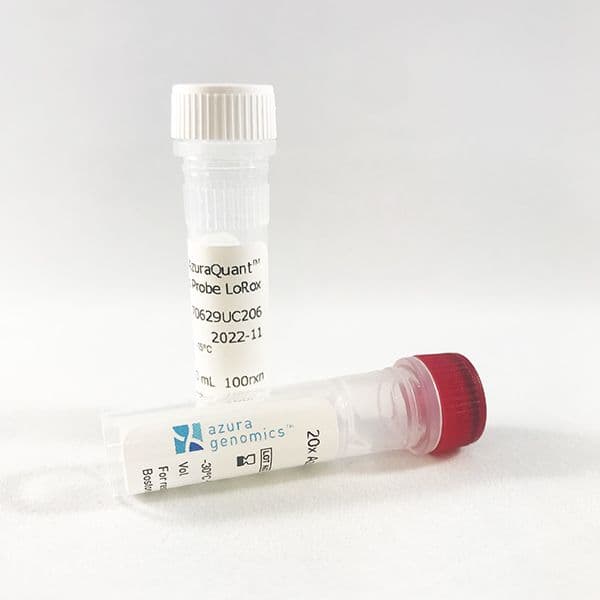
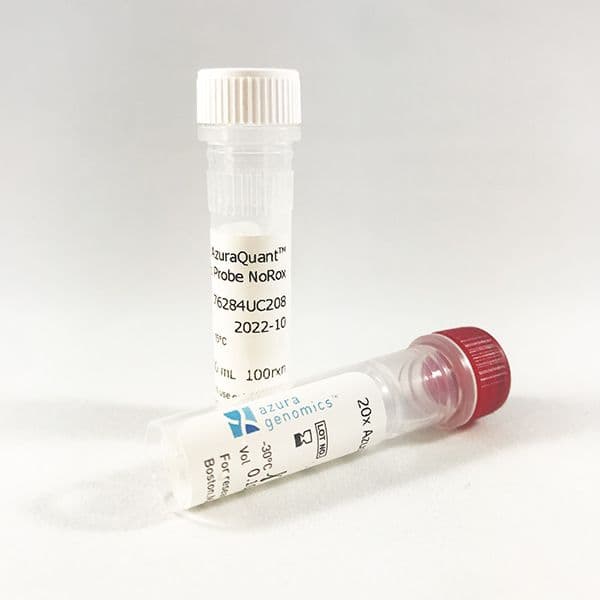
Showing 1 to 3 of 3 results
What Is a SYBR/Primer-Probe Master Mix?
A SYBR/Primer-Probe master mix is a 2x formulation positioned to support both dye-based (SYBR Green) and primer-probe (hydrolysis probe, TaqMan-style) detection chemistries, typically built on a common hot-start Taq, dNTP, MgCl2, and buffer backbone with formulation adjustments that accommodate either an intercalating dye or a labelled probe, depending on the assay. Choose this combined format when your lab runs both SYBR Green and probe-based assays and wants to standardise on fewer master mix products across the qPCR workflow.
What you will find:
- One-step RT-qPCR kits that combine reverse transcription and real-time PCR in a single tube to streamline RNA quantification workflows.
- Hot-start enzyme systems are designed to reduce non-specific amplification during reaction setup and thermal cycling.
- Probe-based detection chemistries for specific RNA target quantification in gene expression and pathogen detection applications.
- HiROX, LoROX, and NoROX formulation options to support compatibility with a wide range of real-time PCR instruments.
- Optimized one-step workflows that reduce sample handling and help minimize contamination risk in high-throughput studies.
How to Choose a SYBR/Primer-Probe Master Mix
Assay Portfolio Mix
Labs running a mix of SYBR Green gene expression assays and probe-based genotyping or pathogen-detection assays can benefit from standardising on a combined-compatible master mix line, reducing the number of distinct products to validate, store, and track across the facility.
Reference Dye Configuration
Confirm whether the specific product includes ROX or other passive reference dyes as standard, since probe-based assays in particular often rely on ROX for instrument normalisation, while some SYBR-only workflows may use ROX-free instruments.
Validation Across Chemistries
When adopting a combined-compatible master mix for the first time, validating performance separately for both a representative SYBR Green assay and a representative probe-based assay is recommended, since buffer optimisations that favour one chemistry slightly can sometimes trade off against the other.
Primer and Probe Concentration Guidelines
Typical primer-probe qPCR setups use primer pairs at a final concentration around 0.5 µM and probes at 0.25-0.5 µM; confirm the master mix manufacturer's recommended concentration ranges for both components when switching from a single-chemistry product.
Throughput and Inventory Simplification
For core facilities supporting multiple research groups with different assay types, a combined-compatible master mix can simplify inventory management and reduce the risk of using the wrong master mix for a given assay type.
Specifications Context
Standard real-time PCR master mixes are 2x concentrated and contain dNTPs, MgCl2, and DNA polymerase as their common backbone; a SYBR/primer-probe combined format extends this backbone with formulation choices intended to perform acceptably whether the researcher adds SYBR Green dye for dye-based detection or a labelled probe for probe-based detection. In probe-based setups, primer pairs are commonly used at a final concentration around 0.5 µM with probes at 0.25-0.5 µM, while SYBR-based protocols may additionally include a small amount of random hexamer primer in RT-qPCR contexts. Real-time PCR master mixes of this type are typically stored at −20 °C to −30 °C and protected from light; lot-specific CoAs are available on request.
Contact the expert team at MBP today and get high-yield SYBR/Primer-Probe Master Mixes for your lab.
FAQ