Viral RNA Extraction Kits for Cell-Free Biological Samples
Viral RNA extraction kits purify RNA from RNA viruses in cell-free matrices — plasma, serum, nasopharyngeal swabs, urine, cerebrospinal fluid, and cell culture supernatant — using chaotropic lysis and silica-based spin columns or paramagnetic beads. Kits recover viral RNA from sample inputs of 140–300 µl and elute in 20–60 µl for direct use in RT-qPCR, RT-LAMP, and sequencing.
MBP carries Zymo Research viral RNA kits validated across 10+ virus families, available to registered vendors, including Howard Hughes Medical Institute and MD Anderson Cancer Center. Request a quote today by contacting customerservice@mbpinc.net.
Viral RNA
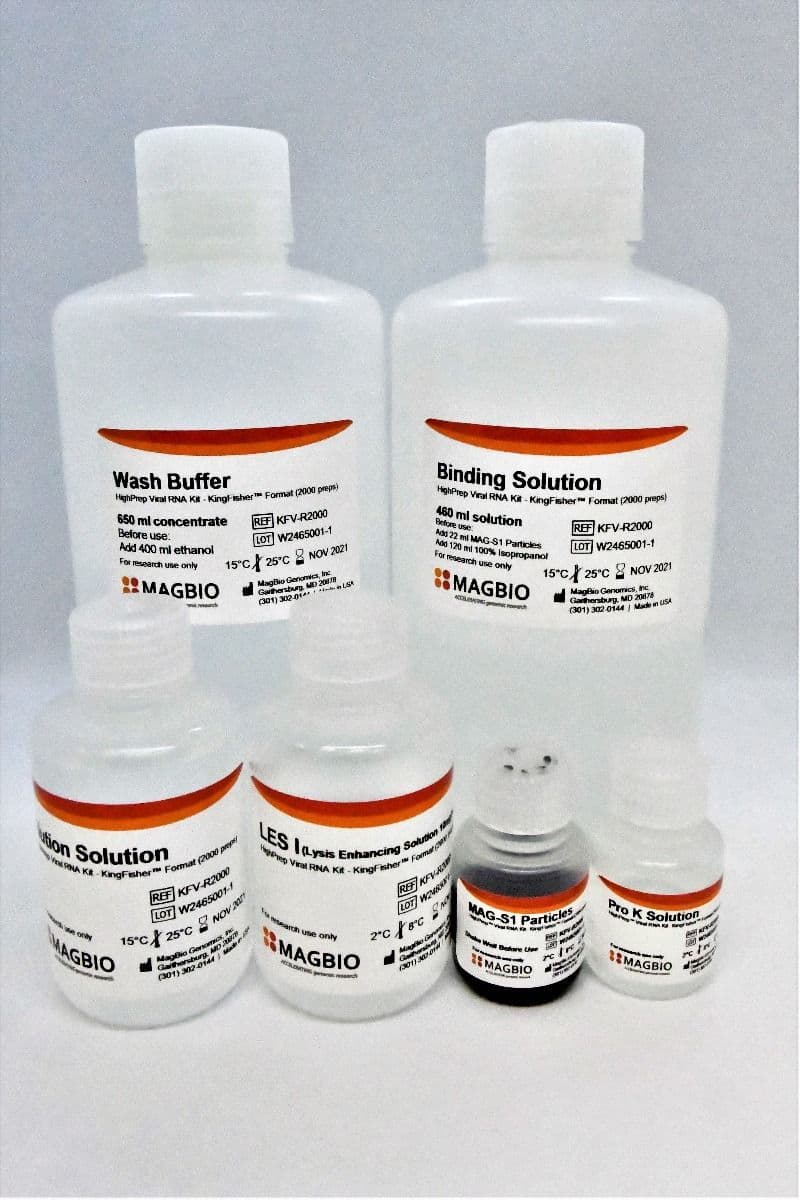
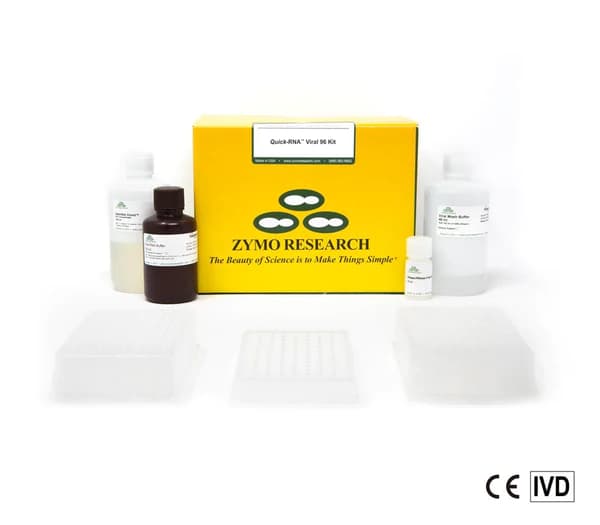
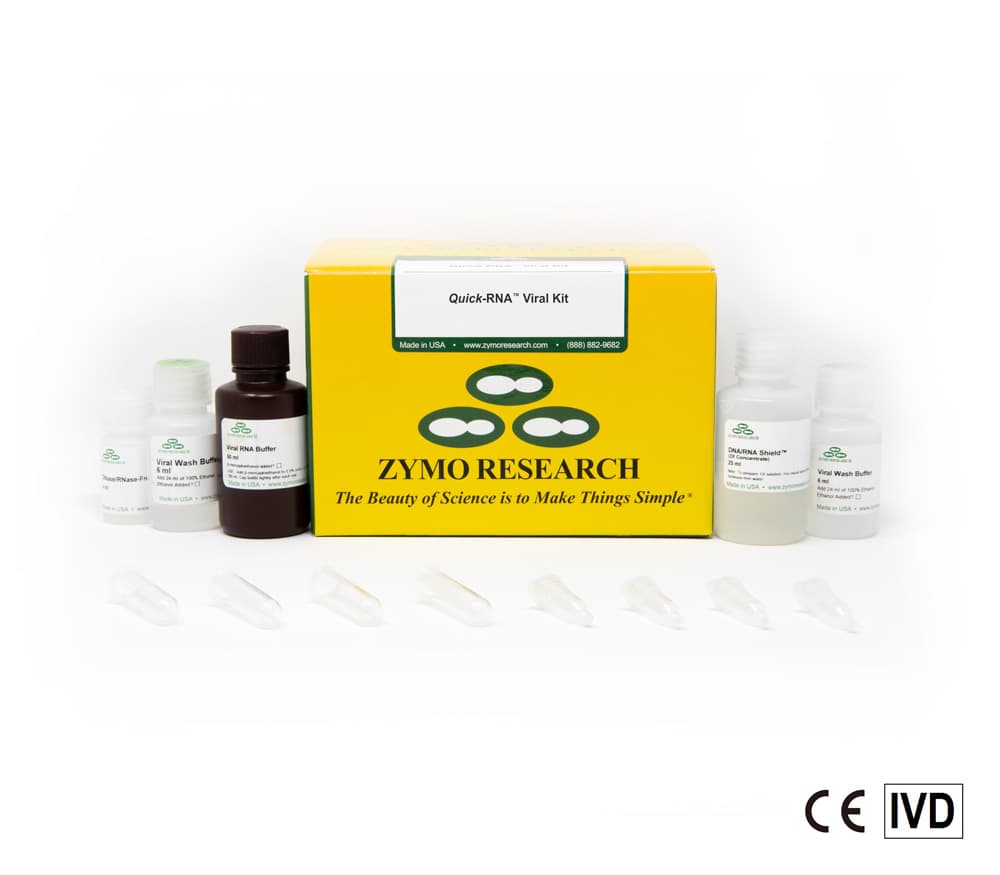
Showing 1 to 3 of 3 results
What are Viral RNA Extraction Kits?
Viral RNA extraction kits purify RNA from RNA-containing viruses in cell-free biological matrices - plasma, serum, nasopharyngeal swabs, urine, cerebrospinal fluid, saliva, and cell culture supernatant - using chaotropic lysis to disrupt viral capsids, followed by RNA binding to silica-coated spin columns or paramagnetic beads, stringent washing to remove inhibitors, and elution in RNase-free water. Unlike total RNA kits optimized for lysing intact cells, viral RNA kits are formulated to maximize recovery of low-copy viral genomes from fluid samples where endogenous cellular RNA is absent or minimal. Use a viral RNA kit - not a total RNA kit - whenever your sample is cell-free, and the target is a viral genome at potentially low copy numbers.
What you will find:
- 96-well plate: for high-throughput, simultaneous screening of large samples
- Spin-column: for rapid, benchtop centrifugal template isolation utilizing advanced silica membranes
- Mag Beads: for flexible, automated extraction workflows using superparamagnetic particles
How to Choose a Viral RNA Extraction Kit
Spin-Column vs. Magnetic Bead Format
Spin-column viral RNA kits (QIAGEN QIAamp Viral RNA Mini, Zymo Quick-RNA Viral Kit) process 1-24 samples in approximately 20 minutes using a standard microcentrifuge; they are the practical choice for low-to-moderate daily volumes. Magnetic bead formats scale to 96 samples per run and integrate with automation platforms, making them the standard for high-throughput surveillance, clinical batch testing, and biobank workflows.
Carrier RNA Inclusion
Viral RNA recovery from low-titer samples (< 1x10^3 viral copies/ml) depends on carrier poly(A) RNA competing for non-specific bead or silica binding. Confirm the selected kit includes carrier RNA in the lysis buffer or purchase it separately. Kits without carrier RNA consistently show reduced sensitivity in low-viral-load specimens.
Sample Input Volume
Spin-column viral RNA kits typically accept 140-300 ul of cell-free sample. Larger-volume protocols (1 ml plasma) require specialized formats or vacuum-manifold setups. Confirm the kit's recommended input volume matches your sample type; exceeding the recommended volume increases co-purified inhibitor carryover.
DNA/RNA Co-Extraction
If your workflow requires both viral RNA and viral DNA from the same sample (e.g., for a pan-pathogen panel), select a kit explicitly validated for co-extraction. Kits labelled 'viral RNA only' do not reliably recover dsDNA viruses such as herpesviruses or adenoviruses.
Sample Stabilization Compatibility
Swabs or fluids preserved in Zymo DNA/RNA Shield or similar inactivation/stabilization reagents require kits validated for those matrices. Most chaotropic lysis-based viral RNA kits are compatible with common stabilization reagents, but verify before adopting.
Specifications Context
Key performance benchmarks for viral RNA kits: recovery should be >=70% as measured by spike-in controls, and eluates should show A260/A280 >= 1.7 with RT-qPCR Ct values within 2 cycles of the reference extraction method. Zymo Research Quick-RNA Viral Kits are cited in published methods for coronavirus, influenza, and enterovirus workflows and are validated across more than 10 virus families. RNase-free plastic consumables should be used throughout the extraction workflow to prevent RNA degradation from surface contamination. For laboratories handling live viral material, select kits whose lysis buffer inactivates pathogens, eliminating infectious risk during processing.
MBP's specialist team can help match kit chemistry, format, and throughput to your sample type and downstream application. Contact the MBP team for personalized guidance.
FAQ