Spin-Column Total RNA Kits for Cells and Tissue Purification
Spin-column total RNA kits use silica membrane adsorption to purify all RNA species—including small RNAs ≥17 nt—from cultured cells, animal and plant tissue, bacteria, and other biological samples in 15–30 minutes per preparation. Kits bind up to 100 µg of RNA per column and elute in 10–100 µL of RNase-free water.
MBP supplies Zymo Research and ABM spin-column RNA kits to labs across the USA and Canada, with direct specialist support for sample-type protocol selection. Request a quote today by contacting customerservice@mbpinc.net
Spin-column
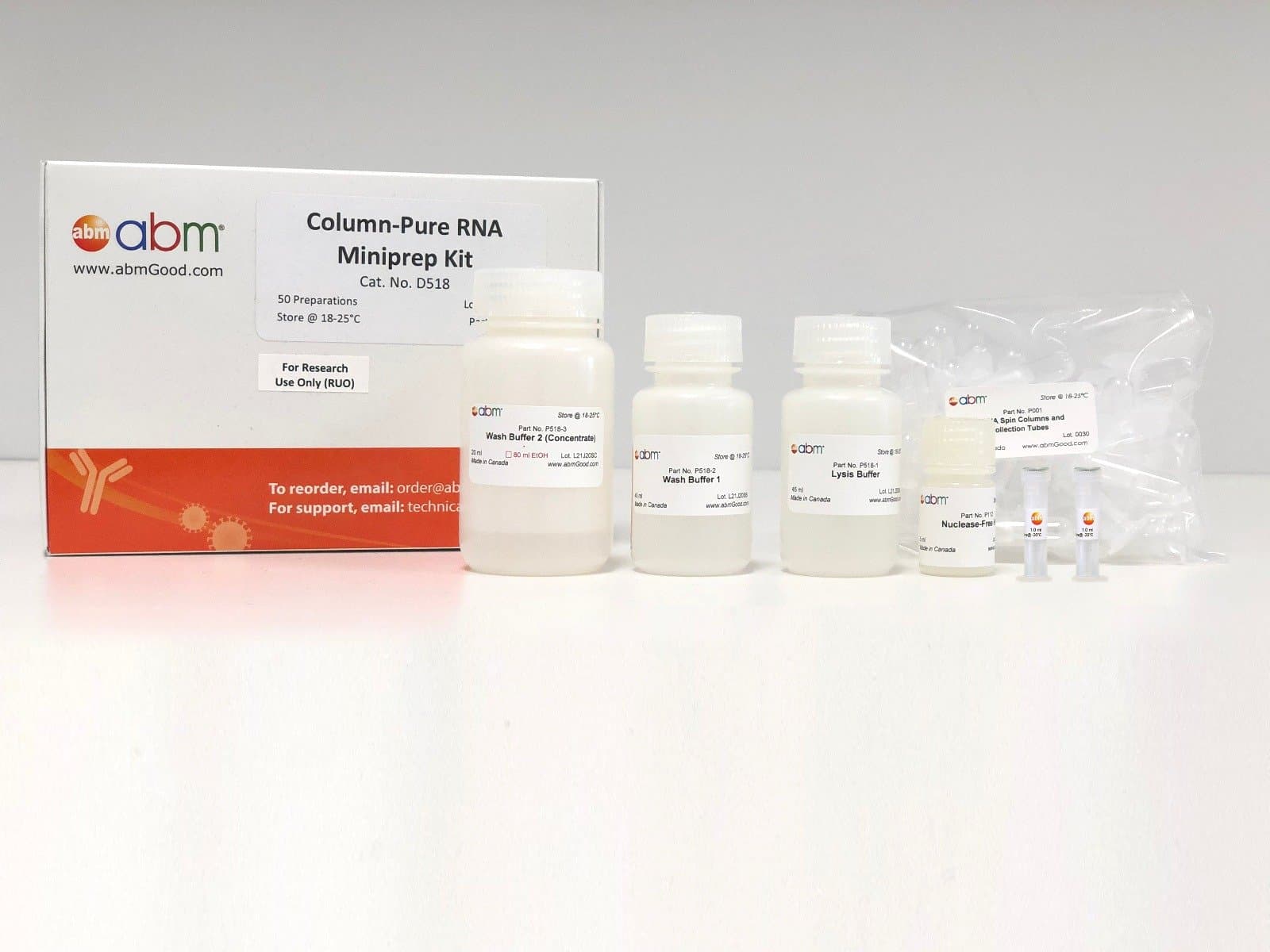
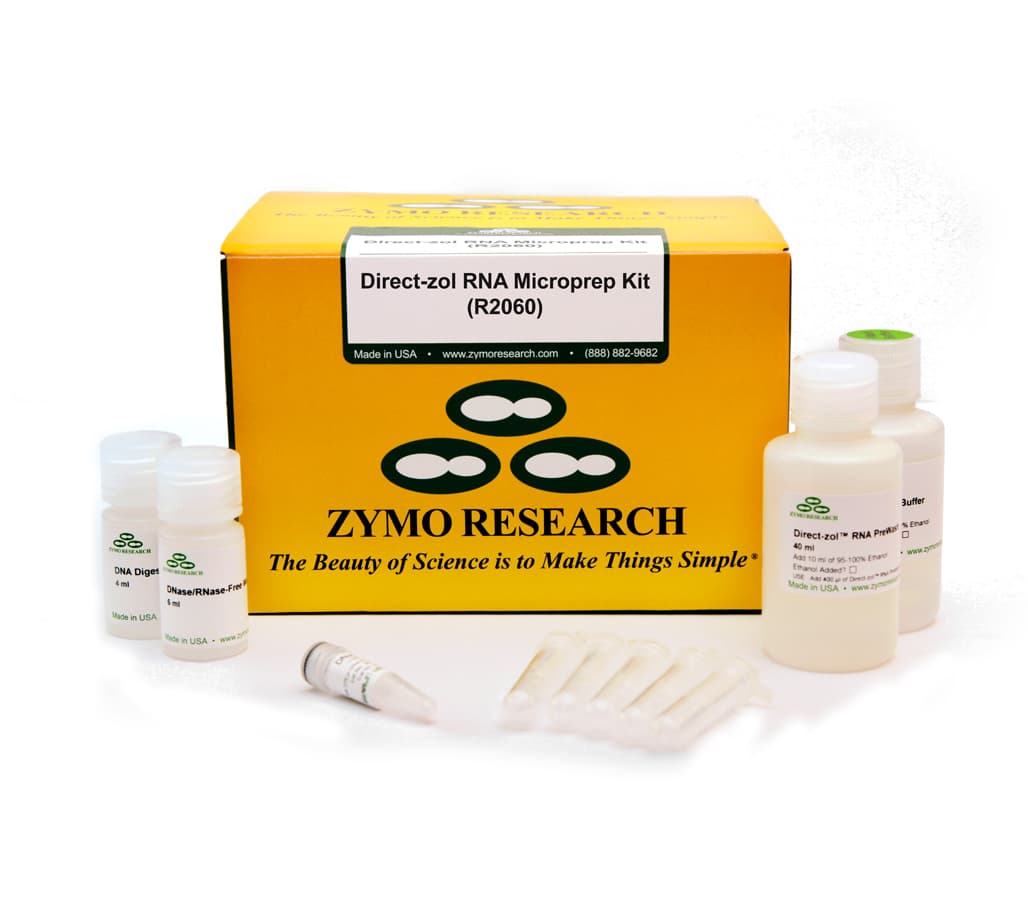
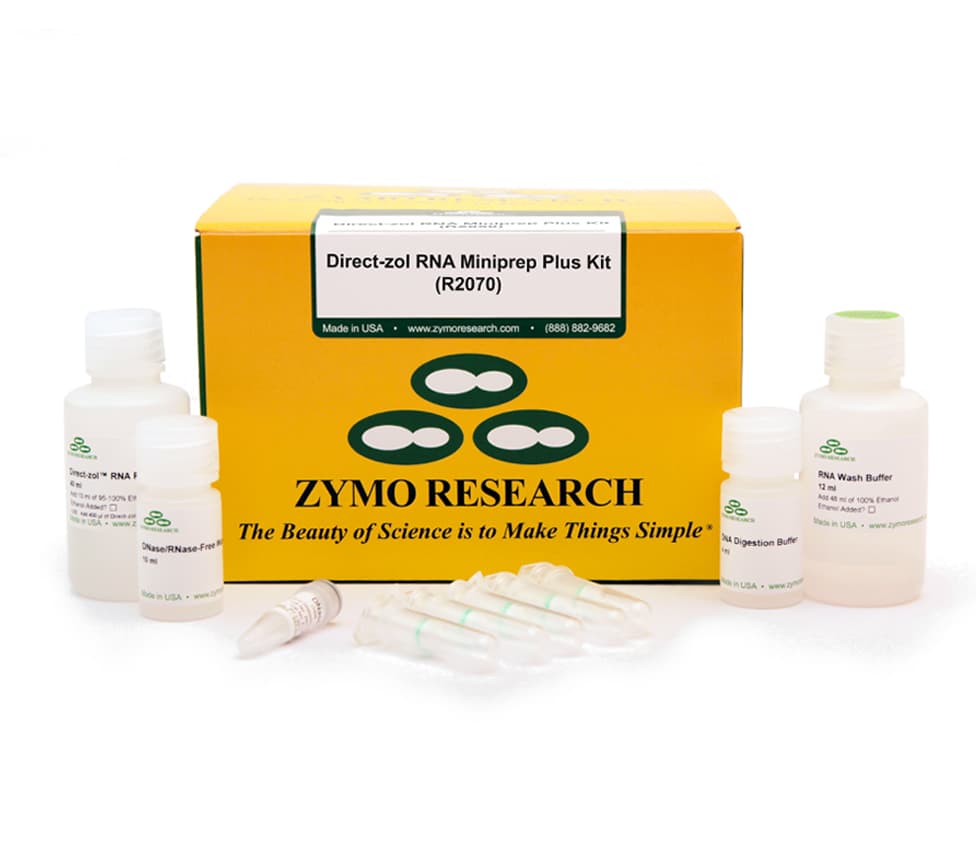
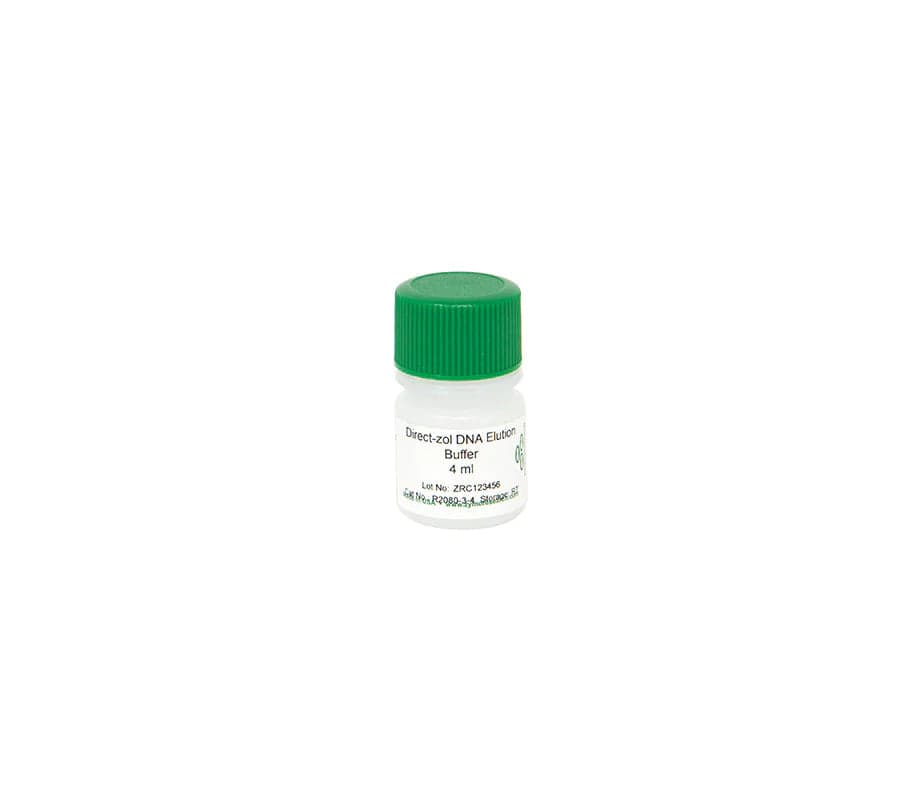


Showing 1 to 10 of 10 results
What Are Spin-Column Total RNA Kits?
Spin-column total RNA kits are the most widely used format for manual RNA purification in molecular biology laboratories. The technology relies on silica membrane chemistry: under chaotropic (guanidinium-based) lysis conditions, RNA adsorbs selectively to the silica membrane of the column; sequential ethanol-based wash steps remove proteins, salts, and gDNA fragments; and a low-ionic-strength buffer or RNase-free water then releases the purified RNA. Standard mini-format kits accept cell or tissue lysate from inputs of 1x10^4-1x10^7 cells or 5-100 mg tissue, bind up to 100 ug RNA, and complete the protocol in 15-30 minutes. The eluted RNA is suitable for RT-PCR, qRT-PCR, RNA sequencing, Northern blot, and hybridization without additional cleanup. Spin-column RNA kits are the default choice for 1-24 samples per run in any lab that does not require automated magnetic-bead processing.
What you will find:
-
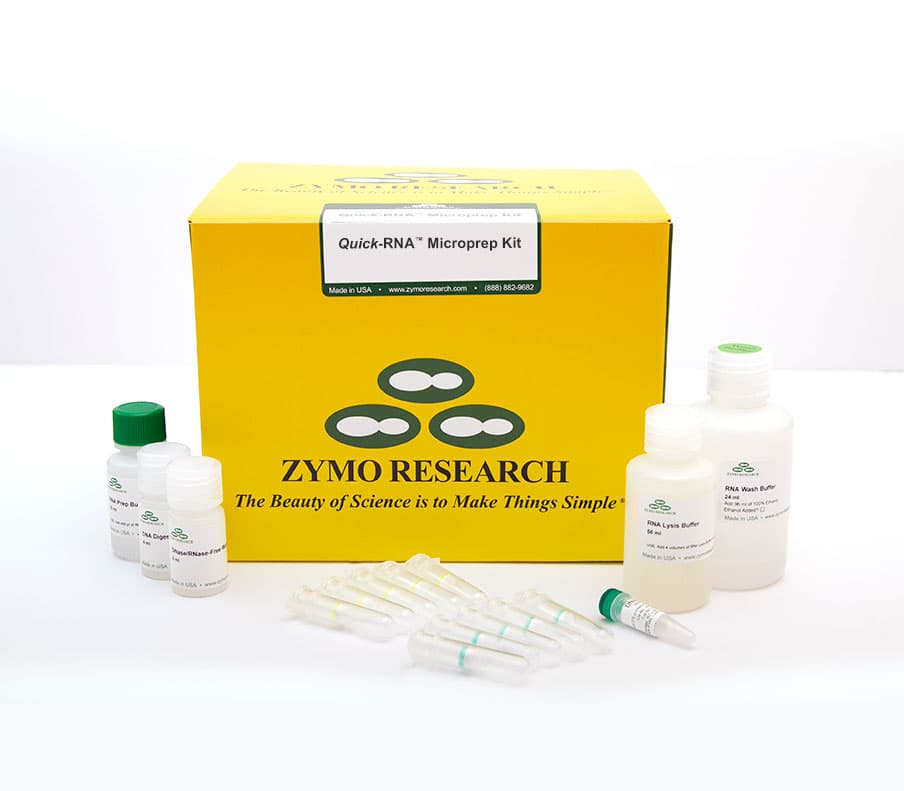
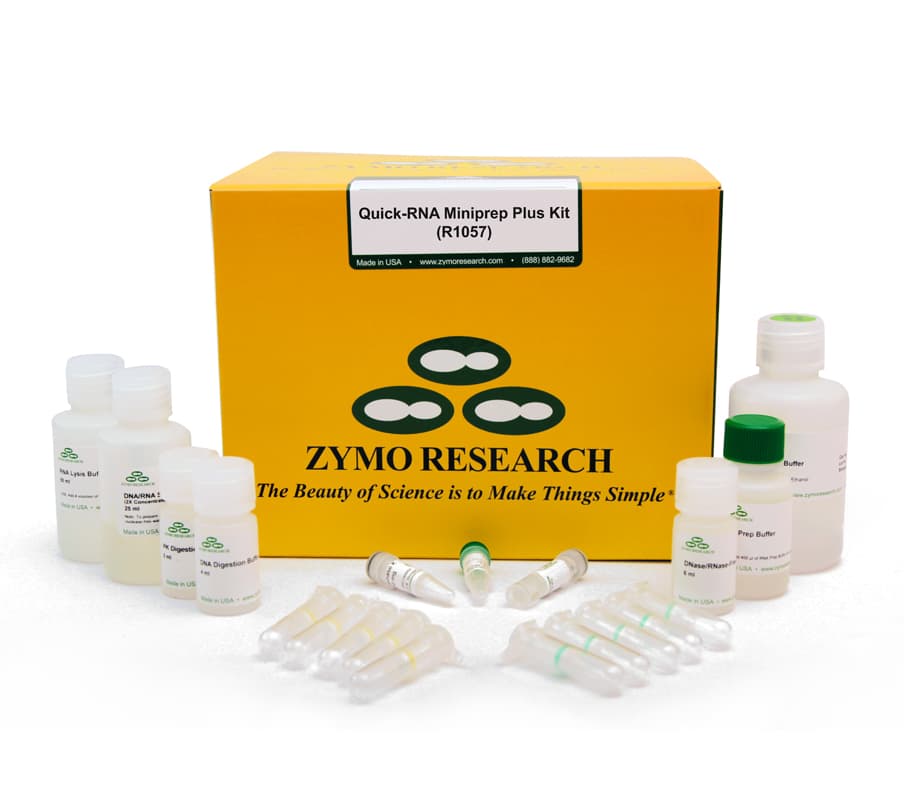
Quick-RNA Microprep and Miniprep Kits for low-volume elution and highly concentrated recovery, providing ultra-clean and phenol-free transcript isolation
-
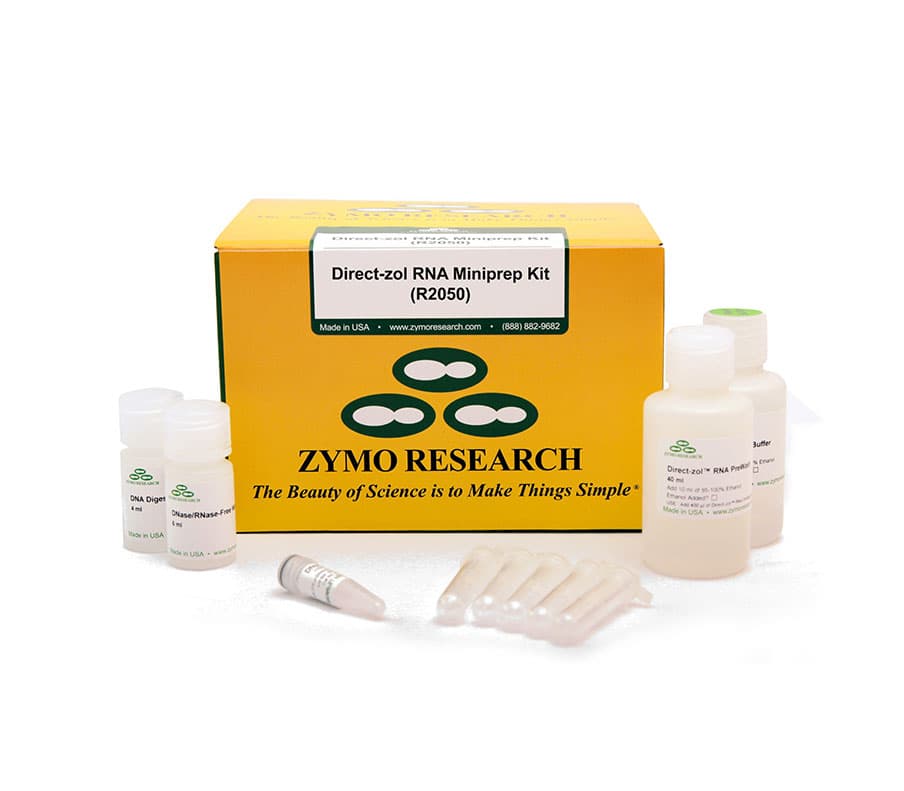
Direct-zol™ RNA Kits to bypass tedious phase separation steps, allowing researchers to pump TRIzol-lysed samples directly into spin-columns
-
Direct-zol™ DNA/RNA Parallel Modules are engineered for the non-destructive, simultaneous isolation of DNA and RNA fractions.
-
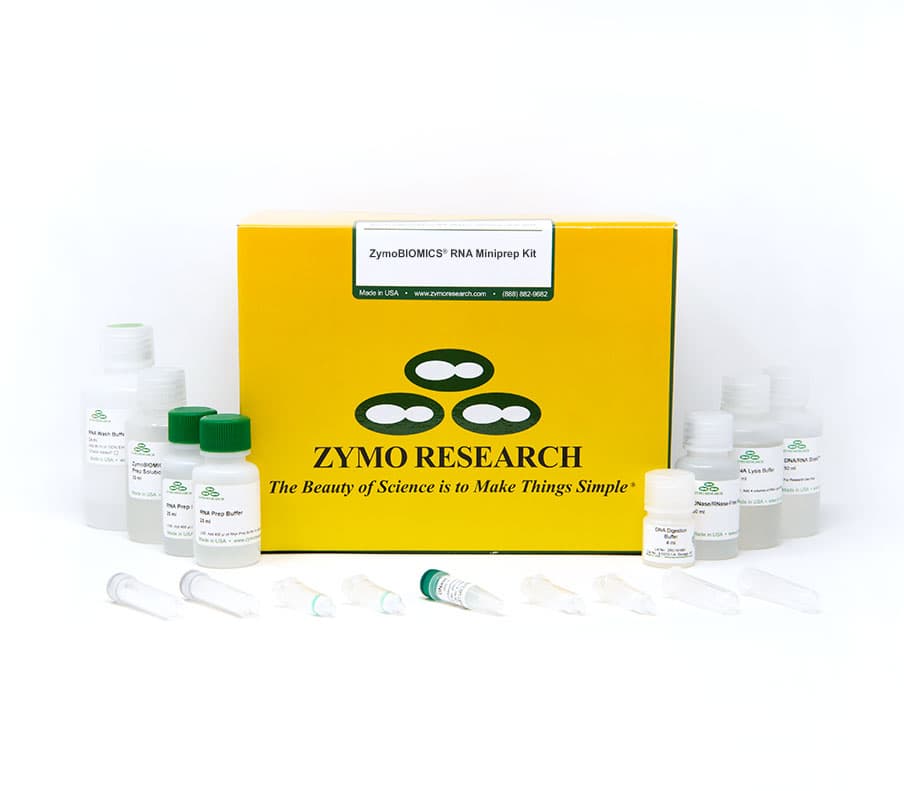
ZymoBIOMICS™ RNA Mini Kits for uniform microbial profiling featuring host-zeroing lysis mechanics
-
Quick-RNA™ Midiprep Assemblies to capture larger quantities of high-purity total transcripts efficiently, tailored for bulk processing
How to Choose Spin-Column Total RNA Kits
Column Binding Capacity and Elution Volume
Mini-format columns bind up to 100 ug total RNA and elute in 10-100 uL. For samples with very low RNA content (needle biopsies, laser-capture microdissection sections, small cell numbers <=10^4), choose micro-format columns with 8-12 uL minimum elution volume to maximize concentration. Eluting in <30 uL with high RNA concentration increases sensitivity in downstream RT-qPCR.
Small RNA Retention
This is the most important differentiator between kit brands. Kits using Zymo-Spin column technology with proprietary binding buffers retain miRNA and small RNA species >=17 nt in the total RNA fraction. Competing kits using standard high-ethanol wash chemistry typically lose RNA <200 nt in the wash steps. If your workflow includes small RNA profiling, miRNA RT-qPCR, or small RNA-seq, verify that the kit retains >=17 nt RNA before purchasing.
On-Column DNase Treatment
Included RNase-free DNase I that degrades gDNA on the column during the wash stage eliminates the need for post-elution DNase treatment. This matters for RT-qPCR with primers spanning a small intron, or for RNA-seq where even trace gDNA contamination generates false mapping reads. DNase-treated RNA typically passes a no-RT PCR control at Ct >35.
Sample Type: Cells vs Tissue
Cell lysis buffer volumes and homogenization requirements differ by sample type. Cultured cells lyse directly in lysis buffer with vortexing; tissue samples require homogenization to disrupt cell structure before contact with the lysis buffer. For fibrous tissues (muscle, heart), use a bead-mill homogenizer or rotor-stator; for soft tissues (liver, brain), a disposable pestle or needle shearing is sufficient. Some kits include TissueLyser-compatible bead tubes or QIAshredder-equivalent homogenizer columns.
Specifications Context
Spin-column total RNA purity targets: A260/A280 ratio 1.8-2.1; A260/A230 ratio >1.8. RNA integrity number (RIN) from fresh cultured cells or snap-frozen tissue is routinely 8-10 with validated kits. Zymo Research Quick-RNA Mini and Miniprep kits are among the most cited spin-column RNA isolation kits in published RT-PCR and RNA-seq methods; ABM RNA extraction kits offer validated protocols for bacteria, yeast, and fungi not covered by many standard cell/tissue kits. All kits supplied by MBP are Research Use Only (RUO).
MBP's specialist team can help match kit chemistry, format, and throughput to your sample type and downstream application. Contact the MBP team for personalized guidance.
FAQ