96-Well Plate RNA Extraction Kits for High-Throughput Isolation
96-well plate total RNA extraction kits purify RNA from up to 96 cell or tissue samples simultaneously using silica-membrane, glass-fiber filter, or magnetic bead formats compatible with centrifuges, vacuum manifolds, or liquid handlers. Kits handle 100–2×10⁶ cells or up to 30 mg tissue per well and complete purification, including on-plate DNase I digestion, in under 90 minutes.
MBP supplies 96-well RNA formats to registered vendors at Howard Hughes Medical Institute, Vanderbilt University, and MD Anderson Cancer Center. Request a quote today by contacting customerservice@mbpinc.net
96-well plate

Showing 1 to 3 of 3 results
What are 96-Well Plate Total RNA Extraction Kits?
96-well plate total RNA extraction kits purify total RNA from up to 96 samples in a single processing run using silica-membrane plates, glass-fiber filter plates, or magnetic bead formats compatible with centrifuges, vacuum manifolds, or automated liquid handlers. Unlike single-tube spin-column formats, plate kits maintain individual sample integrity while delivering the throughput needed for screens, longitudinal studies, and genomics pipelines processing hundreds of samples per week. Choose a 96-well plate format when processing 48 or more samples per session to eliminate the per-sample handling overhead of individual spin columns.
What you will find:
-
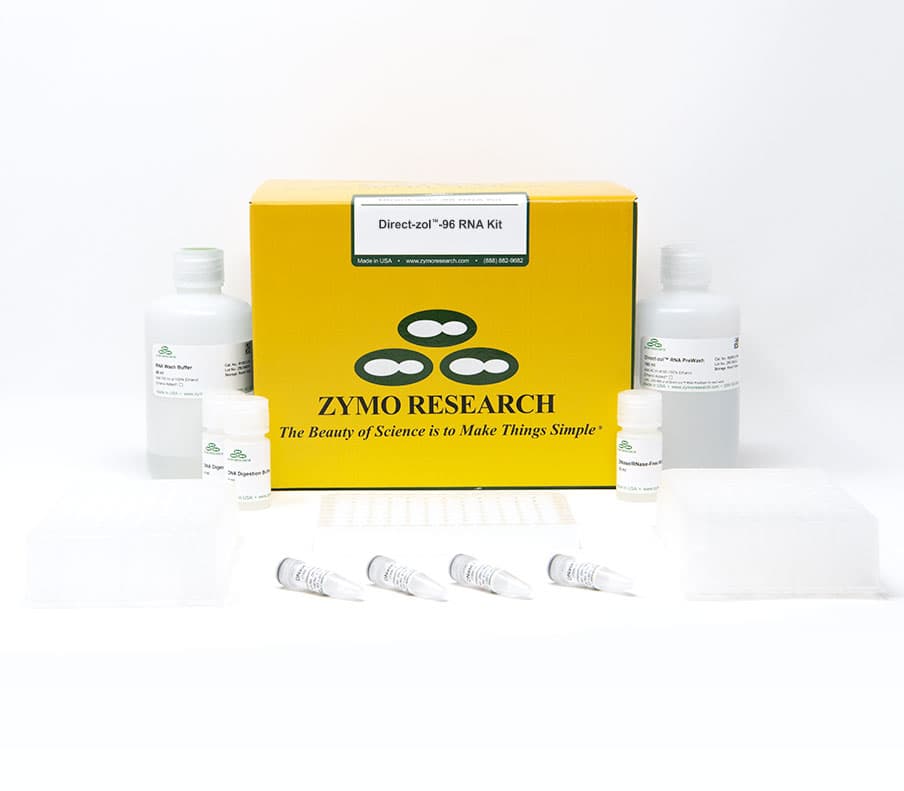
Direct-zol™-96 RNA Kits facilitate bypass of the phase-separation steps, enabling phenol-free, high-throughput transcript extraction directly from TRIzol® reagents
-
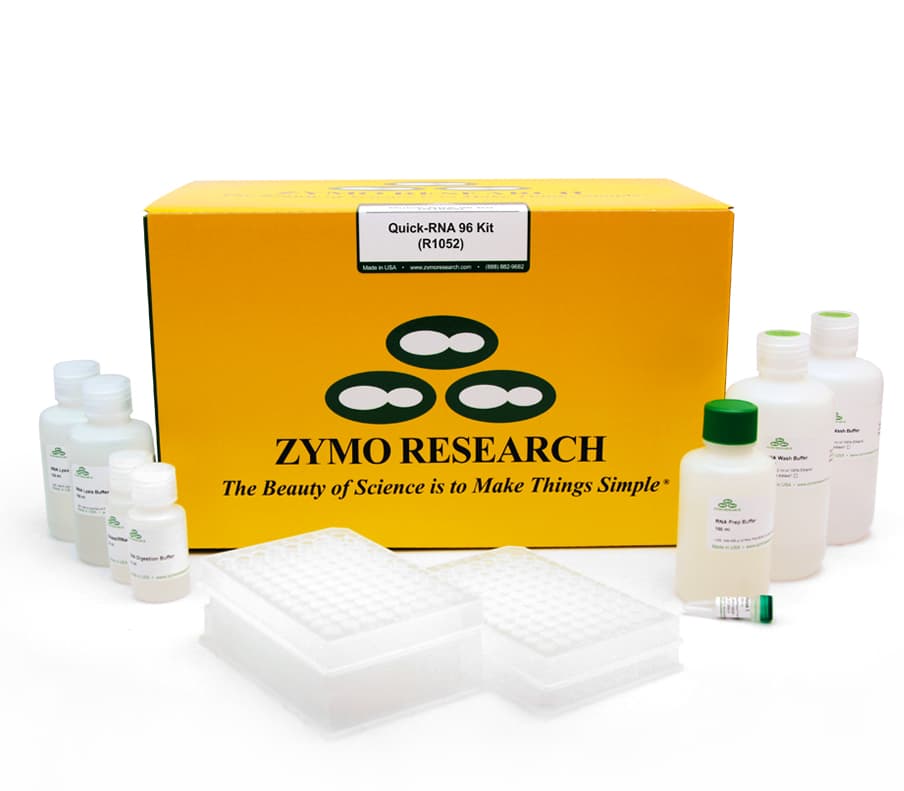
Quick-RNA™ 96 Kits for rapid, ultra-pure total RNA delivery from small-scale cellular samples
-
96-well Tissue RNA Kits with multi-well lysis arrays to handle complex, fibrous animal tissues without blocking the filtration matrices
How to Choose a 96-Well Plate RNA Extraction Kit
Processing Method: Centrifuge vs. Vacuum vs. Magnet
Centrifuge-compatible plates (e.g., QIAGEN RNeasy 96) require a 96-well plate rotor; vacuum manifold protocols skip that equipment dependency. Magnetic bead formats eliminate both and are the preferred choice when an automation platform is available. Select based on the equipment already in your facility before comparing kits.
Sample Type and Starting Amount
Standard plate kits handle 100-2x10^6 cultured mammalian cells or up to 30 mg of tissue per well. Plant tissue extraction requires an additional plant isolation aid to remove polysaccharide and polyphenol inhibitors. Do not use total RNA kits for cell-free samples (plasma, serum, nasal wash) - those require viral RNA formats.
On-Plate DNase Treatment
For RT-qPCR and RNA-seq, choose kits that include on-plate DNase I digestion to remove genomic DNA contamination. Most silica-membrane kits supply lyophilized DNase I; verify that the kit includes this reagent rather than requiring a separate purchase.
Elution Volume and Concentration
96-well kits typically elute in 50-100 ul per well; magnetic bead formats can concentrate into 20-50 ul, which is advantageous for low-abundance samples or applications needing high RNA concentration for library prep.
Automation Compatibility
Magnetic bead 96-well formats integrate with Tecan, Hamilton, and Beckman Coulter liquid handlers using vendor-supplied scripts. Silica-membrane plates can be semi-automated on vacuum manifold platforms. Confirm the kit supplier provides an automation protocol before purchase if robotic processing is required.
Specifications Context
Key purity benchmarks for 96-well RNA eluates are A260/A280 >= 1.8 and A260/A230 >= 1.5; values below these thresholds indicate carryover of protein, phenol, or guanidinium salts that inhibit downstream enzymes. Silica-membrane kits from QIAGEN and Bio-Rad remain the most widely cited 96-well formats in peer-reviewed methods, and their protocols are referenced directly in published automation workflows at institutions including the Howard Hughes Medical Institute. RNase-free reagents and consumables are required throughout to prevent RNA degradation; confirm kit buffers are certified RNase-free before use with precious or low-abundance samples.
MBP's specialist team can help match kit chemistry, format, and throughput to your sample type and downstream application. Contact the MBP team for personalized guidance.
FAQ