Magnetic Bead Plasmid DNA Extraction Kits for Automation
Magnetic bead plasmid DNA extraction kits isolate plasmid DNA from bacterial culture using paramagnetic particles that bind nucleic acids under specific buffer conditions, replacing centrifuge and spin-column steps entirely. Typical yields are 5–20 µg per 1.5–5 mL culture in formats scalable from single-tube to 96-well automation on liquid handlers.
MBP supplies bead-based kits compatible with KingFisher, MagnetaPure, and other automated magnetic rod systems, with direct support for protocol adaptation. Request a quote today by contacting customerservice@mbpinc.net
Mag Beads
Showing 1 to 3 of 3 results
What Are Magnetic Bead Plasmid DNA Extraction Kits?
Magnetic bead plasmid DNA kits use superparamagnetic nanoparticles, typically silica-coated or anion-exchange-functionalized, suspended in optimized binding buffers to capture plasmid DNA from bacterial lysate. After alkaline lysis of E. coli culture (0.5-5 mL per reaction), the beads bind DNA; an external magnetic field then immobilizes the beads so supernatant, RNA, and proteins are washed away without centrifugation. The purified DNA is eluted in water or low-salt buffer and is ready for downstream use. Throughput scales from single-tube manual processing to 96-well plate automation on KingFisher Duo, MagnetaPure 32, or ASSIST PLUS liquid handlers. Choose magnetic bead kits when your lab runs plasmid minipreps at scale (24+ samples/run) or when centrifuge-free automation is required.
What you will find:
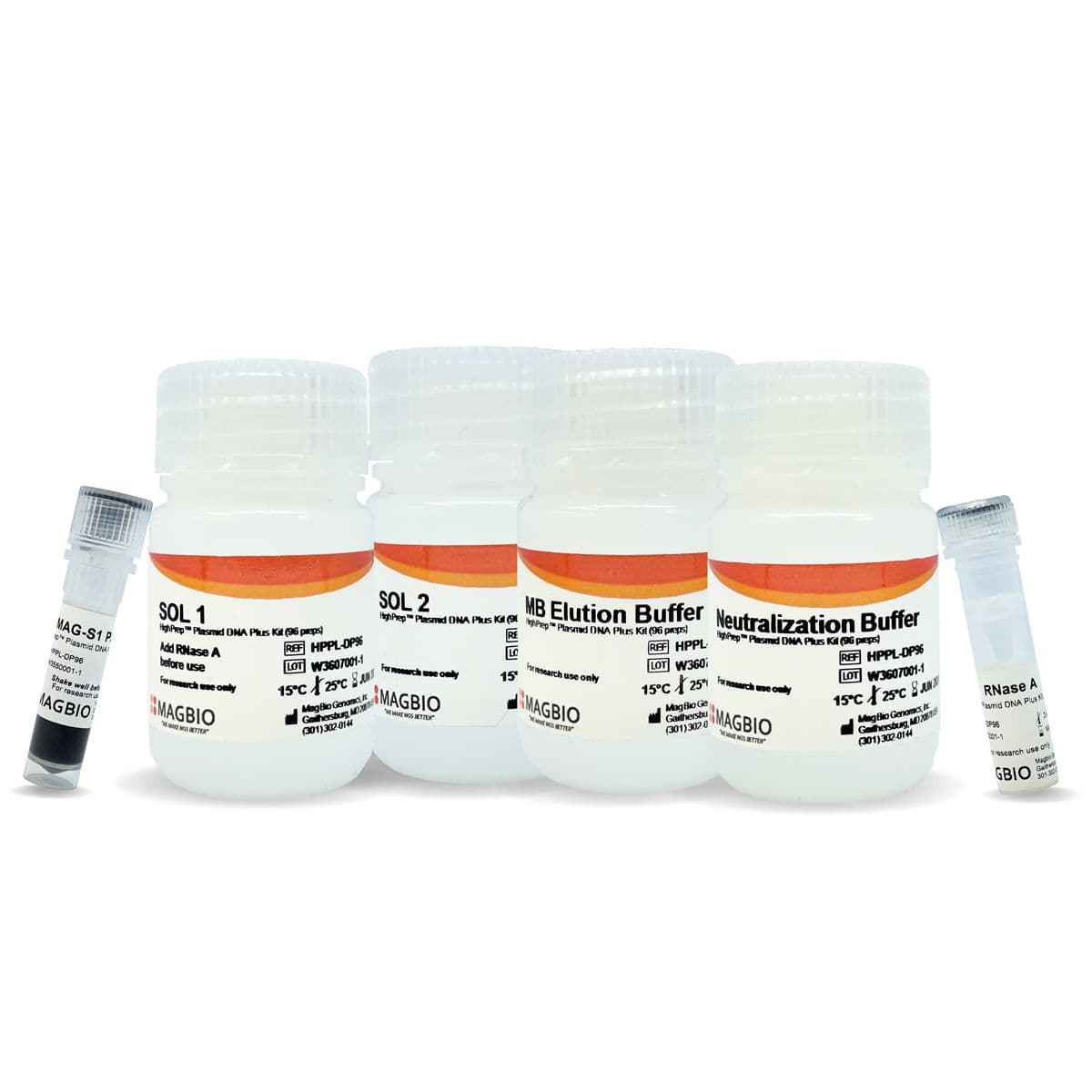
- Magbio HighPrep Plasmid DNA Plus Kit for rapid, automated plasmid purification using high-binding paramagnetic particle technology.
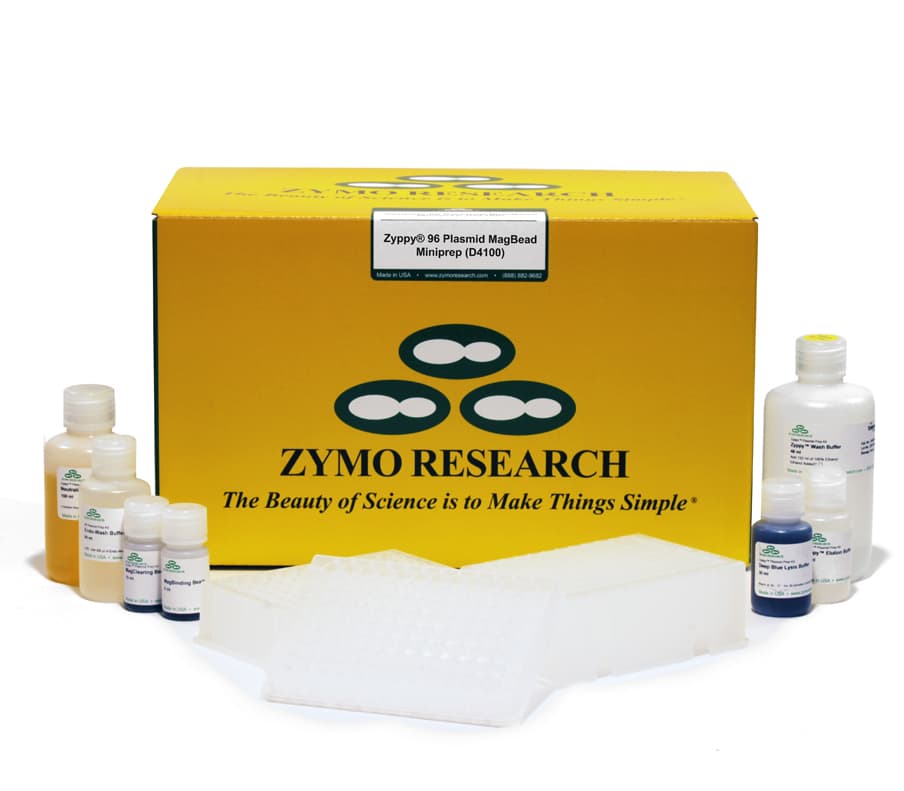
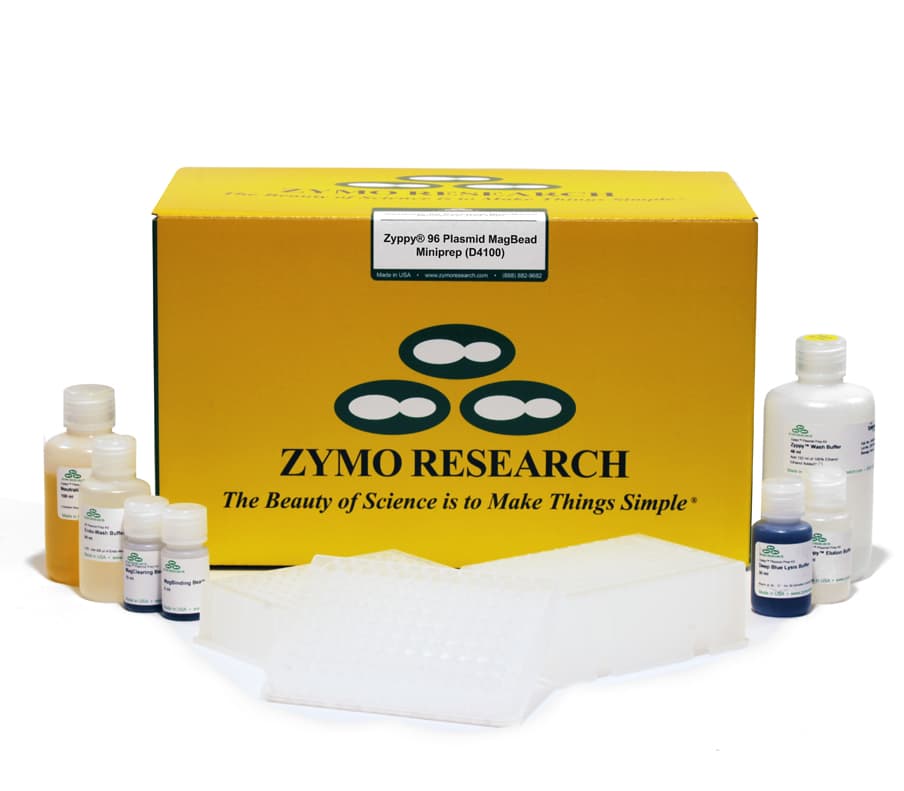
- Zyppy™-96 Plasmid MagPrep Kit for scalable magnetic separation of high-purity vector constructs.
- Zyppy-96 Plasmid MagBead Prep Kit for faster, column-free plasmid isolation.
- Magnetic bead-based plasmid purification solutions compatible with high-throughput laboratory workflows.
- Column-free plasmid DNA extraction systems that simplify processing and reduce hands-on time.
- Products designed for efficient recovery of clean plasmid DNA for cloning, sequencing, and transfection applications.
- Automation-friendly plasmid preparation kits suitable for 96-well and large-batch sample processing.
How to Choose Magnetic Bead Plasmid Kits
Automation Platform Compatibility
Bead-based kits are designed for specific magnetic rod or liquid-handler platforms. Confirm compatibility before ordering: NucleoMag Plasmid kits are validated for MagnetaPure and IsoPure Mini; MagJET kits are optimized for the KingFisher series; MagMAX Pro HT kits are designed for high-throughput centrifuge-free workflows. Using a kit outside its validated platform may require buffer volume adjustments and is not supported by the manufacturer.
Bead Type and DNA Binding Capacity
Silica-coated magnetic beads use chaotropic binding chemistry similar to spin columns; anion-exchange-functionalized beads offer higher selectivity for covalently closed circular (CCC/supercoiled) plasmid. Standard miniprep bead kits bind 5-20 ug from 1.5 mL culture; scaled protocols for 5 mL can yield up to 50 ug. Check binding capacity against your expected yield to avoid saturation.
High-Copy vs Low-Copy Plasmid
Most bead-based kits are validated for standard high-copy plasmids (pUC, pBR322 derivatives). Low-copy constructs such as fosmids or BACs require longer lysis times and may need protocol modifications; check the kit's validated plasmid types before purchasing for non-standard vectors.
Elution Volume and Concentration
Bead protocols typically elute in 50-100 uL. If downstream transfection requires high DNA concentration, choose kits that support low-volume elution (50 uL) or perform a secondary concentration step. Check that the eluate is compatible with your downstream assay buffer conditions.
Specifications Context
Plasmid DNA purity from bead-based kits is evaluated by the A260/A280 ratio (target 1.8-2.0) and the A260/A230 ratio (>1.8). Supercoiling percentage (measured by agarose gel densitometry) should exceed 80% for standard transfection applications. Automated 96-well bead workflows complete plasmid isolation in 30-60 minutes for a full plate, compared to 1-2 hours for centrifuge-based spin-column processing of the same number of samples. All kits are Research Use Only (RUO).
MBP's specialist team can help match kit chemistry, format, and throughput to your sample type and downstream application. Contact the MBP team for personalized guidance.
FAQ