Spin-Column DNA/RNA Co-Extraction Kits with Dual-Column Separation
Spin-column DNA/RNA co-extraction kits simultaneously isolate genomic DNA and total RNA in separate fractions from the same mammalian cell pellets (up to 5×10⁶), tissue biopsies (up to 30 mg), and whole blood (up to 50 µl) in under 15 minutes using a two-column Zymo-Spin architecture—IIICG for gDNA capture, IIC for RNA purification—with DNase I included for on-column RNA fraction cleanup.
MBP carries the Zymo Research Quick-DNA/RNA Miniprep Plus and Microprep Plus kits for registered vendors at Howard Hughes Medical Institute, Vanderbilt University, and MD Anderson Cancer Center. Request a quote for spin-column DNA/RNA co-extraction kits featuring separate genomic DNA and RNA recovery for downstream PCR, qPCR, sequencing, and multi-omics applications by contacting customerservice@mbpinc.net.
Spin-column
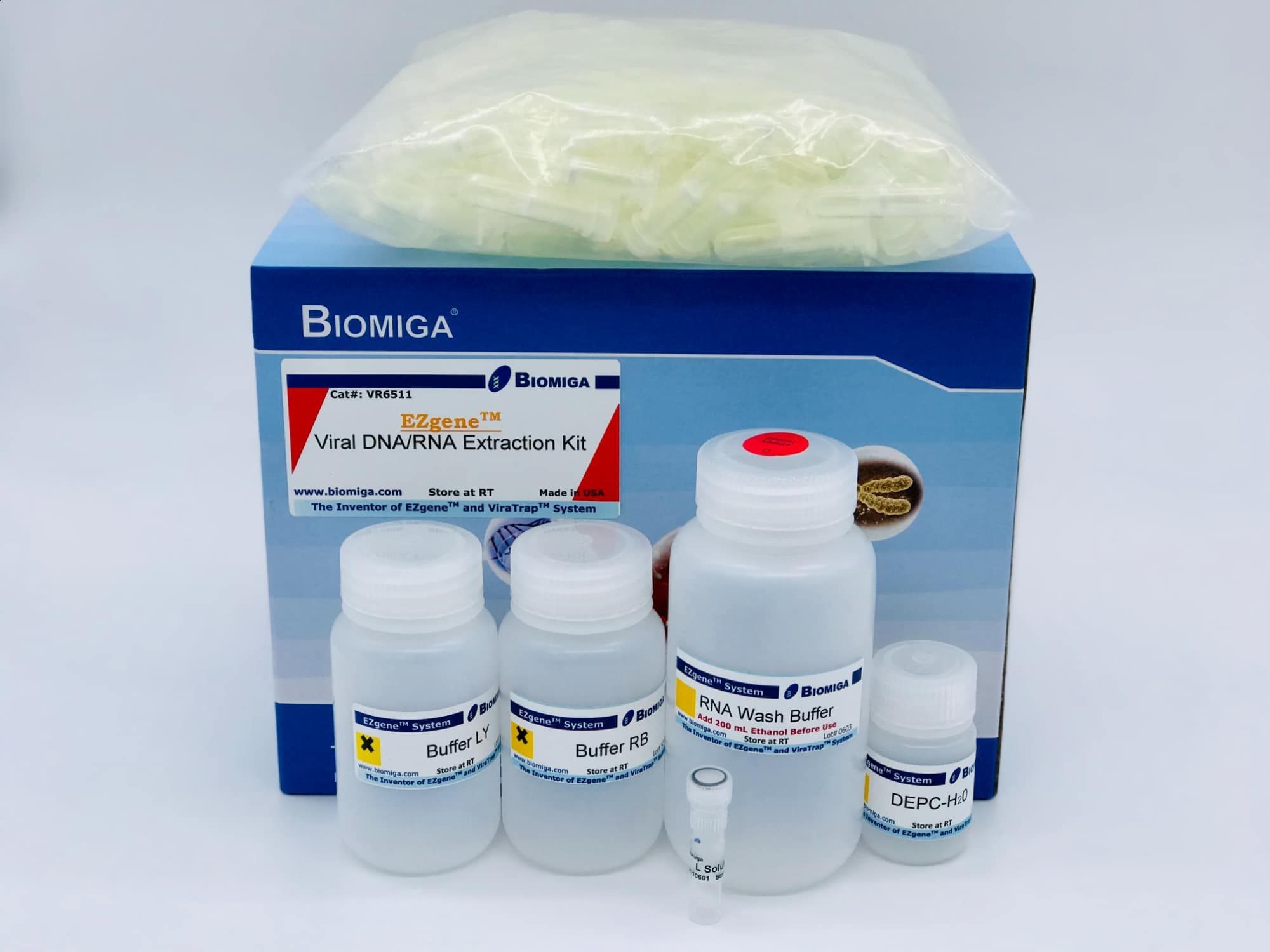
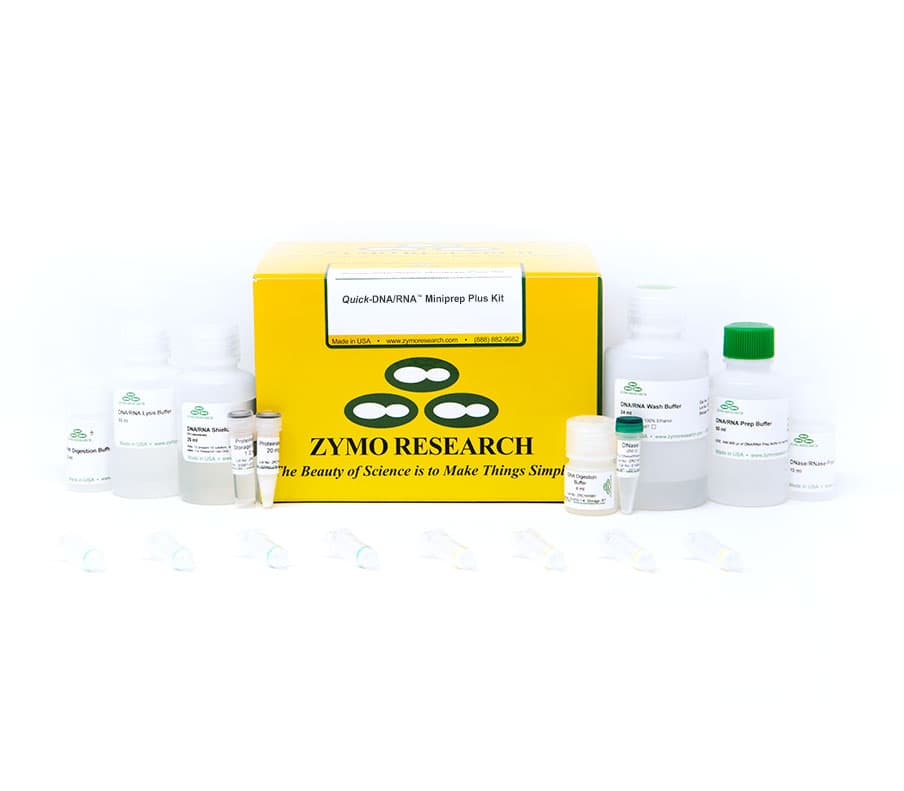
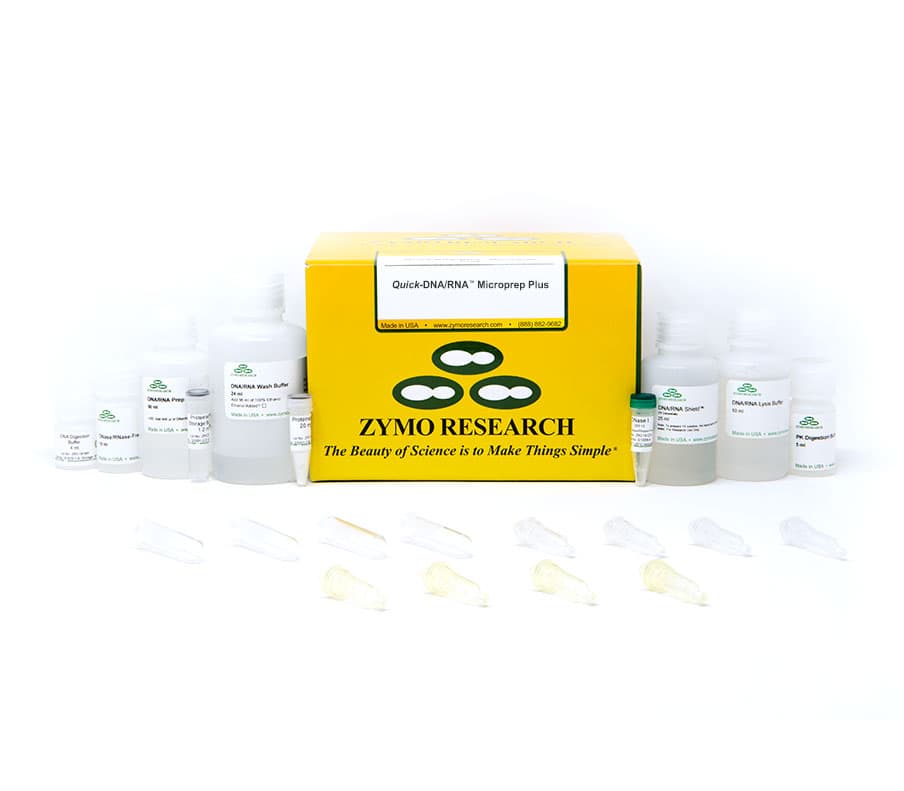

Showing 1 to 4 of 4 results
What are Spin-Column DNA/RNA Co-Extraction Kits for Cells, Tissue, and Blood?
Spin-column DNA/RNA co-extraction kits for cells, tissue, and blood simultaneously purify genomic DNA and total RNA in separate fractions from the same mammalian sample using a sequential two-column silica-membrane workflow in a standard microcentrifuge. The Zymo Quick-DNA/RNA Miniprep Plus Kit loads the sample lysate onto a Zymo-Spin IIICG column that physically captures gDNA while RNA passes through to a Zymo-Spin IIC column for binding, washing, and elution - completing both DNA and RNA purification in under 15 minutes for cell pellets and 45-75 minutes (including Proteinase K digestion) for solid tissue biopsies. Choose the spin-column format for DNA/RNA co-extraction from cells, tissue, and blood when processing 1-24 samples per run, when automation infrastructure is not available, or when the fastest possible DNA + RNA turnaround from a limited biopsy sample is required.
What you will find:
-
Quick-DNA/RNA™ Miniprep Kit for rapid co-extraction of total DNA and RNA from blood and tissues utilizing advanced spin-column technology
-
Quick-DNA/RNA™ Microprep Plus Kit to recover high-purity nucleic acids from extremely small or rare samples using a specialized micro-elution column
-
Quick-DNA/RNA Miniprep Plus Kit to ensure high-yield genomic DNA and total RNA yields using an ultra-clean spin-column workflow
-
Blood RNA Mini Kit for the specific extraction of intact viral and total host RNA from whole blood samples using robust silica-membrane columns
How to Choose a Spin-Column DNA/RNA Co-Extraction Kit for Cells, Tissue, and Blood
Miniprep Plus vs. Microprep Plus Format
The Miniprep Plus kit handles standard inputs (up to 5x10^6 cells or 30 mg tissue) and elutes in 25-100 ul per fraction, appropriate for most downstream applications. The Microprep Plus kit is designed for very low inputs -- 500 cells to 5,000 cells or 0.5-5 mg tissue -- with minimum elution volumes of 6-10 ul per fraction for maximum concentration from limited material. Use Microprep Plus for needle biopsy cores, laser-capture microdissected cells, single-well organoid lysates, and sorted immune cell populations.
DNA/RNA Shield for Sample Lysis and Stabilization
DNA/RNA Shield in the Miniprep Plus and Microprep Plus kits performs dual duty: it lyses cells on contact while simultaneously stabilizing DNA and RNA at room temperature, enabling sample collection and processing to be decoupled by hours or days without cold-chain handling. For tissue biopsies collected in the operating room that cannot be processed immediately, submerging in DNA/RNA Shield preserves RNA integrity for up to 30 days at room temperature -- the practical alternative to snap-freezing in liquid nitrogen.
Tissue Digestion Strategy
Soft, high-cellularity tissues (liver, spleen, kidney cortex) lyse completely in DNA/RNA Shield + Proteinase K at 55 degrees C within 30 minutes. Fibrous tissues (skeletal muscle, heart, skin, lung) require 1-2 hours of Proteinase K digestion or mechanical homogenization (bead-beating, tissue grinder) before column loading. For very fibrous tissue that resists Proteinase K digestion, add bead-beating in a lysis tube (0.5 mm beads) with DNA/RNA Lysis Buffer before proceeding to column loading.
On-Column DNase I for the RNA Fraction
Always include on-column DNase I treatment for RNA-seq and for RT-qPCR assays without intron-spanning primers. Skip DNase I only for RT-qPCR with exon-spanning primer pairs that distinguish cDNA from gDNA amplicons. The IIICG column physically depletes the majority of gDNA but does not eliminate 100%; residual gDNA in the RNA fraction produces false-positive amplification in RT-qPCR assays without an intron-spanning design.
Elution Strategy for Downstream Applications
For RNA-seq: elute RNA in 50-100 ul, quantify by Qubit RNA HS Assay, and verify RIN >= 7 on a Bioanalyzer before library preparation. For RT-qPCR: elute in 25-50 ul for higher RNA concentration. For gDNA applications requiring >= 5 kb fragments (WGS, WES, long-read sequencing): elute DNA in 50-100 ul and quantify by Qubit dsDNA BR Assay; avoid vortexing gDNA eluates to preserve high-molecular-weight fragment integrity.
Specifications Context
The Zymo Quick-DNA/RNA Miniprep Plus Kit produces gDNA (A260/A280 >= 1.8, high molecular weight >= 20 kb) and total RNA, including small RNAs >=17 nt (A260/A280 >= 1.8, RIN >= 7 from fresh tissue) in under 15 minutes from cell pellets, with both analytes ready for next-generation sequencing without further cleanup. The Quick-DNA/RNA Miniprep Plus Kit is among the most widely used spin-column co-extraction kits in academic molecular biology, gene therapy, pharmacology, and cancer multi-omics research; its use is cited in published studies at institutions including Howard Hughes Medical Institute, Vanderbilt University, and MD Anderson Cancer Center for paired genomic and transcriptomic analyses. For needle biopsy or LCM inputs where the Miniprep Plus minimum input cannot be met, the Microprep Plus format recovers both analytes from the single-cell level without carrier RNA or pre-amplification requirements.
For guidance on selecting the right spin-column co-extraction format for your input type or for pricing, contact the expert team at MBP Inc.
FAQ