Magnetic Bead High Molecular Weight (HMW) DNA Extraction Kits for Long-Read Sequencing
Magnetic bead high molecular weight (HMW) DNA extraction kits use gentle lysis followed by magnetic bead binding and a magnetic separator for wash and elution steps, recovering DNA fragments in the 50-150 kb range (or up to 100 kb with vortexing-based resuspension) from blood, cultured cells, and tissue without centrifugation, columns, or a vacuum manifold. Typical yields meet the 3 ug minimum input that PacBio and Oxford Nanopore library prep platforms require, with A260/A280 and A260/A230 ratios above 1.8 indicating sufficient purity.
Genome assembly and structural variant research can choose between bead-resuspension methods to balance fragment size against yield, and MBP's specialist team can help match bead chemistry to your sequencing platform's input requirements. Request a quote today by contacting customerservice@mbpinc.net
Mag Beads
Showing 1 to 2 of 2 results
What Are Magnetic Bead HMW DNA Extraction Kits?
A magnetic bead HMW DNA extraction kit uses Solid Phase Reversible Immobilization (SPRI)-type magnetic beads to bind genomic DNA released by gentle lysis, with a magnetic separator handling wash and elution steps in place of centrifugation, columns, or vacuum manifolds, producing fragment sizes in the 50-150 kb range depending on how beads are resuspended during elution. Related entities include PacBio Nanobind-type bead chemistry, KingFisher-compatible automated magnetic particle processors, A260/280 and A260/230 purity thresholds above 1.8, and downstream long-read sequencing library preparation for PacBio and Oxford Nanopore platforms. Choose magnetic bead HMW kits when fragment sizes in the 50-150 kb range meet your long-read sequencing needs, and you want to avoid centrifugation-based shearing.
What you will find:
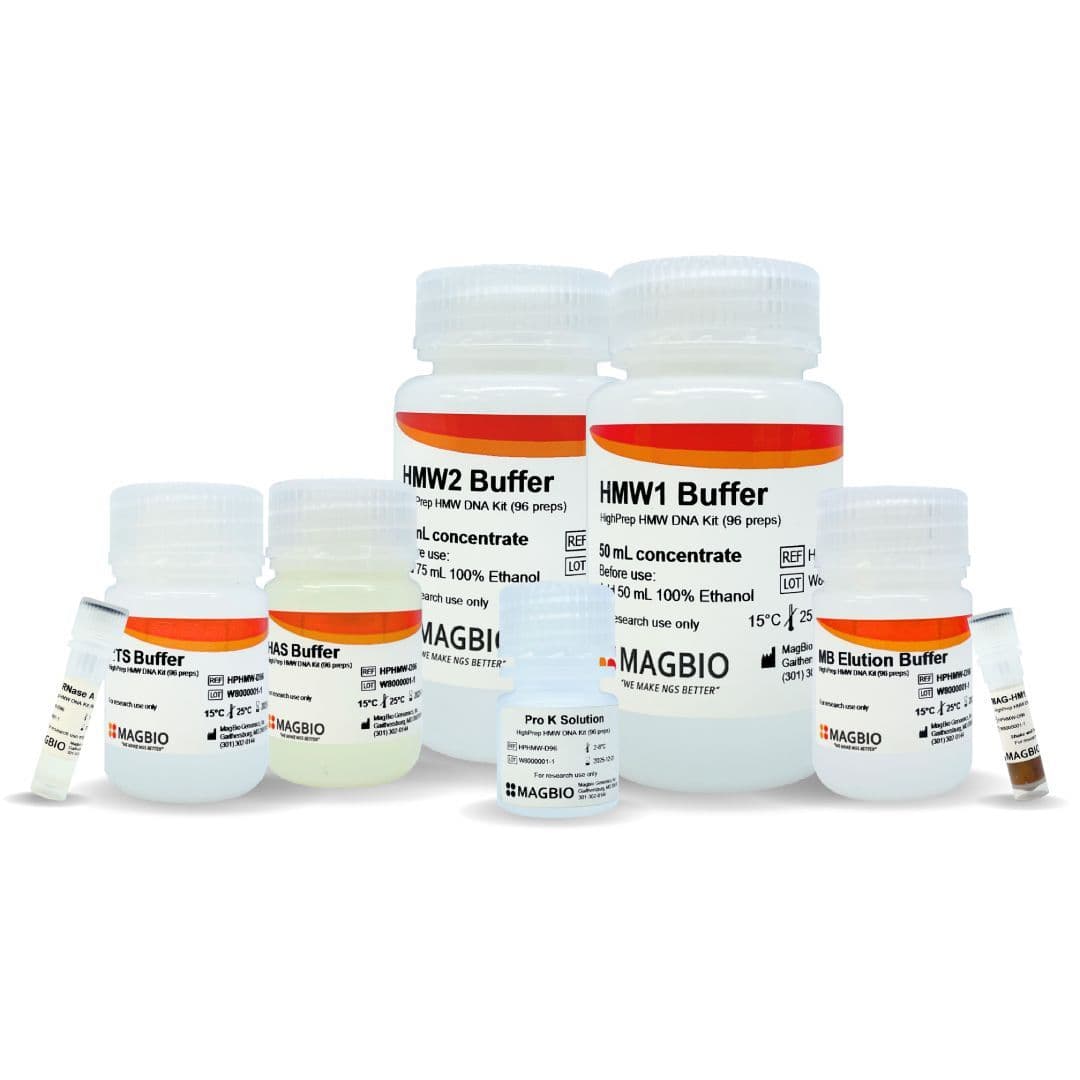
- Low-shear high molecular weight DNA isolation solutions using advanced paramagnetic bead technology, including the Magbio HighPrep HMW DNA Kit.
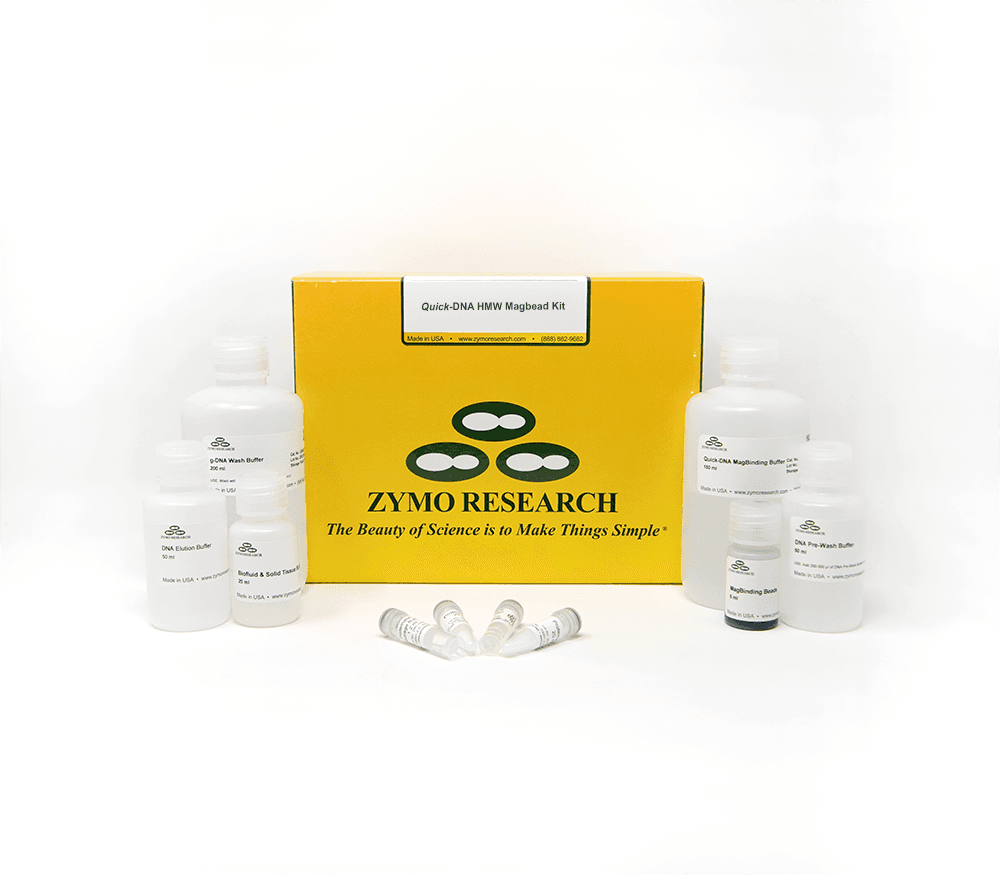
- High-throughput magnetic bead-based extraction systems for simultaneous recovery of intact genomic DNA, including the Quick-DNA™ HMW Kit.
- Workflow-friendly HMW DNA purification kits designed to preserve long DNA fragments for long-read sequencing applications.
- Solutions compatible with manual and automated sample processing for efficient genomic DNA recovery.
- HMW DNA extraction products suitable for genome assembly, structural variant analysis, and other advanced genomics workflows.
How to Choose a Magnetic Bead HMW DNA Kit
Bead Resuspension Method and Fragment Size Tradeoff
Fragment size from magnetic bead HMW kits depends on how beads are resuspended after washing: gentle tube tapping typically yields fragments in the 50-150 kb range, while vortexing produces somewhat smaller fragments (around 40-100 kb) but may improve recovery consistency. If your sequencing application benefits from the largest possible fragments (e.g., resolving large structural variants), prioritize tapping-based resuspension protocols even if yield is marginally lower.
Sample Input and Expected Yield
Magnetic bead HMW kits for blood, cells, and tissue typically specify inputs such as 200 ul of fresh/frozen whole blood, 1 million cells, or up to 8 mg of tissue, with a minimum yield around 3 ug of HMW gDNA—matching the input requirements of PacBio library preparation (around 1 ug above 30 kb) and Oxford Nanopore ligation kits (100 ng to 1.5 ug). Confirm your sample type matches a documented protocol within the kit family rather than assuming a single universal protocol.
No Centrifuge, Column, or Vacuum Required
Unlike silica spin-column or 96-well plate HMW approaches, magnetic bead HMW kits eliminate centrifugation, columns, and vacuum manifolds entirely, relying only on a magnetic separator for all wash and elution steps. This simplifies equipment requirements for labs without access to specialized centrifuge rotors, though a magnetic stand or automated magnetic particle processor is still required.
Purity Ratios and RNA Removal
A260/280 and A260/230 ratios greater than 1.8 are generally preferred for HMW DNA from magnetic bead kits, with near-complete RNA removal reported as a feature of bead-based HMW chemistry. Ratios below this threshold can indicate protein or salt contamination requiring troubleshooting before proceeding to expensive long-read library preparation.
Specifications Context
The defining specifications for magnetic bead HMW DNA extraction are the fragment size achievable via the bead resuspension method chosen, sample-specific input requirements relative to the kit's documented minimum yield, and purity ratios above 1.8 for both A260/280 and A260/230. A kit yielding around 3 ug of DNA in the 50-150 kb range from 200 ul whole blood, 1 million cells, or up to 8 mg tissue meets standard PacBio and Nanopore library preparation inputs without centrifugation.
MBP's specialist team can help match kit chemistry, format, and throughput to your sample type and downstream application. Contact the MBP team for personalized guidance.
FAQ