96-Well Plate Viral DNA Extraction Kits for High-Throughput Viral Research
96-well plate viral DNA extraction kits use a silica-membrane plate, processed by centrifugation with a 96-well rotor carrier or by vacuum manifold, to bind, wash, and elute viral DNA from up to 96 cell-free liquid samples in parallel, with each well accepting up to 400 µL of input. The plate format is designed for high-throughput processing while maintaining recovery comparable to single spin-column workflows.
Academic laboratories running routine viral DNA screening, pathogen surveillance, or sequencing workflows can scale sample throughput without significantly increasing hands-on time. Request a quote today for 96-well plate viral DNA extraction kits by contacting customerservice@mbpinc.net.
96-well plate
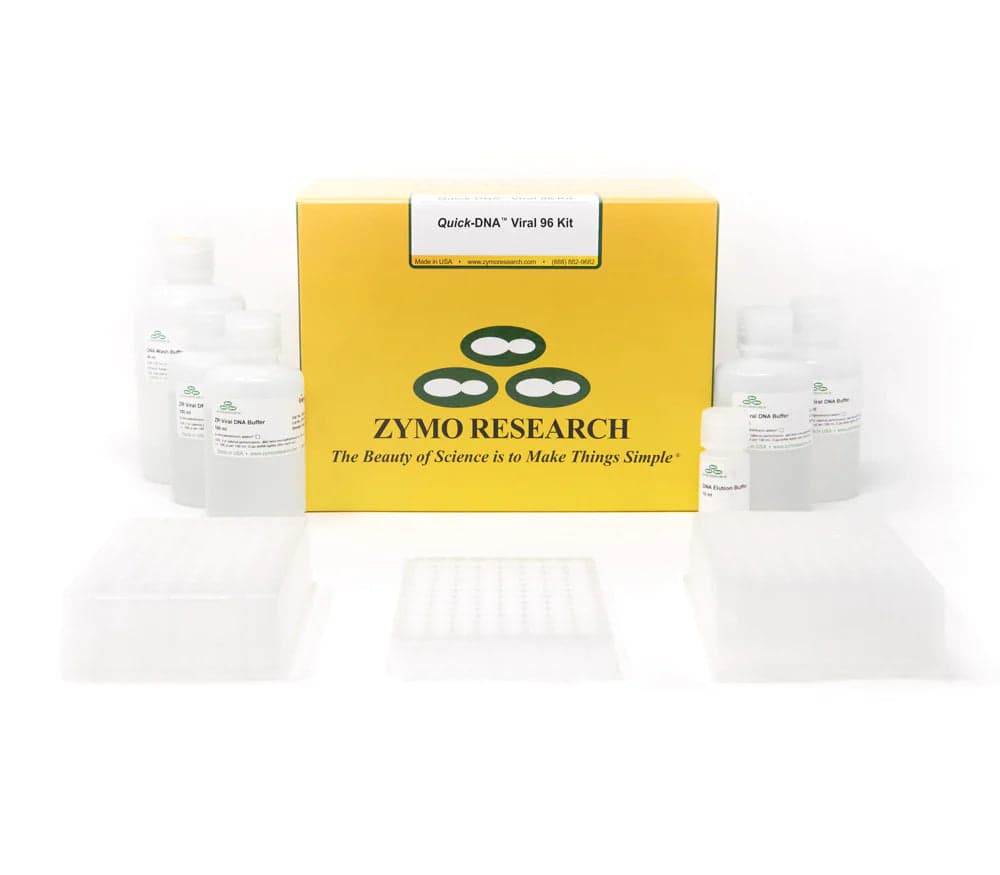
Showing 1 to 1 of 1 results
What Are 96-Well Plate Viral DNA Extraction Kits?
A 96-well plate viral DNA extraction kit replaces individual spin columns with a silica-membrane plate, allowing up to 96 cell-free liquid samples to be lysed, bound, washed, and eluted simultaneously using either a centrifuge equipped with a 96-well rotor carrier or a vacuum manifold. These systems support high-throughput viral DNA purification workflows while maintaining the nucleic acid quality required for PCR, qPCR, sequencing, and molecular diagnostics. Choose a 96-well plate viral DNA extraction kit when sample volumes justify batch processing, and your laboratory has compatible centrifuge or vacuum-manifold equipment.
What you will find:
- Quick-DNA Viral 96 Kit: Enables efficient parallel processing of up to 96 samples in a single workflow.
- Sequencing Ready: Produces purified viral nucleic acids suitable for next-generation sequencing applications.
- PCR & qPCR Compatible: Delivers high-quality DNA and RNA for PCR, qPCR, and RT-qPCR workflows.
- Molecular Diagnostics Support: Ideal for high-throughput viral screening and diagnostic research applications.
How to Choose a 96-Well Plate Viral DNA Extraction Kit
Centrifuge Rotor and Minimum Speed Requirements
Most 96-well plate kits require a centrifuge equipped with a compatible 96-well plate rotor or carrier. Some systems specify minimum centrifugal forces around 2,250 × g and sufficient bucket depth to accommodate the plate format. Confirm equipment compatibility before selecting a kit.
Vacuum Manifold Compatibility
Many plate-based viral DNA extraction kits can also be operated using a vacuum manifold instead of centrifugation. This option is particularly useful for laboratories already utilizing vacuum-based nucleic acid purification workflows.
Elution Volume and DNA Concentration
Some kits support elution volumes as low as 6–10 µL of DNase/RNase-free water, enabling recovery of highly concentrated viral DNA suitable for low-titer samples and sensitive qPCR applications. Larger elution volumes may be preferable when sample concentration is less critical, and ease of handling is a priority.
Throughput and Workflow Efficiency
While plate-format kits generally have a higher upfront cost than individual spin-column kits, they significantly reduce hands-on time per sample when processing large batches. Laboratories routinely processing dozens of samples per run typically benefit most from plate-based workflows.
Specifications Context
The most important specifications for 96-well plate viral DNA extraction kits are sample input capacity, minimum elution volume, and equipment compatibility requirements. Many systems process up to 400 µL of sample per well and support low-volume elution for concentrated DNA recovery. Plate-based workflows are commonly adopted by laboratories transitioning from single-column extraction methods to higher-throughput operations. By combining silica-membrane purification with automation-friendly formats, these kits help standardize viral DNA extraction across large sample sets while maintaining consistent performance for downstream PCR, qPCR, and sequencing applications.
Contact the MBP team today to discuss your high-throughput viral DNA extraction requirements and receive expert guidance on selecting the right 96-well plate solution for your laboratory workflow.
FAQ