RNA/cDNA Sequencing Cleanup Reagents for RNA-Seq Library Prep
RNA/cDNA sequencing cleanup reagents purify RNA and cDNA during RNA-seq library preparation workflows by removing enzymes, buffer salts, unincorporated nucleotides, and other reaction contaminants following RNA processing, cDNA synthesis, amplification, and library preparation steps. MBP supplies magnetic bead-based RNA and cDNA cleanup reagents to registered vendors at Howard Hughes Medical Institute, Vanderbilt University, and MD Anderson Cancer Center.
Request a quote for RNA and cDNA sequencing cleanup reagents supporting RNA-seq library preparation, transcriptomics workflows, and nucleic acid purification by contacting customerservice@mbpinc.net.
RNA/c-DNA
Showing 1 to 2 of 2 results
What are RNA/cDNA Sequencing Cleanup Reagents?
RNA/cDNA sequencing cleanup reagents purify RNA and complementary DNA during RNA sequencing library preparation workflows by removing enzymes, buffer salts, unincorporated nucleotides, short nucleic acid fragments, and other reaction contaminants that can interfere with downstream processing and sequencing. These reagents are commonly used after RNA processing, cDNA synthesis, library construction, amplification, and other enzymatic steps to improve nucleic acid purity and workflow performance.
What you will find:
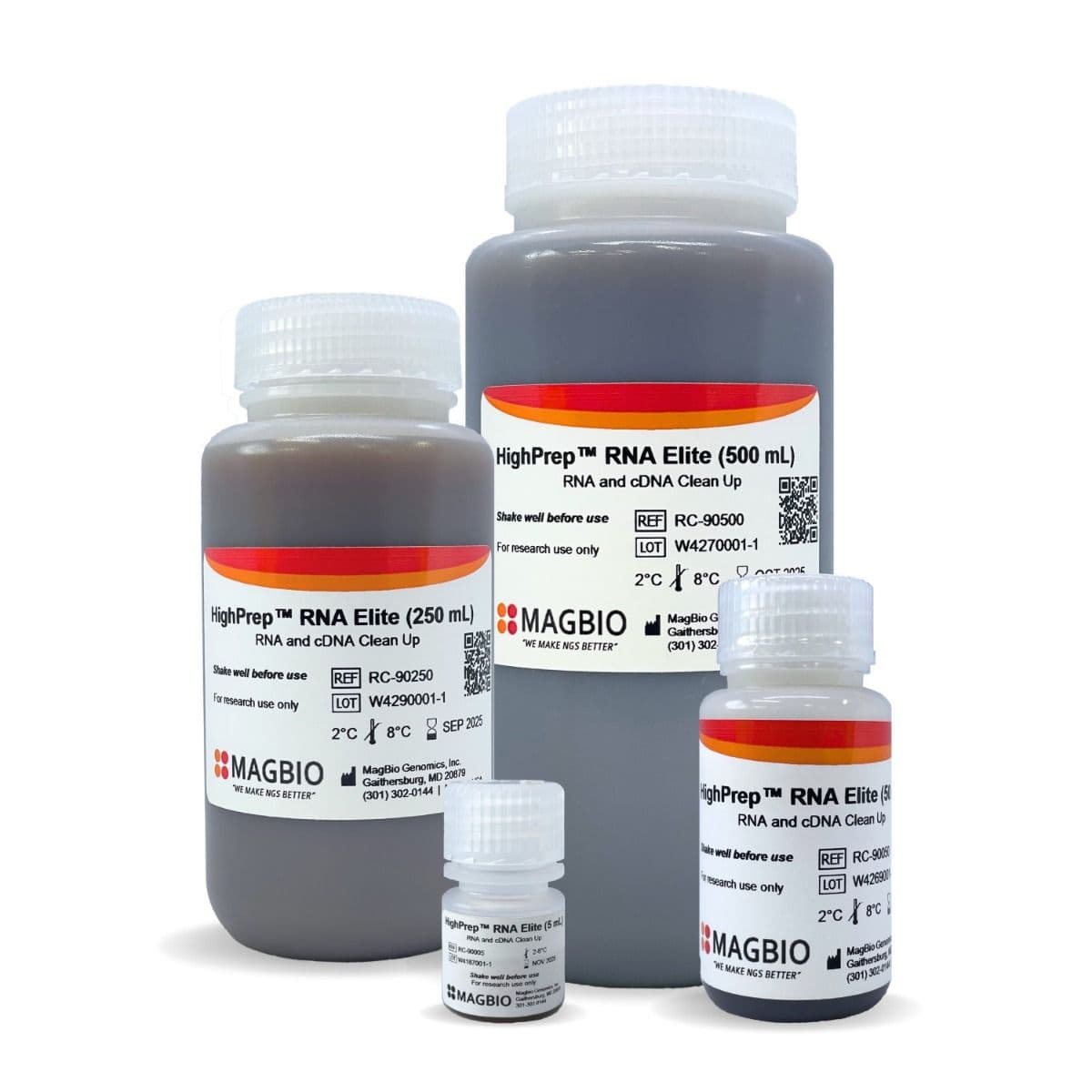
- Magbio HighPrep™ RNA Elite: A high-performance magnetic reagent optimized for the selective recovery of RNA and cDNA from complex enzymatic reactions.
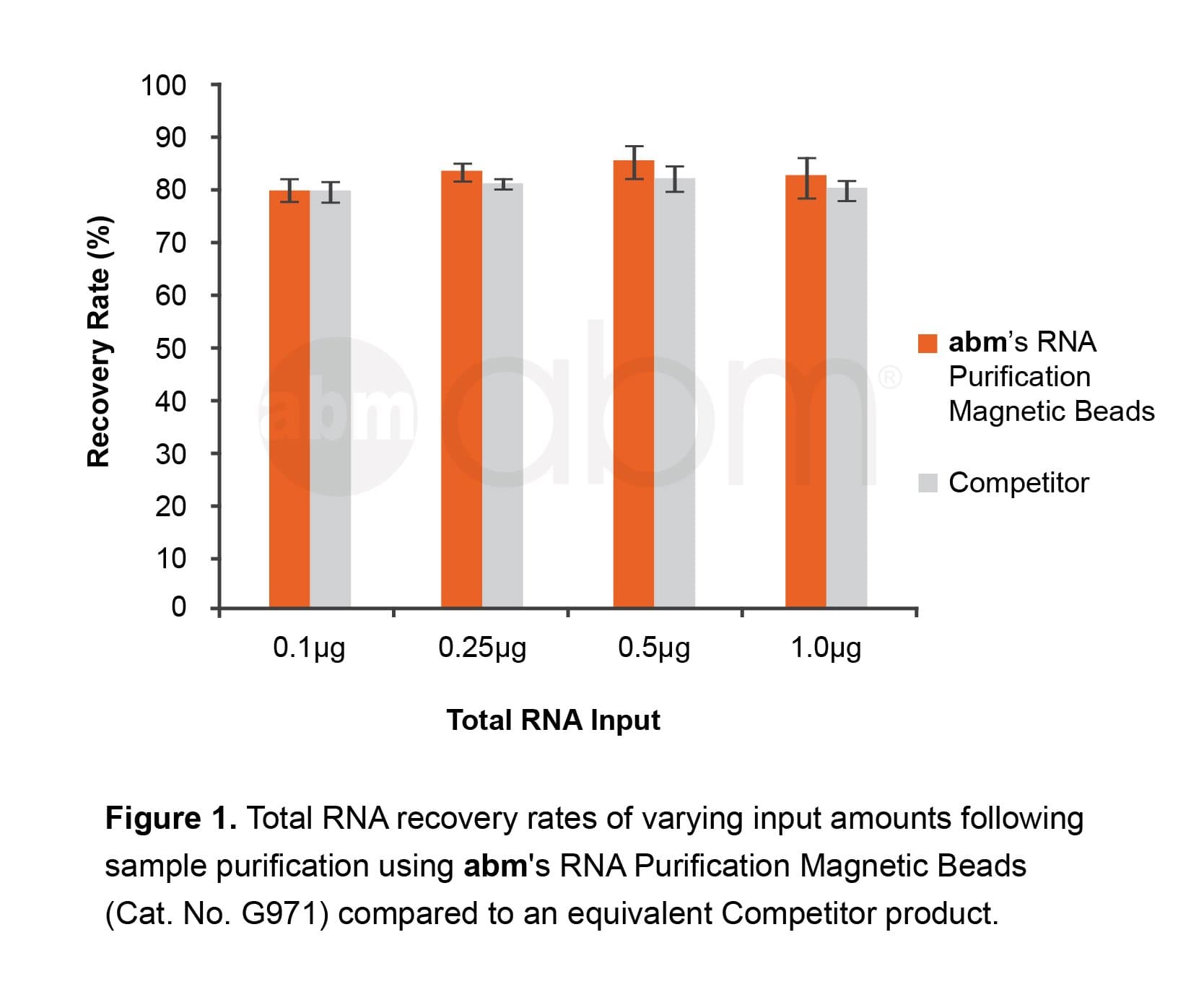
- RNA Purification Magnetic Beads: High-affinity matrices engineered for rapid, centrifugation-free isolation, delivering reproducibility-tested yields in automated workflows.
How to Choose an RNA/cDNA Sequencing Cleanup Reagent
RNA vs. cDNA Workflows
Select a cleanup reagent compatible with the nucleic acid being processed. RNA-focused cleanup reagents are designed for purification and recovery of RNA products, while many magnetic bead-based systems can also be used for cDNA cleanup, concentration, and size-selection workflows.
Cleanup vs. Size Selection
Cleanup workflows remove reaction contaminants such as enzymes, salts, and unincorporated nucleotides. Size-selection workflows enrich RNA or cDNA fragments within a desired size range when required by the downstream library preparation protocol.
Throughput Requirements
Magnetic bead-based cleanup systems support both low-throughput manual processing and higher-throughput workflows that benefit from automation and 96-well format compatibility.
Automation Compatibility
Magnetic bead-based purification eliminates centrifugation during the cleanup process and can be integrated into automated liquid-handling and magnetic separation workflows.
Quality Assessment
Following cleanup, RNA and cDNA quality are commonly assessed using fluorometric quantification methods and fragment analysis platforms to verify concentration, integrity, and size distribution prior to sequencing.
Specifications Context
RNA/cDNA sequencing cleanup reagents provide purification of RNA and cDNA products generated during library preparation and other enzymatic workflows. Magnetic bead-based systems enable cleanup, concentration, and size selection without organic extraction or vacuum filtration and are compatible with both manual and automated processing. MagBio HighPrep RNA Elite supports the cleanup and recovery of RNA and cDNA products used in transcriptomics and sequencing workflows, while RNA Purification Magnetic Beads provide rapid magnetic bead-based purification and recovery of RNA samples without centrifugation. These reagents are widely used in RNA sequencing, transcriptomics, gene expression analysis, and related molecular biology workflows where contaminant removal, nucleic acid recovery, and workflow scalability are important for library quality and downstream sequencing performance.
Ensure the fidelity of your molecular data—contact the MBP team today for a quote on our advanced RNA/cDNA cleanup solutions.
FAQ