Proteinase K for DNA, RNA, and Protein Digestion
Proteinase K is a broad-spectrum subtilisin-related serine endopeptidase (28.9 kDa) isolated from the fungus Tritirachium album Limber that cleaves peptide bonds adjacent to aliphatic, aromatic, and basic amino acids, remains active in the presence of SDS, urea, EDTA, and most detergents, and is used in nearly all nucleic acid extraction protocols to digest contaminating proteins and inactivate nucleases that would otherwise degrade DNA or RNA during purification.
MBP supplies Proteinase K in molecular biology grade formulations certified free of DNase, RNase, and exonuclease contamination, with shipping across the United States, Canada, and internationally from a US office in Houston, Texas. Request a quote for Proteinase K for DNA, RNA, and protein digestion workflows by contacting customerservice@mbpinc.net.
Proteinase K
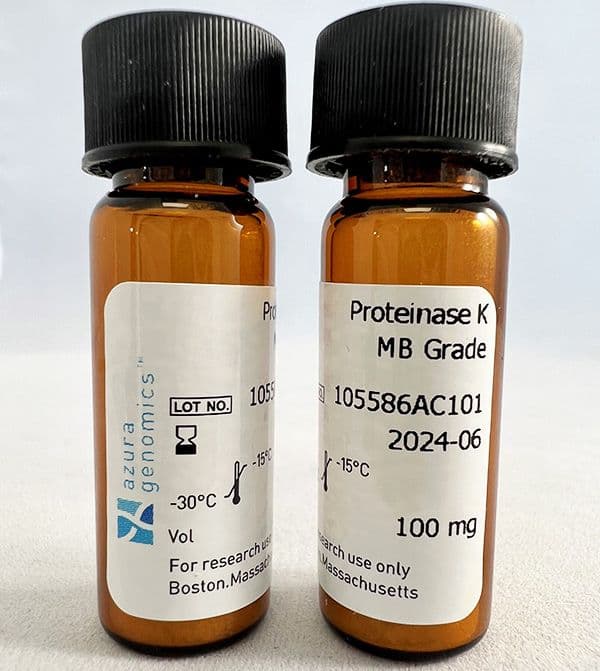
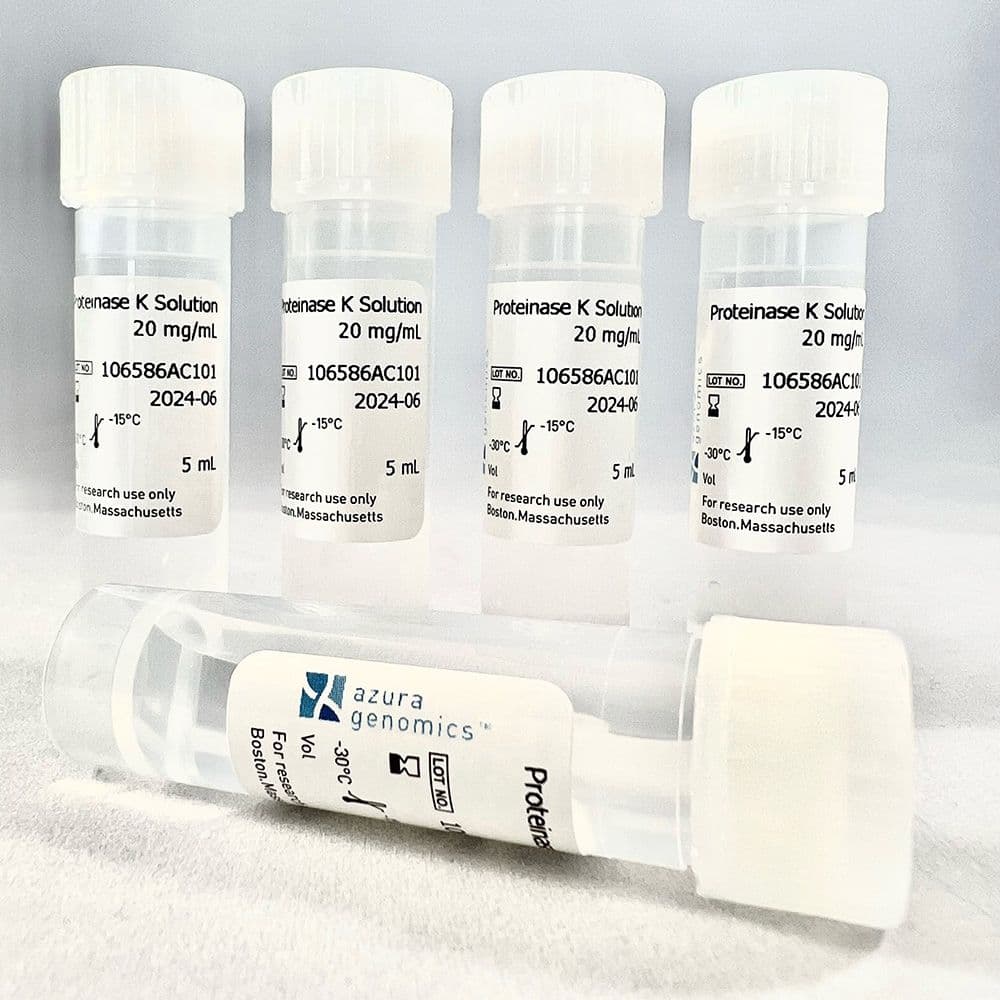
Showing 1 to 3 of 3 results
What Is Proteinase K?
Proteinase K is a subtilisin-related serine endopeptidase with a molecular weight of 28,930 daltons (28.9 kDa), first isolated from Tritirachium album Limber in 1974, and named for its ability to digest keratin ('K') as its original substrate. The enzyme cleaves peptide bonds at the carboxylic side of aliphatic, aromatic, and basic amino acid residues, making it effective against nearly all protein substrates, including histones, chromatin-bound proteins, cell membrane proteins, and contaminating nucleases (DNases, RNases). Critically, Proteinase K retains full activity in the presence of 1% SDS, 4 M urea, 1% Triton X-100, 0.5% N-lauroylsarcosine, EDTA at 5 mM, and common reducing agents -- conditions under which most other proteases are inactivated. Use Proteinase K in any protocol requiring enzymatic removal of proteins from nucleic acid preparations, including genomic DNA, total RNA, plasmid, phage, and cfDNA extraction from tissues, blood, FFPE samples, bacteria, yeast, and environmental samples.
What you will find:
-
Proteinase K (Lyophilized): A stable, high-purity powder ideal for prolonged storage and tailored buffer preparation.
-
Proteinase K Solution: A prepared, stable liquid that reduces preparation time and minimizes pipetting mistakes.
-
Proteinase K (G029): A specially refined grade designed for the swift inactivation of RNases and DNases in sensitive procedures.
How to Choose Proteinase K
Solution vs. lyophilized
Proteinase K is supplied as lyophilized powder (commonly at 30 mAnson units/mg or 20 mg/mL equivalent activity) or as a ready-to-use solution (typically 20 mg/mL in storage buffer). Lyophilized powder offers longer shelf life (up to 2 years at -20 degrees C), cost efficiency for high-volume users, and flexibility in buffer preparation. Solutions are convenient for low-volume use and eliminate weighing errors. Both formats deliver equivalent specific activity when the lot certificate is checked.
Molecular biology grade vs. standard
Molecular biology grade Proteinase K is certified free of detectable endonuclease, exonuclease, DNase, and RNase activities by stringent lot-release assays. Standard grades may carry trace nuclease activity that degrades DNA or RNA during digestion. For any application where nucleic acid integrity matters -- DNA sequencing, NGS library prep, RT-PCR, FISH, or southern blotting -- use only molecular biology grade or equivalent.
Recombinant vs. native
Recombinant Proteinase K (expressed in Pichia pastoris or E. coli) offers freedom from animal-derived material, greater lot-to-lot consistency, and suitability for regulated or GMP-adjacent workflows. Native Proteinase K (isolated from T. album culture) is standard for most research applications. Both must carry DNase/RNase-free certification for nucleic acid use.
Concentration and unit dose
Standard working concentrations are 50-200 microgram/mL for most DNA/RNA extraction protocols in lysis buffer. Higher concentrations of 1-5 mg/mL are used for FFPE tissue deparaffinization and protein digestion, and for prion inactivation studies (where Proteinase K at 10-50 microgram/mL is used to assess proteinase K-resistant PrP accumulation). Proteinase K retains activity for up to 24 months when stored at -20 degrees C in aliquots.
Temperature and pH optimization
Optimal activity is at 20-60 degrees C and pH 7.5-12.0; activity at pH 8.0 and 55 degrees C is used in most nucleic acid extraction protocols. Activity at 37 degrees C is approximately 80% of the 55-60 degrees C optimum. Calcium ions (1 mM Ca2+) stabilize the enzyme structure; EDTA removes calcium and reduces activity, though the enzyme retains sufficient function for nucleic acid prep protocols. Heat-inactivation above 95 degrees C for 5 minutes is complete and does not require chemical inhibitors.
Specifications Context
Proteinase K specific activity is commonly reported in Anson units (mAnson units/mg): one mAnson unit releases 1 micromol of tyrosine equivalents per minute from hemoglobin at pH 7.5 and 35.5 degrees C. Proteinase K is fully denatured at 95 degrees C in 5 minutes without requiring PMSF or other chemical inhibitors, making heat inactivation the simplest and most reliable option before downstream enzymatic steps such as PCR or reverse transcription. The enzyme is deactivated above 95 degrees C within the first cycle of PCR thermocycling, preventing interference with polymerase activity in protocols that include Proteinase K in the PCR reaction. Proteinase K is a universal reagent in automated nucleic acid extraction platforms, including MagNA Pure, KingFisher, and Hamilton NGS workstations; solution-format Proteinase K is specified in most automated platform kits.
Simplify your laboratory tasks—reach out to the MBP team now for a price estimate on our top-tier Proteinase K products.
FAQ