16S/ITS NGS Library Preparation Kits for Microbial and Fungal Community Profiling
16S/ITS NGS Library Preparation Kits cover the amplicon sequencing kits used to profile bacterial community composition via the 16S rRNA gene and fungal community composition via the ITS (internal transcribed spacer) region, both relying on conserved flanking sequences as PCR primer sites to amplify a variable region used for taxonomic classification. These kits remain more cost-effective and less affected by host DNA contamination than shotgun metagenomic sequencing. Academic and core laboratories profiling microbial communities can benefit from guidance when selecting hypervariable regions and designing primers for optimal taxonomic resolution.
Explore available 16S/ITS library preparation kits or request a quotation by contacting customerservice@mbpinc.net. Our team can help identify the appropriate primer strategy, target region, and library prep workflow for your microbiome sequencing studies.
16S/ITS NGS Library Preparation Kits
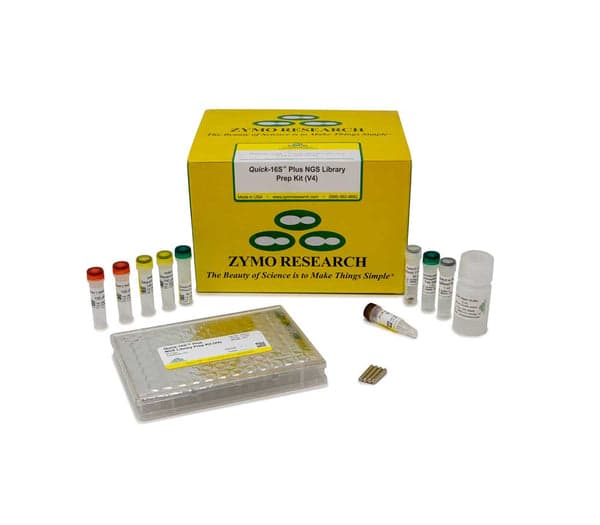
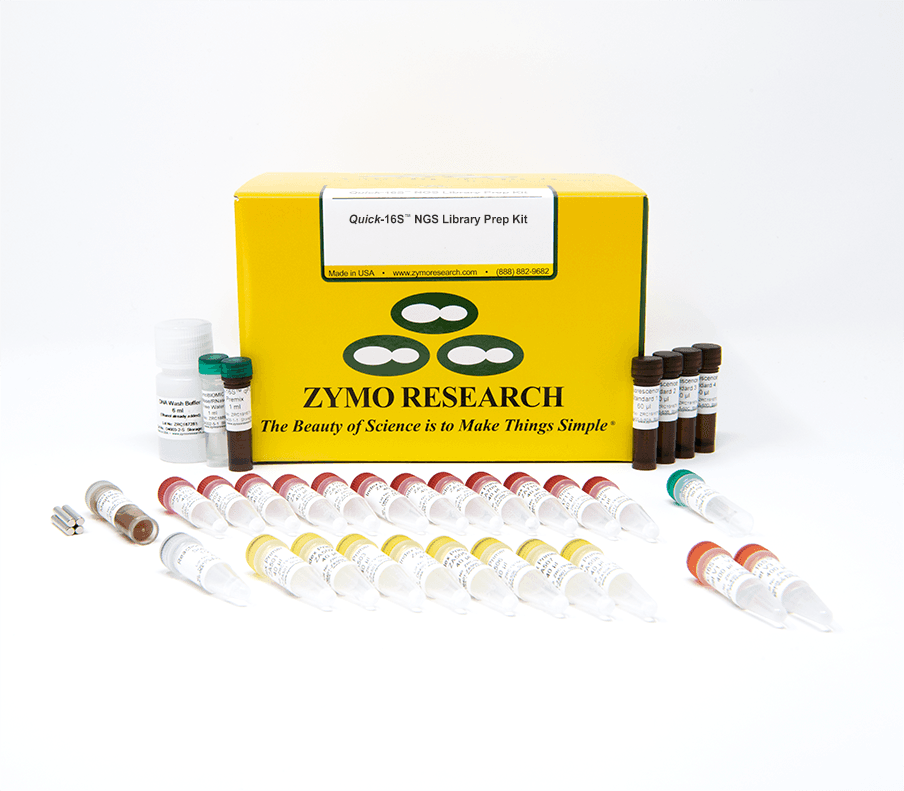
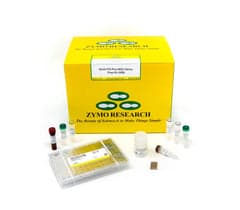
Showing 1 to 5 of 5 results
What are 16S/ITS NGS library preparation kits?
16S/ITS NGS library preparation kits convert extracted microbial DNA into a sequencing-ready library by amplifying a targeted hypervariable region: the 16S ribosomal RNA gene for bacterial and archaeal community profiling, or the ITS (internal transcribed spacer) region for fungal community profiling. Both genes contain conserved flanking sequences that serve as universal PCR primer binding sites, allowing amplification of the variable region in between, which is then sequenced and compared against a reference database for taxonomic classification.
What you will discover:
-
Quick-16S™ Plus Kits (V1–V4): Enhanced systems for targeted amplification of bacterial 16S rRNA, incorporating validated reagents for accurate classification.
-
Quick-ITS™ Plus Library Prep: Sensitive kits for fungal detection, employing specialized chemistry to capture ITS regions while preserving genomic integrity at its best.
-
UDI Indexing Integration: Sophisticated indexing methods to avoid barcode hopping and guarantee precise demultiplexing during simultaneous processing.
-
Accelerated Workflows: Nuclease-free procedures that reduce manual effort while ensuring transfection-grade purity for delicate sequencing systems.
How to choose a 16S/ITS library preparation kit
Confirm which hypervariable region(s) your kit targets
16S library prep kits commonly target specific hypervariable regions such as V3-V4, and primer sets re-designed against an updated 16S reference database can meaningfully improve taxonomic coverage compared with older primer designs that may underrepresent certain taxa.
Decide between single-region and full-length amplicon coverage
Short-read sequencing of a single hypervariable region, or a small number of regions, is the standard, cost-effective approach, while long-read platforms can sequence the full-length 16S gene, providing improved species- and strain-level resolution at a different cost and throughput tradeoff.
Plan for PCR chimera formation as a known amplicon sequencing challenge
PCR chimeras, artificial sequences formed from recombination of multiple templates during amplification, are a recognized challenge in amplicon library prep, and kits using real-time PCR to control amplification cycle number can help keep chimera abundance to a low, well-controlled percentage of total reads.
Confirm fungal ITS coverage if your study includes fungal community profiling
Some 16S kits can be run alongside a separate ITS-targeted protocol, or as a combined workflow, to capture both bacterial and fungal community composition from the same sample set, which matters for studies where fungi are a relevant part of the community.
Check hands-on time and workflow complexity for your sample throughput
Some 16S library prep kits are designed for a single-tube, single-reaction workflow with simultaneous indexing and amplification, substantially reducing hands-on time and contamination risk compared with multi-step protocols, which matters for higher-throughput sample sets.
Specifications context
16S rRNA sequencing requires less input DNA and is less impacted by the presence of host DNA than shotgun metagenomic sequencing, which is part of why it remains the more accessible default for routine bacterial community composition profiling across many labs and sample types. As of 2026, single-tube, real-time-PCR-controlled 16S library prep workflows continue to reduce hands-on time for high-throughput studies while keeping PCR chimera formation to a low, well-controlled percentage of total reads.
Reach out to the MBP Inc. team today to inquire about a quote for your NGS library preparation requirements.
FAQ