Prestained Protein Ladders for SDS-PAGE Monitoring and Western Blot Transfer Verification
Prestained Protein Ladders covers recombinant protein size standards in which each defined-molecular-weight protein band carries a covalently coupled colored dye, making the full ladder visible on the gel during SDS-PAGE without staining and on the membrane during western blotting to confirm transfer. Most prestained ladders cover 10 to 245 kDa with 10–13 bands, include green and red reference bands at defined molecular weights for orientation, and are ready to use directly from the tube. Academic and core laboratories sourcing or restocking prestained protein ladders can benefit from guidance when selecting molecular weight ranges and confirming compatibility with their electrophoresis and transfer buffers.
Explore available prestained protein ladders or request a quotation by contacting customerservice@mbpinc.net. Our team can help identify the appropriate molecular weight range and ladder format for your SDS-PAGE and western blot workflows.
Prestained Protein Ladders


Showing 1 to 5 of 5 results
What are prestained protein ladders?
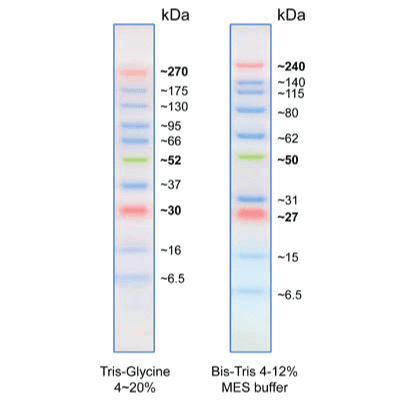
Prestained protein ladders are protein molecular weight standards in which each protein band carries a covalent colored dye, typically coupling most bands in blue with two specifically colored bands, often green around 25 kDa and red around 75 kDa, that serve as easily visible reference anchors for quick orientation. Because the dye is visible without staining, the ladder is used to monitor protein migration in real time during SDS-PAGE and, critically, to verify that protein bands have transferred from the gel to the PVDF, nitrocellulose, or nylon membrane before antibody incubation in western blotting.
What you will find:
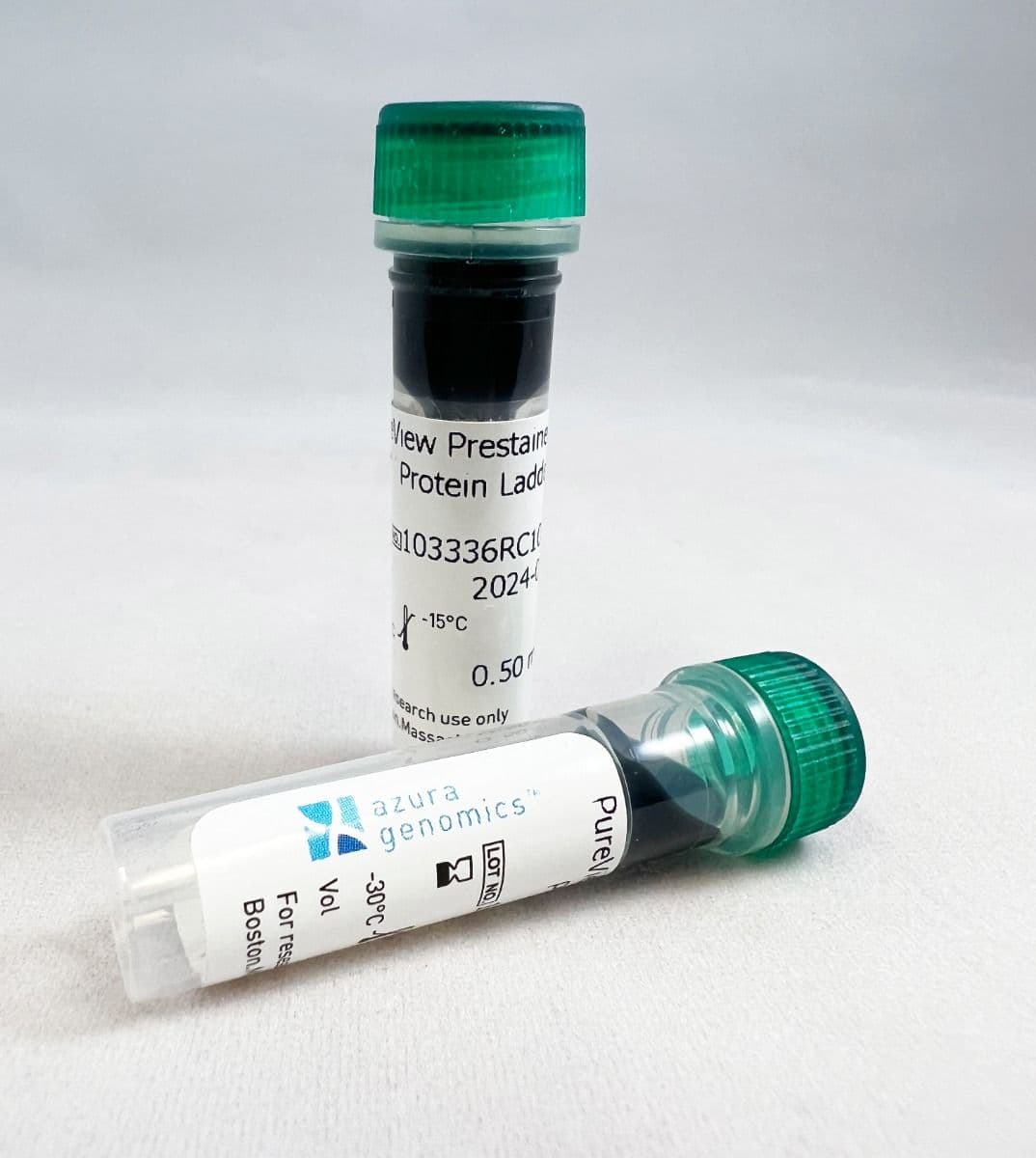
- PureView™ Prestained Protein Ladder for clear visualization of bands in SDS-PAGE
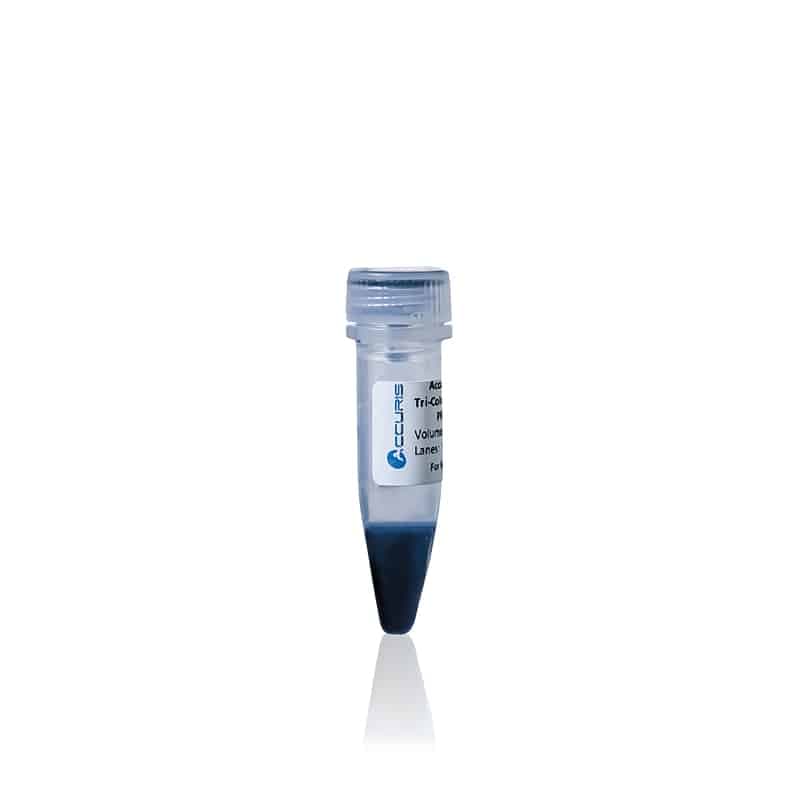
- SmartCheck™ Tri-color Extended Range Plus Protein Marker for broad coverage of protein size
- Opti-Protein Marker for accurate molecular weight estimation of proteins
- Opti-Protein XL Marker for wider range analysis of proteins
- Opti-Protein Ultra Marker for efficient protein separation workflows
How to use prestained protein ladders
Load prestained ladders directly from the tube without preparation
Most modern prestained protein ladders are supplied in gel loading buffer and are ready to load directly without heating, dilution, or addition of reducing agent, since modifying the formulation can cause dye dissociation or protein aggregation. Following the manufacturer's specific note about preparation avoids introducing variability.
Confirm the ladder's kDa range brackets your target protein's expected molecular weight
Match your target protein's expected size to the ladder's coverage: a mid-range ladder (10–180 kDa) suits most antibody targets in typical western blot experiments, while a broad-range (10–245 kDa) or extra-broad (3.5–260 kDa) ladder is needed when the target protein is very large.
Use the colored reference bands for quick gel and blot orientation
Colored reference bands at fixed kDa positions, typically green at 25 kDa and red at 75 kDa, allow you to orient the ladder pattern on the gel or membrane at a glance without counting all bands from the well, making it fast to identify the bands bracketing your target protein.
Check the manufacturer's MW table calibrated for your specific SDS-PAGE buffer system
Pre-stained ladder proteins have apparent molecular weights that differ depending on the SDS-PAGE buffer system used, such as Tris-Glycine versus Bis-Tris MOPS or MES, because the buffer's pH and composition affect SDS binding and protein charge. Using the manufacturer's annotated molecular weight values calibrated for your specific buffer gives more accurate sizing than a generic table.
Verify western blot transfer by confirming the prestained bands are visible on the membrane
After transfer, all or most prestained ladder bands should be visible on the blot membrane; missing or faint bands in a particular region indicate incomplete transfer in that molecular weight zone, guiding troubleshooting before antibody incubation and detection.
Specifications context
Prestained protein ladders are loaded at approximately 3–5 µl per lane for gel visualization during SDS-PAGE, or at 1.5–2.5 µl per lane for western blot transfer, since less ladder per lane is needed for adequate band visibility on the membrane than for gel visualization. As of 2026, ready-to-load prestained protein ladder formats supplied pre-formulated in SDS-PAGE loading buffer that require no heating, dilution, or reducing agent remain the dominant format for routine SDS-PAGE and western blotting, since preparation-free direct loading eliminates one class of user handling errors.
Contact the helpful team at Molecular Biology Products Inc. (MBP) and find the best prestained protein ladders for your next experiment.
FAQ