Loading Dye for Sample Preparation and Electrophoresis Tracking
Loading Dye covers the sample preparation reagents mixed with DNA, RNA, or protein samples immediately before loading into gel wells, composed of a density agent to sink samples to the well bottom and one or more visible tracking dyes to monitor migration progress during electrophoresis. The most common formulation is a 6X concentrate containing glycerol and two tracking dyes, bromophenol blue and xylene cyanol, added at 1/6 volume to a sample. Academic and core laboratories sourcing or formulating loading dyes can benefit from guidance when selecting density agents, tracking dye combinations, and formulations appropriate for their electrophoresis workflow.
Explore available loading dyes or request a quotation by contacting customerservice@mbpinc.net. Our team can help identify the appropriate loading dye formulation and tracking dye combination for your DNA, RNA, or protein electrophoresis applications.
Loading Dye


Showing 1 to 4 of 4 results
What is gel loading dye?
Gel loading dye, also called sample loading buffer or tracking dye, is a concentrated solution mixed with a DNA, RNA, or protein sample immediately before it is loaded into a gel well. It serves two essential functions: the density agent, typically glycerol at 30–60% or Ficoll, makes the sample denser than the running buffer so it sinks to the well bottom rather than diffusing back out; and the tracking dyes, most commonly bromophenol blue and xylene cyanol FF, provide visible colored bands that co-migrate at defined, approximate DNA equivalent sizes to allow the researcher to monitor migration progress and estimate when to stop the run.
What you will find:
-
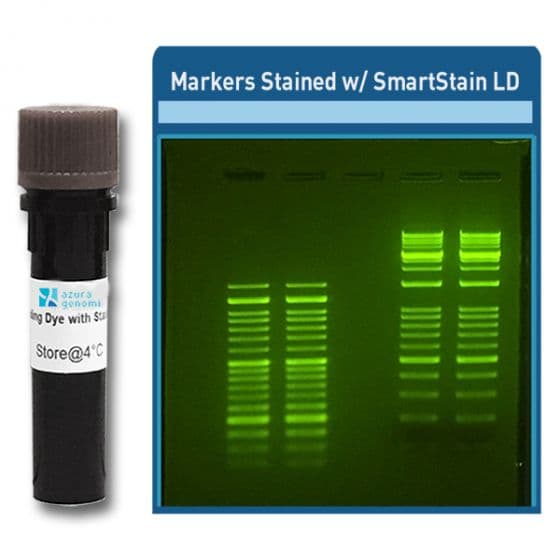
Azura SmartStain Loading Dye for the same preparation and loading
-
Safe-Red loading dye for visualization of nucleic acids in electrophoresis workflows
-
Safe-Green loading dye for gel analysis and DNA tracking applications
-
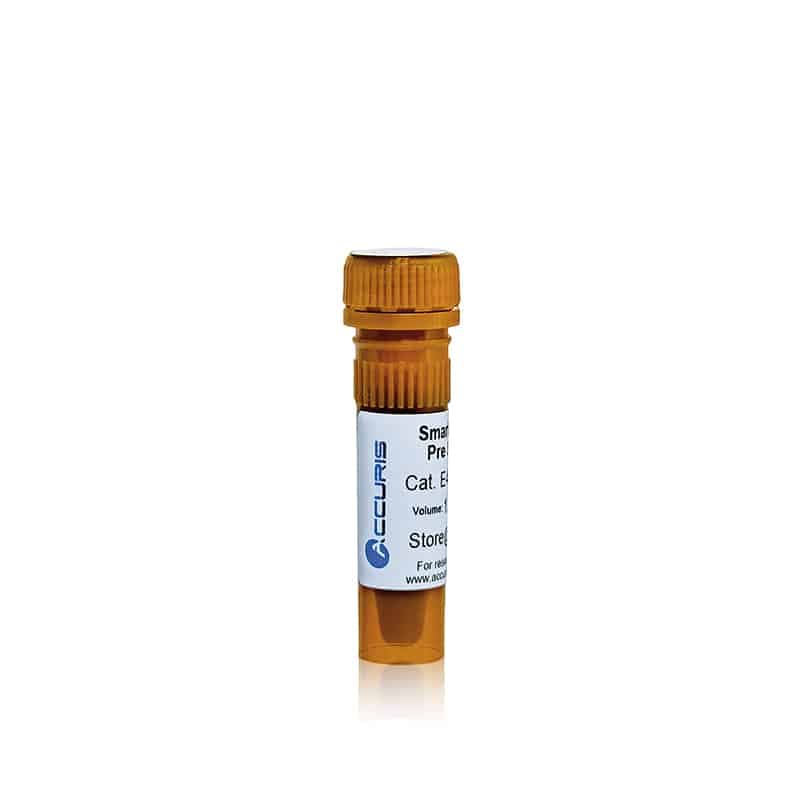
SmartGlow™ Loading Dye with Safe Green Stain for visualization and integrated sample loading
How to choose and use gel loading dye
Use 6X loading dye at 1/6 volume of total sample volume
Most gel loading dyes are formulated as 6X concentrates so that adding one part loading dye to five parts sample brings the total volume to the final working concentration. For a 10 µl final load, add 2 µl of 6X loading dye to 8 µl of DNA or RNA sample and mix well before loading.
Choose tracking dye colors that won't obscure your expected DNA band sizes
Bromophenol blue co-migrates with approximately 300–370 bp in a 1% TAE agarose gel, while xylene cyanol co-migrates with approximately 3,000–4,000 bp in the same conditions. If your samples are expected near those sizes, using a loading dye that includes orange G instead, which co-migrates below 50 bp, avoids masking bands with the tracking dye front.
Confirm EDTA is included if nuclease protection matters for your samples
A standard 6X loading dye contains 60 mM EDTA, which chelates divalent metal ions that nucleases require for activity, providing protection against DNA degradation during sample preparation and the gel run. If your protocol requires EDTA-free loading buffer, confirm the dye formulation before use.
For RNA samples, ensure your loading dye is RNase-free
RNase contamination in loading dye can degrade RNA samples during preparation before loading, so RNA gel experiments require either RNase-free certified loading dye or dye preparation from RNase-free reagents. Using the same nuclease-free water and handling precautions for loading dye as for the RNA samples themselves is standard practice.
Be aware that SDS-containing loading buffers for protein SDS-PAGE differ from nucleic acid loading dyes
SDS-PAGE protein loading buffers contain SDS, dithiothreitol or beta-mercaptoethanol as a reducing agent, and glycerol, which are specifically required for protein denaturation and separation under SDS conditions, whereas nucleic acid loading dyes contain no SDS or reducing agents. The two formulations are not interchangeable.
Specifications context
A standard 6X DNA loading dye formulation typically contains 10 mM Tris-HCl (pH 7.6), 0.03% bromophenol blue, 0.03% xylene cyanol FF, 60% glycerol, and 60 mM EDTA, making it compatible with both TAE and TBE running buffers. As of 2026, ready-to-use loading dyes pre-mixed as part of ready-to-load DNA ladder products remain popular for eliminating the need for a separate mixing step before gel load
Contact the expert team at MBP to obtain high-quality DNA loading dyes for your research workflows.
FAQ