2Kb DNA Ladders for Large DNA Fragment Sizing and Analysis
2Kb DNA Ladders covers the 2-kilobase-increment DNA size standard, suited for gel electrophoresis experiments where samples contain large DNA fragments above the typical 10 kb upper limit of a standard 1 kb ladder, or where 2 kb spacing between reference bands provides clearer orientation in the upper size range. These ladders are typically run on low-percentage agarose (0.5–0.8%) to resolve large fragments. Academic and core laboratories sizing large restriction digest products, cloned inserts, or genomic DNA fragments can benefit from guidance when selecting ladder formats and gel conditions for optimal resolution.
Explore available 2 kb DNA ladders or request a quotation by contacting customerservice@mbpinc.net. Our team can help identify the appropriate size standard for large-fragment DNA electrophoresis applications.
2Kb DNA Ladders
Showing 1 to 2 of 2 results
What is a 2 kb DNA ladder?
A 2 kb DNA ladder provides reference bands spaced at approximately 2-kilobase intervals, designed for gel electrophoresis where samples include large DNA fragments and where 1-kilobase spacing between reference bands would crowd too many bands into the upper region of a low-percentage gel. These ladders are particularly useful when working with large restriction digest products, BAC or cosmid clone inserts, large plasmids, or genomic DNA fragments in the 2–20 kb size range, run on 0.5–0.8% agarose to give these large molecules room to resolve.
What you will find:
-
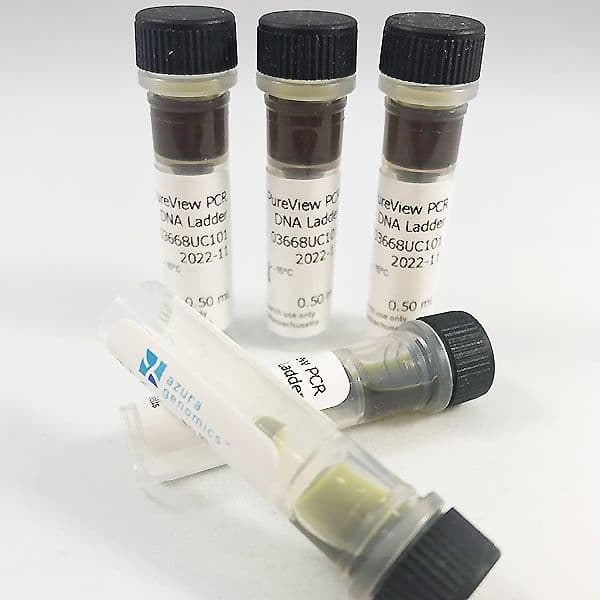
PureView PCR DNA Ladder for routine analysis of gel and size estimation of PCR product
-
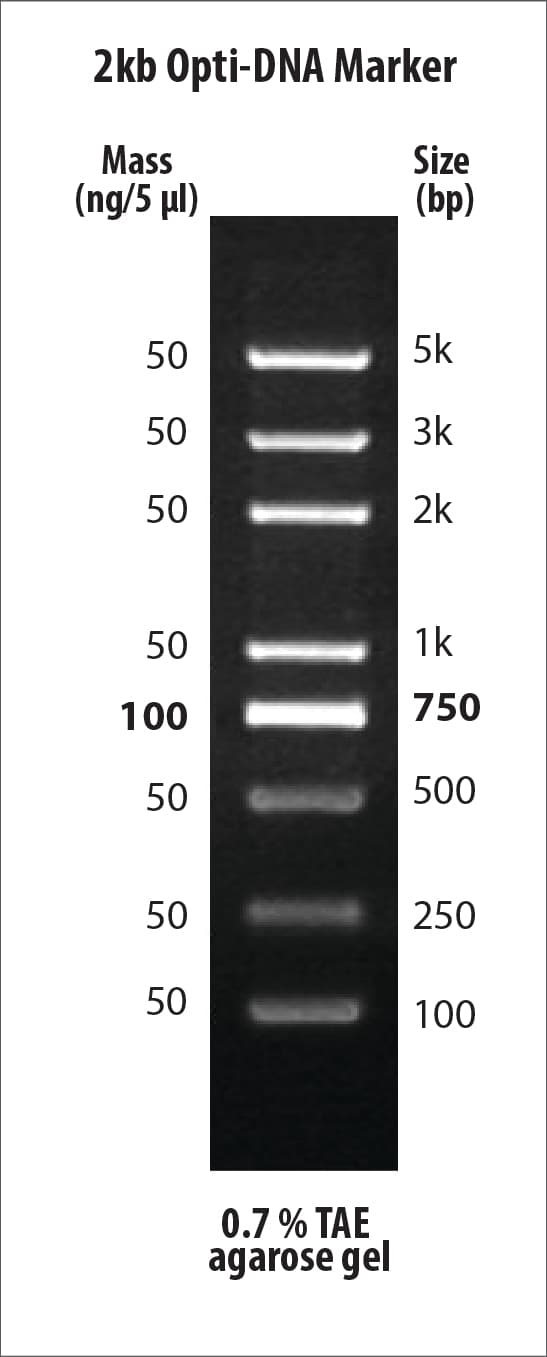
2kb Opti-DNA Marker for accurate sizing of DNA fragments in gel electrophoresis
How to choose and use a 2 kb DNA ladder
Use a 2 kb ladder when your samples are predominantly in the 2–20 kb size range
If most of your samples are in the multi-kilobase range, 2 kb spacing gives each reference band more separation on the gel, making it easier to estimate size in a region where 1 kb reference bands would be compressed together.
Run large-fragment gels on 0.5–0.8% agarose for adequate resolution
Standard 1% agarose does not give sufficient resolution for DNA fragments above 10 kb, and low-percentage gels of 0.5–0.8% provide the larger pore size needed for large molecules to migrate and resolve as distinct bands rather than compressing together at the top of the gel.
Confirm your 2 kb ladder covers the upper size range of your samples
Like any DNA ladder, the 2 kb ladder's largest defined band should be at or above the largest fragment in your sample, since fragments larger than the ladder's upper limit cannot be sized against it and may run together at the well or upper gel.
Plan for longer electrophoresis run times with low-percentage gels
Large DNA fragments migrate slowly through gel matrices, and low-percentage gels run at typical voltages require longer run times to achieve adequate separation of bands across the size range covered by the ladder.
Use a 2 kb ladder alongside a 1 kb ladder when samples span a wide size range
If your samples include both small and large fragments, loading both a 2 kb ladder and a 1 kb ladder in adjacent lanes provides reference coverage across the full size range without either ladder being suboptimal for part of your sample set.
Specifications context
The compression of larger DNA bands in the upper gel region is a fundamental property of agarose electrophoresis: the relationship between fragment size and migration distance is non-linear, so bands in the upper kilobase range are closer together in migration distance than the same size difference produces in the lower range. The 2 kb increment addresses this by providing wider-spaced reference points where 1 kb spacing would produce visually crowded bands on a low-percentage gel. As of 2026, 2 kb ladders are most commonly used when gel conditions are deliberately optimized for large fragments, such as for BAC clone verification or genomic DNA fragment analysis.
Contact the expert team at Molecular Biology Products Inc. (MBP) to get high-quality 2Kb DNA ladders tailored for your research workflows.
FAQ