Product Filters

Agarose for DNA and RNA Gel Electrophoresis


Agarose covers the polysaccharide powder used to cast gel matrices for horizontal DNA and RNA electrophoresis, available in standard, low-melting-point, and high-resolution formulations for different applications. Standard agarose at 0.7% to 2% handles most routine DNA fragment analysis; high-resolution formulations at 2–4% resolve small fragments more clearly; and low-melting-point agarose supports in-gel enzyme reactions and nucleic acid recovery directly from gel slices. Academic and core laboratories selecting or restocking agarose can benefit from guidance when choosing the appropriate formulation and gel concentration for their fragment size range and downstream applications.

Explore available agarose products or request a quotation by contacting customerservice@mbpinc.net. Our team can help identify the appropriate agarose formulation and gel conditions for your nucleic acid electrophoresis workflow.

Agarose
Per Page:
Sort By:
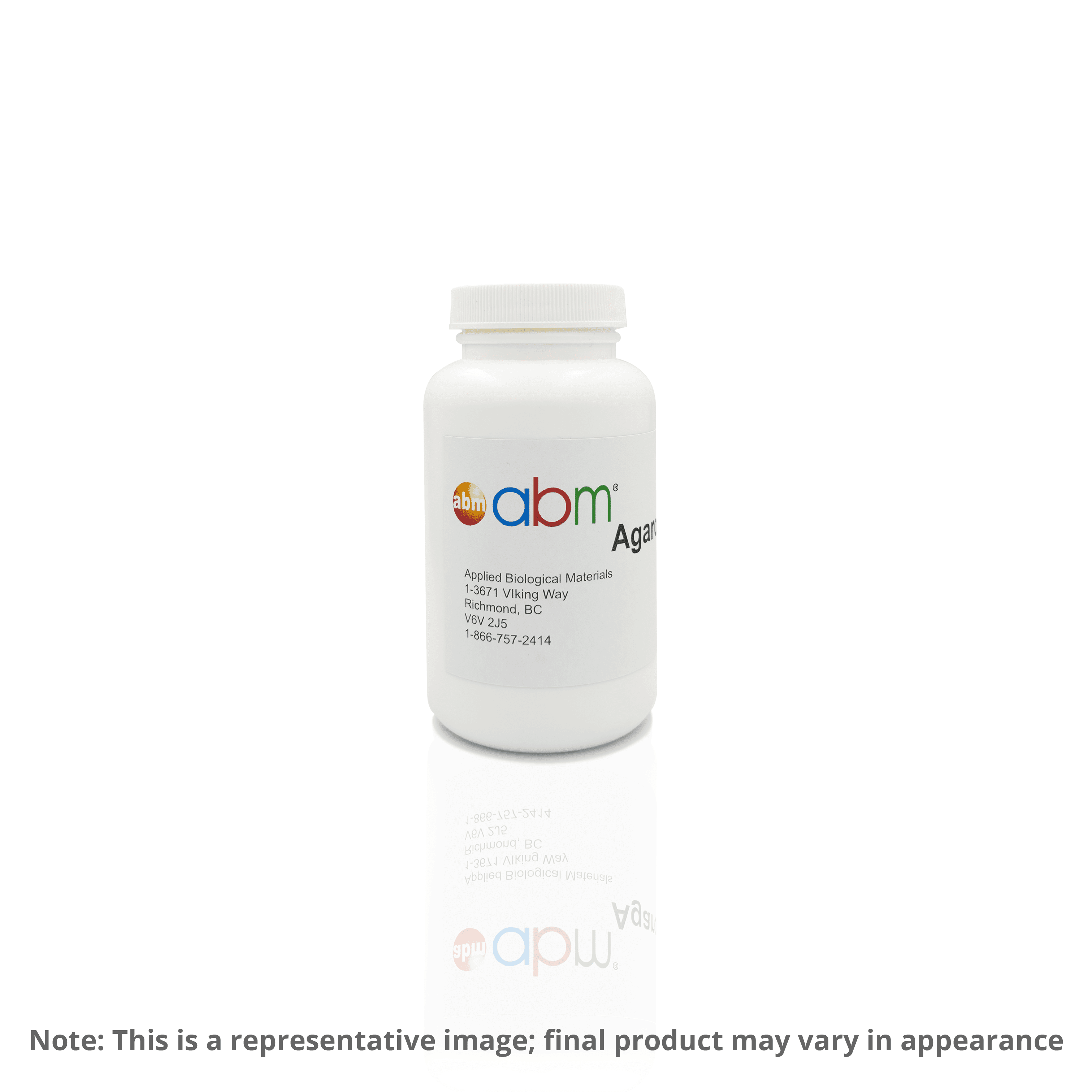
Agarose
G060-1
Agarose
List Price:
USD277.76 - USD1,024.93
Online Price:
USD198.40 - USD732.10
Your Price:
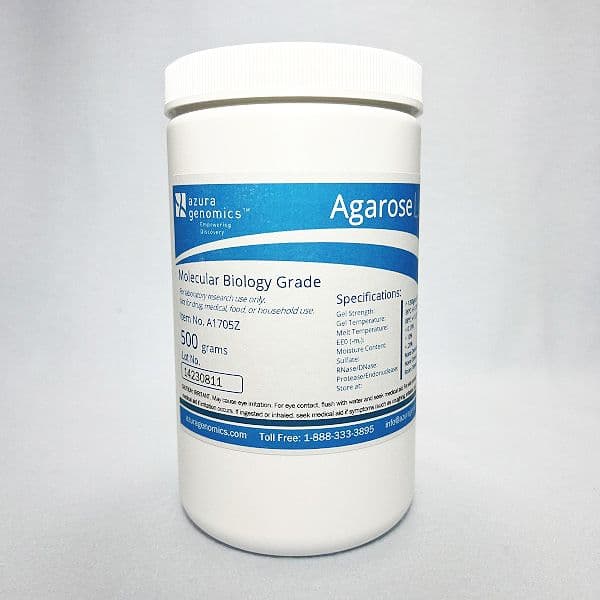
Azura Agarose LE
List Price:
USD175.88 - USD884.45
Online Price:
USD125.63 - USD631.75
Your Price:
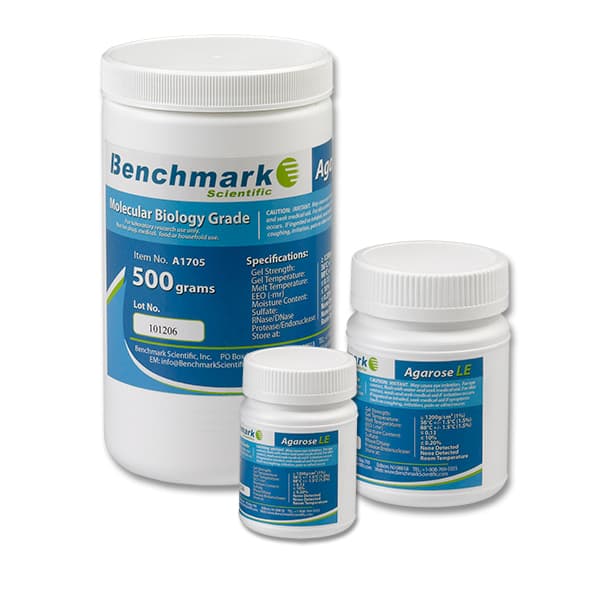
Benchmark Agarose LE (Molecular Biology Grade)
List Price:
USD104.60 - USD748.97
Online Price:
USD74.71 - USD534.98
Your Price:
Benchmark Specialty Agarose
List Price:
USD479.26 - USD596.87
Online Price:
USD342.33 - USD426.33
Your Price:
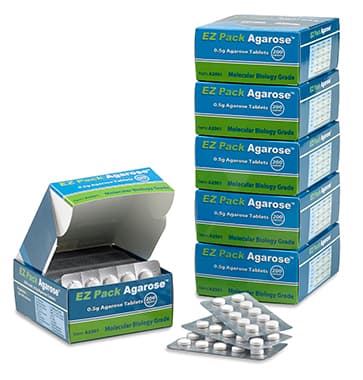
EZ Pack™ Agarose Tablets
List Price:
USD298.35 - USD905.67
Online Price:
USD213.11 - USD646.91
Your Price:

Showing 1 to 5 of 5 results

What is agarose for gel electrophoresis?


Agarose is a linear polysaccharide derived from agar that, when dissolved in hot buffer and allowed to cool, forms a porous gel matrix whose pore size is determined by the agarose concentration. DNA and RNA molecules migrate through this matrix under an electric field at a rate inversely related to their size, allowing fragments of different lengths to be separated and visualized as distinct bands.


What you will find:


  • Azura Agarose for routine electrophoresis of nucleic acids with low electroendosmosis (EEO) performance
  • Benchmark Agarose for PCR product analysis and high-quality nucleic acid separation
  • Benchmark Specialty Agarose for specialized gel applications requiring enhanced resolution and performance control
  • Standard Agarose for routine use in gel electrophoresis workflows
  • EZ Pack™ Agarose Tablets for agarose concentration control and convenient gel preparation 


How to choose agarose type and concentration


Use standard agarose at 0.7–1% for routine PCR and restriction digest checks on larger fragments

A 0.7–1% standard agarose gel is commonly used for routine PCR product verification and restriction digest analysis when fragments are generally in the 1–10 kb size range.

Use 1.5–2% standard agarose for resolving smaller fragments in the 200 bp–2 kb range

Higher agarose concentrations from 1.5% to 2% are appropriate for resolving smaller PCR products, SNP genotyping amplicons, or restriction digests where size differences below 500 bp need to be clearly distinguished.

Use high-resolution agarose at 2–4% for very small fragments or close sizing

High-resolution agarose formulations can differentiate closely sized DNA fragments in the 50–500 bp range more effectively than standard agarose, making them useful for applications such as microsatellite or STR analysis.

Choose low-melting-point agarose when you need to recover DNA from gel slices

Low-melting-point (LMP) agarose can be melted at approximately 65°C after electrophoresis, allowing DNA-containing gel slices to be processed more easily for downstream enzymatic reactions or purification workflows.

Confirm agarose purity (EEO grade) for sensitive applications

Electro-endosmosis (EEO) reflects agarose purity. Low-EEO agarose supports more consistent DNA migration and helps minimize contaminants that may interfere with downstream PCR amplification, restriction digestion, or other enzymatic applications.


Specifications context


Standard agarose gels are typically prepared by dissolving agarose powder in TAE or TBE buffer through heating, followed by cooling to approximately 55°C before pouring into casting trays. Higher-concentration gels solidify more rapidly and generally benefit from prompt casting.

As of 2026, low-EEO agarose grades remain the preferred choice for sensitive applications such as Southern blotting, gel extraction followed by PCR, and restriction enzyme digestion workflows where contaminants can inhibit downstream reactions.

Contact the expert team and get premium agarose gel for your research today.

FAQ

A 1% to 1.5% agarose gel is the most versatile choice for routine PCR product verification, resolving amplicons in the several hundred base pair to a few kilobase range clearly enough for most verification purposes. If your expected amplicons are larger, a 0.7–0.8% gel gives better separation of fragments above 5 kb, while a 2% gel is better for resolving smaller amplicons below 500 bp.
High-resolution agarose is a formulation specifically designed for resolving small DNA fragments in the 50 to 500 bp range, where standard agarose at equivalent concentrations gives insufficient separation between closely-sized bands, such as when analyzing microsatellite or STR markers, small restriction digest products, or other short amplicons. It is not needed for most routine PCR product checks on amplicons above 500 bp, where standard agarose at 1–1.5% is sufficient.
Low-melting-point agarose can be melted at around 65°C after electrophoresis rather than the higher temperatures needed for standard agarose, letting you melt only the gel slice containing your band of interest and use that melted agarose directly in downstream enzymatic reactions or extract the DNA without extreme heat. This is particularly useful for preparative gel electrophoresis where you want to recover a specific DNA fragment for cloning, sequencing, or downstream reactions.
Low-EEO agarose has reduced levels of charged sulfate groups and other contaminants compared with lower-purity grades, and these contaminants can inhibit subsequent PCR amplification or enzymatic reactions on DNA recovered from gel slices or carry through to other downstream steps. For routine gel visualization only, standard-purity agarose is generally adequate, while low-EEO grades are specifically worth using when DNA quality and purity after gel recovery matters for the downstream application.
Agarose gels should be poured after the dissolved agarose has cooled to around 55°C, since pouring while still too hot can warp plastic combs or trays, while waiting until the agarose starts to set unevenly makes it difficult to pour a flat, bubble-free gel. Pouring promptly once cooled to around 55°C, and removing combs only after the gel has fully solidified, avoids cracking and well-damage in the fully formed gel.
Agarose gels poured in TAE perform similarly to TBE in most routine applications, but TAE allows more efficient DNA band recovery from gel slices since borate ions in TBE can reduce gel extraction efficiency. TBE gives slightly sharper bands for small fragments below 1 kb and is more resistant to buffer exhaustion in longer runs, making it preferred when resolution of small fragments or long run times is the priority.
Agarose gels can sometimes be re-stained and re-run if bands were not adequately separated in the first run, but re-using gels is generally not recommended since the gel matrix may be distorted from the first run and residual buffer salts or staining dye in the gel can affect resolution and background in a second run. Casting a fresh gel is almost always the more reliable approach when the first run does not give satisfactory results.
Yes, MBP offers academic and bulk pricing for standard, high-resolution, and low-melting-point agarose powder in a range of pack sizes, with specialist support for formulation and concentration selection. Orders ship from MBP's US office in Houston, Texas, with stock available in both USD and CAD.
We provide the highest quality of products and anytime customer service.
Featured Categories
    online payment
    online payment
    fast delivery
    fast delivery
    technical support
    technical support
    24/7 support
    24/7 support
    copy right
    2026 All Right Reserved