Inorganic Salts for Buffer Systems, Cell Biology, and Enzymatic Applications
Inorganic Salts covers the ionic compounds most widely used in molecular and cell biology laboratories: sodium and potassium salts for ionic strength control and saline preparation, magnesium and calcium salts as enzyme cofactor sources, zinc and manganese salts for specific metalloenzyme applications, and phosphate salts as buffer components. These simple inorganic compounds are among the highest-volume consumables in any molecular biology laboratory, used in virtually every buffer, media, and reaction condition. Academic and core laboratories sourcing inorganic salts can benefit from guidance when selecting appropriate purity grades and applications for buffer formulation, enzymatic reactions, and general laboratory use.
Looking for a specific inorganic salt? Contact customerservice@mbpinc.net for a quotation and expert guidance on selecting the right compound, purity grade, and formulation for your research application.
Inorganic Salts
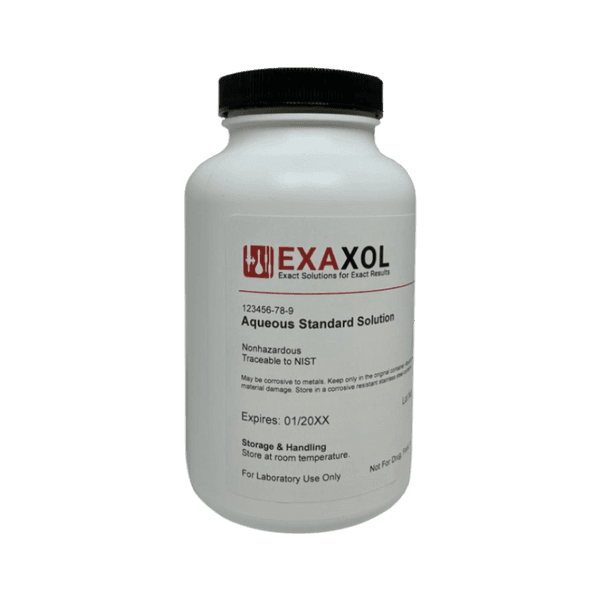

Showing 13 to 24 of 98 results
What are research inorganic salts?
Research inorganic salts are ionic compounds formed from a metal cation and an inorganic anion, used throughout molecular biology and biochemistry as buffer components, ionic strength agents, enzyme cofactor sources, and media supplements. The most frequently used are sodium chloride (NaCl) and potassium chloride (KCl) for ionic strength control; magnesium chloride (MgCl2) and magnesium sulfate (MgSO4) as essential cofactors for DNA polymerases, restriction enzymes, and kinases; calcium chloride (CaCl2) for calcium-dependent enzymes and cell permeabilization; and dibasic and monobasic phosphate salts for PBS and other phosphate-buffered systems.
What you will find:
-
High-purity preservation agents formulated to prevent microbial growth and extend the shelf life of stored antibodies and liquid reagents.
-
Premium salt crystals calibrated for regulating osmotic pressures and establishing baseline ionic profiles in delicate biochemical assays.
How to choose inorganic salts
Use magnesium chloride or magnesium sulfate as enzyme cofactors for polymerases and kinases
Mg2+ is an essential cofactor for virtually all polymerases, restriction enzymes, and many kinases, with the free Mg2+ concentration in PCR reactions typically optimized at 1.5–3 mM and the magnesium source usually MgCl2 for general use or MgSO4 when sulfate provides a performance advantage for certain DNA polymerases.
Use sodium chloride for ionic strength control in buffers
NaCl at concentrations from approximately 100–150 mM provides the physiological ionic strength used in most biological buffers, affecting enzyme activity, protein solubility, and protein-protein interaction stringency. Higher NaCl concentrations, such as in high-salt washing buffers, can disrupt weaker electrostatic interactions.
Use calcium chloride as a cofactor for calcium-dependent enzymes
CaCl2 supplies the Ca2+ ions required by calcium-dependent proteins including calmodulin-dependent kinases, C2 domain-containing proteins, and S1 nuclease, and is also used in competent cell preparation where calcium ions facilitate DNA uptake through the bacterial cell membrane.
Use phosphate salts to prepare PBS and other phosphate buffer systems
Monobasic potassium phosphate (KH2PO4) and dibasic sodium phosphate (Na2HPO4) are combined at appropriate ratios to achieve pH 7.4 in PBS, providing the buffering capacity of the phosphate system alongside NaCl and KCl for ionic balance.
Confirm molecular biology grade for PCR and sensitive enzymatic applications
Molecular biology grade inorganic salts confirm the absence of nuclease, protease, and trace heavy metal contamination that could inhibit PCR or other sensitive enzymatic reactions. For non-enzymatic applications like gel electrophoresis buffer preparation, ACS reagent grade is generally adequate.
Specifications context
Magnesium chloride is particularly critical in PCR optimization because free Mg2+ affects the melting temperature of DNA, the activity and fidelity of thermostable DNA polymerases, and the binding of primers to template, with the optimal MgCl2 concentration varying by template GC content, primer sequence, and reaction conditions. As of 2026, concentrated pre-made MgCl2 solutions at 25 mM or 50 mM supplied sterile with PCR enzyme kits remain standard as a separately added reagent for PCR optimization alongside reaction buffer components.
Contact the helpful team at MBP today to request a quote for your specific research requirements.
FAQ



