siRNA Lentiviral Negative Control Constructs
MBP Inc. supplies siRNA lentiviral negative controls — non-targeting and scrambled sequence constructs — for establishing accurate experimental baselines in RNAi knockdown studies. These controls activate the RNAi pathway without silencing any known mammalian gene, enabling researchers to distinguish specific knockdown effects from non-specific delivery artefacts in labs.
MBP offers a broad range of siRNA control vectors and viruses to support research laboratories worldwide. Contact customerservice@mbpinc.net today to request a quote.
siRNA Controls
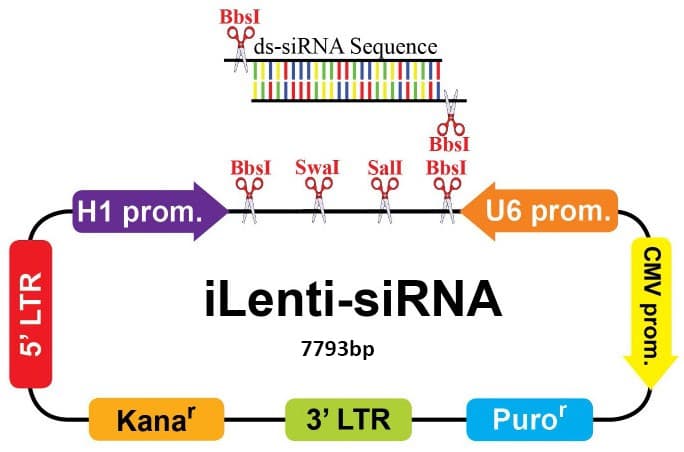
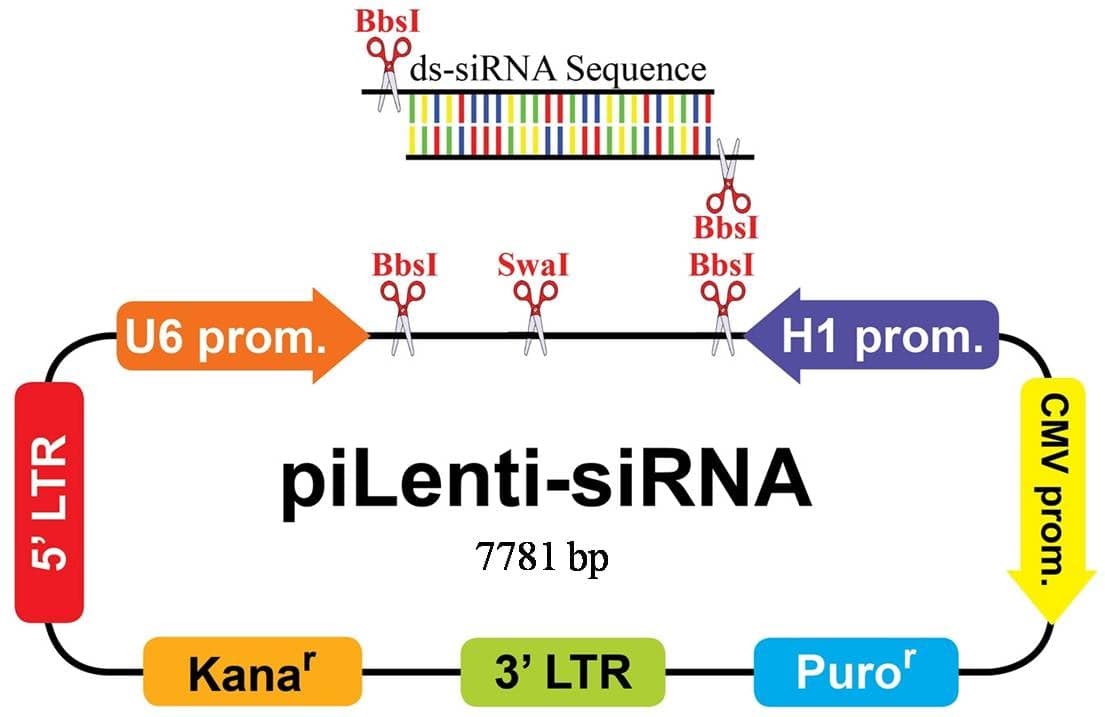
Showing 1 to 6 of 6 results
What are siRNA Lentiviral Negative Controls?
Every well-designed RNAi experiment requires at least one matched negative control. Without proper control, it is impossible to determine whether an observed phenotype reflects specific target gene silencing, non-specific dsRNA effects, viral transduction artefacts, or off-target silencing by the guide strand. Meaningful gene-silencing results require proper experimental controls. Choose the siRNA control appropriate for your study.
What you will find:
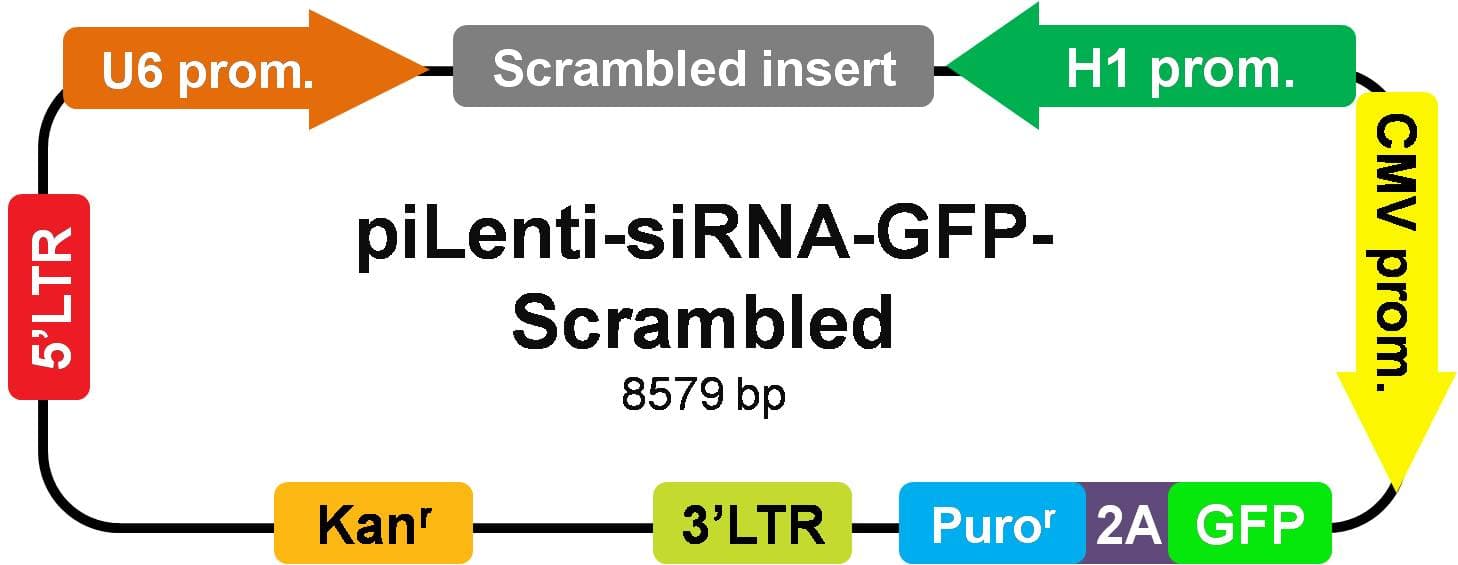
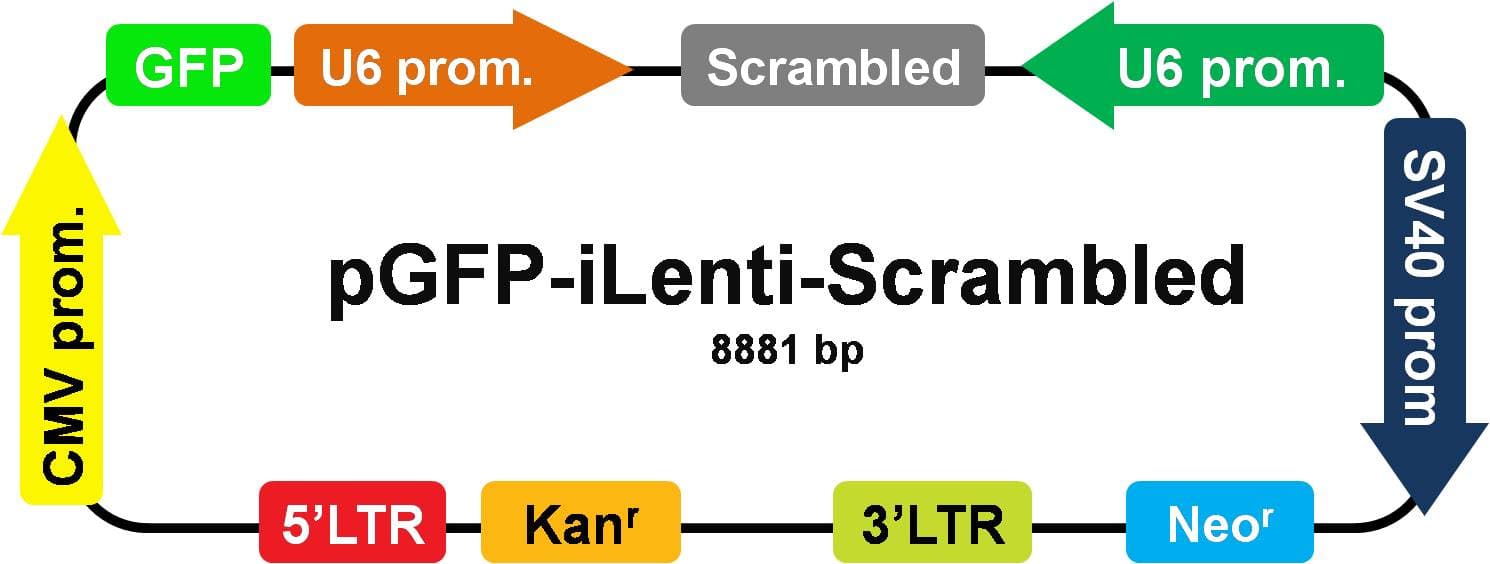
- Scrambled siRNA Control Vectors: Non-targeting siRNA lentivectors for negative control experiments in gene-silencing studies.
- Scrambled siRNA Control Viruses: Ready-to-use lentiviral controls for validating RNAi workflows and transduction conditions.
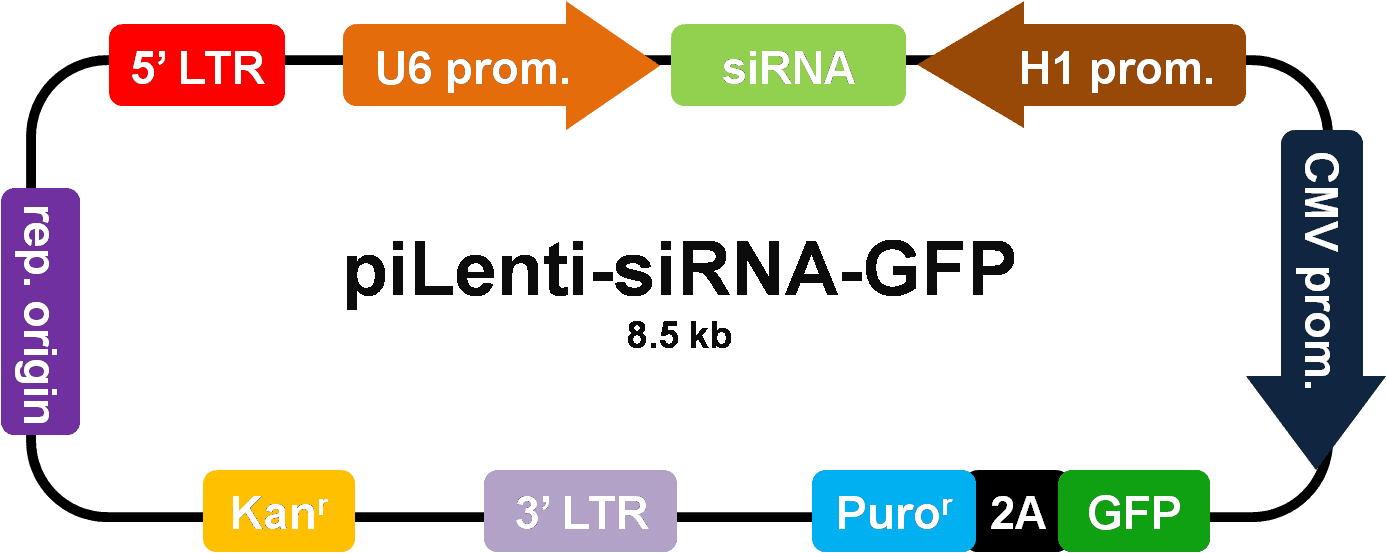
- GFP-Expressing Controls: Scrambled siRNA constructs with GFP reporters for monitoring transduction and expression.
- Neomycin-Selectable Controls: Control vectors and viruses featuring neomycin resistance for stable cell selection.
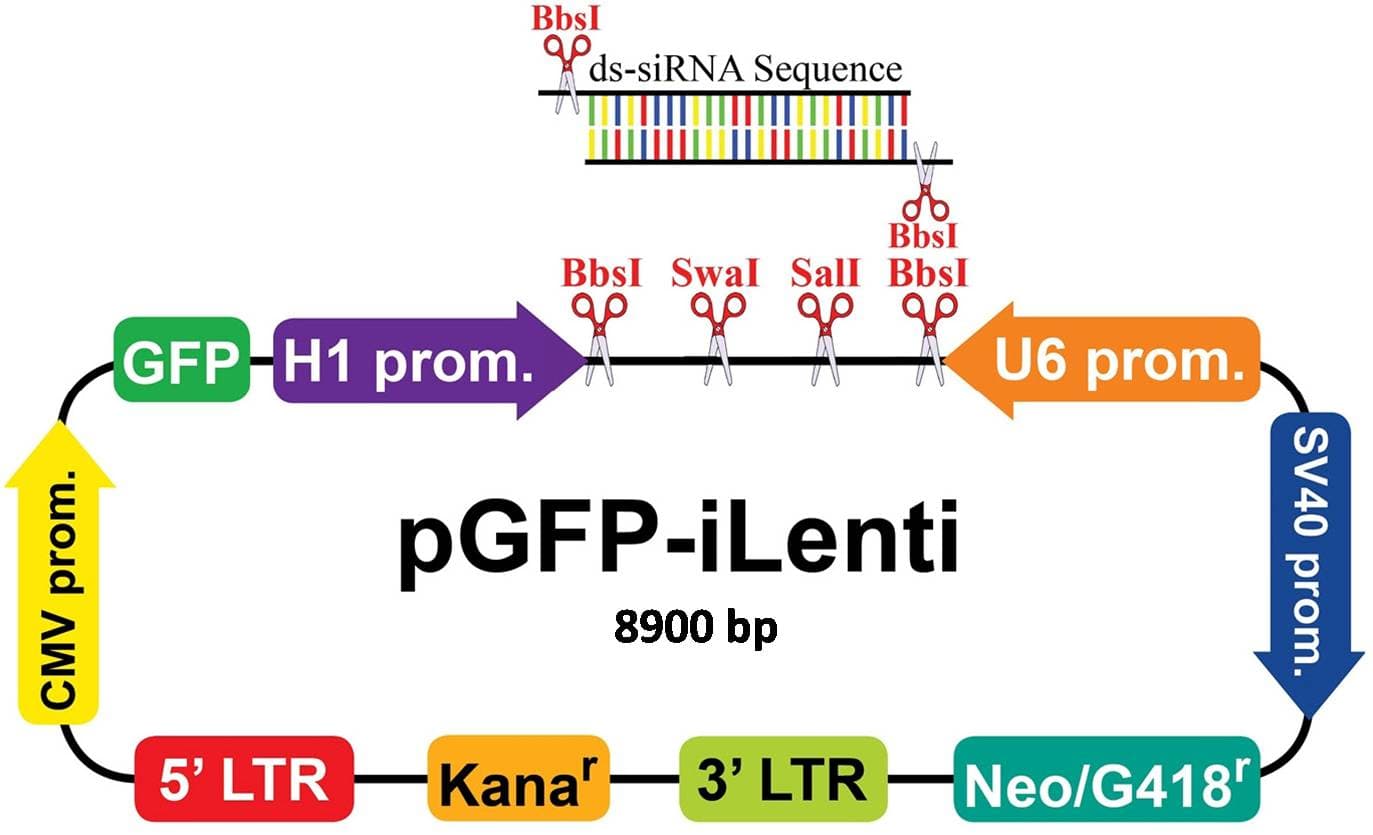
- Vector and Viral Formats: Available as both lentivectors and packaged lentiviruses to support diverse experimental workflows.
How to Choose siRNA Negative Controls
Control Design Type
Non-targeting siRNA sequences are bioinformatically designed with no significant homology to any known human, mouse, or rat gene — entering RISC and activating RNAi machinery the same way as experimental sequences, providing a physiologically relevant baseline.
Scrambled vs. Non-Targeting
Scrambled controls rearrange the nucleotide sequence of an experimental siRNA while preserving base composition, but the rearranged sequence may inadvertently contain a seed region with off-target homology. Non-targeting designs with seed-region optimisation are the preferred approach.
Vector Backbone Matching
Non-targeting lentiviral controls should use the same vector backbone and promoter as the experimental, so differences between groups are attributable to sequence-specific effects rather than backbone, promoter, or selection marker differences.
Community Standard Reference
The pLKO.1 scramble control (Addgene 1864), deposited from the Sabatini lab, is the community standard negative control for TRC library-based experiments, cited in thousands of publications.
Selection and Reporter Options
Lentiviral negative controls are available with puromycin, hygromycin, blasticidin, and neomycin selection markers, as well as fluorescent reporter versions (GFP, RFP) for FACS-based selection.
Specifications Context
Microarray profiling studies have demonstrated that scrambled controls can exhibit off-target expression signatures differing from non-targeting controls — non-targeting designs validated with a minimum of three mismatches or gaps to all potential PAM-adjacent targets are the preferred standard for rigorous RNAi design. Best practice recommends including a non-targeting negative control, an empty vector control, and, where possible, a positive control targeting a constitutively expressed housekeeping gene (GAPDH, ACTB) to confirm knockdown conditions are functioning. For lentiviral screens, multiple distinct non-targeting controls should be distributed throughout the library to provide a statistically robust baseline. Validation by microarray or RNA-seq should show minimal differential gene expression (<2-fold) versus untreated cells.
Contact the expert team at MBP today to get professional siRNA controls for your lab.
FAQ



