Luciferase Reporter Lentiviral Vectors and Kits for Labs
MBP Inc. supplies firefly, Renilla, and dual luciferase reporter lentiviral constructs for stable, quantitative bioluminescent gene expression assays. Available as plasmid DNA or pre-packaged lentiviral particles, these reporter tools support promoter activity studies, transcription factor pathway assays, in vivo imaging, and drug screening in research labs across the USA and Canada.
Researchers can rely on MBP for luciferase reporter vectors and viral systems that support functional genomics and gene regulation studies. Request a quote by contacting customerservice@mbpinc.net to discuss your application requirements.
Luciferase Reporters

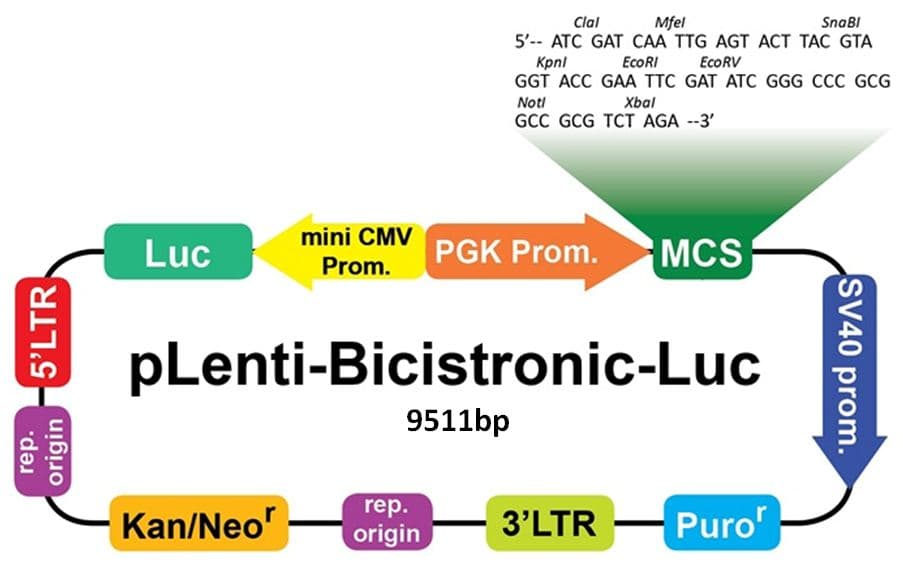
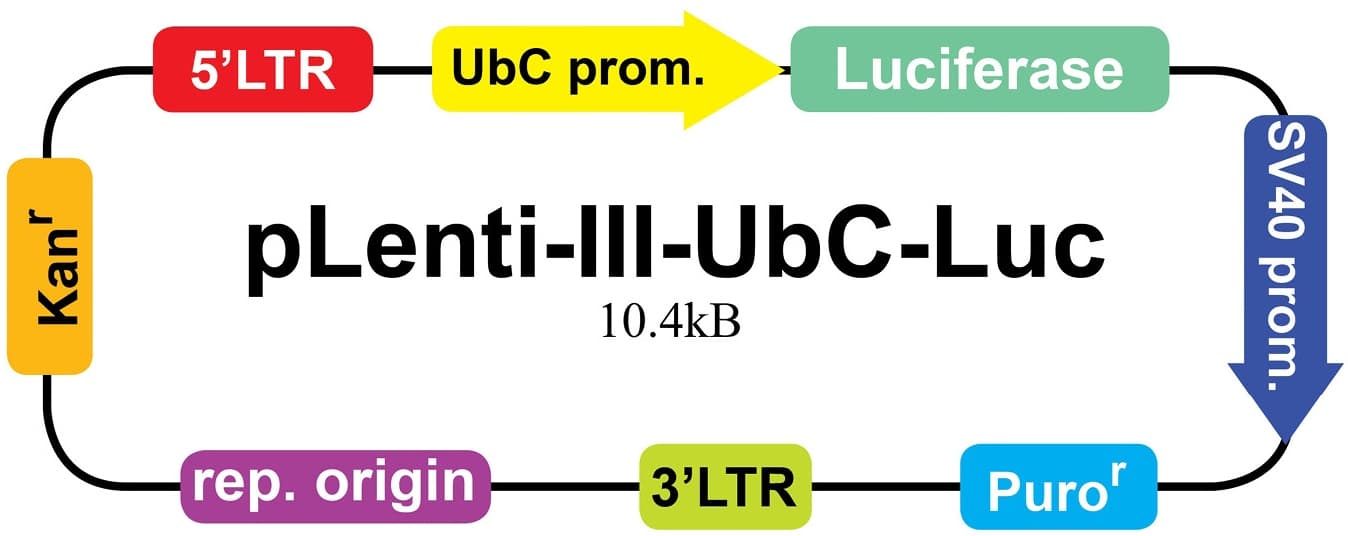
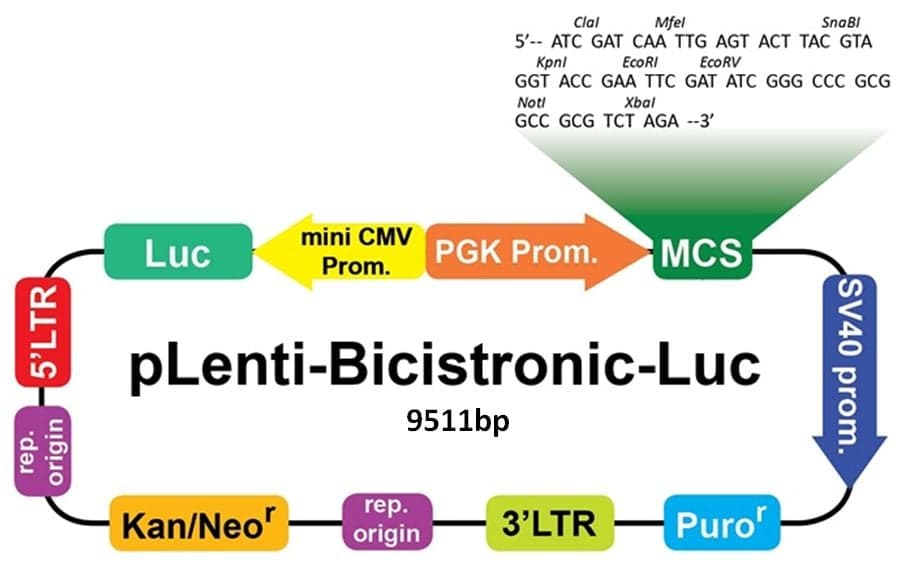
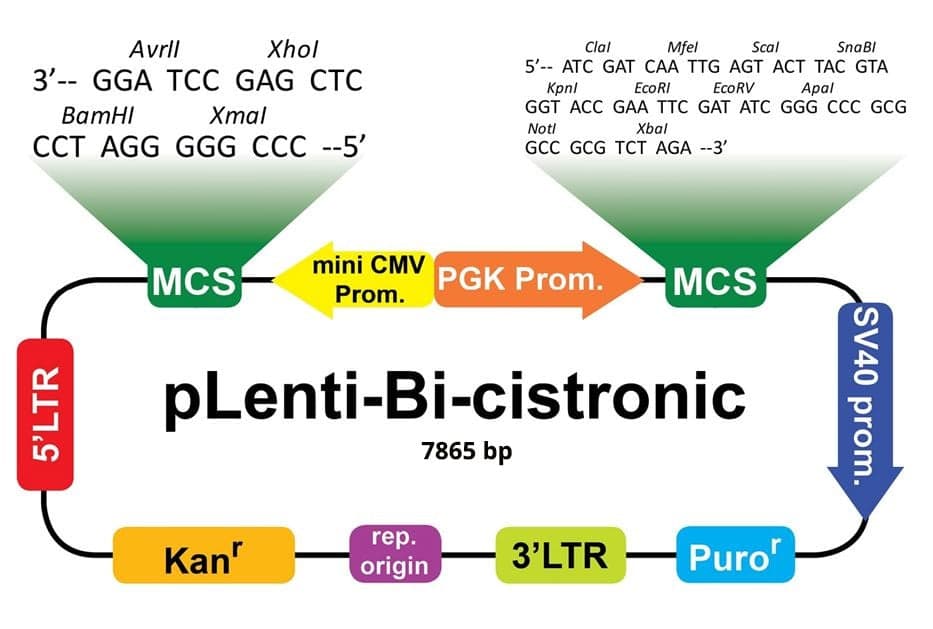
Showing 1 to 12 of 16 results
What Are Luciferase Reporter Lentiviral Vectors?
Luciferase reporters have been foundational to gene expression research since their first use as reporter genes in 1985. The bioluminescent signal produced when luciferase oxidises its substrate provides a sensitive, quantitative, non-radioactive readout measurable over a wide dynamic range with standard plate reader luminometers. Lentiviral delivery produces stable, integrated reporter cell lines that maintain consistent signal over weeks to months. Accurate reporter assays depend on appropriate detection systems. Select a luciferase construct that fits your research needs.
What you will find:
- Luciferase Reporters: Reliable assay validation using selective promoter-specific vectors, fluorescent reporters, dual-reporter systems, and background controls with luciferase reporter systems.
- Fluorescent Reporter Controls: GFP and RFP lentiviral vectors and viruses for monitoring transduction efficiency and transgene expression.
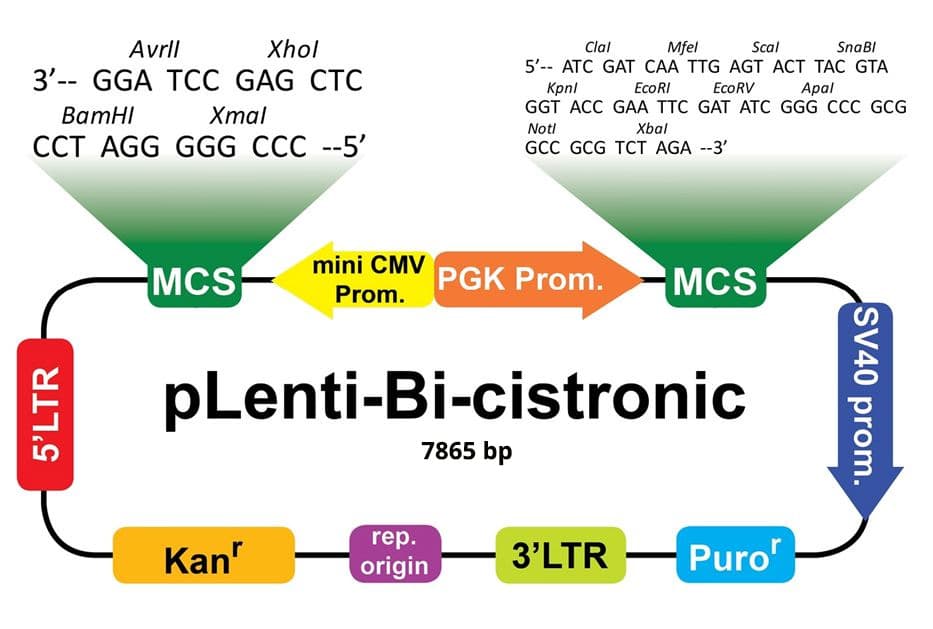
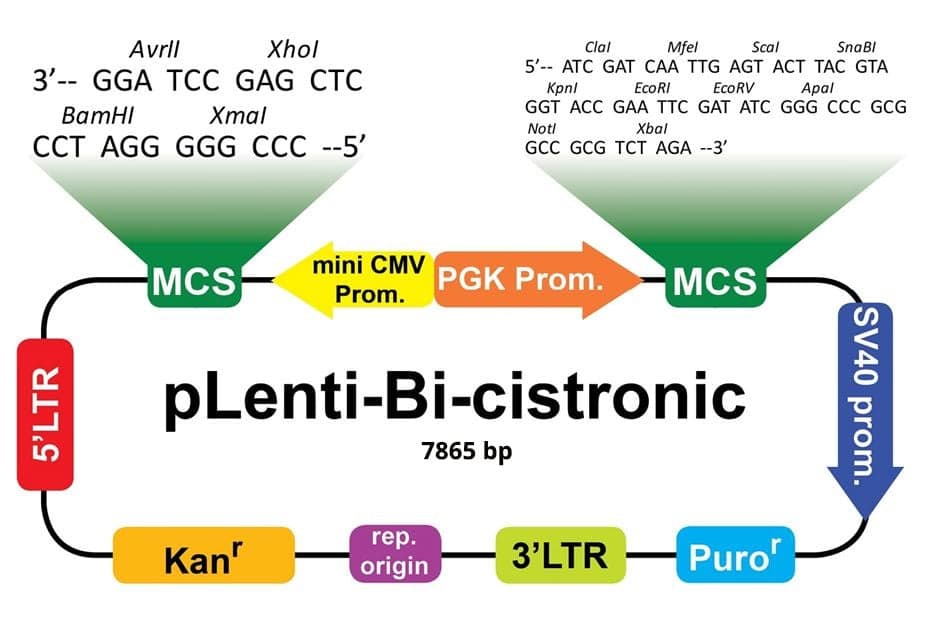
- Blank Control Vectors & Viruses: Empty lentiviral backbones for negative controls, promoter evaluation, and custom construct development.
- Promoter & UTR Reporter Systems: Reporter vectors designed for promoter activity and regulatory element analysis, including promoter and 5′ UTR reporter formats.
- Selectable Marker Controls: Control constructs with puromycin, neomycin, hygromycin, and blasticidin resistance markers for selection and workflow validation.
How to Choose a Luciferase Reporter
Reporter Role
Firefly luciferase is typically driven by the promoter or response element under investigation as the experimental reporter; Renilla luciferase — driven by a constitutive promoter (SV40 or CMV) — provides within-sample normalisation correcting for cell number, transfection efficiency, and lysis variability.
Substrate and Emission
Firefly luciferase uses D-luciferin and emits at ~550–570 nm (green/yellow); Renilla uses coelenterazine and emits at ~480 nm (blue-green) — both can be measured sequentially from the same lysate in a dual-luciferase assay.
Stable vs. Transient Use
Lentiviral delivery produces stable reporter cell lines in 1–2 weeks via antibiotic selection — essential for high-throughput compound screening, long-term pathway activity monitoring, and in vivo bioluminescence imaging.
Pathway-Specific Reporters
Promoter or transcriptional response element (TRE) inserts — such as Wnt/TCF-LEF, NF-κB, NFAT, or VEGF promoter — provide a quantitative readout of pathway activity when the cognate transcription factor is activated.
In Vivo Imaging Needs
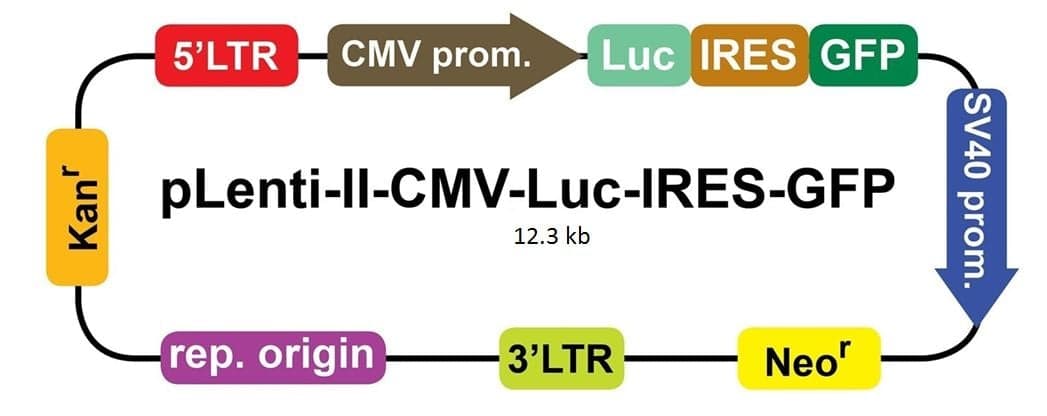
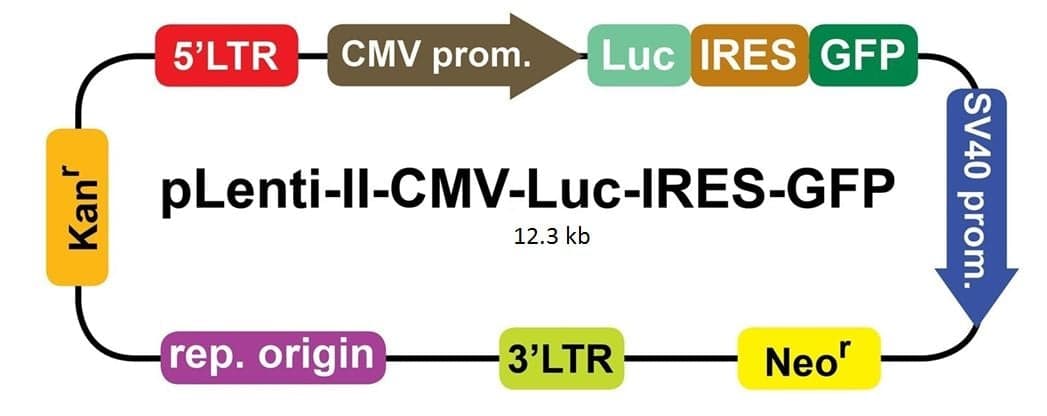
CMV-GFP-T2A-Luciferase dual-reporter lentivectors co-express GFP and luciferase for combined fluorescence and bioluminescence tracking of implanted cells in live animals.
Specifications Context
Cells are lysed and mixed with the appropriate substrate in a plate reader or tube luminometer; light emission is measured in relative light units (RLU), proportional to luciferase activity and reflecting promoter activity or transgene expression level. A promoter-less dual luciferase vector establishes the minimum signal level for the assay system, identifying the true zero-activity baseline. Stable lentiviral luciferase reporter cell lines are essential tools for tracking xenograft tumour growth, metastasis, and therapy response in preclinical mouse models. EF1α-driven constructs maintain high expression for 30+ days without selection, while CMV-driven constructs may undergo progressive silencing in some cell types. Product availability reflects MBP's catalogue as of mid-2026.
Contact the expert team at MBP today and get optimized luciferase reporters for advanced cloning and CRISPR-related workflows.
FAQ



