Primary Cell Culture Media for Specialized Cell Types and Advanced Culture Systems
Primary cell culture media support cells isolated directly from donor tissue, retaining native physiological characteristics and functional responses lost in immortalized cell lines over many passages. Cell-type-specific formulations exist for endothelial, mammary epithelial, pancreatic, hepatic, muscle, neuronal, mesenchymal stem, and mononuclear (MNC) cells, available in serum-containing, serum-free, xeno-free, and animal origin-free options. 3D organoid and cancer stem cell (tumorsphere) media support specialized culture formats. MBP ships to labs across the United States, Canada, and internationally with PO and Quick Order at mbpinc.net.
Explore available primary cell culture media or request a quotation by contacting customerservice@mbpinc.net. Our team can help identify the optimal formulation for your cell type, culture conditions, and research application.
Primary Cell Culture
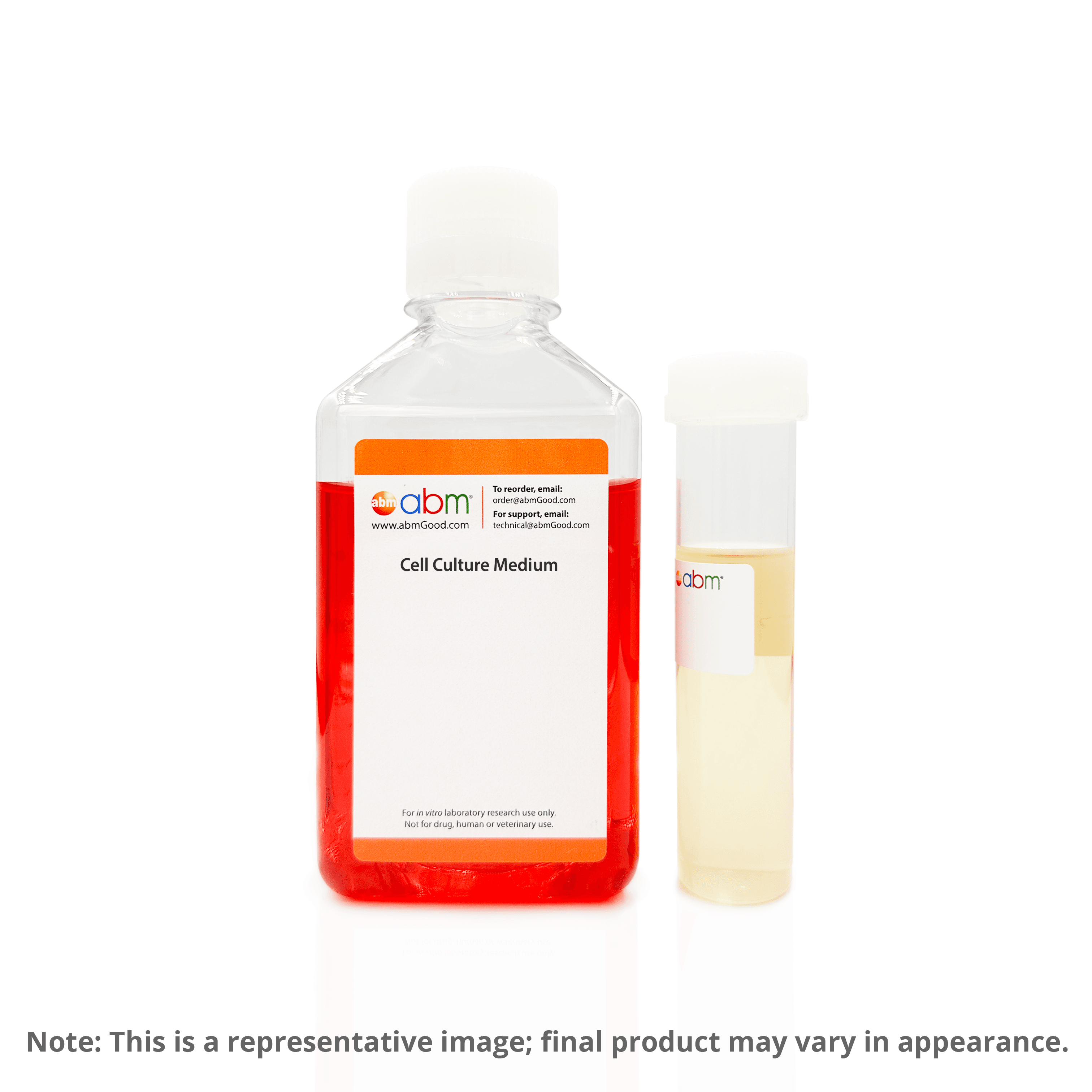


Showing 25 to 36 of 45 results
What is primary cell culture media?
Primary cell culture media are specialized growth media formulated to support cells isolated directly from living tissues rather than immortalized cell lines. Unlike transformed cell lines such as HeLa, HEK293, or CHO cells, primary cells retain many of the physiological characteristics, gene expression patterns, and functional responses found in their tissue of origin. Because primary cells have highly specific nutritional and signaling requirements, they typically require cell-type-specific media containing optimized combinations of growth factors, hormones, supplements, and serum components that cannot be replaced by standard basal media alone.
What you will find:
-
Primary cell culture medium kits: Use tissue-specific growth factors for phenotypic preservation and optimal proliferation. Kits include skeletal/smooth muscle, epithelial, endothelial, immune, hepatocyte, stromal, and progenitor media optimized for metabolic research, lineage differentiation, cryopreservation, and pigmentation recovery.
How to choose primary cell culture media
Match the medium to the cell type
Different primary cells have unique nutritional and signaling requirements. Specialized media are available for endothelial cells, epithelial cells, hepatocytes, neuronal cells, muscle cells, pancreatic cells, mesenchymal stem cells, fibroblasts, and many other primary cell types. Selecting a medium specifically formulated for the target cell type helps maintain normal morphology, growth characteristics, and biological activity.
Complete medium kits vs. individual components
Many primary cell culture systems are available as complete medium kits that include a cell-specific basal medium, optimized growth supplements, antibiotics where appropriate, and serum if required. These kits simplify workflow and reduce variability by providing components that have been validated together for the intended cell type.
Serum-containing vs. serum-free formulations
Traditional primary cell media often contain fetal bovine serum (FBS) to provide growth factors, attachment factors, and nutrients. Serum-free formulations reduce lot-to-lot variability and improve experimental consistency. Depending on the application, serum-free, xeno-free, animal-component-free, and animal-origin-free formulations may be available.
Animal-origin-free and xeno-free options
For cell therapy development, regenerative medicine, and other regulated workflows, animal-derived components may need to be minimized or eliminated. Xeno-free and animal-origin-free media replace serum and animal-derived supplements with defined recombinant components while maintaining cell growth and functionality.
Antibiotic considerations
Many primary cell media include antibiotics and antimycotics to reduce contamination risk. However, certain specialized formulations, particularly those designed for immune cells and mononuclear cells, may be supplied without antibiotics because these additives can influence cellular responses and experimental outcomes.
2D vs. 3D culture applications
Standard primary cell media are typically designed for two-dimensional monolayer cultures grown on tissue-culture-treated surfaces. Three-dimensional culture systems such as organoids and tumorspheres often require specialized media containing additional growth factors and supplements to support long-term growth, differentiation, and tissue-like organization.
Common primary cell culture applications
Primary cell media are widely used for culturing endothelial cells, mammary epithelial cells, hepatocytes, neurons, pancreatic cells, skeletal muscle cells, mesenchymal stem cells, and immune cells. These applications often require highly specific formulations that differ substantially from conventional cell line media.
Mononuclear cell (MNC) media are designed for lymphocyte and monocyte cultures derived from peripheral blood or cord blood. These formulations typically support short-term maintenance and expansion of immune cells under controlled culture conditions.
Three-dimensional organoid and tumorsphere media support tissue-like structures that better mimic native biological environments than conventional monolayer cultures. These systems are commonly used in cancer research, stem cell biology, and disease modeling.
Primary cell culture vs. immortalized cell line culture
Primary cells more closely reflect native tissue biology because they have not undergone genetic transformation or immortalization. However, they generally exhibit limited proliferative capacity and eventually enter senescence after a finite number of passages.
Immortalized cell lines are easier to culture, less expensive to maintain, and capable of indefinite proliferation. While these characteristics make them valuable research tools, they may differ significantly from normal tissue biology after extended culture.
For applications where physiological relevance is critical, primary cells are often preferred despite their higher cost, greater complexity, and shorter lifespan in culture.
Specifications context
Primary cell culture media are available as complete media, growth supplements, and specialized formulations for specific tissues and applications. Many products are offered in serum-containing, serum-free, xeno-free, animal-component-free, and animal-origin-free formats to support both research and regulated workflows.
No more failed experiments. Contact the expert team at MBP and get premium-quality primary cell culture for your lab today.
FAQ