Cell Culture Matrix Products for Organoid, Spheroid, and 3D Cell Culture Systems
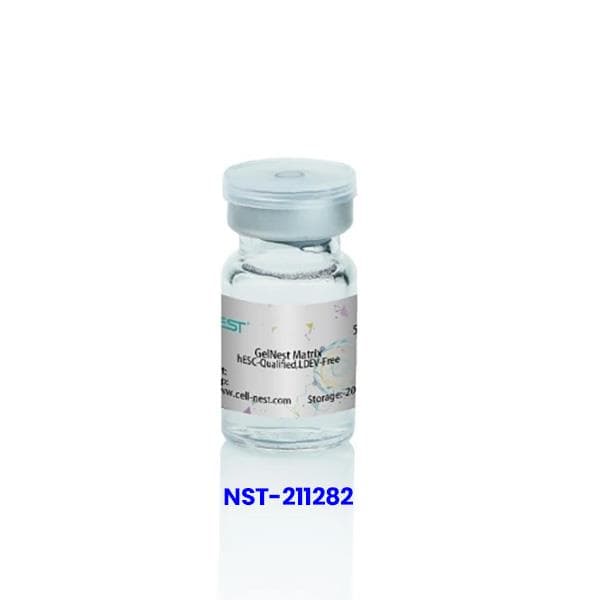
Cell culture matrix products are solubilized basement membrane extracts, primarily derived from Engelbreth-Holm-Swarm (EHS) mouse tumor tissue, that provide the laminin, collagen IV, and growth factor-rich scaffold needed for organoid, spheroid, and other 3D cell culture models. They are available in standard, reduced growth factor, phenol-red-free, and hESC/iPSC-qualified formats, in LDEV-free preparations. Academic researchers establishing organoid culture can use MBP's specialist team to confirm format and lot qualification options for their specific tissue type.
Explore available cell culture matrix products or request a quotation by contacting customerservice@mbpinc.net. Our team can help confirm the appropriate matrix grade, lot testing requirements, and compatibility for your organoid or 3D culture system.
Cell Culture Matrix
Showing 1 to 9 of 9 results
What is cell culture matrix?
Cell culture matrix, often called basement membrane matrix or basement membrane extract (BME), is a solubilized preparation extracted primarily from Engelbreth-Holm-Swarm (EHS) mouse sarcoma tumors. It is composed mainly of laminin, collagen IV, heparan sulfate proteoglycans, and entactin/nidogen, along with associated growth factors. At 37°C, it polymerizes into a gel that provides a 3D scaffold for organoid, spheroid, and tumoroid culture.
What you'll find in this category:
-
Structural Hydrogels: High-purity, low-endotoxin scaffolds optimized to mimic natural basement membranes and guide complex cellular organization.
-
Coated Culture Surfaces: Premium plates and coverslips treated with attachment factors designed to boost cell adhesion and prevent detachment.
-
Tissue-Specific Matrices: Finely tuned extracellular mixtures engineered to support realistic differentiation and phenotypic accuracy in long-term runs.
How to choose cell culture matrix products
Standard vs organoid-optimized matrix
Some matrix products are specifically validated for organoid formation, including lot-level testing for gel stability and elastic modulus. These organoid-qualified versions are preferred for long-term 3D culture consistency. General-purpose matrix may be more suitable for coating applications but less consistent for dome-based organoid growth.
Growth factor content (standard vs reduced)
Standard matrix retains endogenous growth factors from the EHS extraction, which can influence signaling in organoid systems. Reduced growth factor matrix is used when researchers need tighter control over defined media formulations and want to minimize background signaling from the scaffold itself.
Phenol red and imaging compatibility
Phenol-red-free matrix is preferred for fluorescence imaging and hormone-sensitive assays, where background color or weak estrogenic activity may interfere with quantitative readouts. Standard formulations are typically used when imaging sensitivity is not a limiting factor.
Species and tissue-type qualification
Some matrices are validated for specific organoid systems such as intestinal, liver, airway, or renal models. Matching the matrix qualification to the intended organoid type improves reproducibility, especially in long-term culture or biobanking workflows.
Specifications context
Cell culture matrix products are typically characterized by protein concentration (commonly ~8–12 mg/mL for standard formulations), endotoxin and LDEV-free certification, and mechanical properties such as elastic modulus measured in Pascals, which influences gel stiffness and organoid morphology. Packaging is generally in 1–10 mL vials, with organoid-qualified and reduced growth factor formats priced higher due to additional validation and lot-level testing.
This sub-category sits within MBP's organoids, spheroids, and 3D cell culture hub. Labs assessing viability in 3D systems may also use cell stains and dyes, while those studying signaling pathways in organoid models often combine matrix systems with receptors and modulators for functional perturbation studies. MBP’s specialist team can help confirm matrix type, growth factor content, and organoid-specific compatibility before order placement.
Need to secure bulk quantities of structural gels or specialized multi-well matrix plates for your screening runs? Connect with the MBP sales desk today, and we'll help you configure your cell culture setup.
FAQ



