Culture Media for Bacterial Cloning, Transformation Recovery, and Plasmid Production
Culture media in this category refers to bacterial growth media used in cloning workflows, including LB (Luria-Bertani) broth and agar, SOC recovery media, and Terrific Broth, supplied as ready-to-use liquid or pre-made antibiotic-selective agar plates. These media support bacterial outgrowth after transformation, selection of successfully transformed colonies via antibiotic resistance, and plasmid-producing culture scale-up. Academic researchers running routine cloning can use MBP's specialist team to confirm antibiotic concentrations and media formats for a specific selection marker.
Explore available bacterial culture media or request a quotation by contacting customerservice@mbpinc.net. Our team can help identify the appropriate broth, agar, and selective media options for your cloning, transformation, and plasmid production workflows.
Culture Media
Showing 1 to 4 of 4 results
What is bacterial culture media for cloning?
Bacterial culture media for cloning workflows includes LB (Luria-Bertani) broth and agar, the standard general-purpose media for E. coli growth, SOC media used for post-transformation recovery, and Terrific Broth for higher-density culture in plasmid preparation. Pre-made agar plates with antibiotic selection (ampicillin, kanamycin, chloramphenicol, and others matching common selection markers) are used to isolate colonies carrying the desired plasmid. Related entities include antibiotic selection markers matching transformation kit resistance genes, post-transformation recovery time, and plasmid yield scaling with culture volume and media richness.
What you will find:
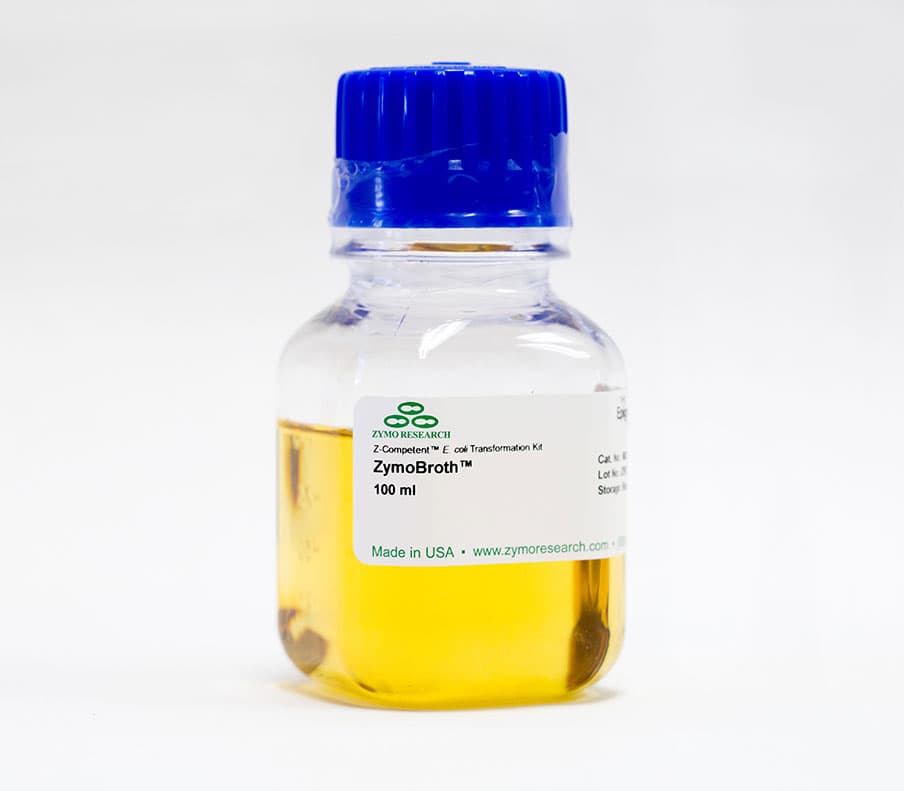
- ZymoBroth Growth Media for efficient transformation workflows to generate highly competent bacterial cells
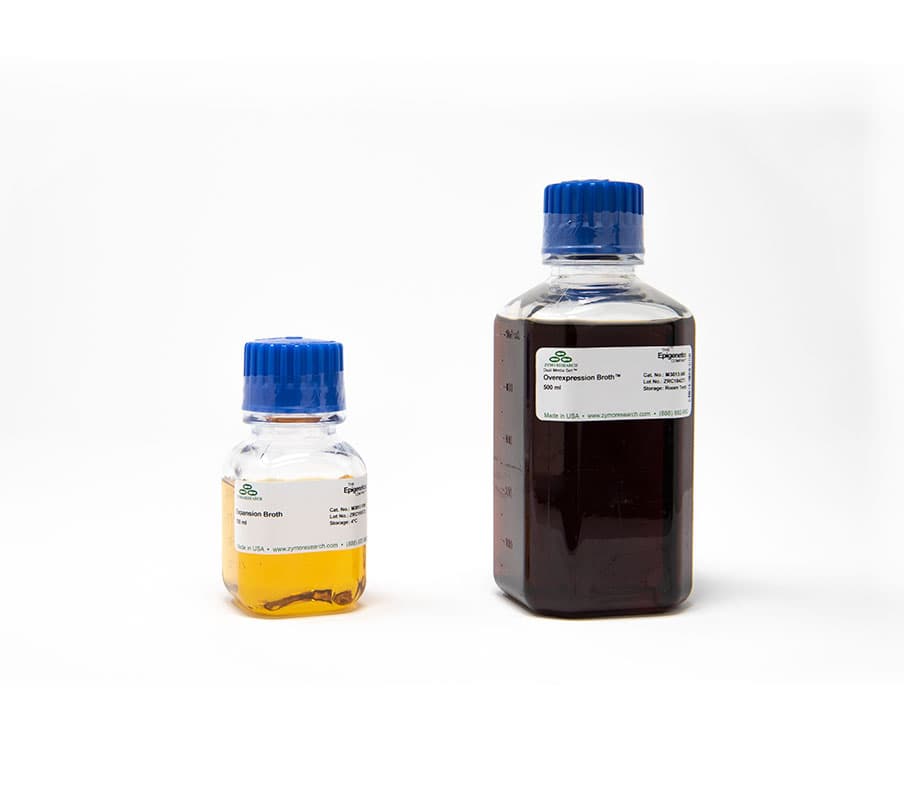
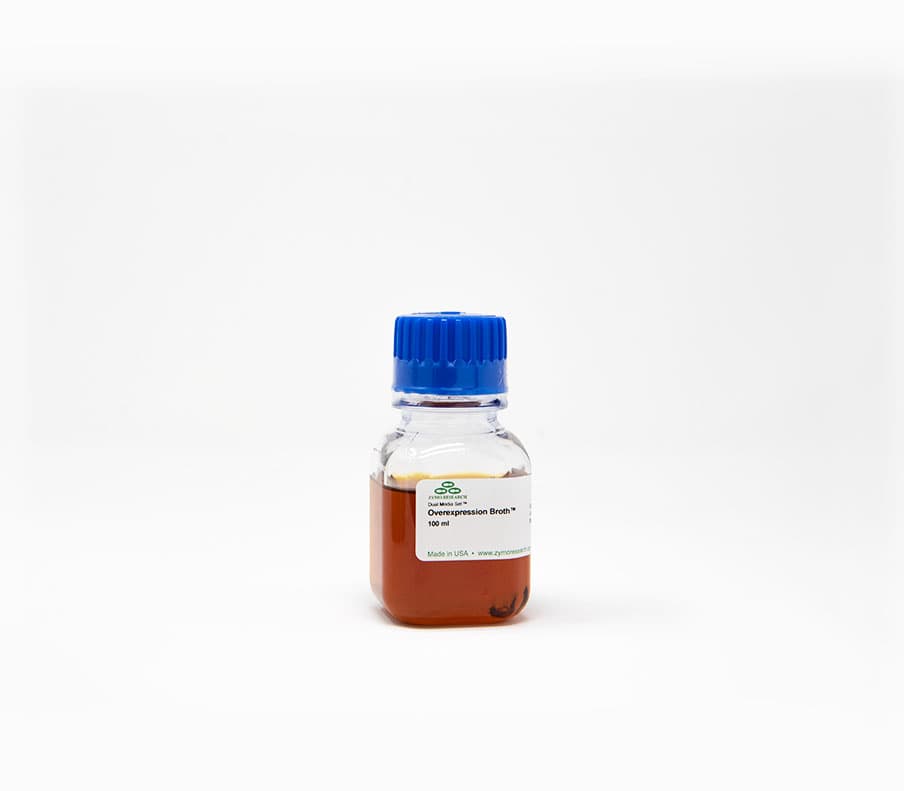
- Overexpression Broth (OB) optimized for increasing recombinant protein yields with high-density nutrient media.
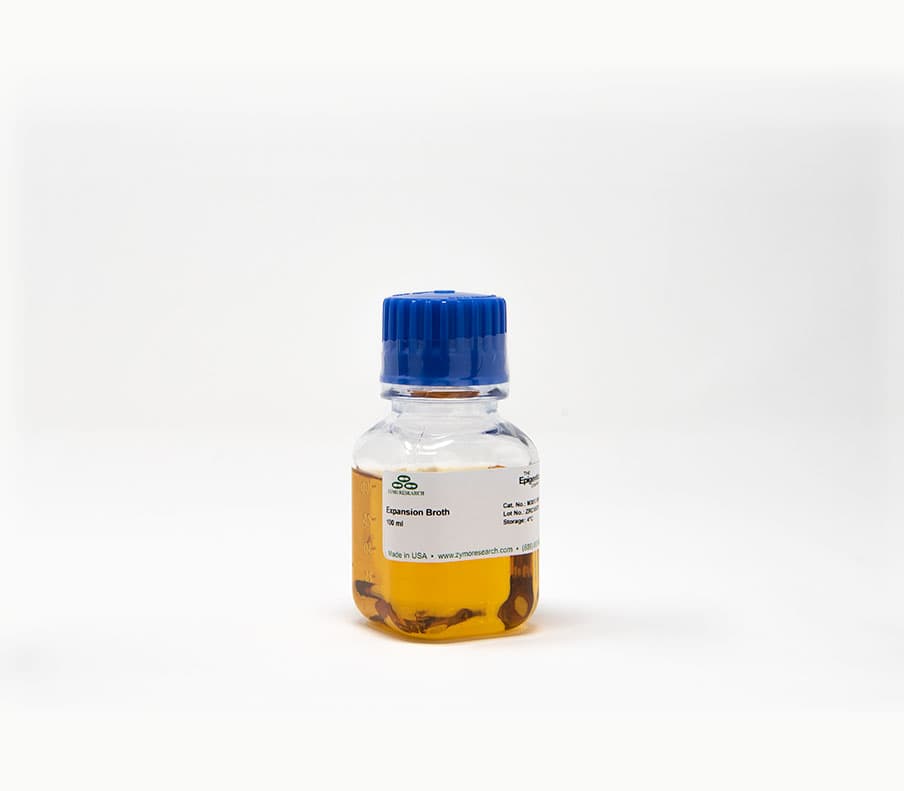
- Expansion Broth (EB) for the faster and more reliable expansion of microbial cultures.
- Dual Media Sets for integrated growth and induction workflows with the help of combined EB and OB systems
How to choose bacterial culture media for cloning
LB broth/agar vs. Terrific Broth
LB broth and agar are the standard general-purpose media for routine cloning, colony selection, and small-scale plasmid preparation, while Terrific Broth provides higher nutrient density supporting higher bacterial cell density, making it useful when maximizing plasmid yield in larger-scale preparations.
SOC media for post-transformation recovery
SOC media is richer than standard LB and supplemented with glucose and magnesium. It is commonly used for a brief recovery incubation immediately after heat-shock or electroporation transformation, helping transformed cells recover before plating on selective agar. Some transformation protocols specifically recommend SOC rather than LB for this recovery step.
Antibiotic selection matching
Pre-made antibiotic-selective agar plates must match the resistance marker carried by the transformed plasmid, whether ampicillin, kanamycin, chloramphenicol, or another selection marker. Using the wrong antibiotic—or no antibiotic at all—will not properly select for plasmid-containing colonies and may allow unwanted bacterial growth.
Liquid vs. agar plate formats and shelf life
Liquid media (broth) is used for post-transformation recovery and culture scale-up, while agar plates are used for colony isolation and selection. Pre-made antibiotic plates have a defined shelf life because antibiotics gradually lose activity over time, making expiration dates particularly important for antibiotics with lower stability.
Specifications context
LB broth and agar are formulated with defined concentrations of tryptone, yeast extract, and sodium chloride, with agar plates commonly supplied in standard Petri dish sizes (for example, 100 mm) and containing antibiotic concentrations matched to common resistance markers, such as 100 µg/mL ampicillin or 50 µg/mL kanamycin. SOC recovery is typically performed as a short incubation, often around one hour at 37°C with shaking, before plating cells on selective agar.
This sub-category is part of MBP's cloning catalog alongside transformation kits and competent cells, the immediately preceding step, and chemicals/reagents for enzyme-based fragment preparation. Labs scaling up plasmid production for lentivirus packaging in immortalization workflows can also review MBP's cell immortalization catalog. MBP's specialist team can help confirm antibiotic concentration and media format requirements for a specific selection marker before order placement.
Contact the expert team at MBP today to request a quote for high-quality culture media.
FAQ