Dry Bath Incubators for Contamination-Free Sample Heating
Dry bath incubators (also called dry block heaters or heat block incubators) are benchtop heating instruments in which a solid aluminum heating block - holding interchangeable well inserts for specific tube formats including 0.5 mL PCR tubes, 1.5 mL and 2 mL microcentrifuge tubes, 15 mL and 50 mL conical tubes, and PCR strip tubes - is heated by a resistive element under PID microprocessor control from ambient to 100-160 degrees C, providing contamination-free, water-free sample incubation with temperature stability of plus or minus 0.2-0.5 degrees C that is faster to setpoint and easier to maintain than water baths.
MBP supplies dry bath incubators in single-block, dual-block, and four-block configurations with interchangeable aluminum inserts for molecular biology, microbiology, biochemistry, and clinical laboratory applications, with US order processing in Houston, Texas. Request a quote by contacting customerservice@mbpinc.net.
Dry Baths

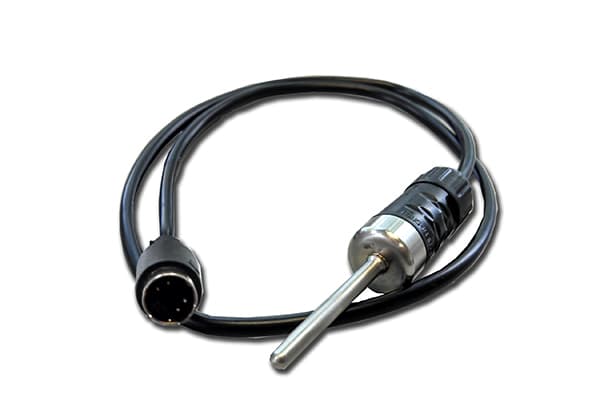
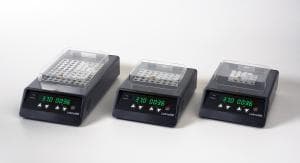
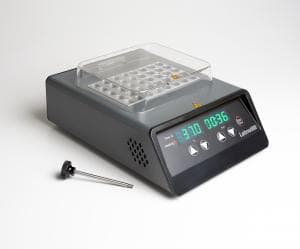
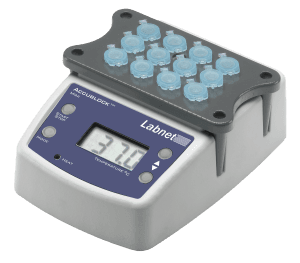
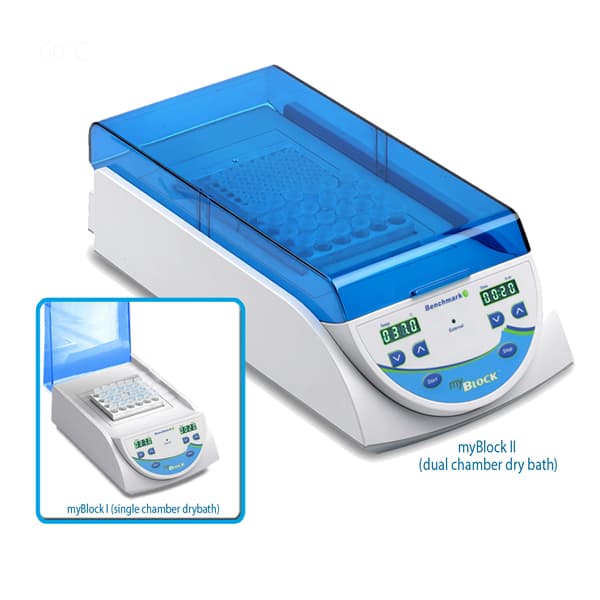
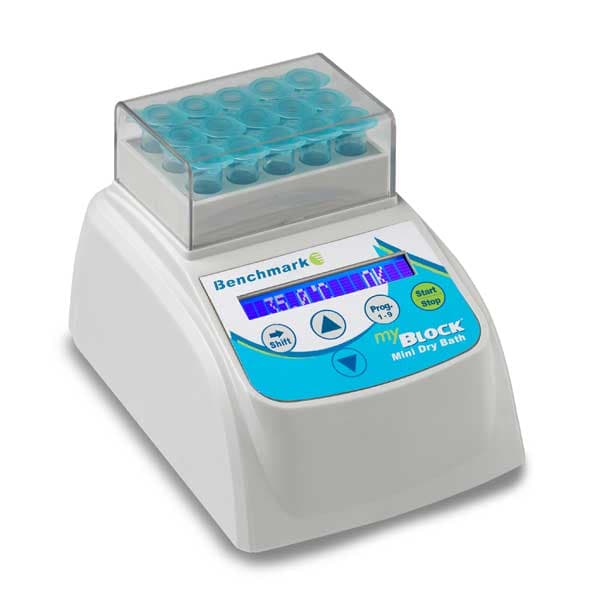
Showing 37 to 48 of 51 results
What Are Dry Bath Incubators?
A dry bath incubator uses direct thermal conduction from a heated aluminum block to sample tubes placed in precision-machined well inserts, rather than immersing samples in a liquid medium. This eliminates water bath contamination risks from microbial biofilms, cross-contamination between samples from water droplets, and the mineral scale buildup associated with tap water. Aluminum blocks heat rapidly: most models reach 37 degrees C from ambient in 3-5 minutes and 100 degrees C in approximately 10-15 minutes, providing faster protocol transitions than water baths for multi-temperature workflows. Interchangeable aluminum well insert blocks are machined to fit specific tube formats with tight tolerances (typically plus or minus 0.1 mm), maximizing thermal contact between the block wall and tube exterior for efficient and uniform heat transfer. Choose dry bath incubators over water baths when contamination prevention is critical, when multiple setpoint temperatures are needed in rapid succession, or when protocols require temperatures above 70 degrees C, where evaporation from water baths is significant.
What You Will Find:
- High-conductivity interchangeable heating blocks designed to accommodate microtubes, PCR strips, and centrifuge tubes for maximum versatility.
- Specialized block lifters and thermal covers that ensure safe handling and improved temperature insulation during high-heat protocols.
- Precision-fit modular inserts engineered for seamless heat transfer, allowing you to customize your heating station for any vessel size.
How to Choose a Dry Bath Incubator
Number of blocks and block capacity
Single-block dry baths hold one aluminum insert block and typically accept 8-24 wells, depending on tube size, occupying minimal bench space. Dual-block models accept two independently controlled blocks simultaneously (see Dual Baths), enabling two temperatures in one footprint. Four-block configurations (such as Labnet DB-04A) hold four blocks with a broad temperature range up to 150 degrees C, suitable for high-throughput labs processing multiple protocols simultaneously. Confirm well count per block for your primary tube format before purchasing.
Temperature range
Standard dry bath incubators cover ambient plus 5 degrees C to 100 degrees C, sufficient for most molecular biology protocols (37 degrees C incubation, 55-60 degrees C Proteinase K digestion, 70 degrees C inactivation, 95 degrees C DNA denaturation). Extended-range models reach 120-160 degrees C for applications such as paraffin embedding at 60-65 degrees C, wax melting, electrophoresis gel denaturation, and COD (chemical oxygen demand) digestion at 150 degrees C. Models with Peltier cooling blocks extend the lower range to -10 to -30 degrees C for sub-ambient incubations.
Temperature accuracy and uniformity
Block temperature accuracy (deviation from the true temperature at setpoint) is typically plus or minus 0.2-0.5 degrees C at 37 degrees C for microprocessor PID-controlled units; the Biolab dry bath incubator 1306 series specifies plus or minus 0.3 degrees C stability and or minus 0.3 degrees C block uniformity at 100 degrees C. Block uniformity describes the temperature variation between different wells in the same insert at the same setpoint, a critical specification when running comparative assays where all samples must be at identical temperatures.
Heated lid
An adjustable heated lid positions a temperature-controlled surface directly above the tube caps during incubation, preventing condensation of volatile samples on the cooler upper portions of the tube and the cap. Heated lids are essential for enzyme reactions, isothermal amplification (LAMP), immunoassay incubations, and any protocol where evaporation or condensation affects sample concentration or reaction outcome. Models like the Labnet PR1MA Mini with Heated Lid allow independent temperature setting of the lid to optimize anti-condensation heating without overheating the sample.
Programmable timer and multi-cycle function
Programmable dry baths with a built-in timer (up to 99 hours and 59 minutes on most models) allow unattended protocol completion with automatic shutoff. Multi-cycle function (up to 99 repetitions) enables automated ramp-hold-repeat cycles for denaturation-renaturation experiments, isothermal nucleic acid amplification protocols, and temperature cycling without a PCR thermocycler for simple two-step protocols. Auto-restart after power failure is standard on research-grade models.
Specifications Context
A 150 W heating element in a single-block dry bath achieves temperature equilibration from 25 degrees C to 100 degrees C in 10 minutes or less, compared to 15-25 minutes for a 12-20 L water bath at comparable setpoints. Block temperature uniformity of plus or minus 0.3 degrees C across all wells is standard for research-grade dry bath incubators; economy models may specify plus or minus 1 degree C block uniformity, which is insufficient for quantitative assays comparing samples run in different wells. Dry bath incubators operating at 95-100 degrees C require minimal maintenance compared to water baths: no water changes, no algae treatment, no mineral descaling, making them operationally lower-cost for high-temperature molecular biology protocols. Dry bath incubators with heated lids, dual LED displays (showing actual and setpoint temperatures simultaneously), and programmable multi-cycle timers are the standard specification for new molecular biology lab installations, replacing older dry block heaters.
Ready to upgrade your sample heating setup? Explore our full range of dry baths and contact the MBP team for a quote today.
FAQ