Shaking Incubators for Aerated Culture and Mixing
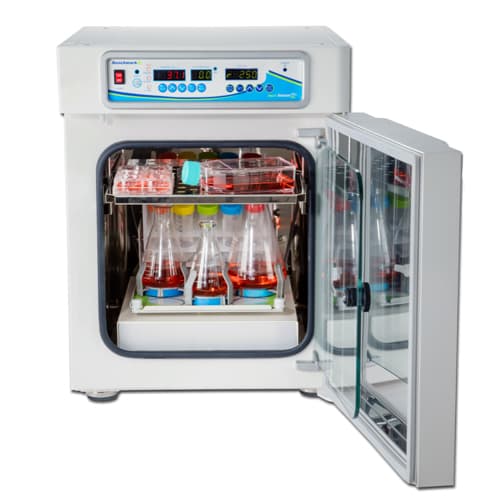
Shaking incubators are laboratory instruments that combine a temperature-controlled chamber with an orbital shaking platform, providing simultaneous agitation and thermal regulation for bacterial cultures, yeast, recombinant protein expression, enzyme assays, and other laboratory workflows. Available in standard and refrigerated configurations, they feature adjustable shaking speeds and interchangeable platforms to accommodate a variety of flasks, microplates, and laboratory vessels.
MBP provides purchase order procurement for shaking incubators for research institutions across the USA and Canada. Request a quote by contacting customerservice@mbpinc.net.
Shaking Incubator



Showing 37 to 48 of 49 results
What Are Shaking Incubators?
A shaking incubator is a laboratory instrument that integrates a temperature-controlled incubation chamber with a motor-driven shaking platform, enabling simultaneous incubation and agitation of liquid cultures, enzyme reactions, and biochemical assays. The shaking motion distributes oxygen and nutrients throughout the culture, prevents cell settling, and promotes faster, more uniform growth than static incubation. Orbital (circular) motion is the standard for most biological culture applications; reciprocating (linear back-and-forth) motion is used for higher-viscosity samples or applications requiring more vigorous mixing. Shaking incubators are used in bacterial and yeast suspension culture, recombinant protein expression in E. coli or Pichia, hybridization and wash steps in molecular biology protocols, and solubility studies in pharmaceutical development. Advanced models include brushless DC motors for long-term maintenance-free operation, programmable step sequences for multi-phase culture protocols, and refrigeration capability for cold-temperature protein expression down to 4 degrees C. Choose a shaking incubator over a static incubator when your culture requires aeration, cells tend to settle, or your protocol specifies a defined agitation speed in rpm.
What You Will Find
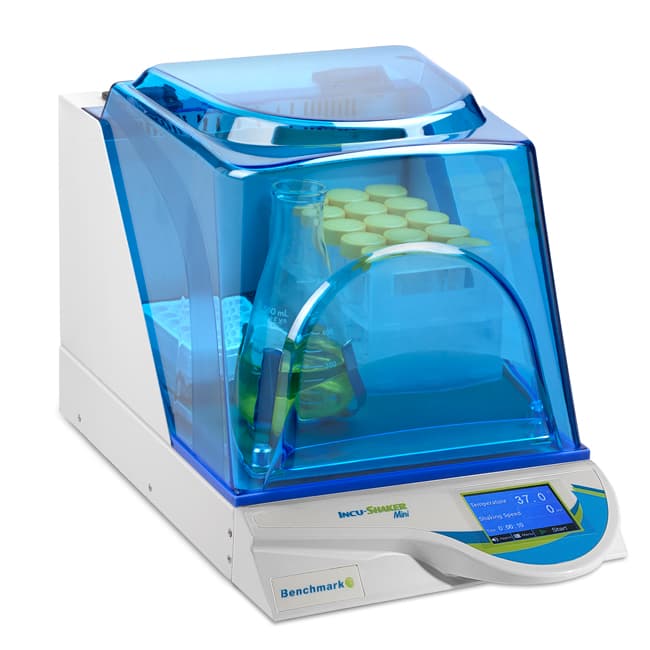
- Benchtop & Refrigerated Shaking Incubators: Incu-Shaker™ Mini, 10L, 20L, refrigerated (10LR/20LR), and CO₂ models for temperature-controlled culture incubation and shaking.
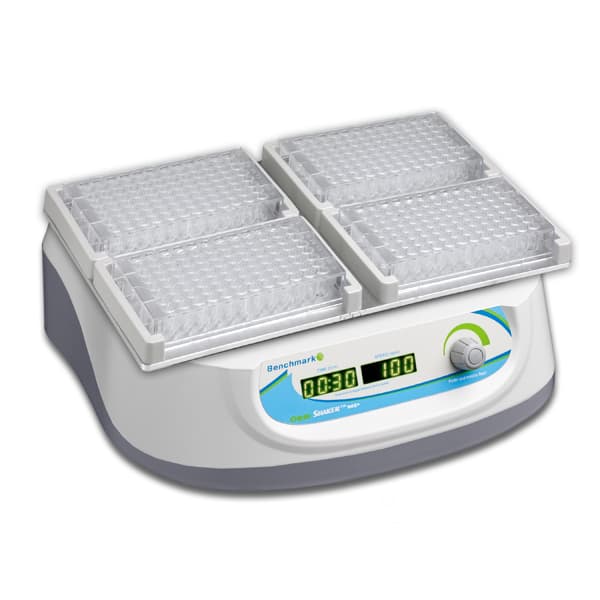
- Microplate & Tube Shakers: Orbi-Shaker™ and Incu-Mixer™ systems for efficient mixing of microplates, PCR plates, and laboratory tubes.
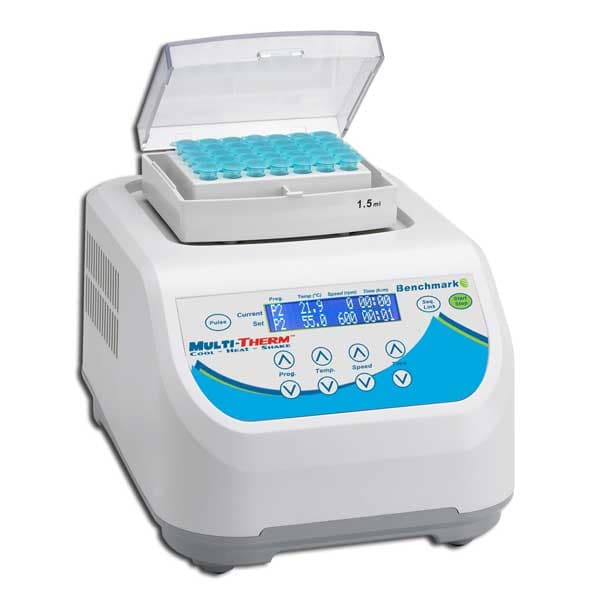
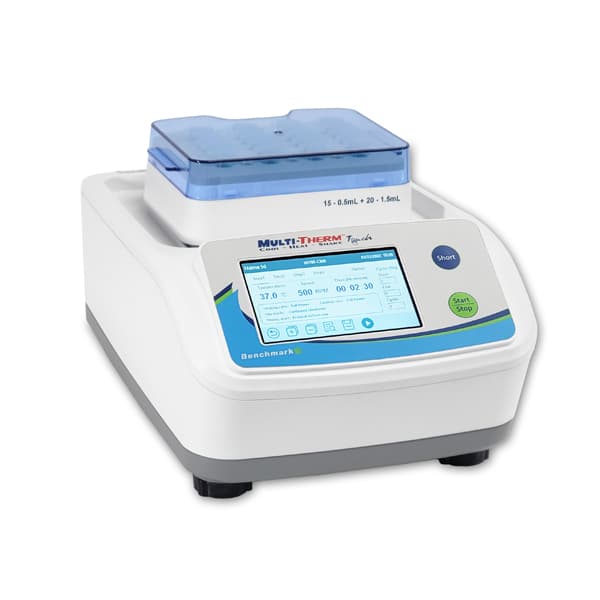
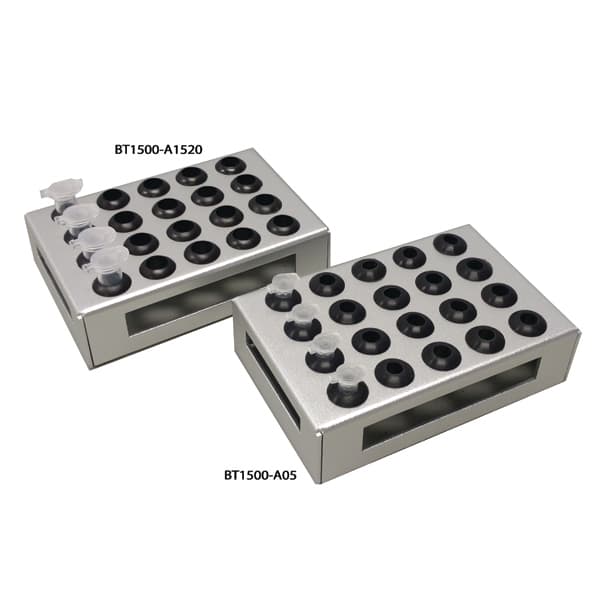
- MultiTherm™ Heating & Shaking Systems: MultiTherm™ and MultiTherm™ Touch shakers with interchangeable blocks for PCR plates, cryotubes, centrifuge tubes, deep-well plates, HPLC vials, and more.
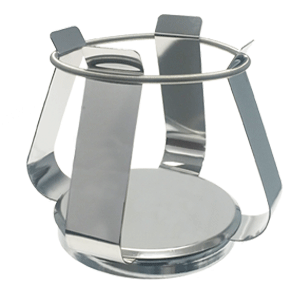
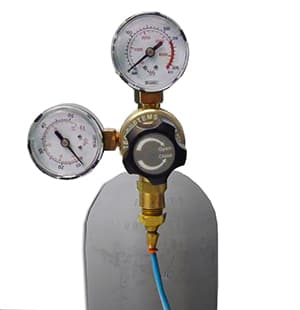
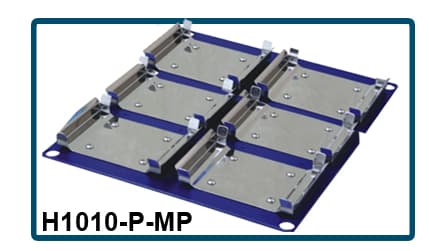
- Platforms & Flask Holders: Spring platforms, microplate platforms, MAGic Clamp™ flask clamps, shelves, heated lids, CO₂ regulators, and other configurable accessories.
- Shaking incubator accessories: Including replacement platforms, adapters, tube blocks, clamps, shelves, heated lids, and other compatible accessories to expand the functionality of your shaking incubator system.
How to Choose a Shaking Incubator
Orbital vs. reciprocating motion
Orbital shakers move the platform in a horizontal circular path, providing gentle, uniform agitation suitable for most cell cultures, bacterial suspensions, and biochemical assays. Reciprocating shakers move the platform in a linear back-and-forth motion at variable stroke lengths, generating higher shear forces appropriate for viscous media and dense suspensions. For general microbiology and cell culture, specify orbital motion; for high-viscosity or industrial-scale applications, reciprocating motion may be preferred.
Temperature range and refrigeration
Standard shaking incubators heat from ambient + 5 degrees C to 60 degrees C. Refrigerated models add cooling capacity, extending the range down to 4 degrees C or below, which is critical for recombinant protein expression protocols in E. coli, where low temperature reduces inclusion body formation. Confirm whether the model supports both heating and cooling, or heating only.
Speed range and orbit size
Shaking speed is expressed in revolutions per minute (rpm); most models cover 30 to 300 rpm. Orbit size (the diameter of the circular motion, typically 19 mm or 25 mm, with large-capacity models reaching 50 mm) determines aeration efficiency. Larger orbits improve oxygen transfer to cultures at lower rpm, which is gentler on sensitive cells. Smaller orbits at higher rpm are preferred for microplate-scale applications.
Capacity: flask size and platform load
Platform capacity specifies how many flasks of a given volume the unit accommodates. A common benchmark: a benchtop unit holds four 2 L Erlenmeyer flasks or twenty 125 mL flasks simultaneously. Ensure the platform accepts interchangeable clamp systems for the flask sizes used in your lab, and verify total load capacity in kg; high-speed operation with heavy flasks can stress the drive mechanism.
Control system and connectivity
PID temperature controllers are standard; advanced models add touchscreen interfaces, programmable step sequences linking consecutive temperature and speed profiles, USB or RS-232 data logging, and STEP programming for timed multi-phase culture runs. For regulated workflows, look for password-protected parameter lockout.
Specifications Context
Temperature uniformity in shaking incubators is harder to achieve than in static incubators because the shaking motion creates air currents inside the chamber. Forced-air circulation combined with a well-insulated chamber maintains uniformity to plus or minus 0.5 degrees C at setpoint under normal conditions. Orbit size affects flask choice: a 19 mm orbit with standard Erlenmeyer flasks at 250 rpm is a common general-purpose configuration for E. coli culture. Review the manufacturer's maximum flask volume and load per platform position; overloading a platform at high speed is a common cause of drive failure in shaking incubators.
Do you want to cultivate your liquid cultures more effectively? View our selection of shaking incubators and get in touch with the MBP team for a helpful quote right now.
FAQ