Tube Furnaces for CVD, Annealing, and Atmosphere-Controlled Sintering
Tube furnaces are electrically heated instruments with a cylindrical work tube - quartz for temperatures up to 1,200 degrees C, alumina ceramic for up to 1,700 degrees C - surrounded by resistive heating elements, and designed for processing samples under precisely controlled gas atmosphere (inert argon or nitrogen, reducing hydrogen, oxidizing oxygen, or vacuum) in applications ranging from chemical vapor deposition (CVD) of thin films and carbon nanotubes, to annealing of oxidation-sensitive metals and semiconductors, sintering of advanced ceramics, crystal growth, catalyst characterization, and nanomaterial synthesis in materials science, chemistry, and semiconductor research.
MBP supplies tube furnaces with single-zone and multi-zone configurations for research labs across the United States, Canada, and internationally, with US order processing in Houston, Texas. Request a quote f by contacting customerservice@mbpinc.net.
Tube Furnaces



Showing 1 to 8 of 8 results
What is a Tube Furnace?
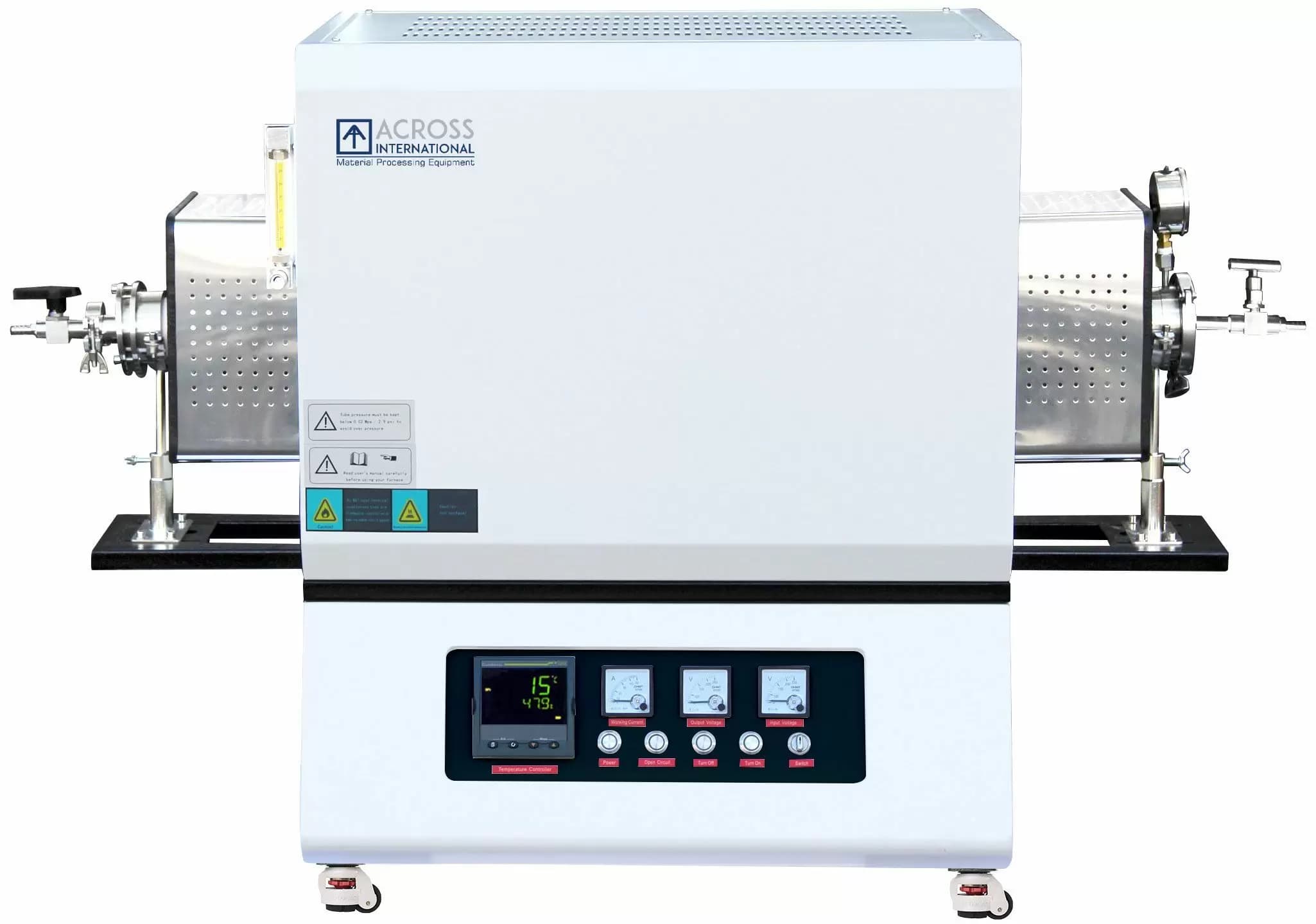
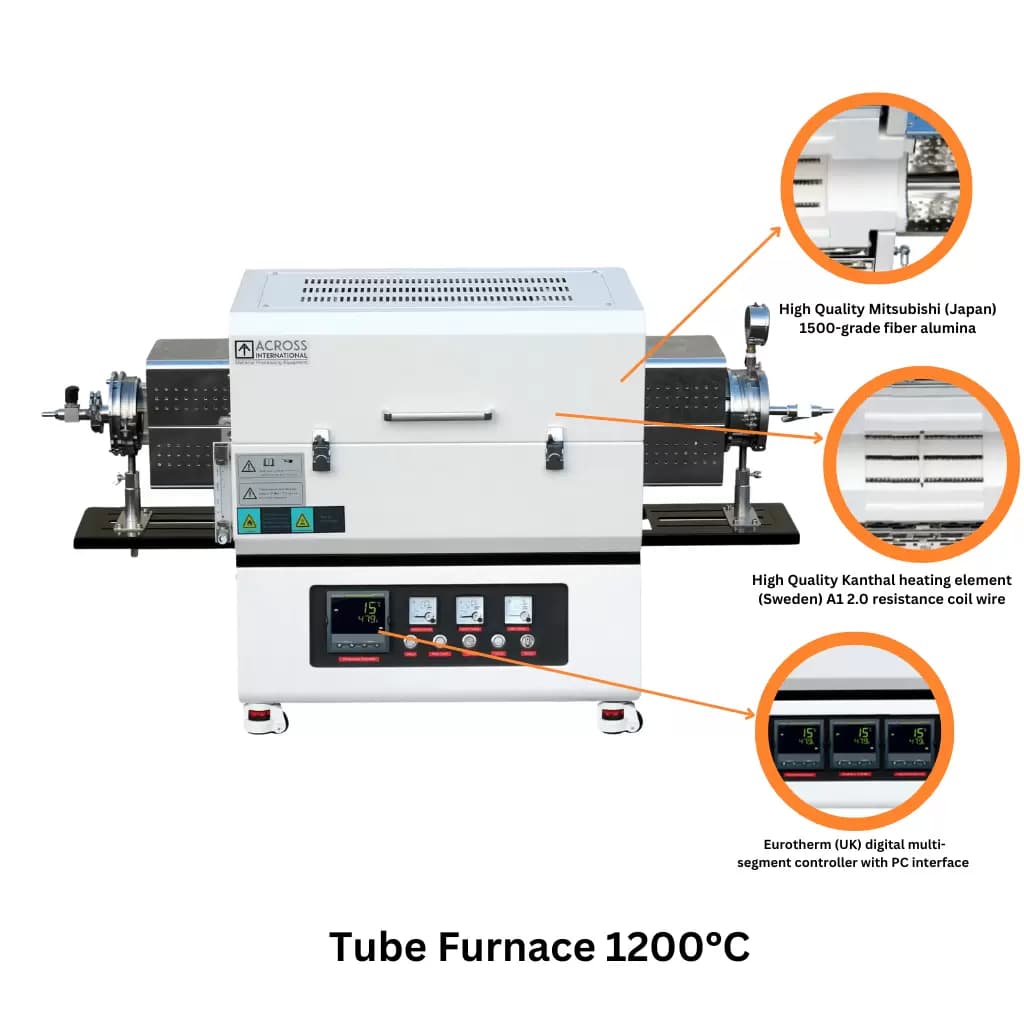
A tube furnace is an electric heating instrument with a central cylindrical bore through which a sealed work tube is inserted, surrounded on the outside by resistive heating elements embedded in refractory insulation. Gas inlet and outlet fittings seal the tube ends with flanges, enabling the introduction of specific gas atmospheres or evacuation for vacuum operation. Quartz (fused silica) tubes are transparent, allowing visual observation, and are rated for continuous use to 1,200 degrees C. Alumina (Al2O3) ceramic tubes are opaque and stable to 1,700 degrees C, with higher chemical resistance to alkaline materials. The uniform heating zone - the central portion of the tube where temperature uniformity meets the manufacturer's specification (typically plus or minus 1-5 degrees C) - defines where samples must be placed for consistent results. Choose a tube furnace for any process requiring a controlled gas atmosphere or vacuum; choose a muffle furnace for open-air ashing, calcination, or sintering where atmosphere control is not needed.
What You Will Find:
-
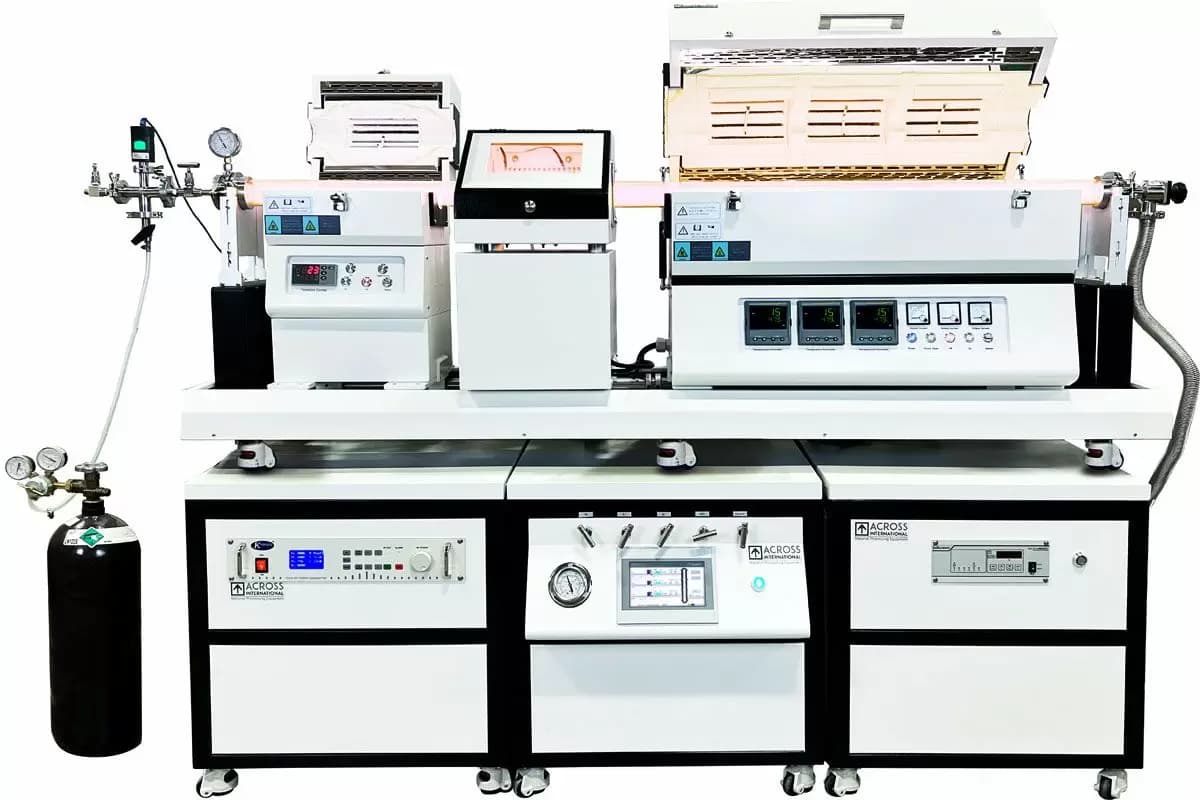
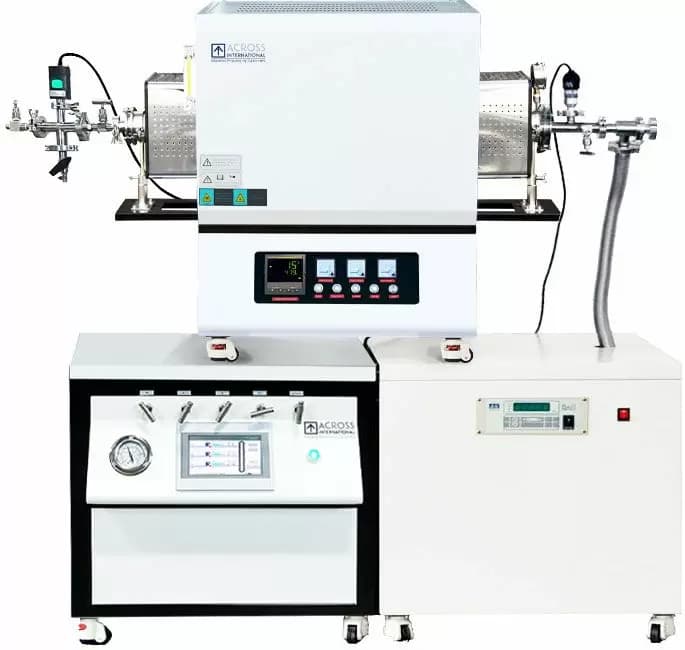
CVD tube furnace systems come fully equipped with gas mixing and pumping hardware, making them a complete solution for high-level chemical vapor deposition.
-
Rotary and tilting furnaces provide continuous sample agitation during the heating process, ensuring every part of your material receives uniform thermal treatment.
-
Split tube furnace designs feature a top-opening structure that makes it incredibly easy for your team to swap tubes or inspect samples mid-run.
-
Multi-zone heating units allow you to create specific temperature gradients across the tube, giving you professional-level control over complex thermal profiles.
-
RF generators and PE/CVD setups provide the specialized power needed for plasma-enhanced processes, perfect for cutting-edge thin-film research.
-
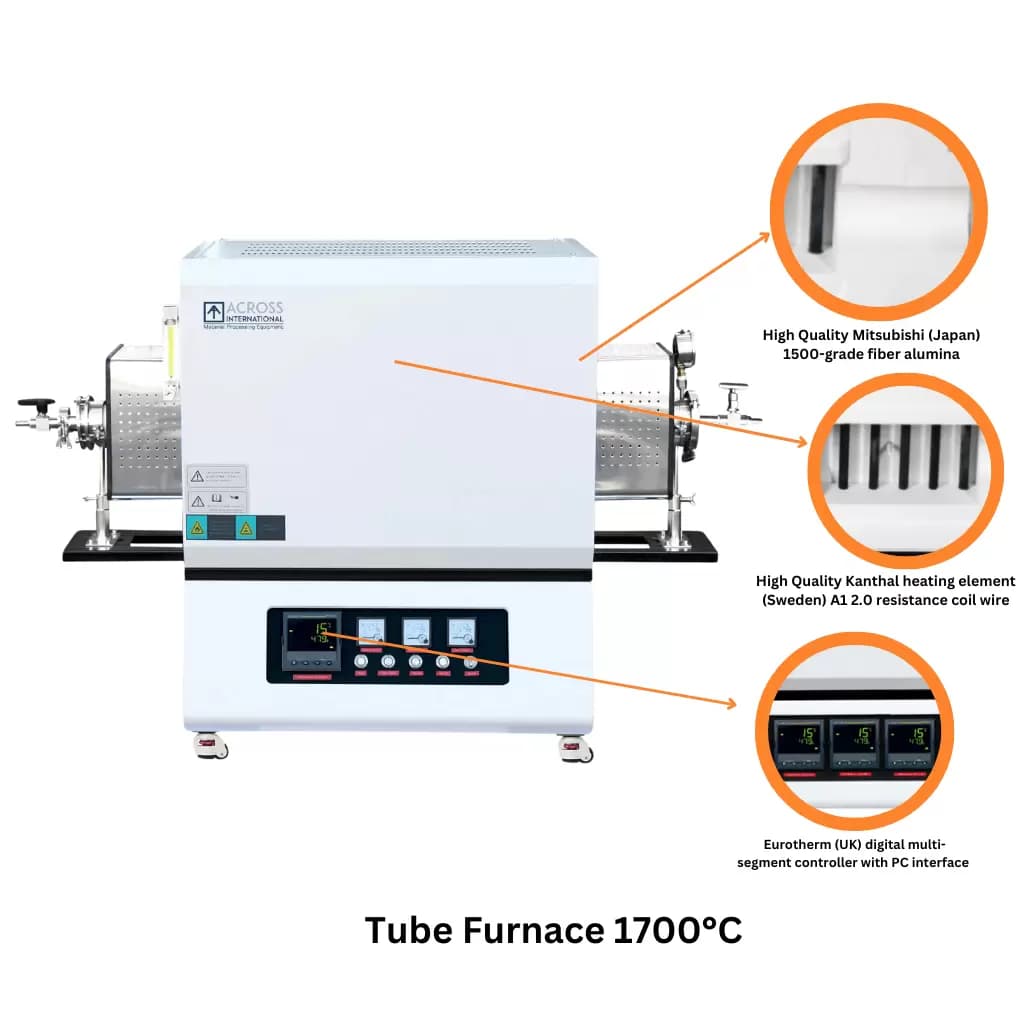
Alumina tube furnaces utilize high-purity ceramic tubes and sealing flanges to maintain a clean, high-temperature environment up to 1700°C.
How to Choose a Tube Furnace
Work tube material
Quartz (fused silica) tubes are standard for processes up to 1,200 degrees C, are transparent (allowing visual process monitoring), and are available in diameters from 25 to 200 mm. Above 1,200 degrees C, quartz devitrifies (turns opaque and brittle) and softens. High-purity alumina (99.7% Al2O3) tubes extend the usable range to 1,700 degrees C and are chemically more resistant than quartz to alkali vapors and some metal-organic precursors used in CVD. Specialty tube materials (molybdenum, tungsten, Inconel) are used for corrosive-atmosphere or extreme-temperature applications.
Single-zone vs. multi-zone heating
Single-zone tube furnaces produce one uniform temperature zone (typically 10-30 cm long) and are standard for most annealing, sintering, and CVD applications. Multi-zone furnaces have two or more independently controlled heating zones along the tube length -- enabling temperature gradients for Bridgman crystal growth, sequential thermal profiles (debinding followed by sintering in a single run), or extended uniform zone length by running outer zones at higher power to compensate for end cooling. Multi-zone configurations feature 30-segment programmable PID control per zone and temperature control accuracy of plus or minus 1 degree C in research-grade models.
Bore diameter and heated zone length
Standard bore sizes are 25 mm (compact single-sample), 50 mm (most common research format), 80 mm, and 100 mm inner diameter for larger samples or substrate wafers. Quartz tube diameters range from 25 to 300 mm up to 1,200 degrees C; alumina tubes are available from 25 to 100 mm for processes to 1,700 degrees C. The heated zone length (10-60 cm for single-zone models) determines maximum sample length; all sample material must fit within the uniform hot zone.
Horizontal vs. vertical orientation
Horizontal tube furnaces position the tube axis parallel to the bench surface, are the most common configuration, and allow easy sample insertion via push-rod with consistent gas flow from one end to the other. Vertical tube furnaces orient the tube perpendicular to the bench, enabling gravity-assisted processes such as powder sintering, where material settles uniformly in the crucible, and crystal growth methods that exploit natural convection. Vertical configurations also reduce bench footprint for space-limited labs.
Split-hinge design
Split-hinge (clam-shell) tube furnaces open along the length of the furnace body to allow tube insertion or removal without threading through the furnace from one end. Benefits include faster tube material changes during process development, the ability to use shorter tube segments, and rapid forced cooling by opening the furnace after a run. Split-hinge models are popular for CVD process development labs where tube configurations change frequently.
Gas flow and safety requirements
Hydrogen-containing atmospheres require dedicated safety measures beyond standard inert gas setups: combustible gas sensors, local exhaust ventilation, solenoid emergency shut-off valves, nitrogen pre- and post-purge sequences, and grounding of all gas fittings. Mass flow controllers (MFCs) provide precise gas flow rate control (0-500 standard cm3 per minute, typical range) for reproducible CVD deposition conditions. Vacuum operation requires rotary vane or turbomolecular pumps, vacuum gauges, and leak-tested stainless steel Swagelok connections.
Specifications Context
Uniform heating zone temperature uniformity of plus or minus 1-3 degrees C for research-grade single-zone tube furnaces is measured by traversing a calibrated thermocouple along the tube axis at maximum setpoint; confirm this measurement in supplier documentation. The maximum heating rate is typically 10-30 degrees C per minute; room temperature to 1,700 degrees C takes approximately 170 minutes at the maximum rate for alumina tube models with MoSi2 elements. Tube furnace bore diameters of 50 mm and 80 mm cover the majority of research sample formats; 25 mm compact models suit single-sample inline gas-flow experiments. Integrated turnkey tube furnace systems combining furnace body, MFC gas control manifold, vacuum pump, and 30-segment programmable touchscreen controller are available from specialist manufacturers, reducing new CVD process setup time significantly.
To discuss product availability or get selection guidance, contact the MBP team.
FAQ