Product Filters

Smart Evaporators for Parallel Sample Concentration


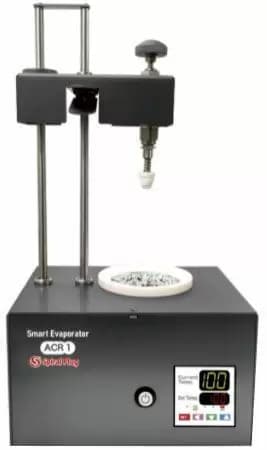
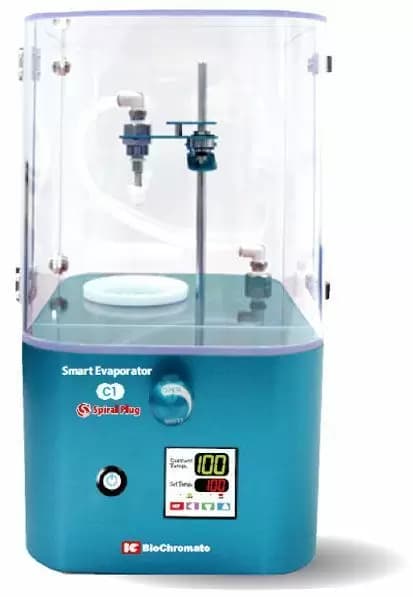
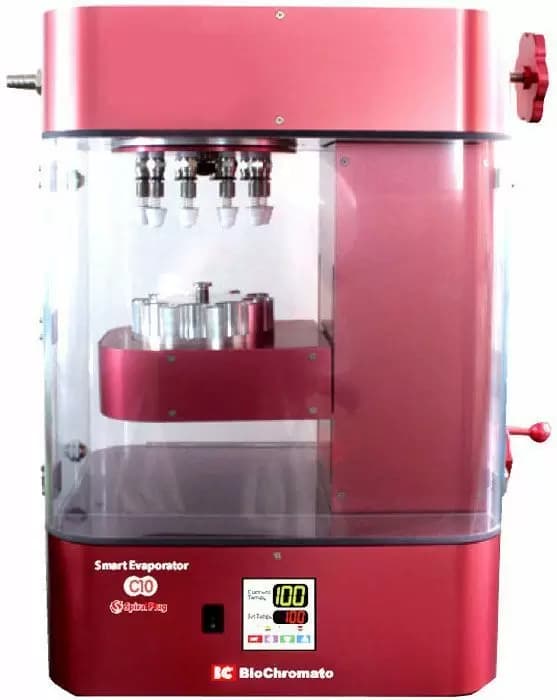
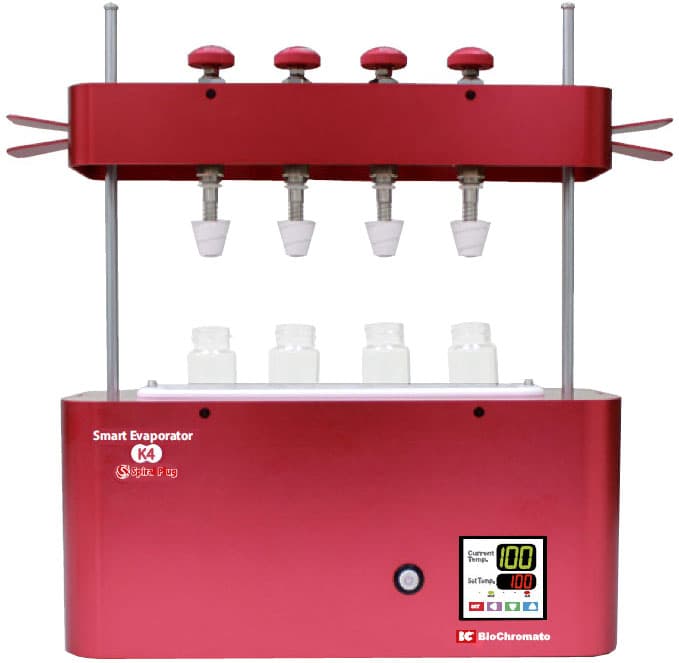
Smart evaporators are laboratory instruments that concentrate or evaporate multiple samples simultaneously using controlled vortex airflow and optional heating, minimizing bumping and sample loss during solvent evaporation. They are used in pharmaceutical sample preparation, analytical chemistry, metabolomics, natural product extraction, and other laboratory workflows requiring efficient parallel solvent removal.

MBP provides purchase order procurement for smart evaporators for research institutions across the USA and Canada. Request a quote for smart evaporators for parallel sample concentration, solvent removal, and laboratory workflows by contacting customerservice@mbpinc.net.

Smart Evaporator
Per Page:
Sort By:
no products Image
No Products Found
Back to home

What Are Smart Evaporators?


Smart evaporators are laboratory instruments designed for efficient solvent evaporation from one or multiple samples while minimizing bumping and sample loss. Depending on the design, they may use controlled airflow, gentle heating, or other evaporation technologies to accelerate solvent removal while preserving sample integrity. Smart evaporators are compatible with a variety of laboratory vessels and are used in pharmaceutical sample preparation, analytical chemistry, natural product extraction, environmental analysis, and other laboratory workflows requiring efficient solvent removal. Choose a smart evaporator when you need faster, more controlled evaporation than manual evaporation methods, especially when processing multiple samples.


What You Will Find:


  • Bump-free solvent evaporation systems designed to reduce sample loss and improve recovery during concentration workflows.
  • Single-channel and multi-channel Smart Evaporator models for processing individual samples or multiple samples simultaneously.
  • Acid-resistant configurations for applications involving corrosive solvents and aggressive chemical environments.
  • Heat carousel options that support faster evaporation and improved throughput across multiple samples.
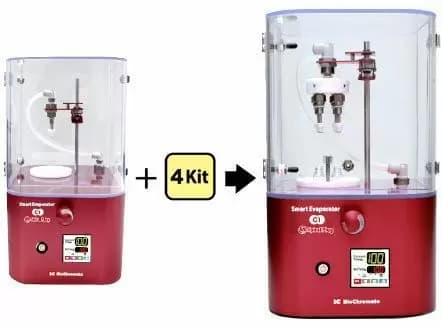
  • Expansion kits and accessories for configuring, upgrading, and optimizing Smart Evaporator systems.


How to Choose a Smart Evaporator


Sample capacity and configuration

Choose a Smart Evaporator based on the number of samples processed per run and the vessel types used in your workflow. Models range from compact systems for individual samples to multi-channel configurations for higher-throughput solvent evaporation. Verify compatibility with your laboratory tubes, vials, or other sample containers before purchase.

Solvent compatibility

Confirm that the Smart Evaporator is suitable for the solvents used in your laboratory. Standard models are appropriate for many common laboratory solvents, while acid-resistant models are recommended for applications involving corrosive or acidic solvents to improve long-term durability.

Heating options

Some Smart Evaporator models operate at ambient conditions, while others incorporate controlled heating to accelerate solvent evaporation. Select a model with the heating capability appropriate for your solvent properties and sample requirements.

Workflow requirements

Consider whether your application benefits from compact single-sample processing or simultaneous evaporation of multiple samples. Higher-capacity systems improve laboratory throughput for routine sample preparation and analytical workflows.

Accessories and expandability

Check the availability of compatible accessories, such as heating modules, expansion kits, and other system components that can increase capacity or adapt the Smart Evaporator to changing laboratory requirements.


Specifications Context


Smart Evaporators are designed to promote efficient solvent evaporation while minimizing bumping and sample loss. Available configurations range from compact single-sample instruments to multi-channel systems for parallel sample processing. Depending on the model, optional heating and specialized accessories can improve evaporation efficiency and expand application flexibility. Acid-resistant models are available for laboratories routinely handling corrosive solvents.


Reach out to the MBP team to request a quote for Smart Evaporator systems, accessories, and sample concentration solutions today.

FAQ

A smart evaporator (centrifugal vacuum concentrator) evaporates solvent from 12 to 96 or more samples simultaneously using centrifugal force, vacuum, and controlled heat, enabling parallel processing without bumping. A rotary evaporator processes one flask at a time (1 to 50 L) under vacuum, with rotation creating a thin evaporation film. Smart evaporators are chosen when many small-volume samples (typically 0.1 to 50 mL each) must be concentrated in parallel; rotary evaporators are used for large single batches of a dissolved compound or extract.
Smart evaporators accept interchangeable rotors for 1.5 mL and 2 mL microcentrifuge tubes, 15 mL and 50 mL conical tubes, 13 x 100 mm culture tubes, standard 96-well microplates, deep-well 96-well plates (2 mL per well), and specialized vials. Many platforms allow multiple rotors to be stacked to increase capacity -- for example, six stacked 96-well plate rotors process 576 wells simultaneously. Confirm the rotor format compatible with your sample containers before specifying a system.
A centrifugal vacuum concentrator (SpeedVac-type) uses centrifugal force plus vacuum plus heat, preventing sample bumping and enabling processing of aqueous, high-boiling, and heat-sensitive biological samples. A nitrogen blow-down evaporator directs a stream of warm nitrogen gas over each sample position without vacuum, making it faster and more cost-effective for volatile organic solvents (hexane, ethyl acetate, DCM) but unsuitable for aqueous samples or small biological specimens where the nitrogen stream causes surface agitation. For pharmaceutical and biological sample preparation, centrifugal concentrators are the standard; for large-volume organic chemistry fraction work, nitrogen blow-down is more practical.
DMSO (boiling point 189 degrees C at atmospheric pressure) requires a smart evaporator capable of operating at 60 to 80 degrees C with vacuum below 3 to 5 mbar for practical DMSO evaporation. Most centrifugal vacuum concentrators can remove DMSO from microwell plate samples at 65 degrees C and deep vacuum, but run times of 2 to 8 hours per plate are typical depending on well volume. Confirm that the instrument is rated for DMSO operation and that the cold trap is cooled to at least -50 degrees C to capture DMSO vapor before it reaches the vacuum pump.
Run time depends on solvent volatility, sample volume, temperature, and vacuum level. Common estimates at typical operating conditions: ethanol or methanol at 40 degrees C and 15 to 20 mbar -- 1 mL microcentrifuge tube samples reach dryness in 30 to 60 minutes per 24-tube batch. Acetonitrile-water mixtures at 40 degrees C and 10 mbar -- 45 to 90 minutes per plate. DMSO at 65 degrees C and below 5 mbar -- 2 to 6 hours per 96-well plate. Aqueous samples (pure water) at room temperature and 10 mbar take the longest -- operating at 45 to 50 degrees C with deep vacuum below 3 mbar reduces aqueous drying time significantly.
Yes. Smart evaporators require a cold trap between the instrument and the vacuum pump to condense solvent vapors before they reach the pump. Many integrated systems include a built-in cold trap cooled to -50 degrees C to -70 degrees C; instruments without an integrated trap require a separate cold trap unit. For aqueous samples, the cold trap must be refrigerated (not just at ambient temperature) to capture water vapor. For organic solvents, trap temperature determines trapping efficiency -- a trap at -50 degrees C catches most organic lab solvents, but diethyl ether and highly volatile solvents require -80 to -90 degrees C.
Centrifugal vacuum concentrators operating at room temperature or mild heat (35 to 45 degrees C) are widely used for concentrating and drying RNA and DNA samples in microcentrifuge tubes and 96-well plates. The centrifugal force prevents bumping that could cause aerosol-mediated cross-contamination between wells or tubes. For RNA samples, use acid-resistant models and confirm that all materials contacting the sample are RNase-free. Run at the lowest temperature sufficient for evaporation to minimize thermal degradation of RNA. Nucleic acid samples in aqueous buffer are typically dried at room temperature to 40 degrees C under deep vacuum.
Yes. MBP provides purchase order procurement for smart evaporators and centrifugal vacuum concentrators for research laboratories in the USA and Canada. MBP is a registered vendor for Howard Hughes Medical Institute, Vanderbilt University, and MD Anderson Cancer Center. Contact MBP via the contact page or Quick Order portal with your sample format, solvent type, throughput, and temperature requirements for a prompt quote and model recommendation.
We provide the highest quality of products and anytime customer service.
Featured Categories
    online payment
    online payment
    fast delivery
    fast delivery
    technical support
    technical support
    24/7 support
    24/7 support
    copy right
    2026 All Right Reserved