Jacketed Glass Reactors for Research and Process Development
Jacketed glass reactors are borosilicate glass vessels with a single or dual jacket through which a heat transfer fluid circulates to control reaction temperature, while the transparent vessel allows real-time visual monitoring without opening the system. They are widely used for research-scale organic synthesis, pharmaceutical process development, botanical extraction, crystallization, filtration, and scale-up studies.
MBP provides quote-based procurement and direct specialist support for jacketed glass reactors for US and Canadian research institutions. Request a quote by contacting customerservice@mbpinc.net.
Glass Reactors
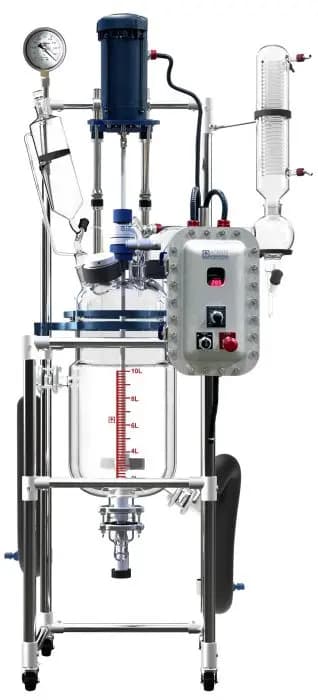
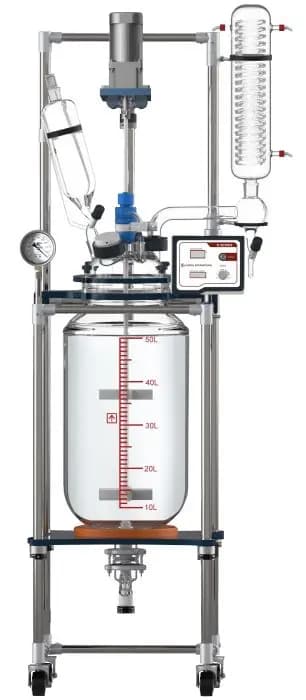
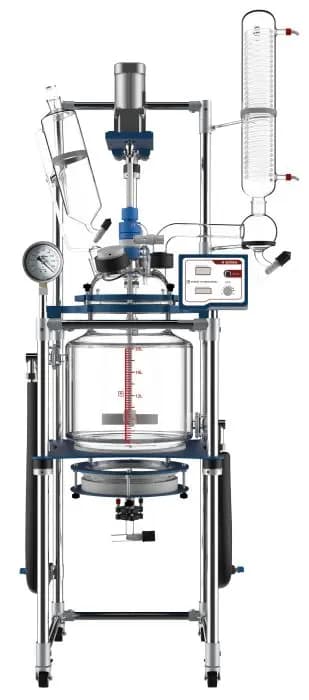
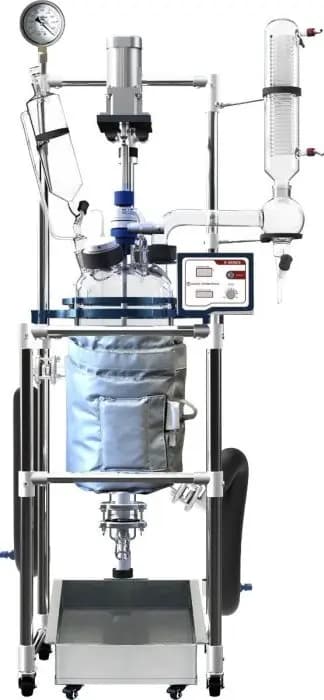
Showing 1 to 7 of 7 results
What Are Jacketed Glass Reactors?
A jacketed glass reactor is a borosilicate glass vessel (the reaction chamber) enclosed within a second glass or metal jacket through which a temperature-control fluid is circulated by a recirculating heater-chiller unit. The inner vessel holds the reaction mixture; the jacket temperature is controlled by the circulating fluid, which transfers heat to or from the reaction contents through the glass wall. This jacketed design allows precise temperature setpoints to be maintained even during exothermic reactions that release heat or endothermic steps that absorb it. The glass construction provides chemical resistance to most organic solvents, acids, and bases (excepting HF and hot concentrated phosphoric acid), allows direct visual observation of color changes, phase separation, precipitate formation, gas evolution, and mixing quality, and simplifies cleaning between batches. Jacketed glass reactors are used for organic and inorganic synthesis, API synthesis and development, crystallization and recrystallization, botanical and cannabis extraction, distillation under vacuum, liquid-liquid extraction, emulsification, and process chemistry development from 50 mL research batches to 200 L pilot runs. A jacketed glass reactor is the correct choice for any research or process development application at atmospheric pressure where visual access to the reaction is valuable; choose it first and switch to stainless steel only when pressure, temperature, or scale demands it.
What You Will Find:
- Single- and dual-jacketed glass reactor systems for controlled chemical synthesis, extraction, crystallization, and process development.
- Jacketed reactor systems with integrated filtration for reaction, solid-liquid separation, and product recovery in a single vessel.
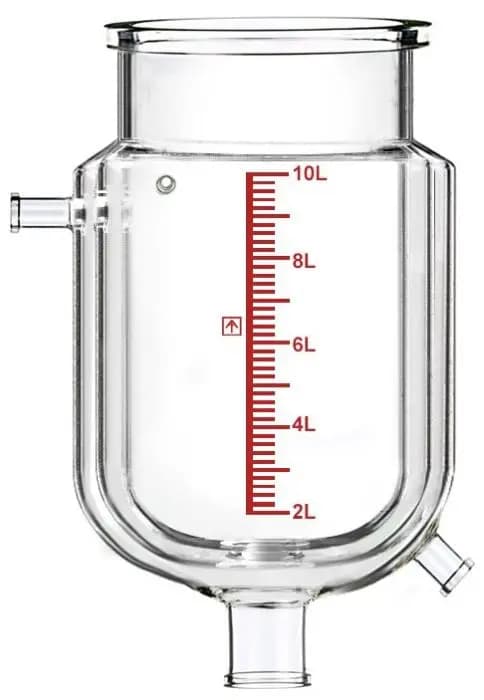
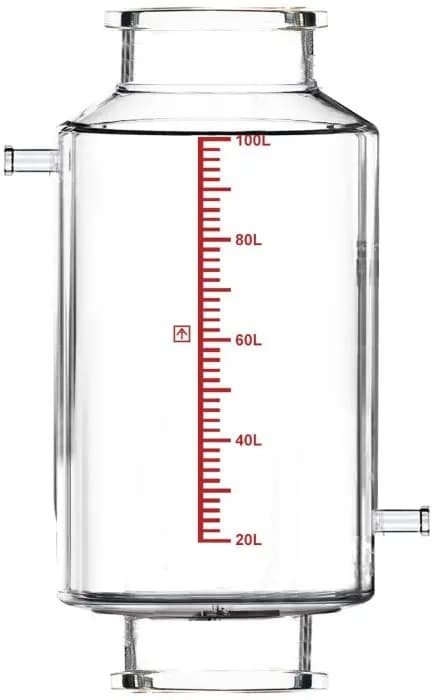
- Single- and dual-jacketed replacement glass vessels for maintaining or upgrading compatible reactor systems.
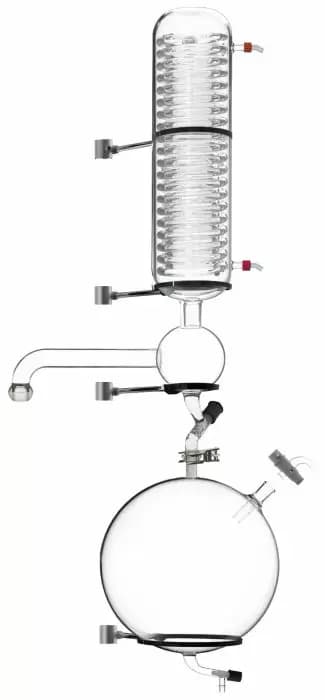
- Condenser sets with receiving flasks for efficient vapor condensation and solvent collection during reactor operations.
How to Choose a Jacketed Glass Reactor
Single vs. double jacket
A single-jacketed reactor has one annular space between the inner vessel and a single outer wall, through which heat transfer fluid circulates. It is the standard for most research applications and provides good temperature control for volumes up to 20 L. A double-jacketed (vacuum-jacketed) reactor adds a second outer shell with the annular space evacuated, providing excellent thermal insulation, which is critical for cryogenic reactions where minimizing heat ingress from ambient is important, or for energy-efficient maintenance of extreme temperatures. Double-jacketed reactors cost more but deliver plus or minus 0.1 degrees C stability at cryogenic setpoints.
Volume selection
Jacketed glass reactors are available from 50 mL (small-batch pharmaceutical synthesis) through 1 L, 2 L, 5 L, 10 L, 20 L, 50 L, 100 L, to 200 L (pilot plant scale). Fill to 50 to 70% of nominal capacity. For research, 1 L to 5 L is the most common range. For crystallization development and botanical extraction, 10 L to 50 L is typical. 100 L to 200 L systems transition to pilot plant or small-scale production.
Glass grade and quality
Borosilicate 3.3 (per ISO 3585) is the standard for lab reactor glass, providing a linear expansion coefficient of 3.3 x 10^-6 per degree C and resistance to thermal shock. Confirm that all glassware components meet this standard. Neck openings, flange sizes, and port configurations vary by manufacturer; confirm compatibility with your overhead stirrer shaft diameter, condenser, and accessory ports before ordering.
Accessories and integration
A complete glass reactor system requires an overhead stirrer (with motor, shaft, and impeller), a reflux condenser, a drip funnel or addition funnel for reagent addition, a thermometer well or temperature probe port, a bottom discharge valve (Teflon or glass), a vacuum port, and a support stand. The reactor connects to an external chiller-heater circulator via inlet and outlet hose fittings on the jacket. Confirm that all accessories are compatible with each other and with the glass reactor flange standard (GL or DN thread; 29/42 or other standard taper joints).
Operating conditions: vacuum compatibility
Jacketed glass reactors can be operated under mild vacuum (for reactions requiring vacuum, reduced-pressure distillation inside the reactor, or solvent removal at the reaction stage). Confirm that the glass reactor is rated for the vacuum level required and that all seals and fittings are vacuum-rated. Operating under vacuum in a glass reactor requires particular caution to avoid implosion; use appropriate guarding and confirm the glass condition before applying vacuum.
Specifications Context
Glass reactor maintenance requires periodic inspection for chips, cracks, and star fractures; damaged glass must not be used under vacuum or with reactive reagents. The PTFE bottom discharge valve should be inspected for leaks and wear at each use. The overhead stirrer seal (where the shaft passes through the reactor lid) must be tight to maintain a vacuum; replace seals at the first sign of vacuum loss. When connecting to a chiller-heater, ensure that jacket inlet and outlet fittings are the correct size and that hose connections are secured with hose clamps rated for the operating temperature range. Borosilicate glass is resistant to thermal shock, but avoid rapid temperature changes exceeding 100 degrees C per hour to prevent cracking.
Transform your synthesis workflow today—explore our specialized glass reactor packages and contact the MBP team for a tailored quote.
FAQ