PCR Thermal Cyclers for DNA Amplification and PCR Optimization
PCR Thermal Cyclers covers the thermal cycling instruments used to perform conventional PCR and related nucleic acid amplification protocols: standard 96-well thermal cyclers for routine amplification, gradient cyclers for primer annealing temperature optimization across a temperature gradient in a single run, fast-ramp-rate cyclers for accelerated protocols, and multi-block instruments for running different protocols simultaneously. These instruments are distinct from real-time PCR (qPCR) cyclers, which require fluorescence detection hardware. Academic and core labs get cycler type and specification guidance plus competitive pricing.
Contact customerservice@mbpinc.net to compare PCR thermal cycler configurations and identify the best system for your amplification workflow.
PCR Thermal Cyclers
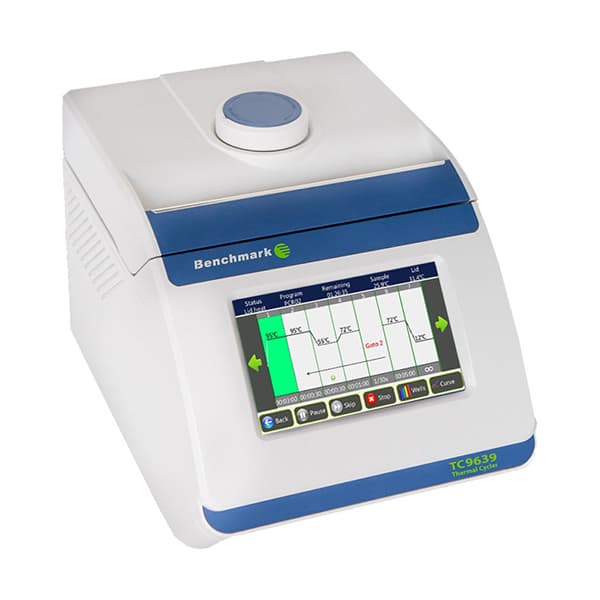
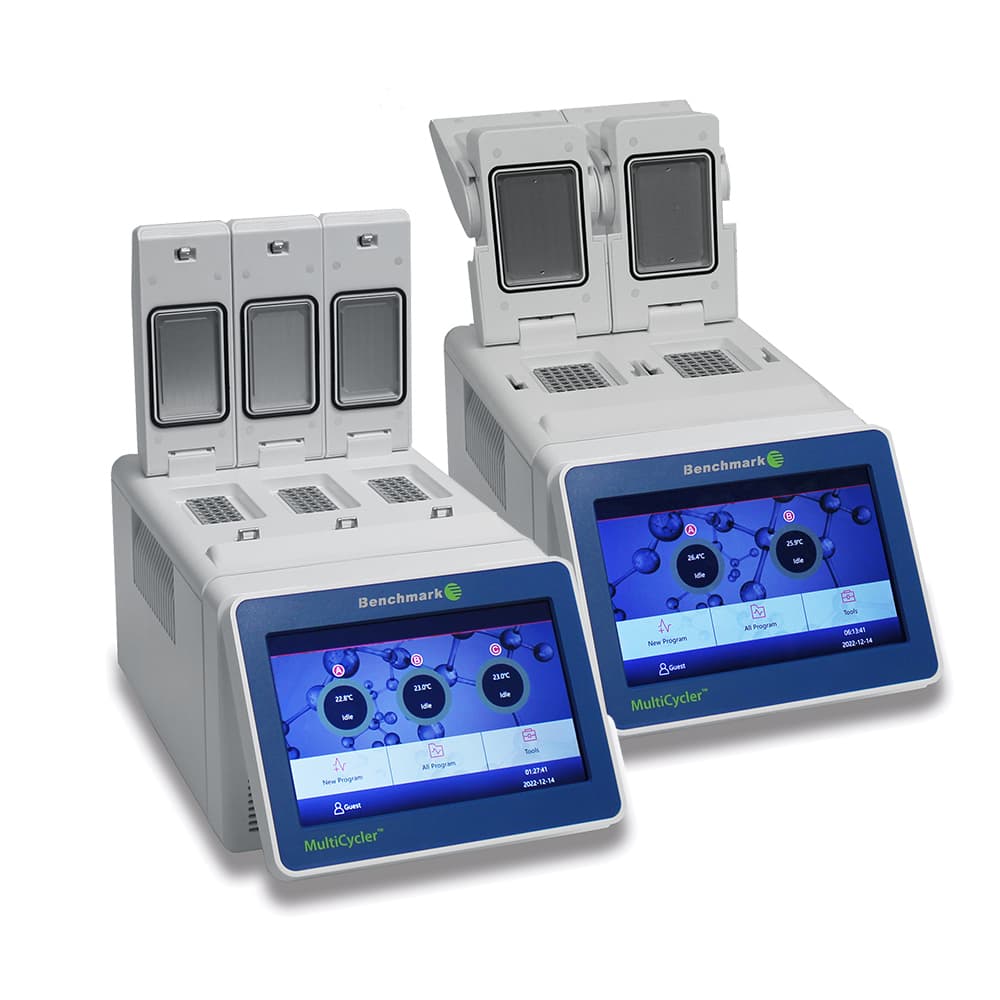

Showing 1 to 4 of 4 results
What are PCR thermal cyclers?
PCR thermal cyclers are precision temperature-cycling instruments that repeatedly heat and cool a block of sample wells through defined temperature profiles — denaturation, annealing, and extension temperatures — to drive the polymerase chain reaction amplification of target DNA sequences. The instrument's ability to cycle rapidly and reproducibly between temperatures, typically 94–98°C for denaturation, 50–72°C for primer annealing, and 68–72°C for extension, and to maintain temperature uniformity across the entire sample block, directly determines the quality and consistency of PCR results.
What you will find:
- PCR Thermal Cyclers: Including the multi-block, gradiant, and mini cycler systems for running different PCR protocols simultaneously
- Thermal Cycler Accessories: Multi-format blocks supporting tubes, strips, and plates for flexible workflows
How to choose a PCR thermal cycler
Choose gradient capability when optimizing new primer pairs
A gradient thermal cycler applies a range of annealing temperatures simultaneously across different columns or rows of the sample block in a single run — for example, 50–65°C across eight columns — allowing the optimal annealing temperature for a new primer pair to be determined in one experiment rather than running separate reactions at each temperature.
Choose fast-ramp-rate cyclers to reduce protocol time
Standard thermal cycler ramp rates of approximately 2–3°C/second can make a standard 30-cycle PCR protocol take 90 minutes or more. Fast-ramp cyclers with ramp rates of 5–10°C/second reduce total PCR run time to 30–60 minutes, increasing laboratory throughput when many PCR reactions are run daily.
Confirm block format matches your tube and plate consumables
Thermal cyclers are available with 96-well, 384-well, and 24-well blocks, as well as multi-format lids and interchangeable block systems. The block format must match the PCR tubes, strip tubes, or plates you use; a 96-well cycler cannot accept 384-well plates without a dedicated 384-well block insert.
Evaluate heated lid temperature and pressure for your consumable format
The heated lid is a critical component that presses against the PCR tube caps and heats the tube top above the reaction temperature to prevent condensation from forming inside the tube during cycling. Lid temperature, typically 105°C, and lid pressure must be compatible with the PCR tubes or plates used.
Consider connectivity and software for remote monitoring and data logging
Modern thermal cyclers offer USB, Ethernet, or Wi-Fi connectivity for remote cycle status monitoring, run history logging, and data export. For labs sharing instruments or needing run records for GLP compliance, connectivity and logging features reduce manual record-keeping.
Specifications context
Temperature uniformity across the thermal cycler block — expressed as the maximum temperature difference between wells at any point in the cycle — is one of the most important specifications for PCR reproducibility, with high-quality cyclers specifying ±0.2°C or better uniformity. As of 2026, connected thermal cyclers with touchscreen interfaces, cloud run logging, and remote monitoring have become the standard configuration for new instrument purchases in well-equipped molecular biology labs.
Contact the MBP team today to request a quote and find the right PCR thermal cycler for your application.
FAQ