Compound Microscopes for Histology and Cell Biology
Compound microscopes are high-magnification light microscopes that use transmitted illumination to examine thin, translucent specimens mounted on glass slides. They typically provide magnifications from 40× to 1000× for histology, pathology, microbiology, cytology, and cell biology applications. Models are available in brightfield, phase contrast, fluorescence, and polarization configurations.
MBP provides purchase order procurement for compound microscopes for research institutions across the USA and Canada. Request a quote for compound microscopes for histology, microbiology, cytology, and cell biology research by contacting customerservice@mbpinc.net.
Compound Microscopes
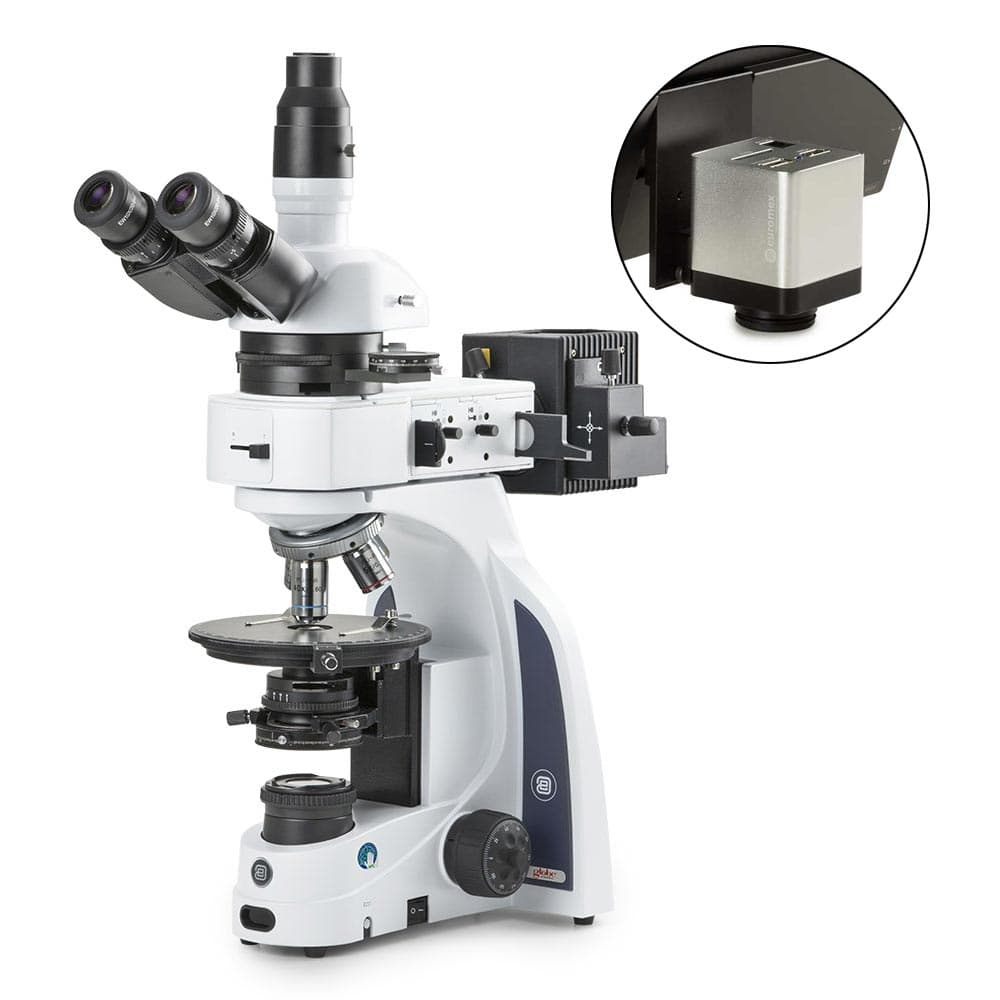
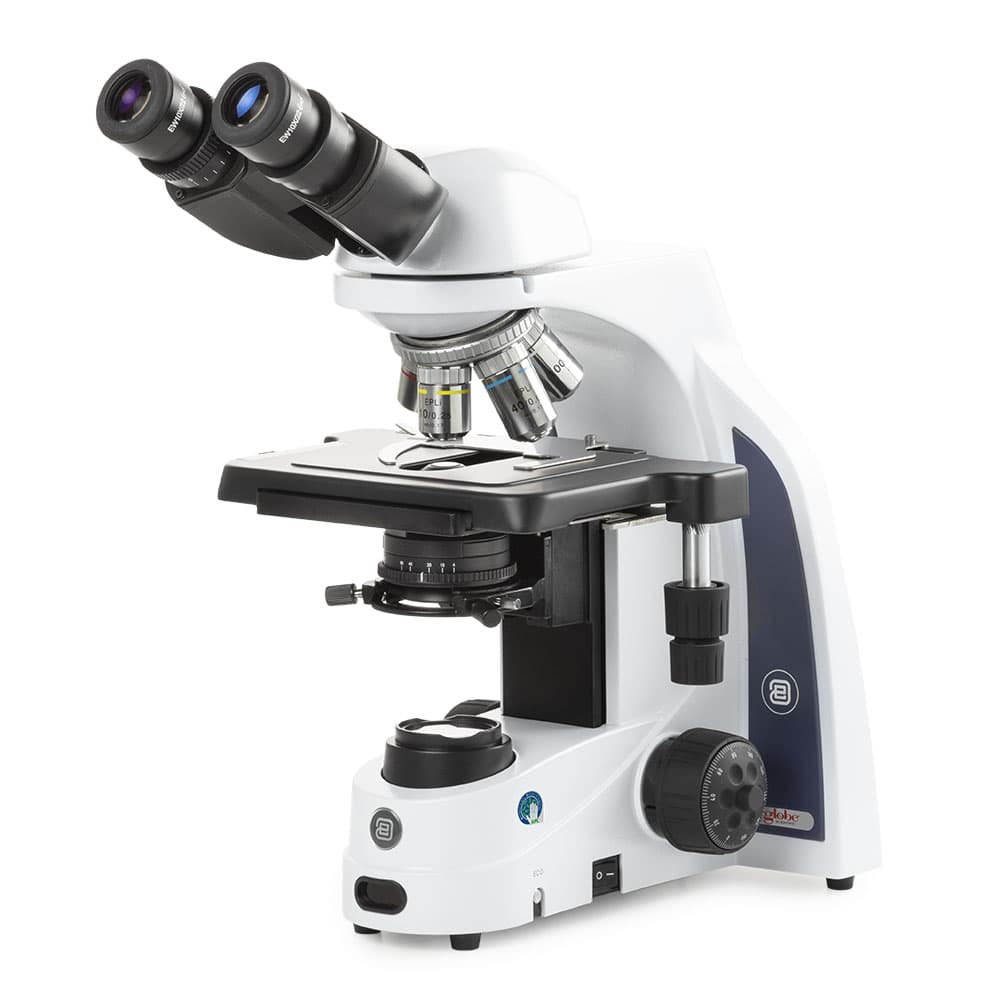
Showing 1 to 10 of 10 results
What Are Compound Microscopes?
A compound microscope forms a magnified image through two sequential lens systems: the objective lens (positioned close to the specimen) provides the primary magnification; the eyepiece (ocular) lens further magnifies the image from the objective, producing a final image that the eye or camera receives. Magnification is the product of the objective magnification and the eyepiece magnification (e.g., 40x objective x 10x eyepiece = 400x total). The transmitted light illumination system (Koehler illumination) passes light from below through the thin specimen mounted on a glass slide, through the objective, and to the eyepiece. This optical configuration provides the highest resolving power of any routine light microscope type, with resolution determined by the numerical aperture (NA) of the objective and the wavelength of light used. Routine brightfield compound microscopes with 4x, 10x, 40x, and 100x (oil) objectives and 10x eyepieces cover 40x to 1000x total magnification. Phase contrast models add a phase ring in the condenser matched to each objective, enabling contrast of unstained transparent cells. Fluorescence models add an epi-fluorescence port and filter cube turret for imaging immunofluorescence-labeled sections and fluorescent markers. Choose a compound microscope for examination of specimens that have been prepared as thin slides, stained sections, or smears; it is the standard instrument for histology, clinical microbiology, hematology, and fixed-tissue fluorescence imaging.
What You Will Find:
-
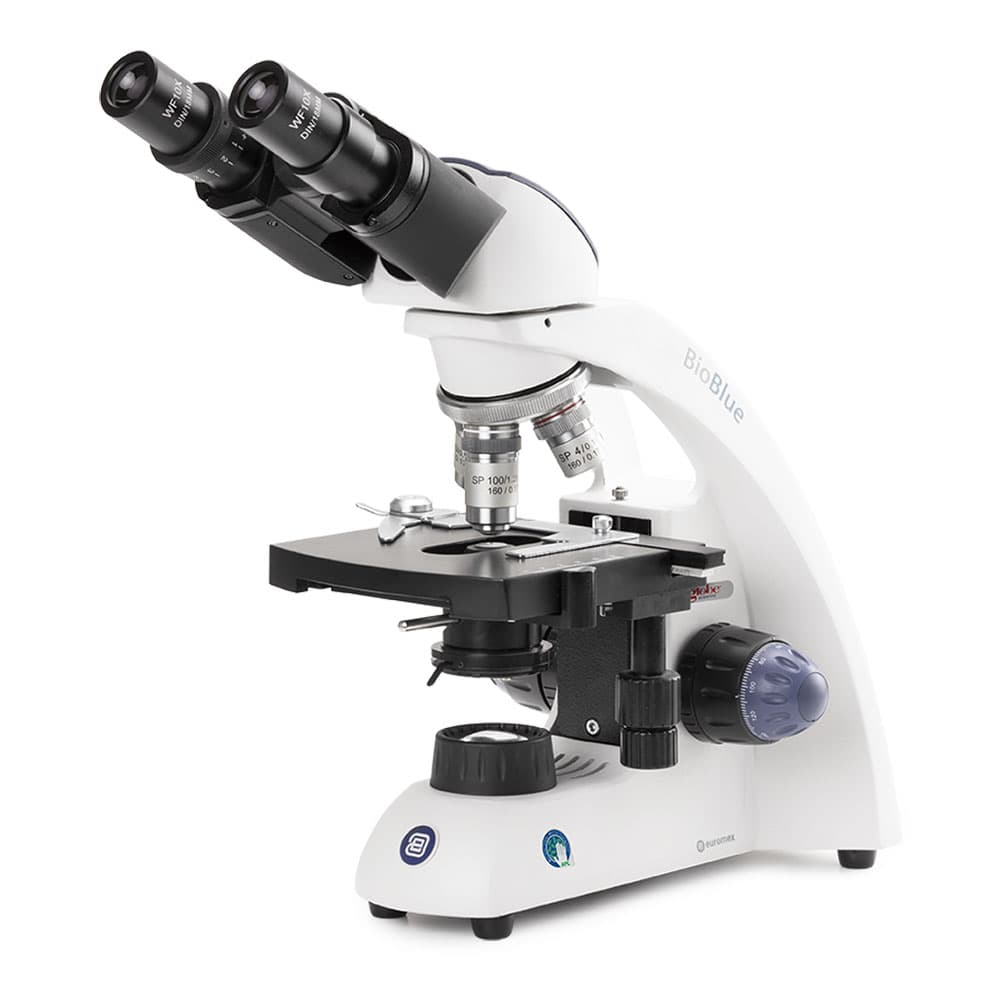
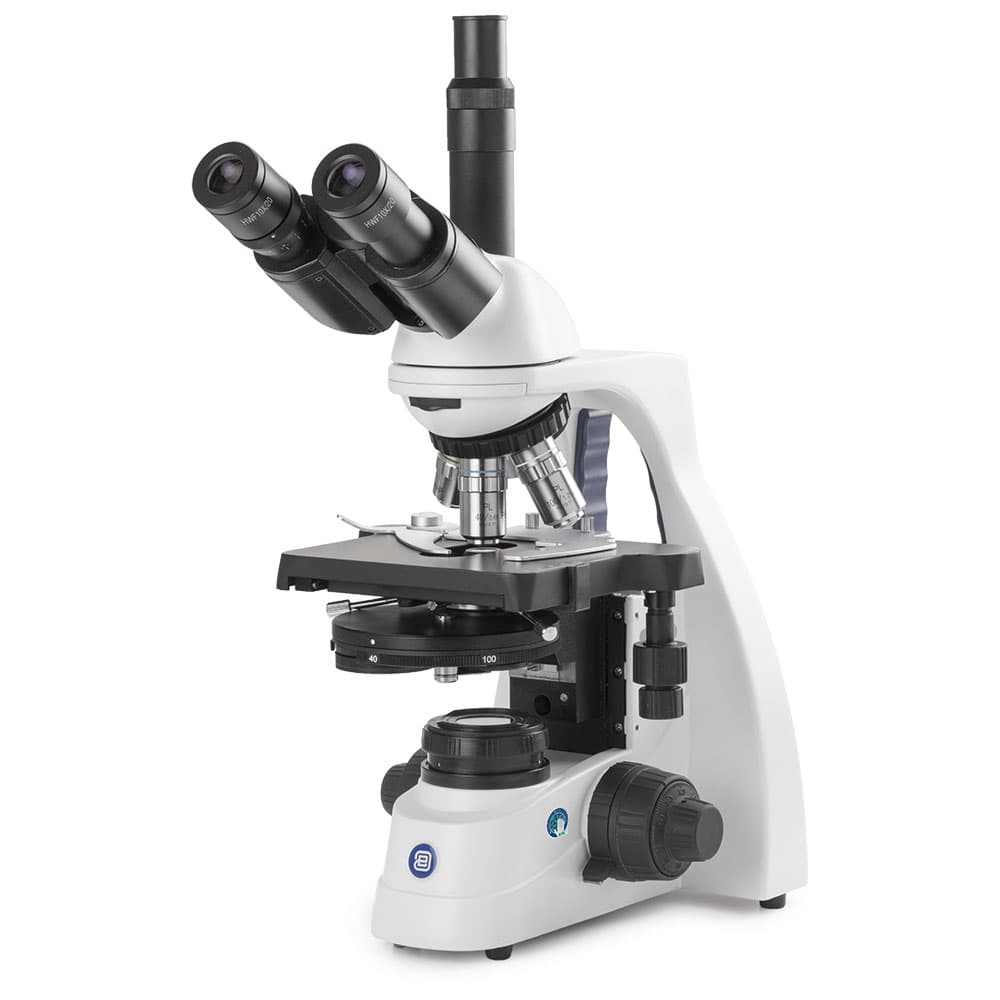
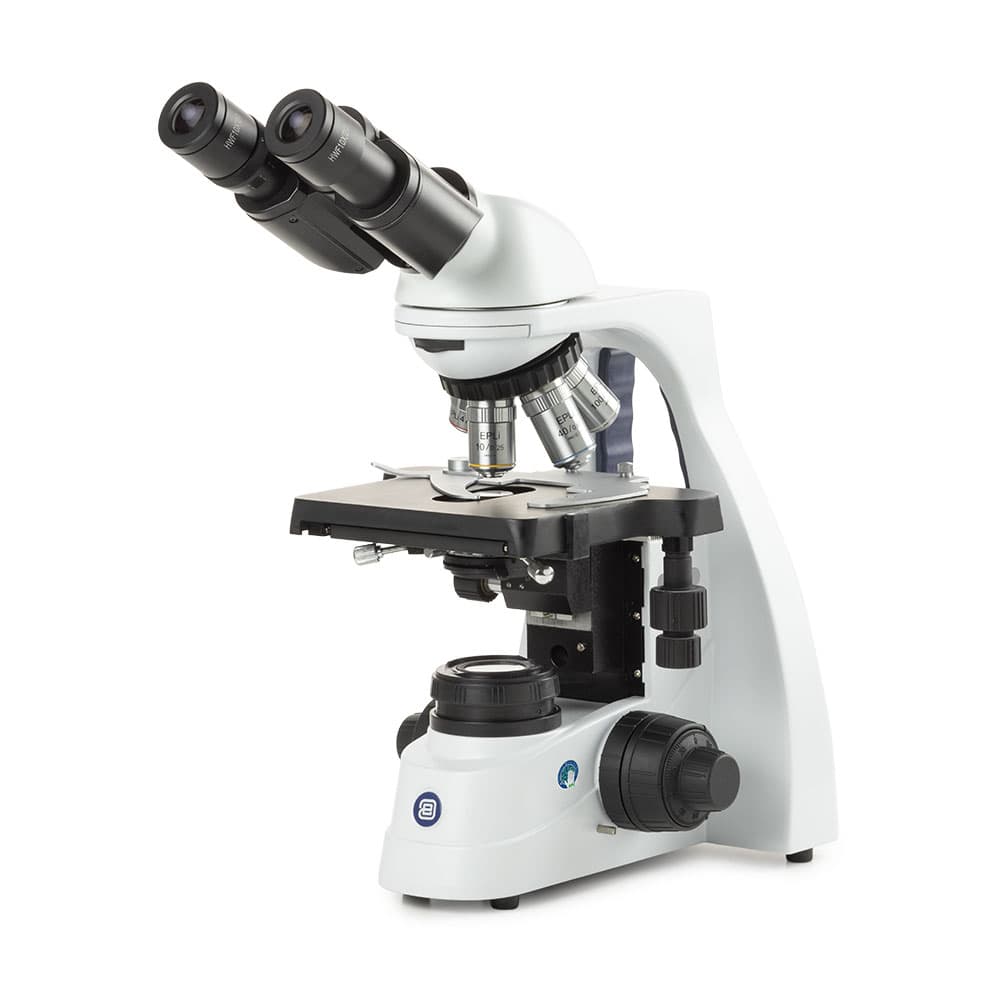
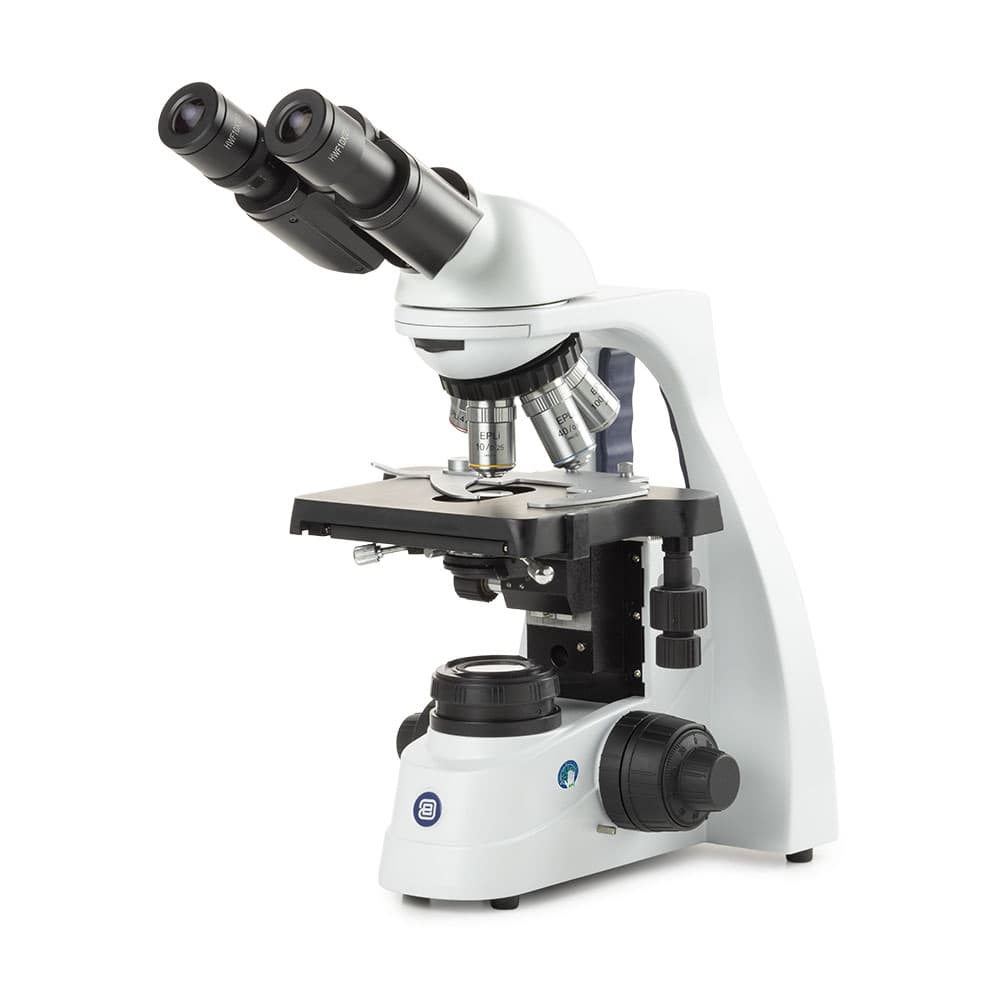
BioBlue™ and bScope® Compound Microscopes for routine biological, educational, and laboratory microscopy.
-
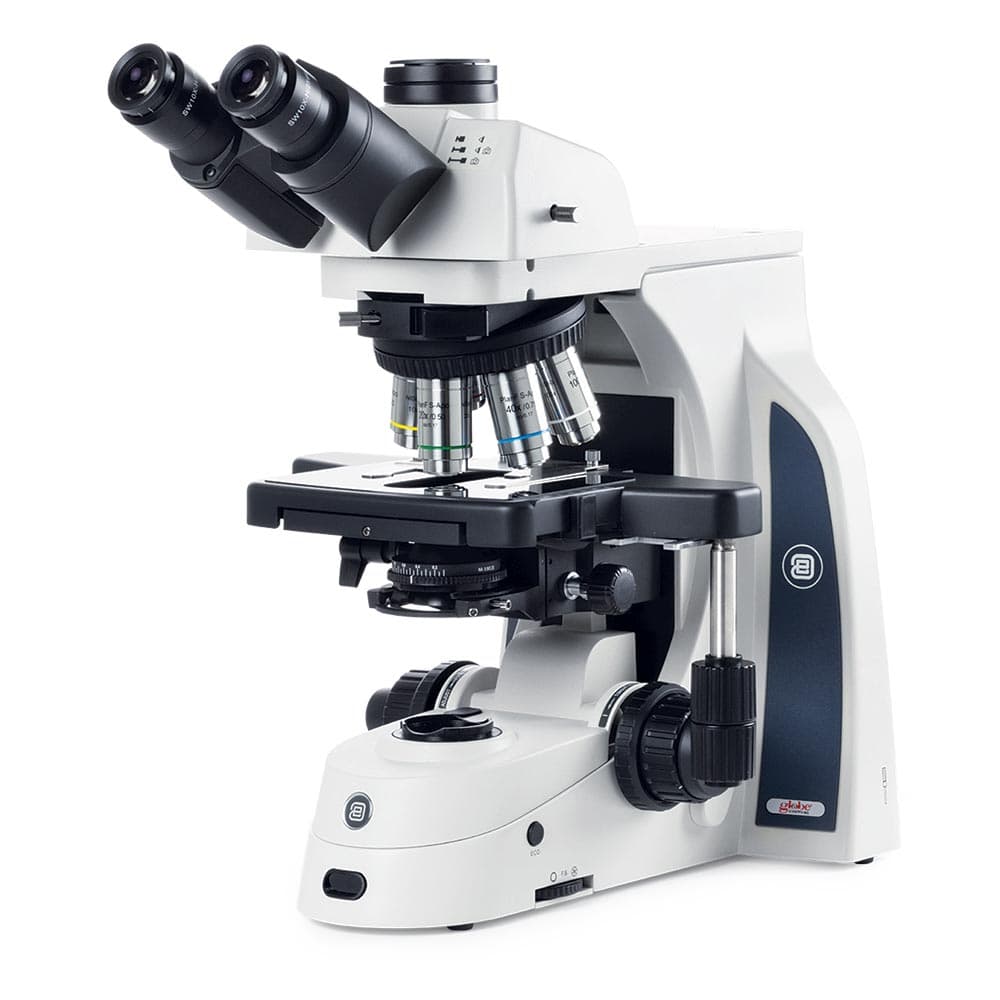
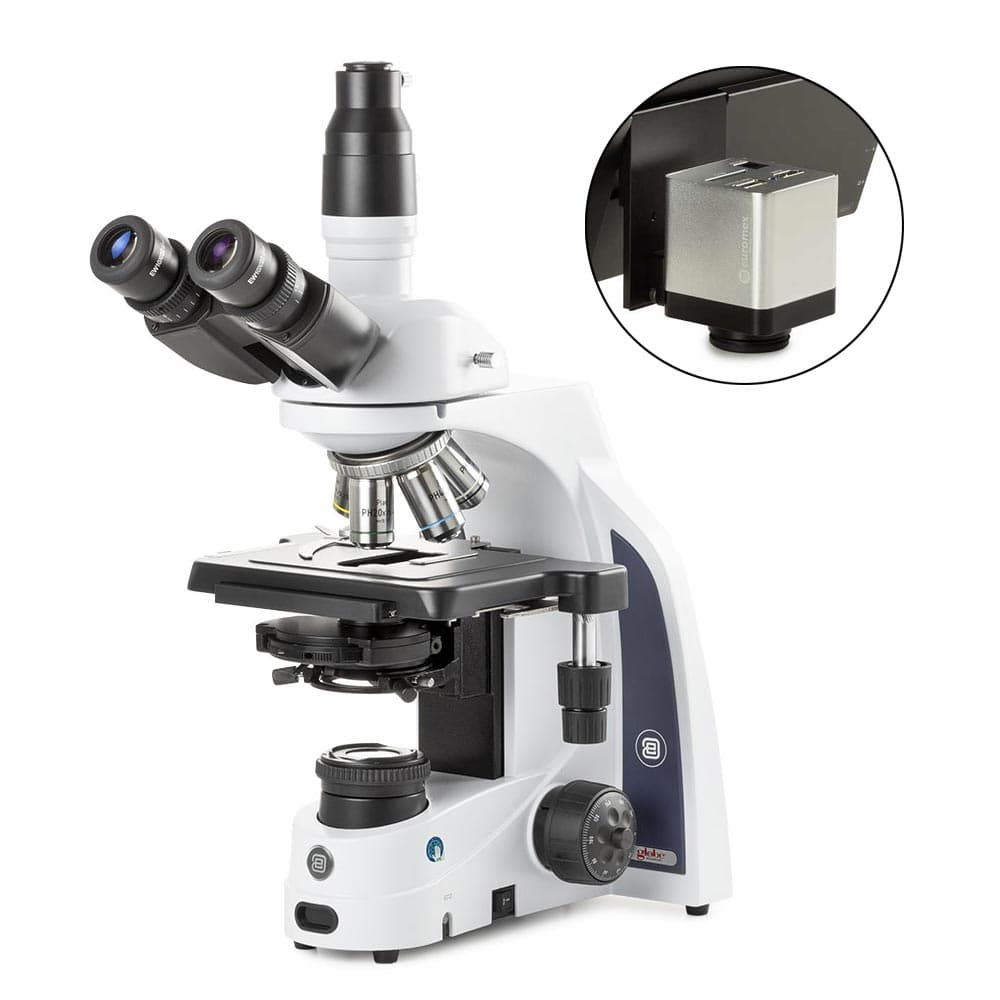
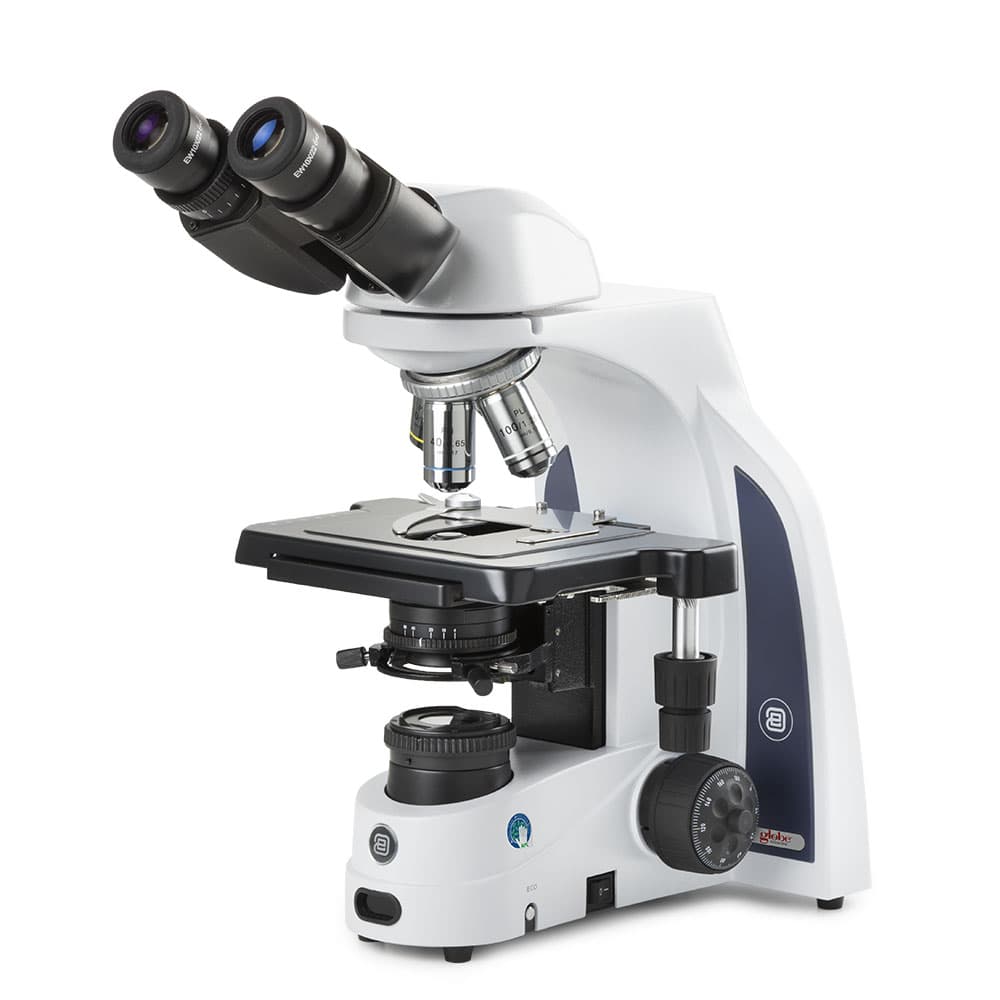
iScope® Research Microscopes with Plan and E-Plan optics for high-quality imaging and analysis.
-
Phase Contrast Microscopes for enhanced observation of transparent, unstained specimens and living cells.
-
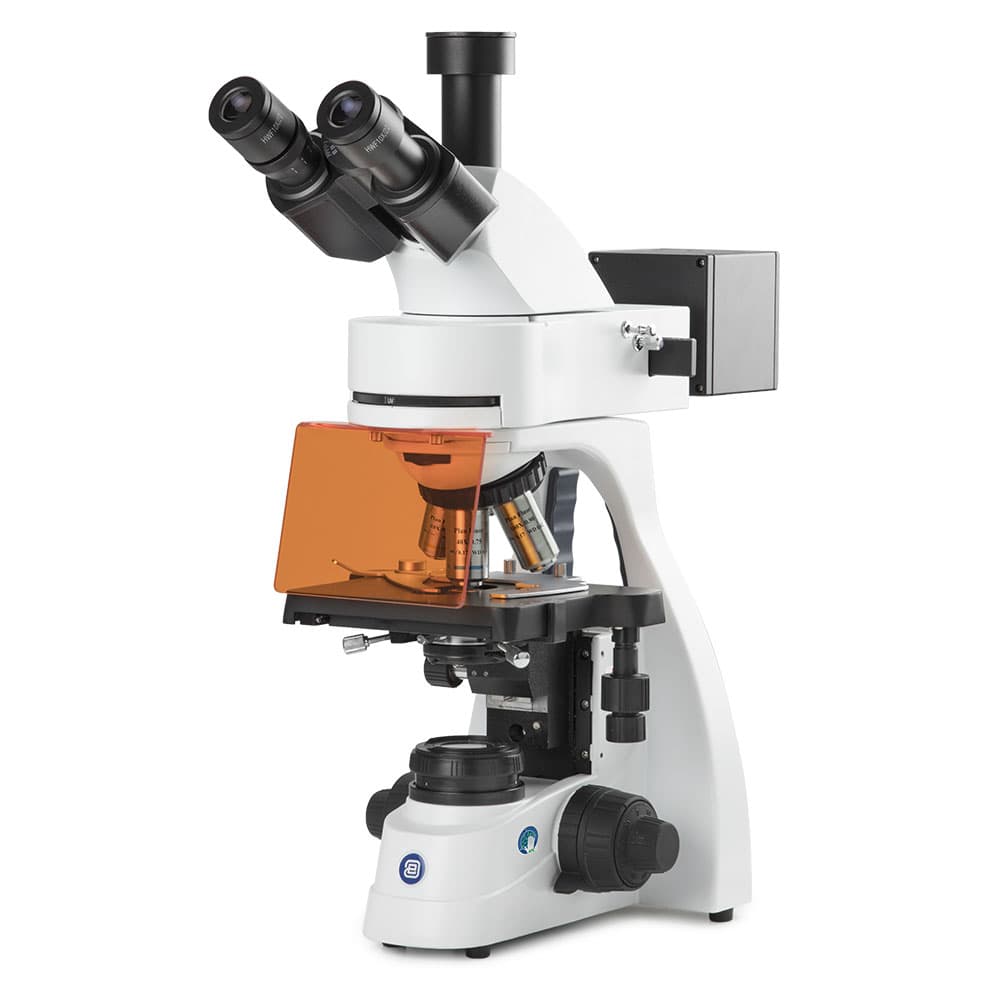
LED Fluorescence Microscopes for fluorescence-based cell and tissue imaging applications.
-
Specialized Systems, including polarization microscopes and anatomopathology microscopes for advanced research and diagnostic workflows.
How to Choose a Compound Microscope
Brightfield vs. phase contrast vs. fluorescence
Brightfield compound microscopes are the entry-level configuration, adequate for stained tissue sections, Gram-stained bacterial smears, blood smears, and all applications where contrast comes from staining rather than optical manipulation. Phase contrast is required for observation of unstained, living, or lightly fixed cells, where inherent contrast is too low for brightfield, common in microbiology, parasitology, and cytology. Fluorescence (epi-fluorescence) is required for DAPI nuclear staining, immunofluorescence (IF) labeling, FISH assays, and fluorescent reporter protein imaging in fixed cells.
Objective quality: plan-achromat vs. plan-apochromat
Plan-achromat objectives correct for chromatic aberration at two wavelengths and are flat (plan) across the field, suitable for routine brightfield and basic fluorescence imaging. Plan-apochromat objectives correct for chromatic aberration at three or more wavelengths and provide superior color fidelity and fluorescence flatness across the full field, required for multi-channel fluorescence imaging, quantitative image analysis, and publication-quality fluorescence documentation. Plan-apochromat sets cost significantly more than plan-achromat sets; specify them when fluorescence image quality and accurate color reproduction matter.
Magnification set
A standard objective set for a research compound microscope: 4x (NA 0.10) for tissue overview; 10x (NA 0.30) for histological pattern assessment; 20x (NA 0.50) for cellular detail without immersion; 40x dry (NA 0.65 to 0.75) for detailed cell morphology; 63x or 100x oil immersion (NA 1.25 to 1.40) for highest-resolution organelle imaging and bacteria identification. For clinical microbiology, 100x oil is the standard for bacterial identification. For routine histology, 10x and 40x are the most used.
Illumination: LED vs. halogen
LED transmitted light illumination is now standard on most new compound microscopes, providing 50,000+ hour lamp life, instant-on operation, no color temperature shift over lifetime, and significantly lower power consumption than halogen. Halogen (6V 30W or 12V 100W) remains in use on older instruments and some entry-level models and requires bulb replacement every 50 to 200 hours. For new purchases, specify LED illumination.
Camera port and documentation
A trinocular head with a C-mount camera port is standard for documentation in research labs. The camera beam splitter on research-grade microscopes maintains eyepiece brightness while splitting a portion of the light to the camera; entry-level trinoculars may dim the eyepiece view when the camera port is in use. A CMOS or CCD camera is required; confirm the camera's pixel size against the objective magnification and required image resolution for your intended analysis.
Specifications Context
Oil immersion objectives (63x NA 1.40, 100x NA 1.40) require immersion oil between the objective front lens and the coverslip to achieve their rated NA. Confirm that the coverslip thickness is No. 1.5 (0.17 mm); most plan-apochromat objectives are corrected for this standard thickness. Non-standard coverslip thickness introduces spherical aberration that degrades resolution and fluorescence image quality. For routine use in clinical microbiology or hematology where high-throughput slide processing is needed, wide-field eyepieces (22 mm field number) reduce the number of microscope fields needed to survey the full slide area, improving throughput.
Contact the MBP team to discuss product availability or get selection guidance.
FAQ