Microplate Reader Accessories for Detection and Maintenance
Microplate reader accessories are components that expand detection capability, maintain measurement accuracy, and support regulatory compliance of laboratory plate readers. Accessory compatibility is instrument model-specific; always confirm the reader brand and model before ordering filters, lamps, or calibration plates.
MBP provides direct procurement support for microplate reader accessories for US and Canadian research laboratories. Request a quote for microplate reader accessories by contacting customerservice@mbpinc.net.
Microplate Reader Accessories
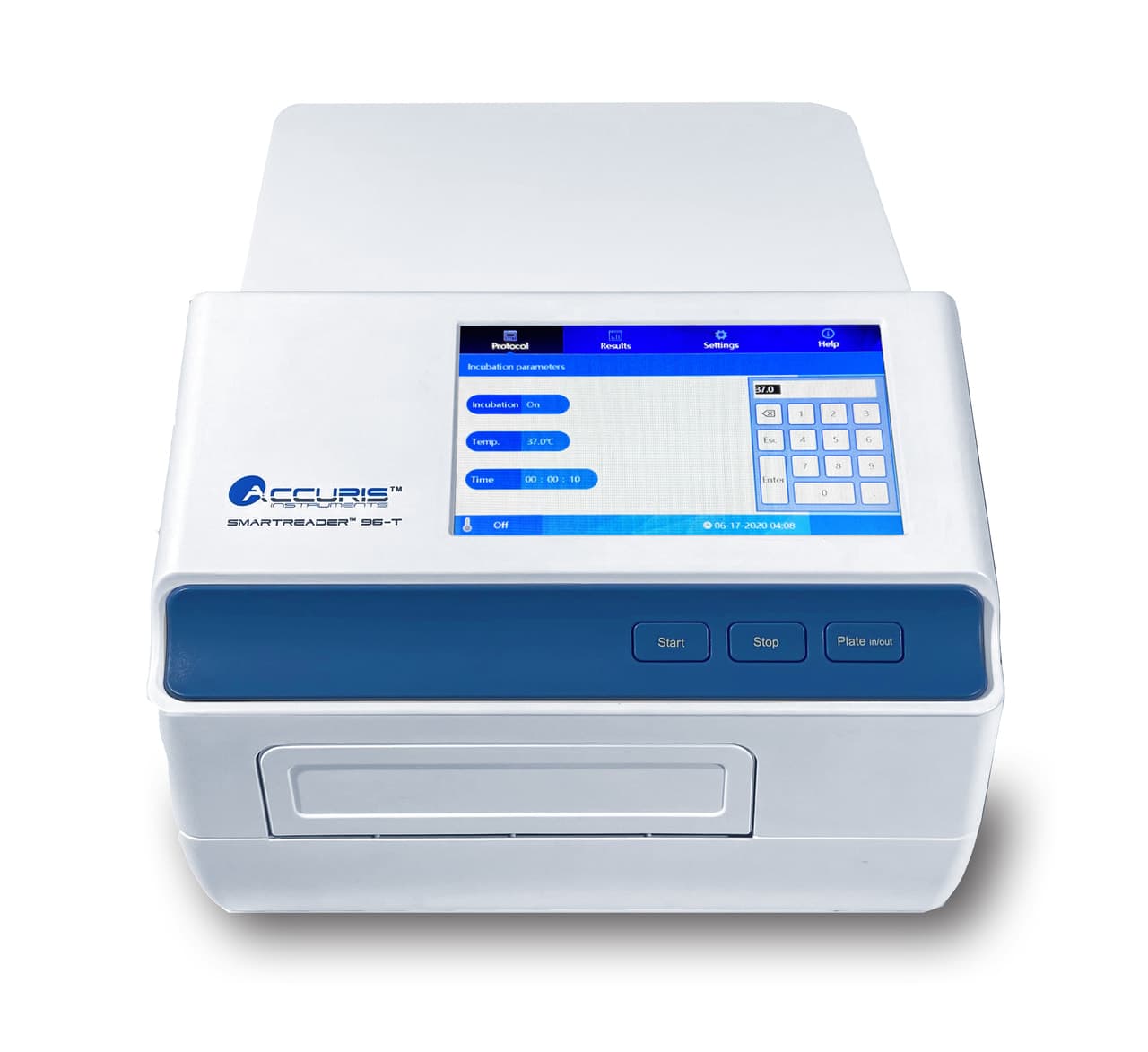
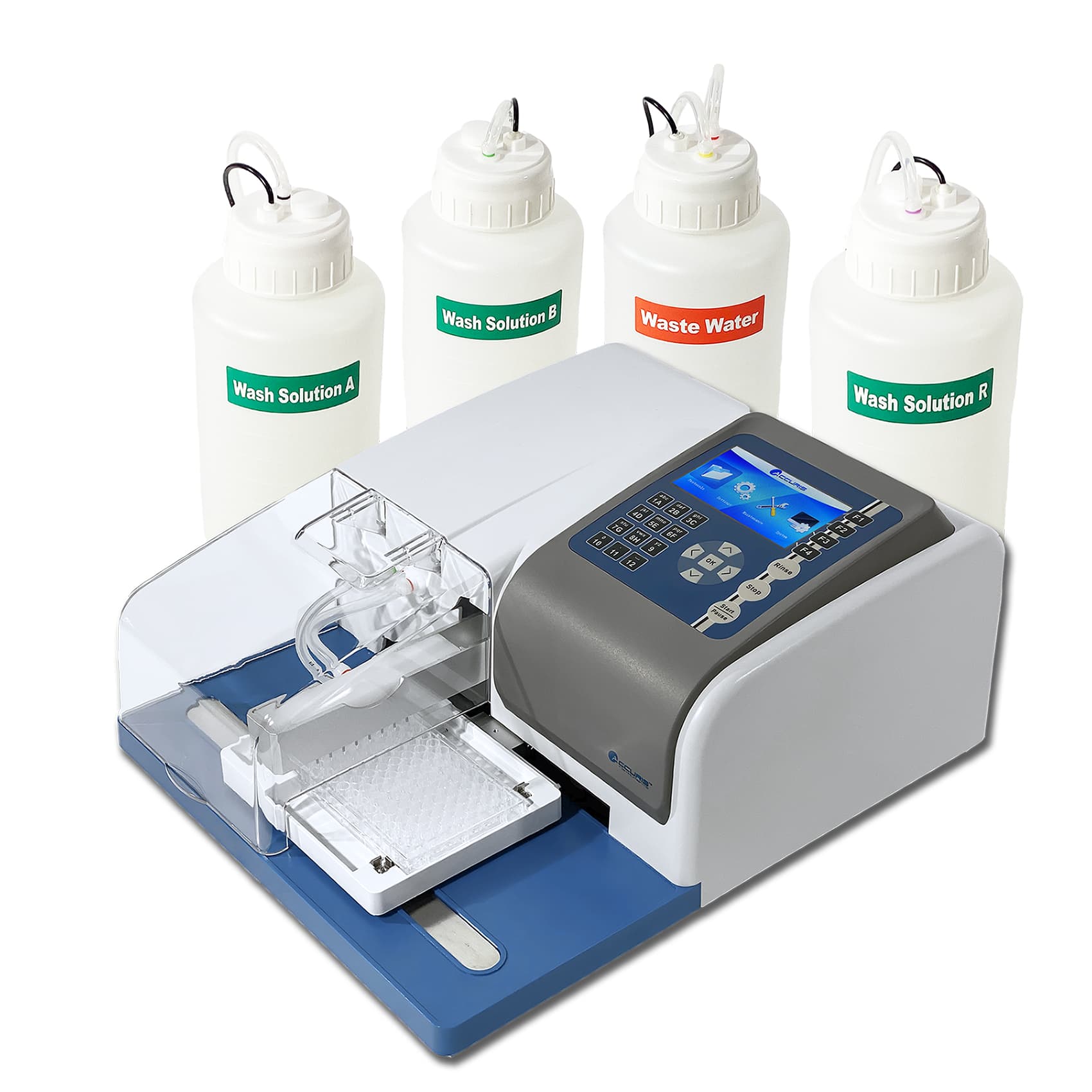
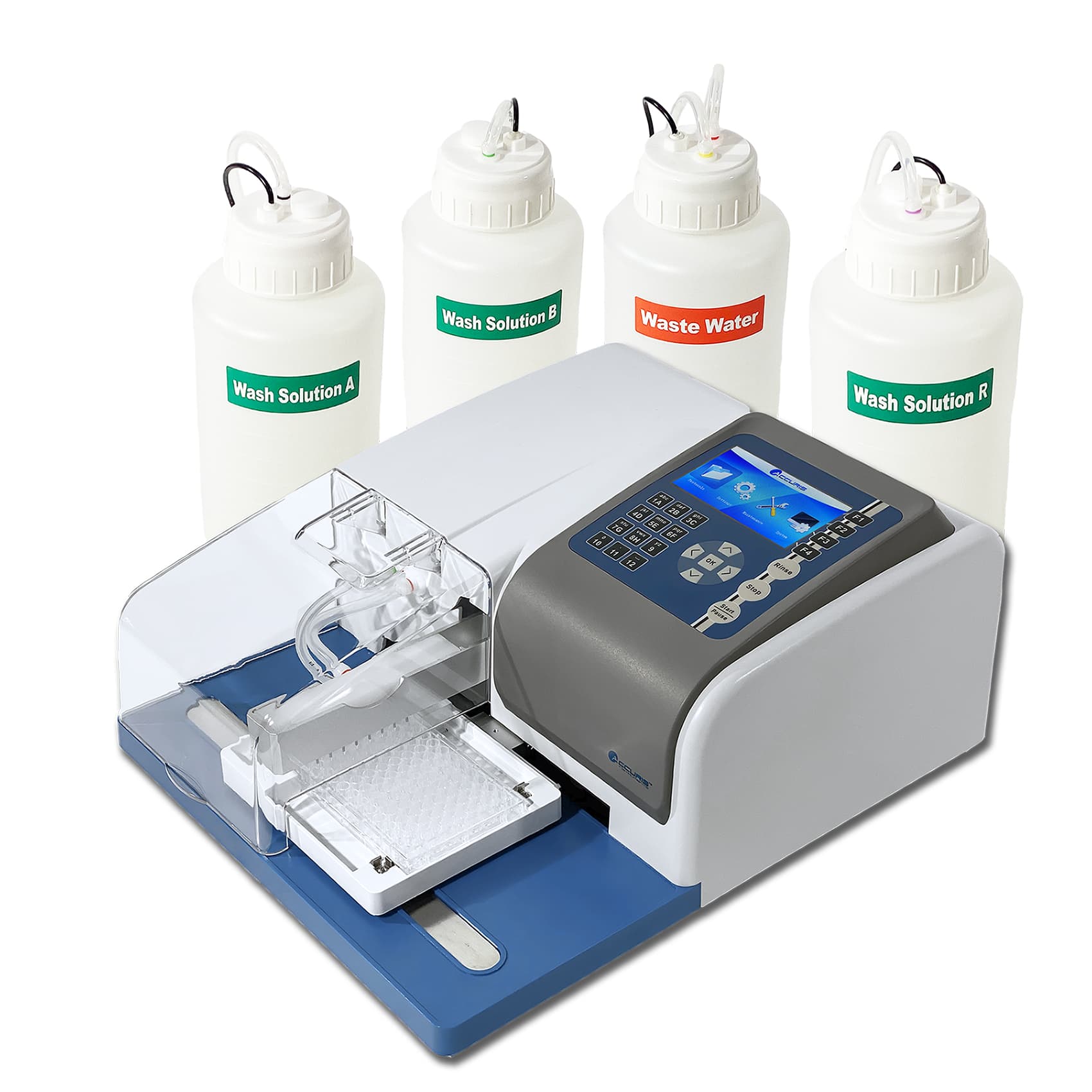
Showing 13 to 15 of 15 results
What Are Microplate Reader Accessories?
Microplate reader accessories are supplementary components that extend detection range, maintain instrument performance, and support compliance in regulated workflows. They fall into four groups: optical accessories (filters, filter cubes, and polarizers for wavelength selection in fluorescence and absorbance detection); illumination accessories (replacement xenon flash lamps, deuterium lamps, or LED upgrade modules that provide the excitation light source); calibration and validation tools (absorbance validation plates with certified reference values, fluorescence uniformity plates, and luminescence performance standards used to verify reader performance); and automation and software accessories (reagent injectors for kinetic luminescence assays, plate stackers for unattended batch reading, and software module licenses for 21 CFR Part 11 compliance, spectral scanning, or advanced kinetics). Because accessory designs are manufacturer-specific, a filter block designed for one plate reader brand will not fit another; always order accessories using the instrument's model number as the primary specification parameter. Filter sets are the most commonly needed accessory for multi-mode readers; confirm the filter block format and thread size for your specific reader model before ordering, as filter cube dimensions vary significantly between manufacturers and generations.
What you will find:
- Replacement filters and optical accessories for maintaining microplate reader performance.
- Calibration and validation tools to support accurate and reproducible assay measurements.
- Microplates and consumables compatible with absorbance, fluorescence, and luminescence applications.
- Replacement components and maintenance accessories for routine instrument upkeep.
- Accessories designed to support ELISA, cell-based assays, nucleic acid quantification, and other microplate-based workflows.
How to Choose Microplate Reader Accessories
Filter sets for fluorescence and absorbance.
Fluorescence filter sets (excitation filter, dichroic mirror, emission filter) must match both the fluorophore's excitation and emission spectra and the filter cube housing format of the specific reader. Most microplate reader filters use standard 25 mm diameter circular filters; some readers use 12 mm micro-filters. Common fluorescence filter sets: FITC/SYBR Green (Ex 485/12 nm, Em 520/10 nm); DAPI/Hoechst (Ex 360/40 nm, Em 460/40 nm); TRITC/PI (Ex 544/10 nm, Em 620/10 nm); Cy5 (Ex 620/10 nm, Em 680/10 nm). For absorbance, filter-based readers require individual narrow-bandpass filters at the wavelengths required by each assay protocol: 450 nm for ELISA, 595 nm for Bradford, 562 nm for BCA, 260 nm, and 280 nm for nucleic acid and protein.
Replacement lamps
Xenon flash lamps are the standard excitation source in high-quality fluorescence and absorbance microplate readers; typical lamp lifetime is 500 million flashes (approximately 3 to 5 years of daily use). Lamp output decreases gradually before failure; rising CV% in repeated measurements of the same standard is the first sign of lamp degradation. Replacement xenon flash lamps are model-specific; confirm part number from the instrument manual before ordering. Some instrument manufacturers have transitioned to LED-based excitation sources, which have much longer lifetimes (50,000+ hours) and do not require routine lamp replacement.
Calibration and validation plates
Calibration plates contain certified optical standards (neutral density filters, fluorescent reference dyes at known concentrations, or luminescent reference materials) in an SBS-format plate footprint for installation in the plate carriage. They are used to verify photometric accuracy, linearity, and inter-well uniformity (CV% across all 96 or 384 wells). These verifications are required in ISO 17025 accredited labs and GLP/GMP environments, and recommended as best practice for any lab relying on quantitative plate reader data. Validation plates are model-specific and must be re-certified periodically (typically annually) by the manufacturer.
Reagent injectors
Reagent injectors are syringe-pump accessories that dispense a defined volume of reagent into each well of a microplate immediately before or during reading, required for luminescence kinetic assays (luciferase, beta-galactosidase, flash luminescence from coelenterazine), where the signal decays rapidly after reagent addition. Single injectors add one reagent (e.g., luciferase substrate); dual injectors allow sequential addition of two reagents for sequential flash and glow luminescence detection. Injectors are model-specific and must be installed and calibrated by the manufacturer or a qualified service engineer.
Plate stackers and automation accessories
Plate stacker modules load and unload microplates automatically from a tray of 10 to 50 plates, allowing unattended overnight batch reading. Integration with laboratory robotics and LIMS extends this to fully automated plate reading workflows. Plate stackers are model-specific and typically sold as separate accessories from the reader. Confirm that the plate stacker is compatible with the specific plate type (96-well standard, 384-well, with or without sealing film) and the plate loading orientation.
Specifications Context
Filter bandpass width (the FWHM of the filter transmission curve) affects sensitivity and selectivity. Narrower bandpass filters (10 nm FWHM) improve selectivity by excluding off-target fluorophore emission but transmit less light, reducing signal. Wider bandpass filters (20 to 40 nm) transmit more light for a brighter signal, but may allow bleed-through from closely overlapping fluorophores. In multiplex assays with two or more fluorophores, narrow bandpass emission filters reduce spectral cross-talk between channels. Optical density (OD) of the blocking region outside the transmission band should be at least OD 5 to OD 6 for fluorescence filters to prevent light leakage from the excitation source from reaching the detector.
To discuss product availability or get selection guidance, contact the MBP team.
FAQ