Cell Counter Accessories: Slides, Reagents, and Viability Kits
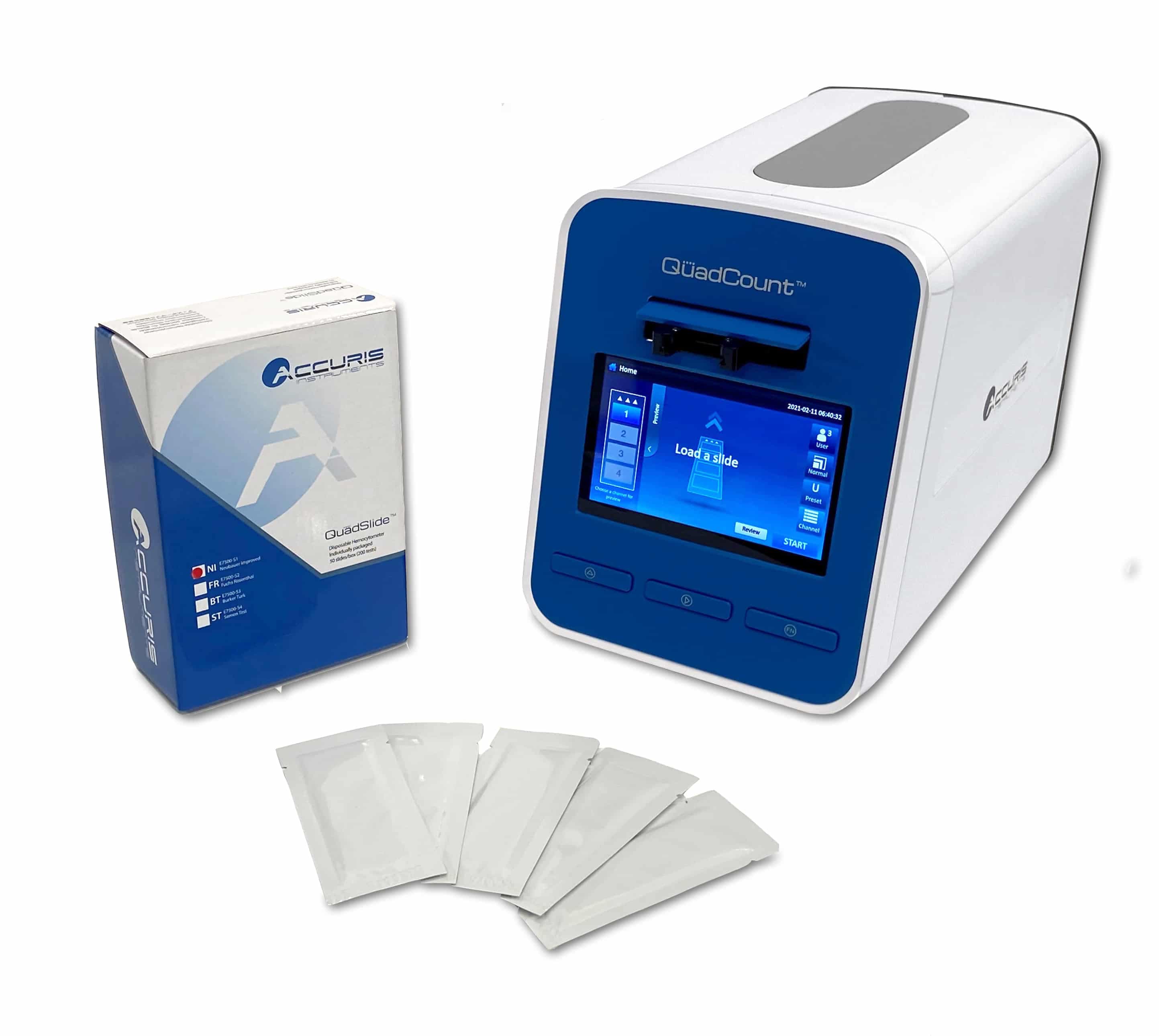
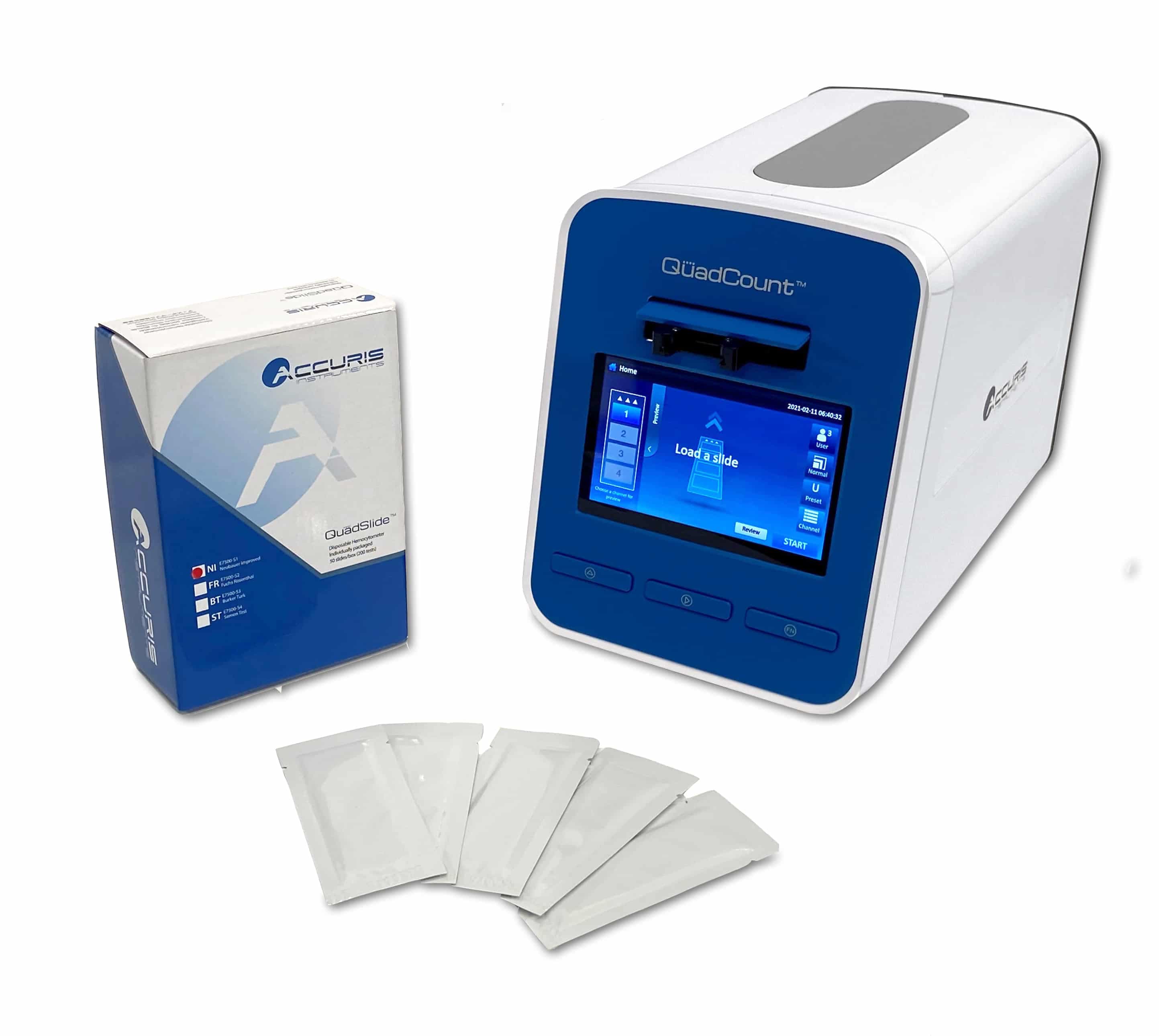
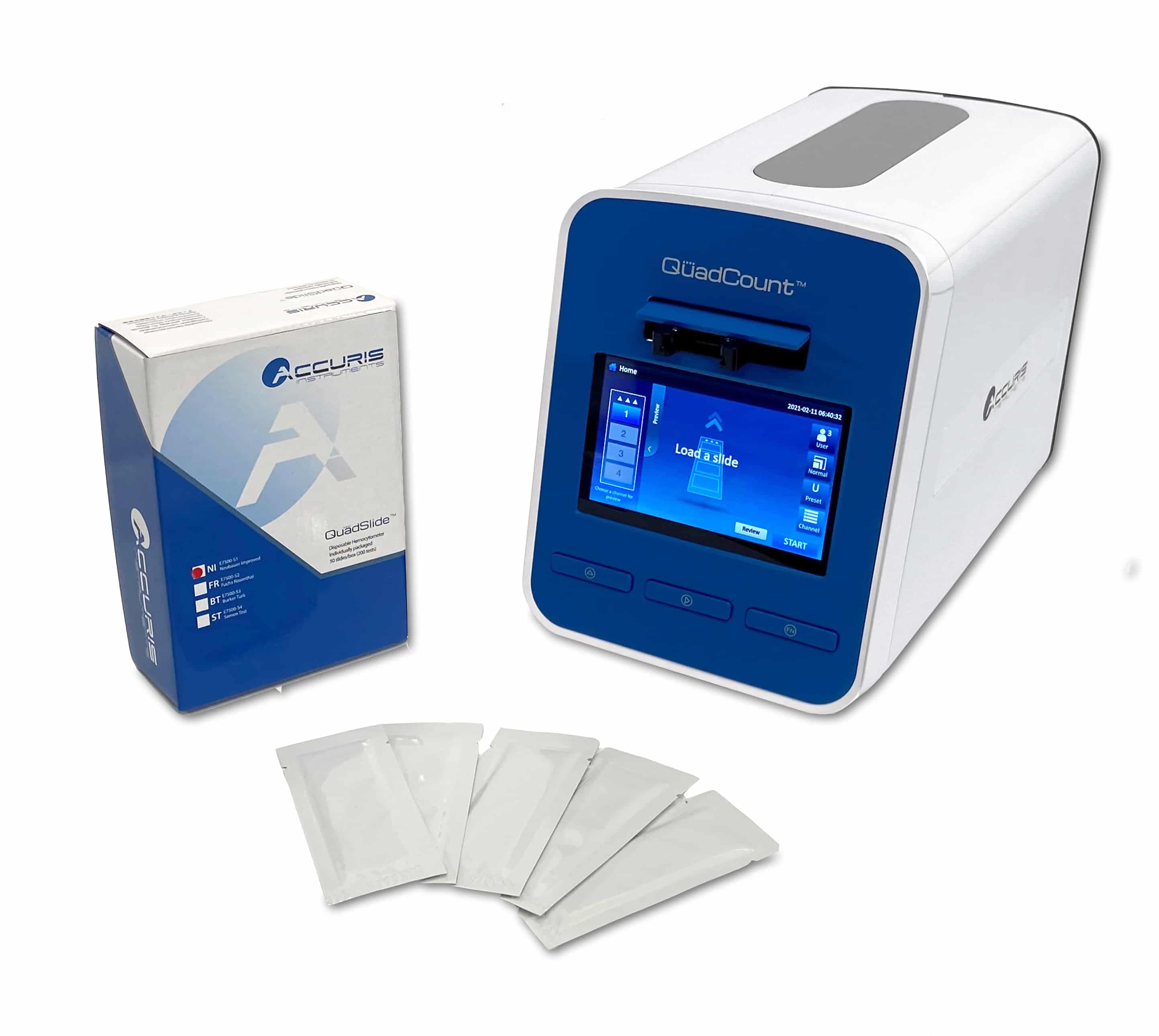
Cell counter accessories support the routine operation of automated cell counters. This category includes disposable QuadSlides for sample counting, standard test slides for instrument verification, and barcode scanners for streamlined sample identification and workflow management with QuadCount automated cell counters.
MBP provides purchase order procurement for cell counter accessories for US and Canadian research institutions. Request a quote for cell counter accessories, including QuadSlides, standard test slides, and barcode scanners, by contacting customerservice@mbpinc.net.
Cell Counter Accessories
Showing 1 to 3 of 3 results
What Are Cell Counter Accessories?
Cell counter accessories are the consumable reagents and replacement components that enable continued, accurate operation of automated cell counters. They fall into three categories: consumable slides (single-use counting chambers loaded fresh for each sample); staining reagents (trypan blue, AO/PI kits, or other viability dyes used to prepare the cell suspension before counting); and instrument maintenance components (calibration beads for verifying counting accuracy, replacement light sources or LED modules, optical cleaning solutions for direct-pipette instruments, and software updates). Counting slides are the dominant consumables by volume and cost, typically used at one slide per sample (two counting chambers per slide provide technical duplicates). Because counting slides are instrument-specific (not interchangeable between brands), procurement must specify the correct instrument model. Third-party slides compatible with certain instruments (Countess-type, TC20-type) are available from alternative suppliers at a lower cost per slide; confirm compatibility and counting accuracy before switching from OEM slides. The two consumables needed for every cell count are a counting slide and a staining reagent; order both in sufficient quantity for your weekly sample volume, and maintain a stock of 4 to 6 weeks of slides to avoid workflow disruptions from supply delays.
What You Will Find
- Disposable QuadSlides for accurate and consistent cell counting with QuadCount automated cell counters.
- Standard test slides for instrument verification and performance checks.
- Barcode scanners for streamlined sample identification and workflow management.
- Cell counter accessories designed to support routine operation and maintenance of QuadCount automated cell counters.
How to Choose Cell Counter Accessories
Counting slides: OEM vs. third-party
Original equipment manufacturer (OEM) counting slides are validated for accuracy on the specific instrument and are the safest choice for regulated and research-critical workflows. They typically cost 0.80 to 2.00 USD per slide. Third-party alternative slides (for Countess II-compatible, TC20-compatible, and other common platforms) are available at 0.20 to 0.60 USD per slide, a significant cost reduction in high-frequency counting labs. Before switching to third-party slides, count the same samples on both OEM and third-party slides across a range of densities (1×10⁵ to 5×10⁶ cells/mL) and viability levels (above 90% and 70 to 80%) to verify equivalent accuracy and viability discrimination.
Trypan blue reagent: concentration and quality
Trypan blue for cell counting is supplied as a 0.4% solution (w/v) in phosphate-buffered saline. Dilute the cell suspension 1:1 with 0.4% trypan blue immediately before counting (resulting in 0.2% trypan blue in the counted mixture). Ensure the trypan blue solution is sterile-filtered (0.2 micron) and stored at room temperature away from light; degraded or contaminated trypan blue causes inconsistent staining intensity, compromising viability discrimination. Some automated cell counters use a proprietary pre-diluted trypan blue optimized for the instrument's imaging algorithm; confirm whether the instrument requires instrument-specific trypan blue or accepts a standard 0.4% solution.
AO/PI viability kits
Acridine orange (AO) and propidium iodide (PI) reagent kits are supplied as ready-to-use or concentrate formulations. AO penetrates all nucleated cells and fluoresces green (excitation 470 to 490 nm, emission 515 to 530 nm); PI enters only cells with compromised membranes and fluoresces red (excitation 530 to 550 nm, emission 610 to 640 nm). AO/PI kits are matched to the fluorescence filter configuration of the specific cell counter; confirm that the instrument has the appropriate excitation/emission channels before specifying a kit. Store AO/PI solutions protected from light; AO is stable for 12 months at 2 to 8 degrees C.
Calibration beads
Calibration bead sets contain fluorescent microspheres at known concentrations and known fluorescence intensities, used to verify that the cell counter's counting algorithm and fluorescence channels are performing within specification. Calibration should be performed at a defined frequency (monthly or quarterly, depending on the laboratory's quality management requirements) and after any instrument relocation, service, or software update. Store calibration beads at 2 to 8 degrees C protected from light; do not freeze.
Direct-pipette instrument cleaning accessories
Cell counters with direct-pipette optical counting surfaces (no disposable slide) require cleaning with manufacturer-specified optical surface cleaning solutions between every sample to prevent carryover. Cleaning kits typically include a low-detergent optical cleaning solution, lint-free optical wipes, and a rinse solution. Follow the manufacturer's cleaning protocol exactly; using inappropriate cleaning agents on the optical surface degrades the surface coating and permanently impairs counting accuracy.
Specifications Context
Counting slide chamber depth (most commonly 100 micrometers) determines the volume of suspension imaged per frame and affects cell density calculation. A non-standard chamber depth produces systematic counting errors; never use counting slides with unspecified or incorrectly specified chamber depths for quantitative cell density measurements. Trypan blue should not be left in contact with cells for more than 3 to 5 minutes before counting; prolonged exposure causes staining of live cells with compromised membranes from extended trypan contact, artificially reducing apparent viability. Set up the staining step immediately before counting, not in advance.
FAQ