Analytical Balance Accessories for Calibration and Accuracy
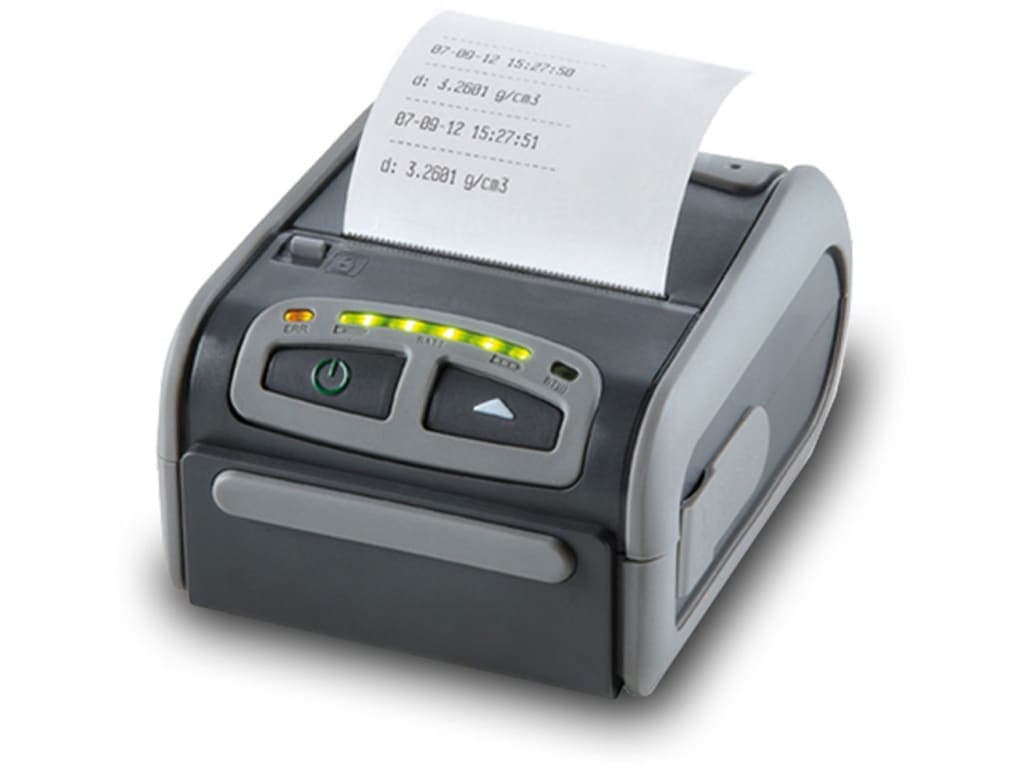
Analytical balance accessories include components that support weighing accuracy, calibration, and routine instrument operation. Depending on the balance model, available accessories may include calibration weights, draft shields, printers, data interfaces, anti-vibration tables, density determination kits, and other compatible balance accessories designed for laboratory weighing workflows.
MBP provides direct procurement support for analytical balance accessories for US and Canadian research institutions. Request a quote by contacting customerservice@mbpinc.net.
Analytical Balance Accessories
Showing 1 to 1 of 1 results
What Are Analytical Balance Accessories?
Analytical balance accessories are components, tools, and consumables that support accurate measurement, maintain instrument calibration, reduce environmental interference, and enable regulatory-compliant documentation. They fall into several categories: calibration weights (certified reference masses used for external calibration and periodic performance verification); environmental control accessories (anti-vibration tables, isolation pads, and leveling wedges that stabilize the balance against floor and building vibrations); electrostatic control (ionizers that neutralize static charge that causes powders, small particles, and light samples to be attracted or repelled from the pan); and operational consumables (weighing papers, weighing boats, and disposable dishes that protect the pan from contamination while providing a hygienic surface for sample placement). Analytical balance accessories are partially instrument-specific (draft shield panels, printer interface cables, density determination kits) and partially universal (calibration weight sets, ionizers, anti-vibration mats). The two accessories most commonly needed immediately after purchasing an analytical balance are a certified calibration weight set for external verification and an anti-vibration table or isolation mat; without these, balance accuracy cannot be independently verified, and readings may drift due to floor vibration.
What you will find:
- Precision vacuum gauges for accurate monitoring of laboratory vacuum systems.
- Piezo rough vacuum gauges with isolated sensors for reliable vacuum measurement.
- Vacuum gauges with real-time analytics for continuous vacuum monitoring and process optimization.
- Vacuum measurement accessories suitable for laboratory, analytical, and vacuum processing applications.
How to Choose Analytical Balance Accessories
Calibration weight sets: OIML class and weight range
Calibration weights for analytical balances must be traceable to national measurement standards (NIST in the USA, PTB in Germany, NPL in the UK). OIML (Organisation Internationale de Metrologie Legale) weight classes define accuracy: E1 and E2 weights are the highest accuracy for calibrating reference balances and high-precision semi-micro instruments; F1 weights are the standard class for calibrating analytical balances (readability 0.1 mg to 1 mg); F2 weights are suitable for precision balances with 1 mg to 10 mg readability. ASTM classes (Class 1, 2, 3) are broadly equivalent to OIML E2, F1, F2, respectively. Specify a weight set covering the full capacity range of the balance (e.g., 1 mg to 200 g for a 200 g capacity analytical balance) for both single-point and multi-point calibration.
Anti-vibration tables and isolation mats
Anti-vibration tables use pneumatic, spring, or viscoelastic isolator pads between a heavy granite or steel top plate and a fixed base to attenuate floor vibrations from 2 Hz to 100 Hz. Granite surface plates (50 to 100 kg) provide both a level, vibration-absorbing surface and thermal mass. For labs where a full anti-vibration table is impractical, anti-vibration mats (viscoelastic foam or gel pads, 30 to 50 cm x 30 to 50 cm) placed under the balance provide meaningful isolation from bench vibrations at a lower cost. Confirm the isolator's frequency range covers the primary vibration frequencies in the lab environment (typically 4 to 20 Hz from building HVAC and 2 to 5 Hz from elevator/vehicle traffic).
Anti-static ionizers
Static charge on powder samples, weighing papers, and small vessels is a common cause of weighing errors in analytical balances; charged particles are attracted to or repelled from the pan and the draft shield walls, producing systematic and variable weighing errors. Anti-static ionizers (ion blower bars or hand-held ionizing guns) emit balanced positive and negative ions that neutralize static charge on the sample, pan, and vessel. Place the ionizer inside or adjacent to the draft shield; allow 10 to 30 seconds for ion equilibration before reading the balance. Particularly important for weighing pharmaceutical powders, polymer granules, and any sample prone to triboelectric charging.
Draft shield panels and accessories
Replacement draft shield panels (glass or polycarbonate) are needed when a panel is broken or scratched. Additional draft shield accessories include glass draft shield extension tubes for weighing tall vessels, balance pan brackets for density determination, and draught-proof covers for transport. Confirm that the panel format, dimensions, and sliding mechanism are specific to the balance model and generation.
Density determination kits
Density determination kits attach to the balance and allow measurement of the density of solids and liquids by Archimedes' principle, weighing the sample first in air, then suspended in a liquid of known density, and calculating density from the buoyancy difference. The kit typically includes a suspension assembly, a beaker holder, and a sinker weight for liquids. Density determination is used in material characterization, polymer QC, pharmaceutical tablet analysis, and gemological evaluation.
Specifications Context
Calibration weights should be stored in padded, labeled containers and handled only with tweezers or clean, lint-free gloves to prevent fingerprint oils and contamination from altering their mass. Even E2 and F1 weights require recertification at defined intervals (typically annually for GLP environments) by an accredited calibration laboratory to maintain traceability. When selecting calibration weights for a 0.1 mg analytical balance, confirm the weight set includes small denominations (1 mg, 2 mg, 5 mg, 10 mg) for low-mass calibration points, in addition to the full range. Weighing papers should be lint-free, chemical-resistant (compatible with the samples being weighed), and sized to fit within the pan area.
To discuss product availability or get selection guidance, contact the MBP team.
FAQ