UV Transilluminator Accessories for Safe Gel Visualization
UV transilluminator accessories are protective and optical components that improve the safety, usability, and performance of UV and blue-light gel visualization systems. Common accessories include protective viewing glasses and colored viewing covers that enhance fluorescent band contrast while helping shield users from direct exposure to excitation light during gel visualization.
MBP supplies accessories for compatible blue-light gel visualization systems, including protective viewing glasses and replacement amber covers, with US order processing in Houston, Texas. Request a quote for UV transilluminator accessories for gel visualization applications by contacting customerservice@mbpinc.net.
UV Transilluminators Accessories
Showing 1 to 2 of 2 results
What Are UV Transilluminator Accessories?
UV transilluminator accessories fall into four functional groups: personal protective equipment (PPE) that guards operators against UV radiation; optical components that improve image quality and camera compatibility; maintenance and consumable parts that sustain instrument performance; and light-conversion accessories that extend the transilluminator's functional range. Together, these accessories make gel visualization workflows safer, more reproducible, and more cost-effective over the instrument's lifespan. PPE includes UV-blocking polycarbonate face shields and safety glasses that block radiation below 380 nm; standard glass lab safety glasses transmit UV and are inadequate. Optical accessories include orange/amber emission filter plates (longpass above 500-580 nm), portable darkroom viewing hoods, and UV-to-blue light converter plates (Visi-Blue style) that place a phosphor layer over UV lamps to emit 460-470 nm blue light, enabling SYBR Safe and GelGreen imaging without purchasing a separate blue-LED instrument. Match each accessory to the transilluminator model (wavelength, viewing surface dimensions, lamp power, and pin configuration) to ensure compatibility before ordering.
What You Will Find:
-
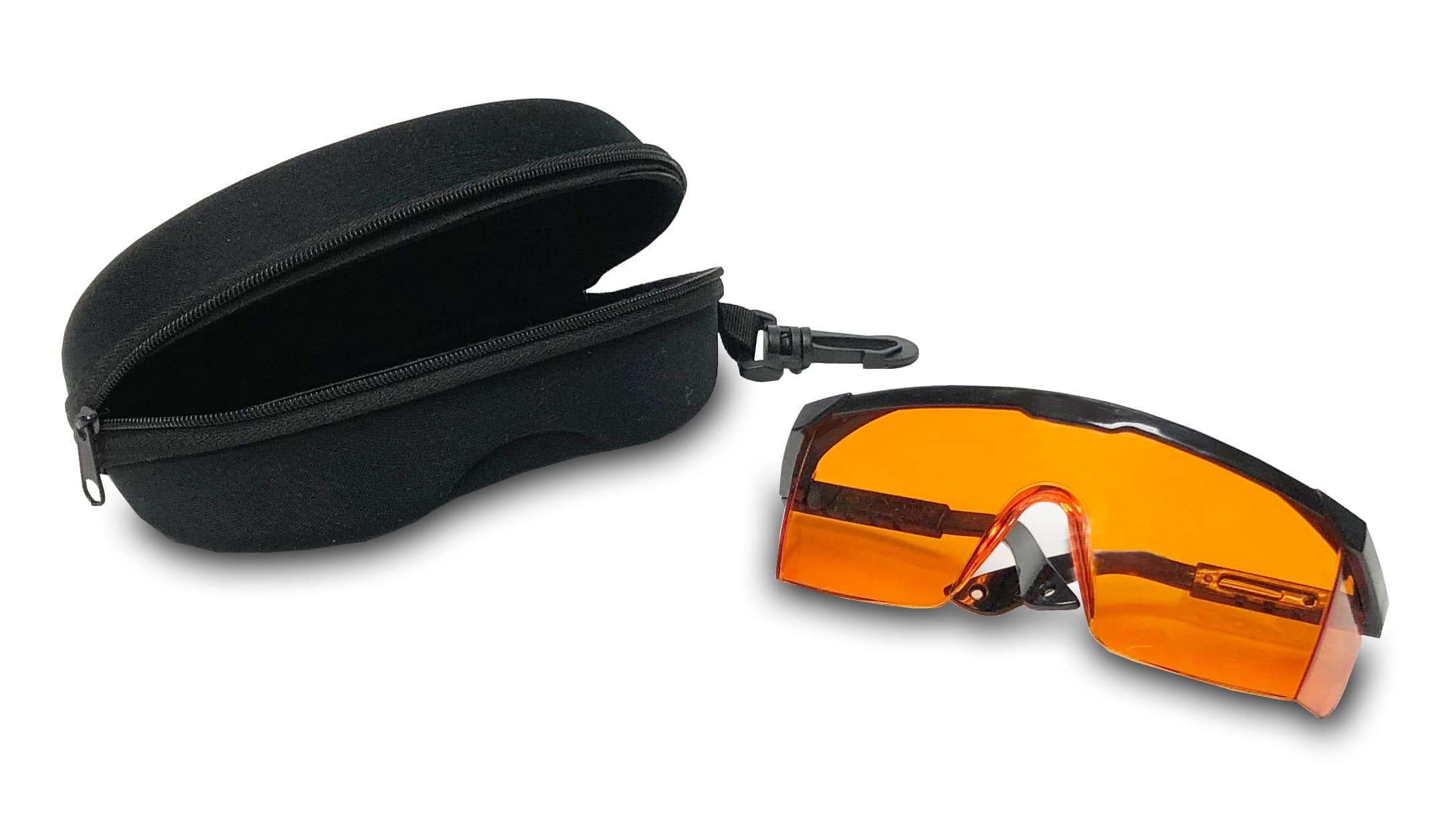
SmartBlue Viewing Glasses for UV and blue light provide high-contrast protection, allowing you to visualize fluorescent bands safely and clearly.
-
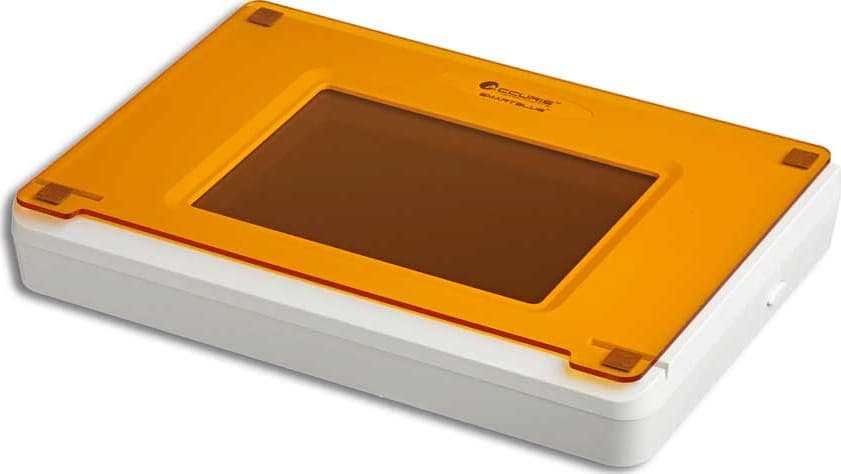
Amber Covers for Transilluminators act as durable, high-clarity replacement shields that ensure a secure viewing experience during gel documentation.
How to Choose UV Transilluminator Accessories
Personal protective equipment
All operators using open-top UV transilluminators at 254-365 nm require UV-blocking polycarbonate face shields or safety glasses rated to block UV below 380 nm. Orange-tinted polycarbonate viewing glasses - such as Accuris SmartBlue Plus Viewing Glasses - serve a dual function: blocking UV from 302 nm transilluminators and blocking blue-LED light at 470 nm from blue-light systems, while allowing band fluorescence above 500 nm to pass for direct visualization. Arms and forearms require UV-opaque lab coat sleeves during gel cutting.
Emission filters for photography
Orange and amber longpass filter plates (cutoff at 515-580 nm) block the UV excitation source while transmitting the gel-band fluorescence (590 nm for EtBr and GelRed; 525 nm for SYBR Safe and SafeView Safe-Green). For EtBr at 590 nm emission, a 560 nm longpass is standard. For SYBR Safe/SafeView Safe-Green at 525 nm emission, a 500-515 nm longpass provides better signal transmission. Clip-on filter plates attach to handheld cameras or smartphones for photography without a dedicated gel doc system; the amber filter unit in blue-LED transilluminators filters to approximately 580 nm.
Portable viewing hoods
Portable viewing hoods create a contained darkroom environment over the transilluminator surface by blocking ambient room light, enabling gel photography using a handheld digital camera or smartphone with an amber filter without requiring a dedicated gel documentation enclosure. Most hoods include a UV-blocking face shield integrated into the hood opening, a removable bottom panel for placement over the transilluminator, and a felt or light-proof curtain. These are particularly useful for lower-throughput labs that do not justify a standalone gel doc system.
UV-to-blue light converter plates
Converter plates contain a phosphor layer that, when placed on a UV transilluminator surface, absorbs UV emission and re-emits blue light at 460-470 nm. This converts an existing UV system into a functional blue-LED transilluminator for SYBR Safe, GelGreen, and SafeView Safe-Green gels without purchasing a separate instrument. Three sizes are typically available to match standard transilluminator viewing areas; an amber camera filter is required for photography with converter plates.
Filter glass protectors
UV-transmitting filter protectors are thermoplastic (UV-transparent polycarbonate) sheets placed directly on the filter glass surface to protect the costly UV filter from gel cuts, scrapes, and dropped objects during gel manipulation. They are solarization-resistant and maintain UV transmission above 85% for their rated lifespan. Replacing a protector is far less expensive than replacing a cracked filter glass.
Replacement UV lamp tubes
Fluorescent UV lamp tubes are rated at 2,000-5,000 hours and degrade progressively; bands requiring longer exposure times or appearing dimmer at standard settings signal that replacement is needed. Tubes must match the transilluminator's wavelength (254, 302, or 365 nm), wattage (8 W or 15 W), tube length (15-25 cm), and pin configuration (bi-pin G13 is common). Confirm the exact specifications from the transilluminator manual before ordering replacements.
Specifications Context
UV lamp output intensity is expressed in milliwatts per square centimeter at the filter surface; research-grade transilluminators specify 5-25 mW/cm2 at 302 nm. Replacement tubes should be sourced to match the original lamp's wavelength and pin configuration exactly; using the wrong wavelength (e.g., 365 nm instead of 302 nm) changes dye excitation efficiency and may require different exposure times. Polycarbonate UV shields block over 99% of UV radiation at 302 nm; acrylic-based covers block UV below 380 nm and are used on hinged blocking covers. UV-to-blue converter plates are increasingly popular in labs transitioning from EtBr to safer dyes, as they allow the use of existing UV equipment with new non-mutagenic stains without capital equipment replacement.
Don’t settle for substandard protection. Browse our transilluminator accessories and hit up the MBP team for a custom quote today.
FAQ