Electrophoresis Systems for DNA, RNA, and Protein Separation
Electrophoresis systems are the tanks, trays, combs, and power supply combinations used to separate DNA, RNA, and proteins through gel matrices under an applied electric field with horizontal submarine agarose systems resolving nucleic acid fragments of 100 bp to 20 kb for PCR verification, restriction analysis, and RNA integrity checks, and vertical polyacrylamide systems resolving proteins from 10 to 200 kDa for SDS-PAGE and western blotting.
MBP supplies electrophoresis systems for research labs across the United States, Canada, and internationally, with US order processing in Houston, Texas, and direct specialist support. Request a quote for electrophoresis systems for DNA, RNA, and protein separation workflows by contacting customerservice@mbpinc.net.
Electrophoresis System


Showing 1 to 3 of 3 results
What Are Electrophoresis Systems?
An electrophoresis system is the complete apparatus for casting and running gels, comprising the electrophoresis tank, gel casting tray, sample loading combs, electrode assembly, and buffer reservoirs - used in combination with an external power supply to drive biomolecule separation. Horizontal submarine systems submerge the agarose gel beneath electrophoresis buffer (TAE or TBE), connecting the gel to platinum or carbon electrodes at each end. Applying 80-120 V drives negatively charged DNA or RNA toward the positive electrode, with smaller fragments migrating further. Vertical systems clamp two glass or plastic plates around a poured polyacrylamide gel, connecting the upper and lower buffer chambers for protein or oligonucleotide separation. Match the electrophoresis system format (mini vs. standard vs. wide), tray size, well count, and buffer capacity to your sample throughput and fragment size range.
What You Will Find:
-
Electrophoresis Tanks – High-durability, single-piece molded tanks designed for leak-proof runs and optimal buffer circulation.
-
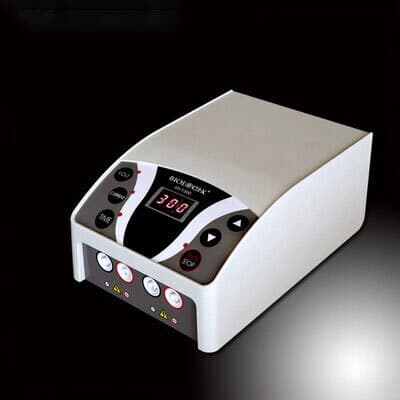
Standard 300V Power Supplies – Full-featured digital units with advanced programming, ideal for high-performance and high-capacity laboratory runs.
-
Mini 300V Power Supplies – Ultra-compact, space-saving units engineered for reliable, routine electrophoresis within a smaller bench footprint.
How to Choose an Electrophoresis System
Format: mini, standard, or wide
Mini electrophoresis systems with 7 x 8 cm gel trays accommodate 8-16 samples per gel and run in 20-35 minutes at 100 V in TAE, making them the fastest option for quick PCR band verification. Standard systems with 10 x 14 cm trays hold 20-30 samples and are the workhorse format for most molecular biology labs. Wide and large-format systems with gel trays of 20 x 20 cm or greater, or multi-row comb configurations, allow 50-100+ samples per gel for high-throughput applications such as colony PCR screening. Multi-format systems that accept interchangeable trays in the same tank provide the best flexibility.
Horizontal vs. vertical configuration
Horizontal agarose gels are the standard for nucleic acid work: they are easy to cast, accommodate large well counts, and can separate fragments of 100 bp to 20 kb in a single run with appropriate agarose concentration. Vertical polyacrylamide gels provide sharper band resolution (under 5 bp for sequencing gels; under 1 kDa for SDS-PAGE proteins) and are required for western blotting workflows. Mini-PROTEAN-style vertical systems (Bio-Rad format) are the most widely referenced standard; confirm cassette compatibility when purchasing from alternative manufacturers.
Well volume and comb specifications
Standard well combs create wells of 5-10 mm width, accommodating 10-30 microliters of sample in 1x loading buffer. Preparative combs create a single wide well (20-50 mm) for running large-volume samples ahead of gel extraction. Comb tooth count is specified per tray configuration; 8, 12, 15, 20, or 24-tooth combs are common for standard formats. Confirm that the comb thickness (0.75 mm or 1.0 mm) matches the gel cassette spacer width for vertical PAGE systems.
Buffer compatibility
TAE (1x: 40 mM Tris, 20 mM acetic acid, 1 mM EDTA, pH 8.3) is the standard buffer for agarose gels used in cloning and routine DNA analysis; DNA migrates approximately 10% faster in TAE than TBE. TBE (1x: 89 mM Tris, 89 mM boric acid, 2 mM EDTA) gives sharper resolution of fragments below 1 kb and is standard for polyacrylamide gels. MOPS-formaldehyde buffer is used for denaturing RNA gels. Never mix buffer types between chambers during a run.
Integrated vs. separate power supply
Some compact electrophoresis systems include an integrated power supply, simplifying setup and reducing bench footprint. Separate, dedicated power supplies provide more precise voltage control, current monitoring, and the ability to run multiple gel units simultaneously from one supply. Dedicated power supplies rated at 300 V and 400 mA allow running 2-3 mini gel units or 1-2 standard units simultaneously.
Specifications Context
Buffer capacity (mL) determines how long a gel can run at standard voltage without buffer depletion; standard horizontal systems hold 200-500 mL buffer. For very long runs exceeding 90 minutes (e.g., for large DNA fragment separation or PFGE), buffer recirculation or mid-run buffer exchange is required to prevent ion depletion and pH shift. Electrode material -- platinum wire (corrosion-resistant, long lifespan) versus carbon rod (lower cost) - affects current delivery consistency over the electrode lifetime; platinum electrodes are standard on research-grade systems. UV-resistant plastic (UV-blocking polycarbonate or polypropylene) gel trays are standard on new electrophoresis systems to prevent UV degradation during UV transilluminator use.
Don’t let your samples drift. Browse our electrophoresis hardware and hit up the MBP team for a custom quote today.
FAQ