Product Filters

Super-Speed Centrifuge for Organelle Isolation, Bacterial Harvesting, and Virus Pelleting


Super-speed centrifuge operates at 15,000–30,000 RPM (20,000–70,000 ×g)—the force range required for harvesting bacteria and yeast, isolating organelles (mitochondria, lysosomes, peroxisomes), pelleting viruses, and performing intermediate differential centrifugation steps. Refrigeration is essential at these speeds to protect sample integrity. MBP is a registered vendor to Howard Hughes Medical Institute, MD Anderson Cancer Center, and Vanderbilt University.

Contact customerservice@mbpinc.net to compare super-speed centrifuge models and request pricing, availability, or institutional quotes.

Super-Speed Centrifuge
Per Page:
Sort By:
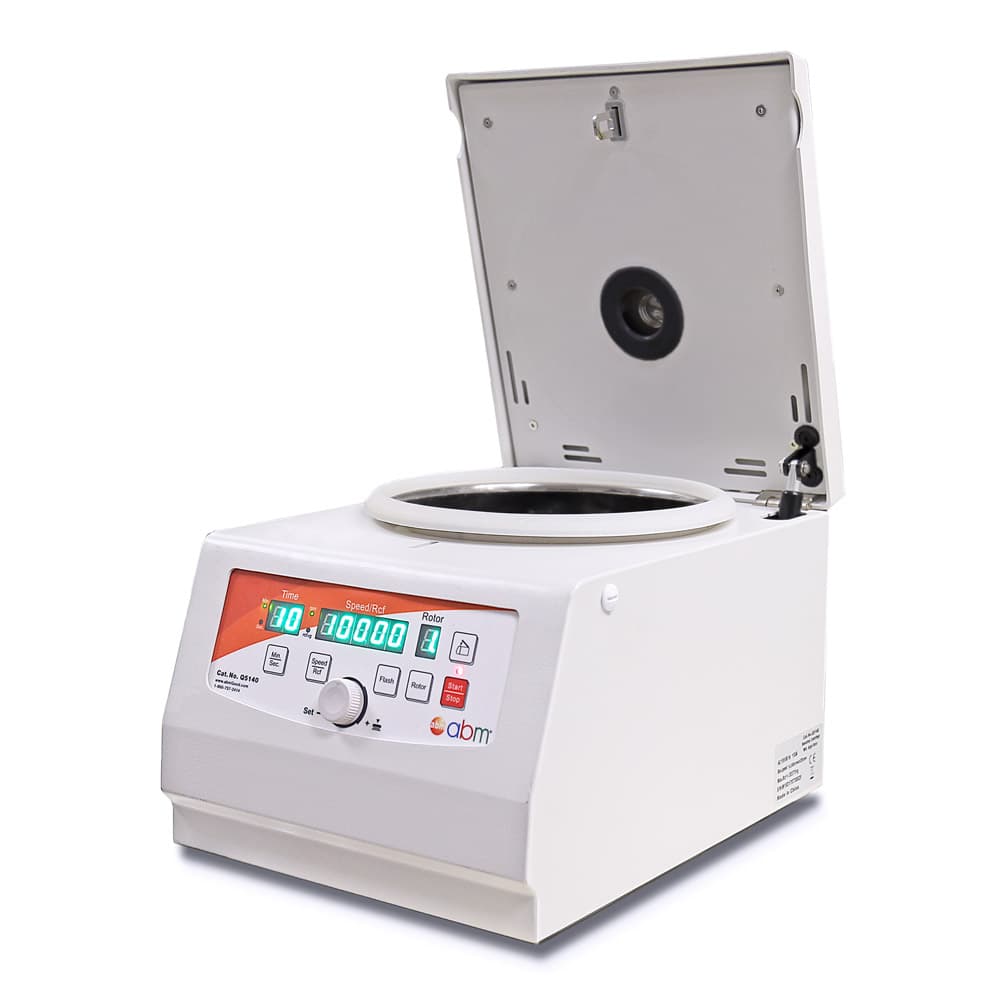
High Speed Micro-centrifuge with 24 x 1.5 ml Rotor
List Price:
USD3,684.49
Online Price:
USD2,631.78
Your Price:
High speed 0.2-0.4ml adapter for 2.0ml rotors, 6/pk
List Price:
USD204.50
Online Price:
USD146.07
Your Price:
High speed 0.5ml adapter for 2.0ml rotors, 6/pk
List Price:
USD204.50
Online Price:
USD146.07
Your Price:
High speed 1.5ml adapter for 2.0ml rotors, 6/pk
List Price:
USD253.12
Online Price:
USD180.80
Your Price:
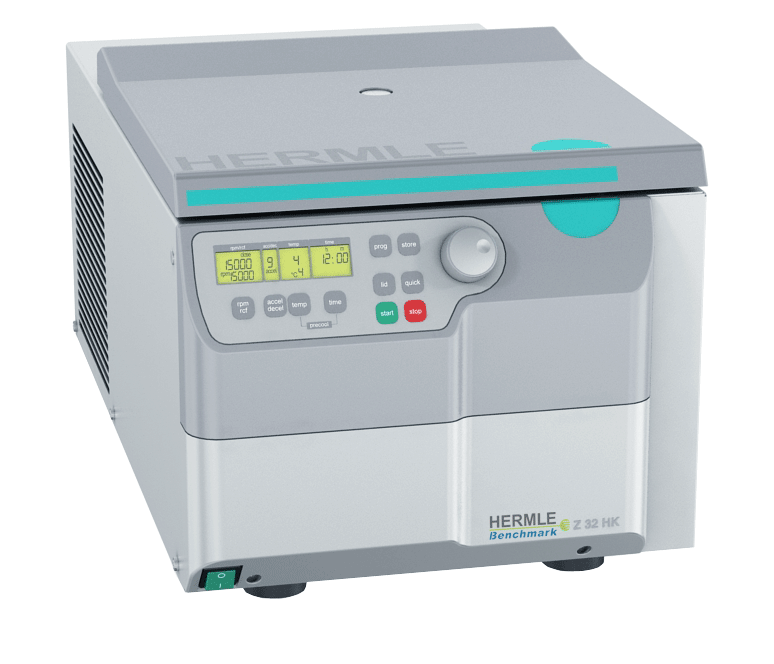
Z32-HK High Speed Centrifuge
List Price:
USD18,120.04 - USD18,120.04
Online Price:
USD12,942.89 - USD12,942.89
Your Price:
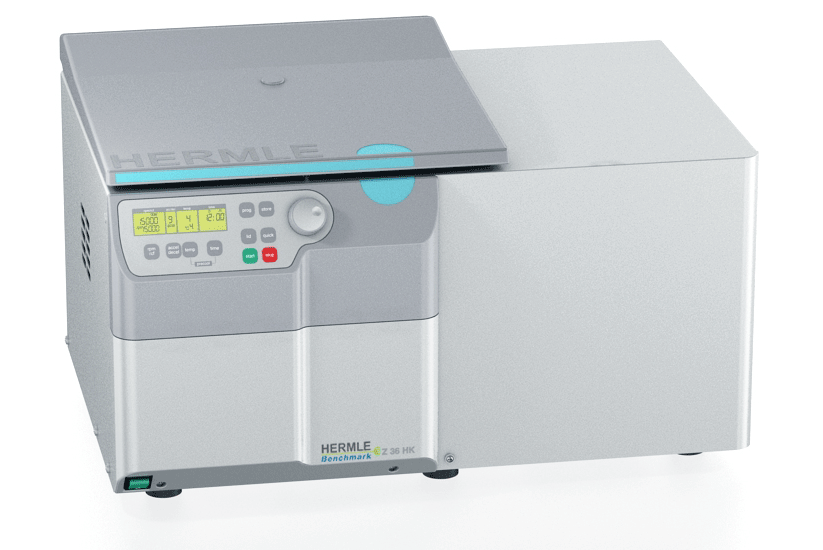
Z36-HK Super Speed Centrifuge
List Price:
USD23,423.94 - USD23,423.94
Online Price:
USD16,731.39 - USD16,731.39
Your Price:

Showing 1 to 6 of 6 results

What Are Super-Speed Centrifuges?


Super-speed centrifuges, also known as high-speed centrifuges, bridge the performance gap between standard benchtop centrifuges and ultracentrifuges. Operating at 15,000–30,000 RPM and generating forces of 20,000–100,000 ×g, they are used for harvesting microorganisms, isolating subcellular organelles, pelleting viruses, concentrating protein precipitates, and performing intermediate differential centrifugation steps. Active refrigeration is essential to maintain sample integrity by preventing heat buildup during high-speed operation. Super-speed centrifuges are available as benchtop and compact floor-standing models, offering different capacities to suit a range of laboratory workflows.


What You Will Find


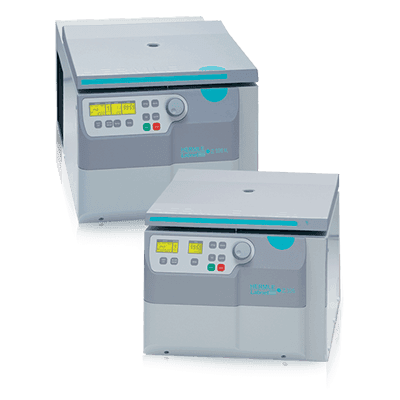
  • Z36-HK Super-Speed Centrifuge: High-performance system for advanced laboratory applications
  • Z32-HK High-Speed Centrifuge: Reliable unit for routine high-speed workflows
  • High-Speed Microcentrifuge (24 × 1.5 mL Rotor): Designed for high-speed processing of small-volume samples
  • High-Speed Mini Centrifuge: Compact unit for quick spin applications
  • Super-Speed Centrifuge Accessories: Includes adapters for 2.0 mL rotors with flexible volume ranges (0.2–0.4 mL, 0.5 mL, and 1.5 mL) for various microtube sizes


How to Choose a Super-Speed Centrifuge


Maximum RCF for Your Protocol

Select a centrifuge that meets the highest centrifugal force required by your applications. Bacterial harvesting, organelle isolation, virus concentration, and protein precipitation each require different RCF ranges, so matching instrument performance to laboratory needs is essential.

Rotor Type and Tube Capacity

Fixed-angle rotors are commonly preferred for high-speed pelleting because they provide efficient particle sedimentation and compact pellet formation. Consider both rotor compatibility and the maximum sample volume required for routine workflows.

Refrigeration System

Choose a refrigerated model capable of maintaining stable temperatures, typically around 4°C, during high-speed operation. Effective cooling helps preserve enzyme activity, protein integrity, and subcellular structures throughout extended centrifugation runs.

Safety Features

Modern super-speed centrifuges incorporate safety systems such as imbalance detection, overspeed protection, automatic lid locking, and sealed rotor options for biological samples. These features help ensure operator safety and maintain sample containment.

Certifications and Compliance

Laboratories operating under regulated environments may require equipment with documented calibration procedures, electronic data export capabilities, and certifications that support quality assurance and compliance requirements.


Specifications Context


Super-speed centrifuges typically operate within a range of 20,000–70,000 ×g, supporting applications such as organelle isolation, microbial harvesting, and preparative virology. Appropriate tube selection is critical, as high-speed applications often require specialized thick-walled tubes designed to withstand elevated centrifugal forces.

Routine rotor inspection and adherence to manufacturer maintenance schedules help maximize equipment lifespan and maintain safe operation. Modern refrigerated systems continue to provide improved temperature control, higher capacities, and advanced safety features for demanding research and industrial laboratory environments.

Find the perfect super-speed centrifuge for your laboratory today. Contact now with the expert team at Molecular Biology Products Inc. to discover the ideal solution for your needs.

FAQ

A super-speed centrifuge (also called a high-speed centrifuge or superspeed centrifuge) operates at 15,000–30,000 RPM, generating 20,000–100,000 ×g—significantly higher than the 6,000–15,000 ×g range of standard benchtop centrifuges and bridging the gap between benchtop and ultracentrifuge performance. This force range is sufficient to harvest bacteria, yeast, and microorganisms; isolate organelles (mitochondria, lysosomes, peroxisomes, Golgi membranes); pellet viruses and large protein complexes; concentrate cell fractions; and clarify homogenates before downstream ultracentrifugation steps.
Super-speed centrifuges are the primary centrifuge for: harvesting bacteria, yeast, and microorganisms (3,000–10,000 ×g); isolating mitochondria, lysosomes, peroxisomes, and intact Golgi membranes (10,000–27,000 ×g); pelleting viruses and bacteriophage in preparative quantities (10,000–50,000 ×g); concentrating protein precipitates from large-volume preparations (15,000–20,000 ×g); and performing the intermediate centrifugation steps in differential centrifugation protocols before ultracentrifuge finalization steps.
Super-speed centrifuges typically reach 18,000–30,000 RPM, generating 27,000–70,000 ×g or higher depending on rotor radius. Benchtop high-speed models (e.g., Beckman Coulter Avanti J-26 XP at 26,000 RPM / ~74,000 ×g) and compact floor-standing models (Sigma 3-30KS at >70,000 ×g) represent current reference platforms. The Sigma 3-30KS model fills the niche between standard and ultra centrifuges with a maximum RCF exceeding 70,000 ×g while maintaining a benchtop or compact floor-standing footprint.
Refrigeration is required in virtually all super-speed centrifuge protocols because motor heat and air friction during high-speed operation raise rotor chamber temperature significantly. Without active refrigeration, sample temperature can rise 10–20°C during a 30-minute run at 20,000 RPM, denaturing enzymes, degrading RNA, and disrupting organelle integrity. Super-speed centrifuges used for organelle isolation, virus preparation, and protein work must be pre-cooled to 4°C before the run, and the refrigeration system should maintain temperature within ±1°C throughout.
Super-speed centrifuges use fixed-angle rotors as the primary configuration—the short sediment path and high RCF per RPM make fixed-angle rotors the correct choice for pelleting bacteria, organelles, and viruses. Swing-out rotors are also available for density gradient separations at moderate super-speed forces. Vertical rotors are used in ultracentrifuge applications for isopycnic banding. Confirm the maximum rated RPM and RCF for each rotor against the centrifuge model's rated motor speed before applying high-speed protocols.
Super-speed centrifuge tubes must be rated for the application RCF. Polypropylene (PP) tubes are general-purpose and rated for most high-speed benchtop applications. Polycarbonate (PC) tubes are optically clear for visual pellet inspection but have limited resistance to strong bases and many organic solvents. Oak Ridge-style thick-walled polycarbonate or polyallomer tubes are designed for applications requiring mechanical strength at forces above 20,000 ×g. Always verify the tube manufacturer's maximum rated RCF—never use tubes showing stress whitening, deformation, or visible cracking.
Super-speed centrifuges operate at 15,000–30,000 RPM (20,000–100,000 ×g) and are used for pelleting bacteria, organelles, viruses, and protein precipitates. Ultracentrifuges exceed 50,000 RPM (up to ~1,000,000 ×g) and are required for isolating ribosomes, macromolecular complexes, lipoprotein subfractions, and performing isopycnic density-gradient separations of DNA, RNA, and membrane fractions. Super-speed centrifuges are the preparative step before many ultracentrifuge protocols, removing debris and larger particles so the ultracentrifuge operates on clarified sample.
Super-speed centrifuge maintenance includes: cleaning the rotor chamber with a dry cloth or damp cloth (non-abrasive) after every run to remove condensate; cleaning rotors with mild detergent and drying completely before storage; inspecting O-ring seals on rotor lids and safety buckets; checking for corrosion, pitting, or stress cracking on all rotor surfaces before each use; verifying that the rotor is correctly seated on the drive shaft before each run; and following the OEM's rotor retirement schedule based on cumulative RPM-hours. Super-speed rotors must never be used after their rated retirement limit.
We provide the highest quality of products and anytime customer service.
Featured Categories
    online payment
    online payment
    fast delivery
    fast delivery
    technical support
    technical support
    24/7 support
    24/7 support
    copy right
    2026 All Right Reserved