Minicentrifuges for Quick Spin-Downs of Microtubes and PCR Strips
Minicentrifuges are compact lid-activated personal centrifuges running at 6,000 RPM (2,000 ×g) for quick spin-down tasks: collecting condensate from microtube caps, concentrating PCR strip contents before thermal cycling, and briefly clarifying samples after vortexing. Most models include a microtube rotor (8 × 1.5/2.0 mL) and a PCR rotor (32 × 0.2 mL or 4 × 8-strip) in a footprint under 175 mm wide. MBP is a registered vendor to Howard Hughes Medical Institute, MD Anderson Cancer Center, and Vanderbilt University.
Contact customerservice@mbpinc.net to compare minicentrifuge models and request pricing or availability information.
Minicentrifuge


Showing 1 to 12 of 31 results
What Are Minicentrifuges?
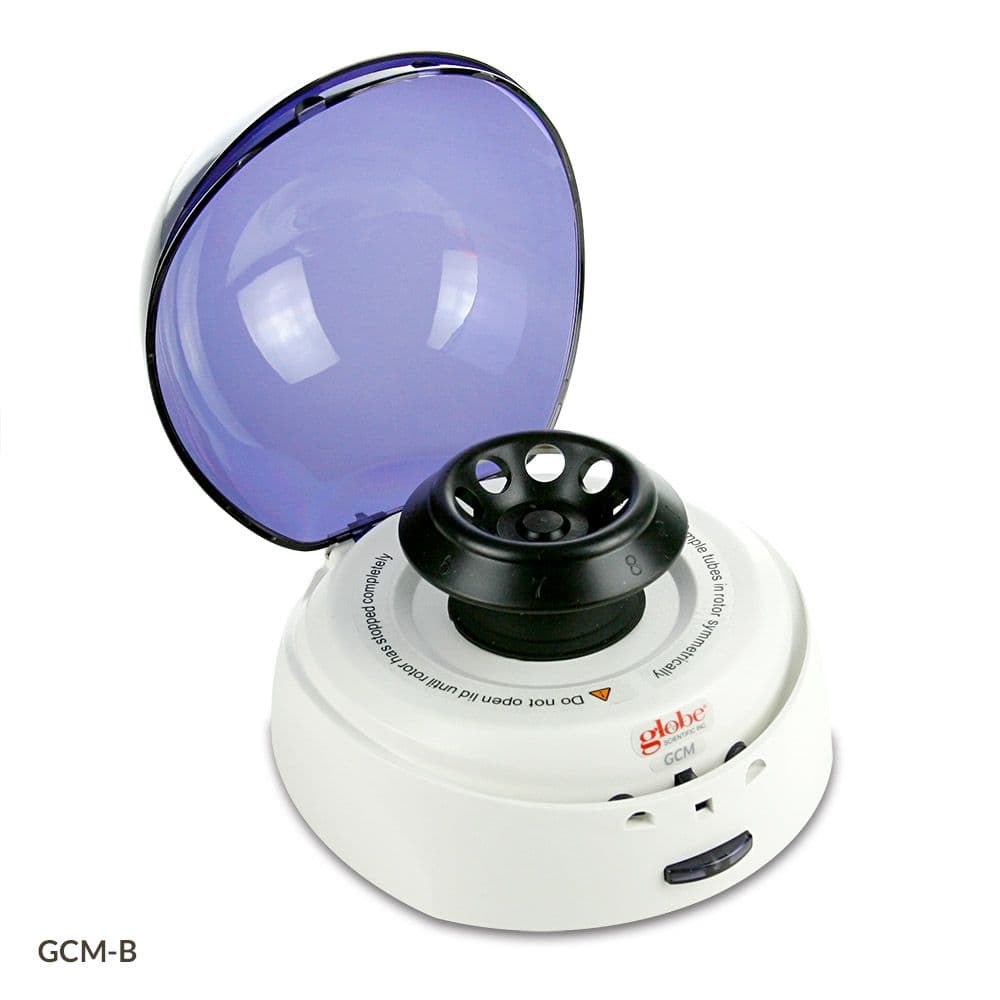
Minicentrifuges (personal centrifuges or pulse centrifuges) are compact lid-activated benchtop instruments that spin at a fixed speed of approximately 6,000 RPM (2,000 ×g) for quick spin-down tasks: collecting condensate from microtube caps, concentrating PCR tube contents to the bottom before thermal cycling, briefly clarifying samples after vortexing, and pelleting small-volume precipitates in 0.2 mL, 0.5 mL, 1.5 mL, and 2.0 mL tube formats. Most models include two rotors—one for 1.5/2.0 mL microtubes with 0.5 mL adapters, and one for 0.2 mL PCR tubes and 8-strip PCR strips—in a compact benchtop footprint. Lid closure starts the rotor, and lid opening stops it within seconds. The minicentrifuge is a daily-use instrument in molecular biology laboratories performing PCR, RT-PCR, qPCR, cloning, and NGS workflows.
What You Will Find:
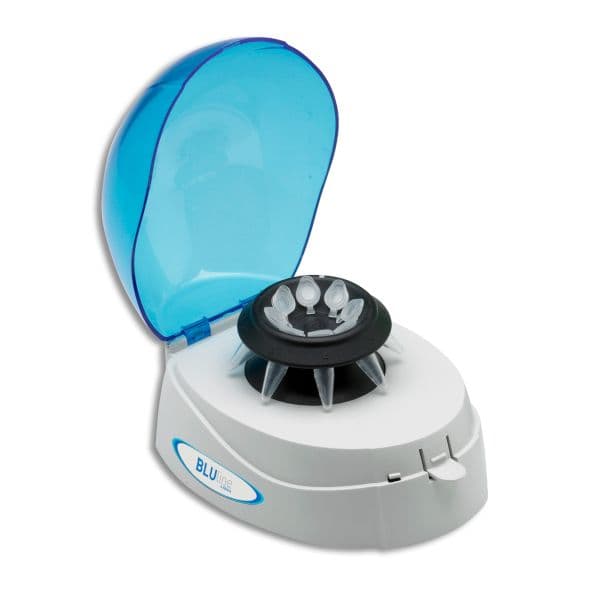
- BLUline Mini Centrifuges: Compact units for routine microcentrifuge tube applications
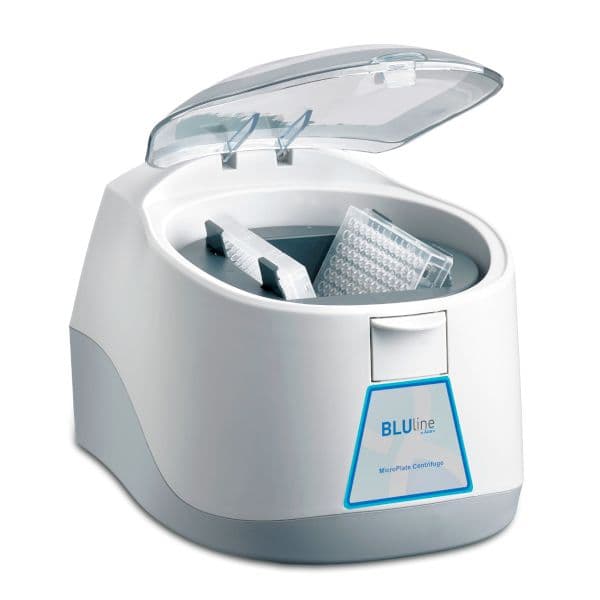
- BLUline PCR Plate Centrifuge: Designed for rapid PCR plate spin-downs
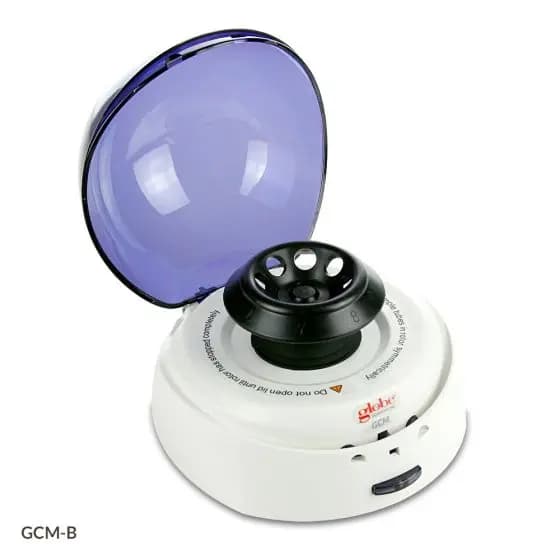
- Globe Scientific Mini Centrifuge: Efficient fixed-speed units for everyday sample processing
- myFuge™ 12 MiniCentrifuge: Higher sample capacity with a 12-place rotor
- myFuge™ Digital Mini Centrifuge: Digital controls with combination rotor functionality
- StripSpin™ Digital Mini Centrifuge: Optimized for PCR strips and plates
- Mini Centrifuge: Compact solution for basic laboratory applications
- Mini Plate Spinner Centrifuge: Ideal for quick microplate spin-downs
- DLAB Mini Centrifuge: Flexible systems with multiple rotors and adapters
- Mini Centrifuge Accessories: Rotors and adapters for different tube sizes and laboratory workflows
How to Choose a Minicentrifuge
Fixed Speed vs. Variable Speed
Standard minicentrifuges operate at a fixed speed of approximately 6,000 RPM. Some models offer variable-speed operation, typically between 2,000 and 10,000 RPM, providing additional flexibility for laboratories that occasionally require higher centrifugal force without investing in a full-size microcentrifuge.
Rotor Compatibility and PCR Strip Support
Confirm that both common rotor types are included: a rotor for 1.5/2.0 mL microtubes with 0.5 mL adapters and a rotor for 0.2 mL PCR tubes and PCR strip tubes. Laboratories performing high-throughput PCR or NGS workflows should ensure PCR strips fit securely and can be loaded without additional adapters.
Tool-Free Rotor Exchange
Models with tool-free rotor exchange systems allow users to switch between microtube and PCR rotors quickly without requiring tools. This feature is particularly useful in busy laboratories where rotor changes occur frequently throughout the day.
Portable and Battery Operation
Some minicentrifuges support battery operation in addition to standard AC power. These models are suitable for field sampling, point-of-care testing, mobile diagnostic applications, and environments where power outlets may not be readily available. Verify voltage compatibility and power requirements before purchase.
Noise Level
Most minicentrifuges operate at noise levels of approximately 45 dB or lower, making them suitable for shared laboratory spaces and benchtop use near workstations. Check manufacturer specifications if low-noise operation is a priority.
Specifications Context
At 6,000 RPM with a typical rotor radius of 39–42 mm, a standard minicentrifuge generates approximately 1,700–2,000 ×g. This is sufficient for condensate collection, quick sample spin-downs, and concentrating PCR reaction contents but is not suitable for applications requiring higher centrifugal force such as spin-column nucleic acid purification, bacterial pelleting, or protein precipitation workflows.
Most minicentrifuges weigh less than 1.5 kg and occupy minimal bench space, making them suitable for crowded laboratory environments, PCR workstations, and biosafety cabinet work areas. Modern models emphasize ease of use through lid-activated operation, compact footprints, quiet performance, and rapid rotor exchange systems.
Your search for a premium-quality minicentrifuge ends here. Contact the expert team at Molecular Biology Products Inc. today to find the right solution for your laboratory.
FAQ