Hematocrit Centrifuges for Packed Cell Volume and PCV Measurement
Hematocrit centrifuges (microhematocrit centrifuges) spin sealed capillary tubes at 10,000–15,000 RPM for 3–5 minutes to measure packed cell volume (PCV)—the percentage of blood volume occupied by red blood cells—used to diagnose anemia, polycythemia, and dehydration. Manual PCV from capillary centrifugation runs 1–3% higher than automated CBC hematocrit due to trapped plasma. MBP is a registered vendor to Howard Hughes Medical Institute, MD Anderson Cancer Center, and Vanderbilt University.
Contact customerservice@mbpinc.net to explore hematocrit centrifuge options and request current pricing or availability.
Hematocrit Centrifuge

Showing 1 to 2 of 2 results
What Are Hematocrit Centrifuges?
Hematocrit centrifuges (microhematocrit centrifuges) are specialized high-speed instruments that spin sealed capillary tubes of anticoagulated whole blood at 10,000–15,000 RPM for 3–5 minutes to measure packed cell volume (PCV)—the percentage of total blood volume occupied by red blood cells (RBCs). The centrifugal force separates blood into three distinct layers: packed RBCs at the sealed clay end, a thin buffy coat of white blood cells and platelets, and plasma at the open end. PCV is read from the RBC column height using a microhematocrit card reader and expressed as a percentage. Typical adult reference ranges are approximately 41–53% for males and 36–46% for females, although laboratories should follow their own validated reference intervals. Manual PCV values obtained by microhematocrit methods may be slightly higher than automated hematocrit measurements because of plasma trapped between packed red blood cells.
What you will find:
-
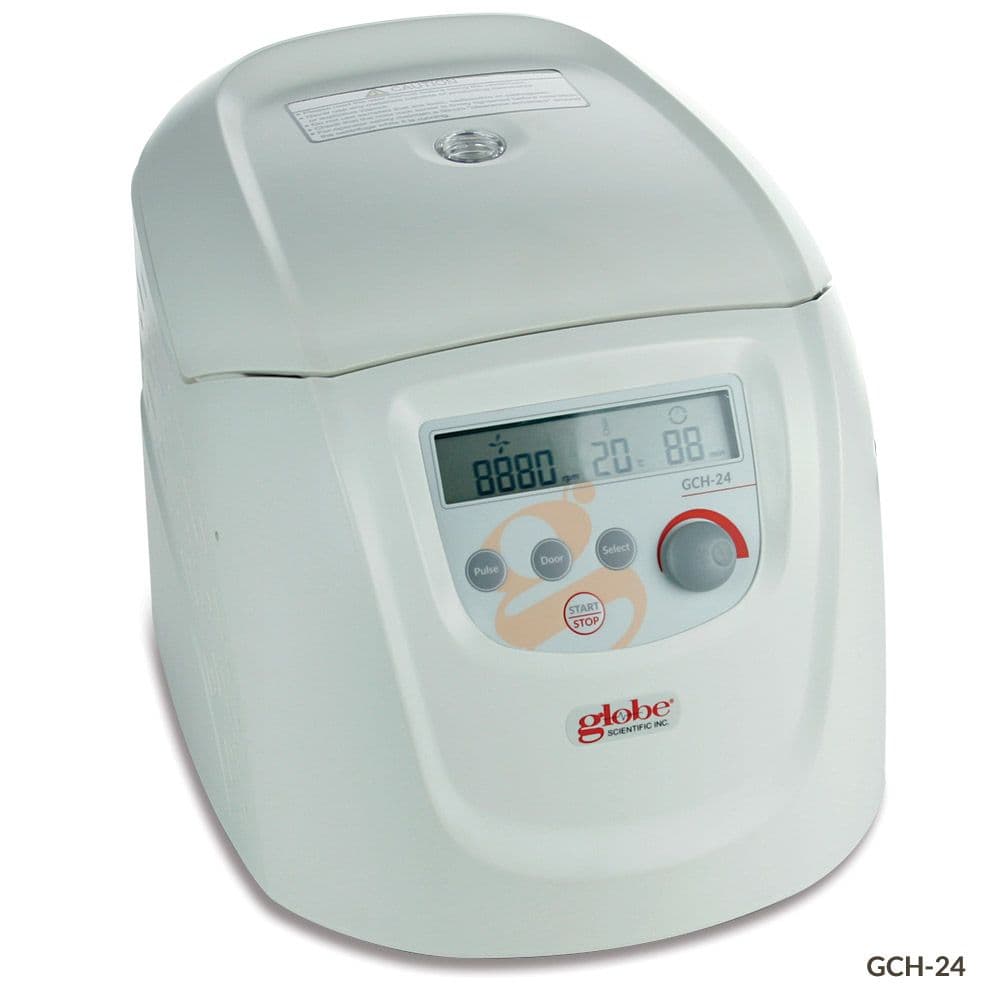
GCH-24 Hematocrit Centrifuge: High-speed unit with a 24-capillary rotor for precise separation of blood and micro-samples
-
GCH-24 Hematocrit Centrifuge Accessories: Compatible rotor and accessories for smooth and efficient operation
How to Choose a Hematocrit Centrifuge
Speed Range and Spin Time
Standard microhematocrit centrifuges operate between 10,000 and 15,000 RPM, with most laboratory protocols using approximately 11,000–12,000 RPM for complete red blood cell packing. Higher-speed models may reduce processing time to 3–4 minutes, while standard systems typically use 4–5 minute cycles. Verify that the selected instrument supports your laboratory's established procedures and validation requirements.
Rotor Capacity
Many hematocrit centrifuges accommodate 24 capillary tubes in a flat grooved rotor, enabling multiple patient samples to be processed simultaneously. Compact or point-of-care models may hold 6–12 tubes. Confirm compatibility with standard microhematocrit capillary tubes, which are typically 75 mm long with an outer diameter of approximately 1.55 mm.
Safety Cover and Interlock
A secure safety lid with an interlock mechanism is an important feature, preventing rotor operation while the cover is open. Capillary tube breakage during high-speed operation can create biohazardous exposure risks, so splash-resistant materials and easy-to-clean surfaces support routine laboratory safety and maintenance procedures.
Timer and Brake Control
An integrated timer helps maintain validated spin durations and supports consistent PCV measurements. Controlled deceleration minimizes disturbance of the packed red blood cell layer after centrifugation. Laboratory personnel should always allow the rotor to stop according to the manufacturer's instructions rather than manually slowing the system.
Capillary Tube Compatibility
Verify that the rotor accepts both heparinized and plain 75 mm capillary tubes sealed with clay. Some instruments are optimized for specific tube dimensions or manufacturers, making compatibility checks important when purchasing replacement consumables or third-party supplies.
Specifications Context
The standard microhematocrit method uses 75 mm capillary tubes with approximately 1 mm internal diameter and 1.55 mm outer diameter, sealed with clay and centrifuged according to validated laboratory procedures. Heparinized tubes are commonly used for direct capillary blood collection, while plain tubes are used with anticoagulated venous blood specimens. Laboratories should follow applicable CLSI guidance and their own standard operating procedures when establishing test protocols.
Manual PCV measurements obtained by microhematocrit methods may include a small amount of trapped plasma, producing slightly higher values than automated hematology analyzers that calculate hematocrit using red blood cell count and mean corpuscular volume (MCV). In veterinary medicine, hematocrit centrifuges remain widely used because they require minimal blood volume and provide rapid diagnostic information. Modern systems frequently include digital timers, brushless motors, and enhanced safety interlocks to support reliable routine operation.
Choose the best hematocrit centrifuge for your lab today. Contact the expert team at Molecular Biology Products Inc. now and book the perfect match.
FAQ